Month: June 2025

  • The Climate on Monday: Big Tech’s net zero goals unrealistic, researchers say, India in SDG 100 for the first time, and more

    The Climate on Monday: Big Tech’s net zero goals unrealistic, researchers say, India in SDG 100 for the first time, and more

    Daily news on deep tech and climate tech from India and around the world

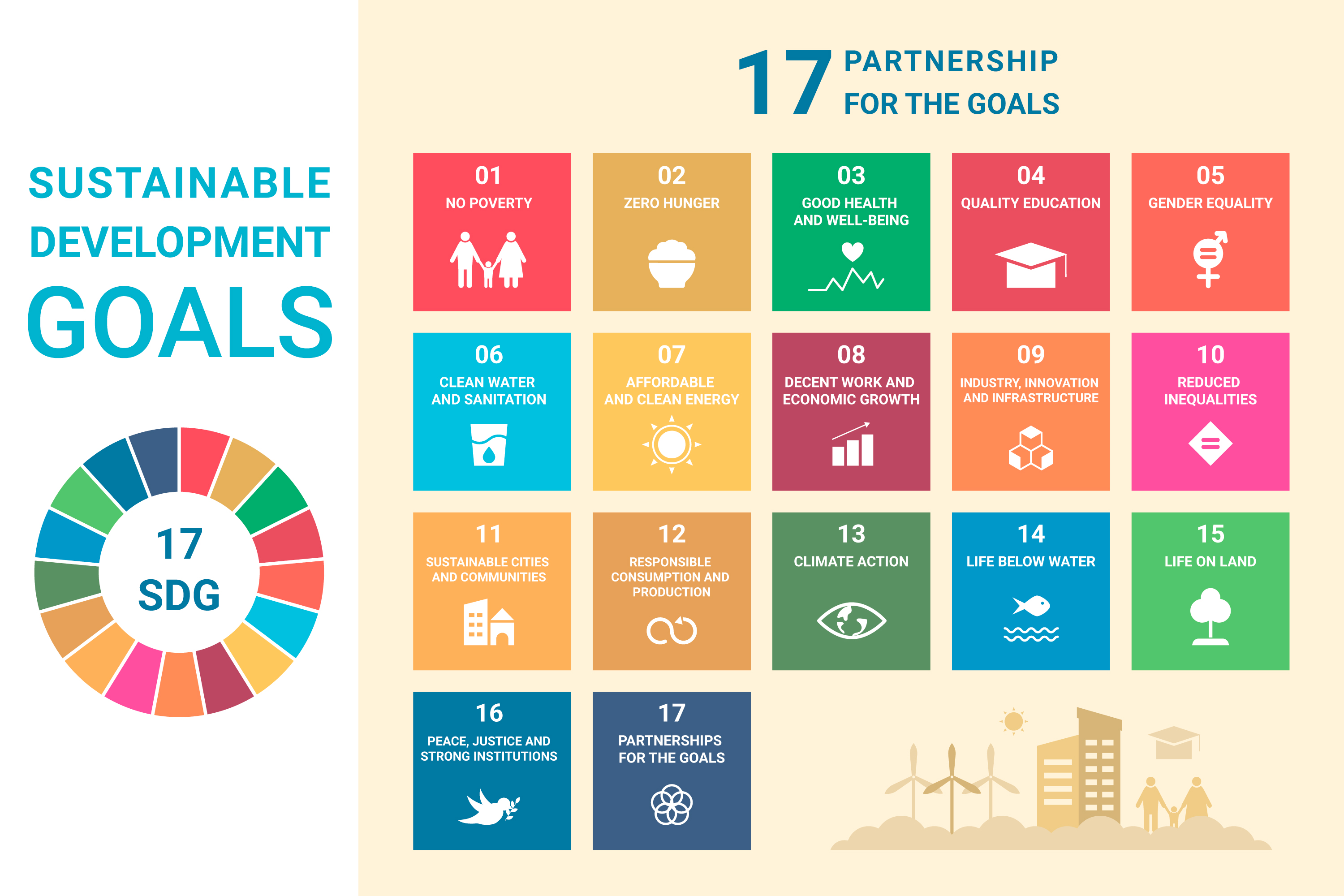
    An infographic show the 17 Sustainable Development Goals that were articulated at the United Nations in 2015 as an urgent call to action for all countries.

    Tech Giants’ Net Zero Goals May Be Unachievable Amid AI Data Center Boom

    Researchers warn that the net zero pledges of big tech companies such as Microsoft, Apple, Google, Meta, and Amazon are increasingly unrealistic as they expand AI and data centers, driving up energy use, according to a report by AFP that was widely syndicated last week.

    For example, Microsoft disclosed a 23 percent increase in greenhouse gas emissions since 2020, driven by rapid expansion of AI and cloud infrastructure, despite significant investments in carbon removals and clean energy, Carbon Pulse reported on May 30.

    Listen to the podcast

    Independent analysis rates the credibility of the big tech companies’ climate strategies as poor, with emissions targets likely unattainable if unchecked energy consumption continues without stronger oversight and regulation, according to the report.

    “The greenhouse gas emissions targets of tech companies appear to have lost their meaning,” Thomas Hay, lead author of a report by think tanks Carbon Market Watch and NewClimate Institute, told AFP.

    Meta finalizes deals for green power for AI data centres

    Meanwhile, Meta has finalized deals that will take it closer to net-zero emissions across its global data centers, according to a Bloomberg report on June 26. Meta signed new clean energy agreements with developer Invenergy to power its operations with renewable energy.

    Clean hydrogen investment at risk in US after tax bill proposal

    A proposed US tax bill threatens to drive clean hydrogen investors out of the country by cutting key incentives, Reuters reports. The move could slow the growth of the clean hydrogen sector, undermining efforts to decarbonize heavy industry and transportation.

    BizClik announces global sustainability awards finalists

    BizClik, a B2B digital media and events company, named the finalists for its Global Sustainability Awards 2025, recognizing measurable progress in ESG, climate tech, and sustainable innovation. The awards ceremony, set for September in London, spotlights global enterprises leading in sustainability, encouraging best practices and transparency in corporate environmental responsibility.

    Global Energy Prize shortlist features 15 scientists from eight countries

    The Global Energy Prize announced its 2025 shortlist, highlighting 15 scientists from eight countries working on sustainable energy solutions. The award promotes innovations addressing global energy challenges, supporting research that drives the transition to a cleaner, more sustainable energy future.

    Germany’s Climatiq bags €10 million to turn emissions into business metric

    Climatiq, a German climate tech startup, has raised €10 million in funding to develop technology that quantifies and tracks carbon emissions as a core business KPI, Tech Funding News reported. The company’s platform helps businesses to monitor their carbon footprint in real time and integrates emissions metrics into financial and operational decision-making. The investment will fuel further tech development and market expansion.

    Resilience AI assesses climate risk for Indian cities

    Resilience AI, a startup in Bengaluru, is developing a software platform that assesses how risk-prone our buildings and other infrastructure in our cities are to climate hazards like floods and landslides, Your Story reports. The startup’s risk modeling is helping urban planners and policymakers prepare for and mitigate the impact of increasingly frequent extreme weather events.

    India breaks into sustainable development goals index top 100 for the first time

    India has reached a significant milestone in the latest Sustainable Development Goals (SDG) Index, ranking within the top 100 countries for the first time, The Indian Express reports. This marks a notable improvement from its previous positions of 112th in 2022 and 120th in 2021, reflecting substantial progress in health, education, and environmental sustainability.

    The SDG Index evaluates countries on their commitment and performance toward global development targets. While India’s inclusion is a milestone, it also highlights ongoing challenges in areas like poverty reduction and climate resilience, requiring continued policy focus and innovation to sustain momentum.


    In Conversation

    In-depth conversations with entrepreneurs, investors, industry leaders, and other stakeholders building India’s deep tech and climate tech ecosystems

    Insight

    Takeaways from conversations with entrepreneurs, investors, industry leaders, and other stakeholders building India’s deep tech and climate tech ecosystems

  • Ending the ICE age: Kunal Khattar on the trillion dollar EV opportunity in India

    Ending the ICE age: Kunal Khattar on the trillion dollar EV opportunity in India

    My guest today is Kunal Khattar, founding managing partner at AdvantEdge Founders, an early-stage VC firm in New Delhi that’s well known for backing founders in the EV and mobility sectors in India. Kunal is well known for backing both consumer facing shared mobility ventures like Rapido and technology-led product innovation startups like Exponent Energy, which is a leader in fast-charging tech in India.

    It’s now 10 years since AdvantEdge was founded, Kunal says, and the firm is very close to announcing the first close of its third fund, which will likely be in the ballpark of $75 million, to back the next generation of EV entrepreneurs in India.

    In this conversation, Kunal talks about why he expects the EV space to hit the J-curve growth stage over the next three to five years and how replacing the overall ICE economy in India is a trillion-dollar opportunity.

    Kunal also talks about how because technology-led industry shifts can take decades, some promising technologies, like green hydrogen, for example, will take time to become mainstream.

  • Deep tech wrap on Friday: Green hydrogen solutions rise in India, aerospace startup Raphe scores $100 million, and more

    Deep tech wrap on Friday: Green hydrogen solutions rise in India, aerospace startup Raphe scores $100 million, and more

    Daily brief on deep tech and climate tech news from India and around the world

    Illustrative image. India needs high-altitude drones to support its troops across the Himalayas, or for rescue operations and several other civilian applications as well.

    JuliaHub unveils Dyad to accelerate hardware development with AI-powered modeling

    JuliaHub has launched Dyad, a new system that integrates Scientific Machine Learning, Generative AI, and traditional physics modeling to revolutionize hardware system design, according to a post from the eponymous company. Dyad offers both textual and graphical interfaces, agentic AI workflows, and seamless simulation tools, supporting the entire product lifecycle for industries like aerospace and energy.

    Under a source-available license, Dyad aims to bring modern software agility and collaboration to engineering, making advanced modeling accessible, safe, and efficient for critical applications.

    Listen to the podcast

    APac ex-Japan IoT spending to reach $355 billion by 2029, driven by manufacturing and smart technologies

    Internet of Things (IoT) spending in the Asia Pacific region (ex-Japan) will grow from $241 billion in 2025 to $355 billion by 2029, with a 12.6 percent CAGR, technology market researcher IDC said in a recent post.

    Manufacturing, government, retail, and utilities will drive over half of 2025’s spending, while healthcare and transportation will see the fastest growth. Hardware, especially sensors and modules, will dominate spending, with China, India, and Indonesia leading growth. Key trends include smart factories, supply chain resilience, and real-time analytics adoption.

    John Cockerill Hydrogen raises €116 million to boost global green hydrogen expansion

    John Cockerill Hydrogen has secured a €116 million capital increase to advance its strategic development and international growth, the hydrogen electrolyser and industrial equipment maker said in a press release.

    Supported by Belgian investors SFPIM and Wallonie Entreprendre, and new partner Fluxys, the funding strengthens the company’s Belgian roots and global reach.

    The capital will support large-scale electrolyser production in Europe and India, including India’s largest green ammonia project. The group’s Indian unit is listed in Mumbai.

    This investment advances John Cockerill’s leadership in pressurized alkaline electrolyser technology, reinforcing its commitment to sustainable, cost-effective green hydrogen solutions worldwide, according to the press release.

    Toyota Kirloskar Motor and Ohmium partner to pilot green hydrogen microgrids for India’s clean energy future

    Meanwhile, Toyota Kirloskar Motor and Ohmium International have signed an MoU to co-develop green hydrogen-based microgrid solutions in India. The collaboration combines Toyota’s fuel cell expertise with Ohmium’s modular PEM electrolyzer technology to design scalable, efficient, and cost-effective hydrogen power systems for diverse applications, including data centers and remote areas.

    The partnership aims to prototype and test integrated electrolyzer-fuel cell microgrids, supporting India’s National Green Hydrogen Mission and advancing the country’s carbon neutrality and energy independence goals.

    Cummins India launches Battery Energy Storage Systems to accelerate clean energy transition

    Cummins India Limited has launched its Battery Energy Storage Systems, expanding its sustainable solutions portfolio to support India’s clean energy goals, the industrial company said in a press release.

    The modular, scalable units — available in 10ft and 20ft containers with capacities from 200kWh to 2MWh — use advanced lithium ferrophosphate batteries and integrated liquid cooling for safety and long life, according to the release.

    Designed for industries such as manufacturing, data centers, and mining, these systems enable seamless integration of renewables, grid stability, and optimized energy costs, the company said.

    Ericsson expands Bengaluru R&D to boost 5G chip design and India’s semiconductor ecosystem

    Ericsson is expanding its Bengaluru R&D operations with a dedicated Application-Specific Integrated Circuit (ASIC) development unit, adding over 150 engineering roles. This move strengthens Ericsson’s global semiconductor design capabilities and supports India’s growing tech ecosystem.

    The new unit will focus on developing custom Ericsson Silicon System on a Chip (SoC) solutions, essential for high-performance, energy-efficient 5G network equipment. The expansion aligns with Ericsson’s $5 billion annual R&D investment and India’s ambitions to become a semiconductor innovation hub.

    Antler Bio raises $4.3 million to expand gene expression tech for smarter, more resilient dairy farming

    Antler Bio has secured $4.3 million in funding, led by The First Thirty Ventures, to scale its EpiHerd gene expression platform across Europe, Tech Funding News reports. EpiHerd analyzes how cows’ genes respond to environmental and nutritional stressors, delivering data-driven insights that boost milk yields, quality, and herd health. Already used on over 100 farms, the system has achieved up to 22 percent higher milk yields and a 7:1 ROI. The funding will accelerate expansion and further technology development.

    Raphe mPhibr raises $100M to scale indigenous drone manufacturing and global defense ambitions

    Raphe mPhibr has secured $100 million in Series B funding led by General Catalyst, marking the largest private capital raise by an Indian aerospace manufacturer, according to a press release by the Noida based startup.

    Founded in 2016, Raphe designs and manufactures end-to-end unmanned aerial systems (UAS), including drone swarms and high-altitude UAVs, entirely in India.

    Serving more than 10 government agencies, the company has achieved 4x revenue growth for four years, remains profitable, and plans to expand globally, emphasizing sovereign technology and local manufacturing.


    In Conversation

    In-depth conversations with entrepreneurs, investors, industry leaders, and other stakeholders building India’s deep tech and climate tech ecosystems.

    Insight

    Takeaways from conversations with entrepreneurs, investors, industry leaders, and other stakeholders building India’s deep tech and climate tech ecosystems.

  • Autonomous mobile robots: Five takeaways from a conversation with Saurabh Chandra at Ati Motors

    Autonomous mobile robots: Five takeaways from a conversation with Saurabh Chandra at Ati Motors

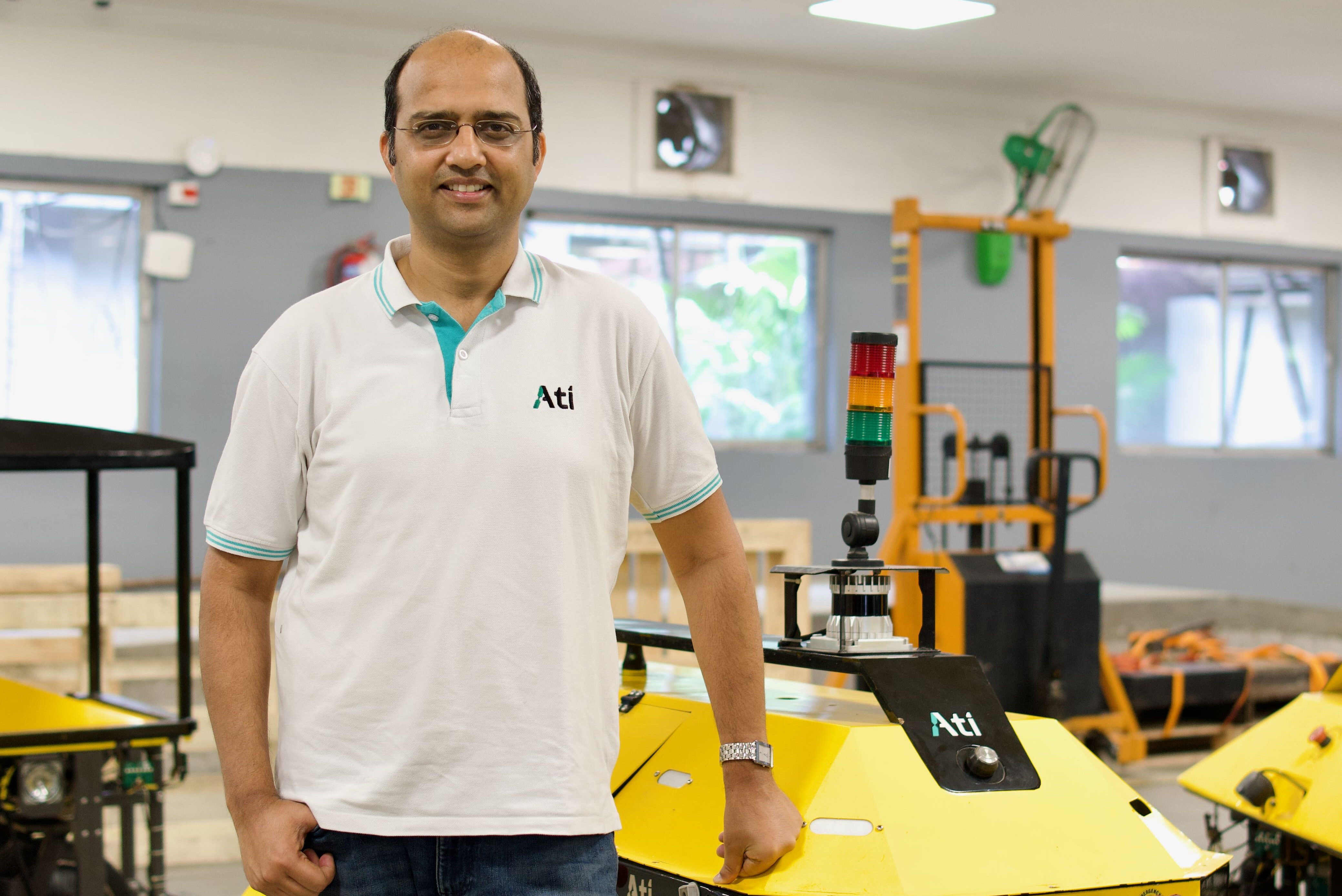
    In this episode, Saurabh Chandra, co-founder and CEO of Ati Motors in Bengaluru, talks about how autonomous mobile robots (AMRs) are set to completely change factories, warehouses and an increasing number of other environments.

    Backed by investors including MFV Partners, Exfinity Ventures, NGP Capital and Blume Ventures, Ati is shipping its AMRs to some of the biggest manufacturing names in India, Southeast Asia and the US.

    Chandra talks about Ati’s own family of robots, named Sherpa, some early engineering decisions that have stood the company in good stead, and how Ati can go from shipping hundreds of robots to thousands, and more. We also briefly touched upon lessons from building a deep tech robotics company out of India.

    Here are my five top takeaways from the conversation.

    Early engineering decision to avoid teleoperation from the start 

    Ati Motors made a deliberate early engineering choice to design its robots for full autonomy without any dependency on a teleoperator — a person remotely controlling or assisting the robot during exceptions or tough situations. While it was initially tempting to include teleoperation as a safety net for handling edge cases, the engineering team argued that this would become a crutch, making it harder to ever achieve true, robust autonomy.

    This decision led to a longer initial development phase, as the team had to ensure the robots could handle all real-world scenarios independently. However, this approach ultimately paid off by forcing the team to build a more reliable and resilient system, setting Ati Motors apart.

    “Don’t take even a screw for granted. This is really one of the places where for want of a nail, the kingdom can be lost.”

    Saurabh Chandra, Co-Fouder and CEO, Ati Motors

    Ati’s full-stack approach: comprehensive in-house development and integration

    Ati’s full-stack approach means the company develops every critical aspect of its AMRs in-house — from navigation and localization algorithms to vehicle design, perception modules, and fleet management software, although some individual specialized components such as sensors aren’t made in India and have to be imported.

    By owning the tech stack, Ati ensures its robots are purpose-built for challenging factory conditions, can be quickly adapted to new customer needs, and deliver robust, reliable performance with little dependence on external infrastructure or third-party systems.

    Lessons from building Ati out of Bengaluru and India

    A key lesson from building Ati Motors out of Bangalore and India is the tremendous advantage of tapping the city’s multidisciplinary talent pool and its robust, under-appreciated manufacturing ecosystem – well before the city came to be known for its IT services prowess.

    Chandra highlights that Bengaluru offers access to both technical expertise and a strong base of manufacturing customers, enabling rapid product iteration and real-world feedback that even locations like California cannot match.

    The rich local supply chains from India’s electric vehicle (EV) industry provide unique cost and innovation benefits, as Ati can co-develop and customize key components with local partners — an advantage rare outside of a few global markets.

    Top priority: scale from shipping hundreds of robots to thousands

    One of Ati’s top priorities today is to scale its operations so it can meet the growing demand for its robots and move from shipping hundreds of units to thousands.

    This means accelerating deployment, expanding manufacturing capacity, and streamlining processes to handle much higher volumes efficiently. The company is also focused on improving tooling and support for its partners, enabling them to deploy and manage robots more independently, which is essential for rapid global expansion and for reaching new customers across North America, Southeast Asia, and potentially Europe and Japan.

    By prioritizing scalable operations and robust partner enablement, Ati aims to solidify its leadership in industrial automation and make its robotic solutions accessible to a far broader range of businesses worldwide.

    Chandra’s advice to aspiring deep tech entrepreneurs in India

    Aspiring deep tech entrepreneurs, especially in the hardware space in India, should be prepared for the immense complexity and challenges involved, Chandra says. For example, how does one crack the issue of quality and efficiency at the same time at low production volumes.

    He notes that hardware ventures require a wide range of expertise and that, at early stages, both founders and vendors may lack experience, making it harder to achieve desired outcomes.

    Chandra cautions against underestimating any detail — even the smallest component can be critical to success. He suggests that, while it is important to be ambitious, entrepreneurs should also recognize the value of getting specific parts right.

    “Don’t take even a screw for granted,” he says. “This is really one of the places where for want of a nail, the kingdom can be lost.”

  • After 40 years an Indian in space, Bosch and Mindgrove, SolarSquare in WEF, Ather’s day, and more

    After 40 years an Indian in space, Bosch and Mindgrove, SolarSquare in WEF, Ather’s day, and more

    Group Captain Shubhanshu Shukla of the IAF representing India on the Ax-4 mission to the International Space Station. Image courtesy Axiom Space website.

    Ax-4 mission marks historic return to space for India, Poland, and Hungary

    Axiom Mission 4 launched on June 25th, sending astronauts from India, Poland, and Hungary to the International Space Station for the first time in more than 40 years, according to the mission update blog on Axiom Space’s website.

    India is represented by Group Captain Shubhanshu Shukla, a test pilot with the Indian Air Force and an astronaut with ISRO. Shukla is also piloting the Ax-4 mission. Led by American astronaut Peggy Whitson, the crew will spend 14 days conducting nearly 60 scientific studies representing 31 countries.

    This milestone mission highlights renewed international collaboration and is Axiom Space’s most research-intensive mission to date, advancing global microgravity research.

    Group Captain Shubhanshu Shukla of the IAF representing India on the Ax-4 mission to the International Space Station. Video courtesy Axiom Space website.

    Union Minister Jitendra Singh inaugurates AIC–NIFIE incubation centre at IIM Mumbai

    India’s Union Minister Dr. Jitendra Singh inaugurated the AIC–NIFIE incubation centre at IIM Mumbai, aiming to foster innovation and entrepreneurship under the Atmanirbhar Bharat mission, according to a press release.

    AIC stands for Atal Incubation Centre, and NIFIE is the NITIE Incubation Foundation for Innovation and Entrepreneurship. And NITIE, now known as Indian Institute of Mangement Mumbai, is the National Institute for Training in Industrial Engineering.

    The new centre, supported by the Atal Innovation Mission, will provide startup incubation, mentorship, and industry linkages, focusing on manufacturing, supply chain, sustainability, and digital transformation.

    Bosch and Mindgrove partner to drive semiconductor innovation in India

    Bosch Global Software Technologies and Mindgrove Technologies have signed an MoU to jointly develop advanced System-on-Chip (SoC) solutions for sectors such as industrial automation, consumer electronics, automotive, and IoT.
    Bosch’s SoM on Mindgrove’s base board. Image courtesy Mindgrove.

    Bosch Global Software Technologies and Mindgrove Technologies have signed an MoU to jointly develop advanced System-on-Chip (SoC) solutions for sectors such as industrial automation, consumer electronics, automotive, and IoT, according to a press release.

    The collaboration leverages Bosch’s R&D expertise and Mindgrove’s chip design capabilities, focusing on RISC-V architecture and co-development of software tools.

    The partnership aims to accelerate innovation, field deployment, and commercialization of semiconductor-driven products for Indian and global markets.

    Listen to the podcast

    Ather to unveil new scooter platform, EL, and Ather Stack 7.0 at Community Day 2025

    Ather Energy, a premium electric scooter maker in Bengaluru, will host its third Community Day at the end of August 2025, themed “Technology that works like magic,” according to a press release.

    The event will feature the debut of Ather’s new scooter platform, EL, next-generation fast chargers, and the upgraded Ather Stack 7.0 software. Aimed at expanding Ather’s product range and improving charging convenience, the company’s Community Day continues to be a major gathering for Ather owners and enthusiasts.

    SolarSquare named to World Economic Forum’s 2025 Technology Pioneers list

    SolarSquare, a leading rooftop solar solutions venture based in Mumbai, has been named to the World Economic Forum’s 2025 Technology Pioneers list, joining 100 global innovators, including 10 Indian startups recognized this year, according to a press release.

    The company’s tech-driven platform and patented WindPro Mount system have enabled more than 20,000 installations, advancing solar adoption in India. SolarSquare will contribute to WEF initiatives and participate in the Annual Meeting of the New Champions 2025 in Tianjin, China.

    Indian startups rank global no. 3 in H1 tech funding, despite fall: Tracxn

    India’s tech startups raised $4.8 billion in H1 2025, a 25 percent drop from the same period last year, impacted by the global macroeconomic uncertainties. Despite the drop, India ranked no. 3, globally, behind the US and UK, surpassing Germany and Israel, according to a press release from Tracxn, a private markets intelligence provider.

    Transportation and logistics tech led sector growth, while Bengaluru and Delhi attracted the most funding. Despite fewer mega-deals, the ecosystem showed resilience with increased acquisitions and continued investor interest from VCs including LetsVenture, AngelList, and Accel.

    That’s it for today. You can find links to all the headlines in the show notes, wherever you get your podcasts.


    In Conversation

    In-depth conversations with entrepreneurs, investors, industry leaders and other stakeholders building India’s deep tech and climate tech ecosystems.

    Insight

    Takeaways from conversations with entrepreneurs, investors, industry leaders, and other stakeholders building India’s deep tech and climate tech ecosystems.

  • Muon and Rocket Lab’s launches, Krystal Biotech’s gene therapy, SunHydrogen’s pilot, EKA Mobility, and more

    Muon and Rocket Lab’s launches, Krystal Biotech’s gene therapy, SunHydrogen’s pilot, EKA Mobility, and more

    Daily brief on deep tech and climate tech news in India and around the world

    EKA Mobility has raised fresh funding to expand its capacity.
    EKA Mobility has raised fresh funding to expand its capacity. Image courtesy company website.

    Muon Space launches Hydrosat’s VanZyl-2 mission with advanced climate data capabilities 

    Muon Space has successfully launched Hydrosat’s VanZyl-2 mission, marking the fourth deployment of its HALO spacecraft platform. This mission aims to deliver high-resolution thermal infrared data for climate and agricultural monitoring.

    The VanZyl-2 satellite will enhance Hydrosat’s ability to provide critical insights into water stress, drought, and crop health, supporting efforts to address climate change and improve food security worldwide.

    Listen to the podcast

    Rocket Lab adjusts Electron mission manifest to include HawkEye

    Rocket Lab has adjusted its Electron launch manifest to deploy the “Get The Hawk Outta Here” mission for geospatial analytics firm HawkEye 360, launching in two days from New Zealand. The mission will deliver four satellites focused on collecting and geolocating radio frequency signals for global security.

    The rocket was scheduled to launch the ‘Symphony in the Stars’ mission on Tuesday.

    Satellogic to deliver next-generation satellite for Malaysia’s earth observation programme

    Satellogic is set to provide its next-generation satellite and technology transfer services for Malaysia’s national earth observation satellite program. This partnership will enhance Malaysia’s capabilities in satellite imaging, supporting applications in environmental monitoring, agriculture, and national security.

    Krystal Biotech begins phase 3 trial for KB803 in treating corneal abrasions

    Krystal Biotech has dosed the first patient in its Phase 3 clinical trial of KB803, a gene therapy for treating and preventing corneal abrasions in patients with dystrophic epidermolysis bullosa (DEB). This trial aims to evaluate the safety and efficacy of KB803, which could become the first approved treatment for corneal complications in DEB, a rare and severe genetic skin disorder.

    Enzo Biochem to be acquired by Battery Ventures in all-cash deal 

    Enzo Biochem, a life sciences and diagnostics company, announced its acquisition by private equity firm Battery Ventures in an all-cash transaction. The deal is expected to provide Enzo shareholders with immediate value and support the company’s continued growth and innovation in molecular diagnostics and life sciences tools.

    SunHydrogen to deploy large-scale hydrogen production pilot with UT Austin

    SunHydrogen will collaborate with the University of Texas at Austin to deploy a pilot system capable of producing more than 30m2 of hydrogen. The project aims to demonstrate scalable, renewable hydrogen production using SunHydrogen’s proprietary technology, supporting the transition to clean energy and advancing commercial deployment.

    Pickle Robot expands engineering team to accelerate warehouse robotics

    Pickle Robot has appointed a new VP of Engineering, Fred Hopke, and plans to hire 50 additional engineers by September to support the growth of its warehouse robotics solutions. This expansion is intended to accelerate product development and meet increasing demand for automation in logistics and supply chain operations.

    Quantum Art reveals roadmap to scalable quantum advantage and 1 million qubits by 2033

    Quantum Art has unveiled an ambitious roadmap targeting scalable commercial quantum advantage by 2027 and the achievement of 1 million qubits by 2033. The company’s plan includes aggressive R&D milestones and partnerships, aiming to lead the quantum computing industry and unlock transformative capabilities for science and industry.

    Micron’s Sanand chip plant enters crucial cleanroom validation phase

    Micron Technology’s semiconductor facility in Sanand, Gujarat, has entered the critical cleanroom validation stage, an essential milestone before commencing chip production. This progress highlights India’s gradually increasing role in the global semiconductor supply chain and is expected to boost domestic manufacturing and technological capabilities.

    EKA Mobility secures INR 200 crore from ENAM Holdings to expand EV manufacturing

    EKA Mobility, in Pune, has raised INR 200 crore ($23 million) from ENAM Holdings to expand its manufacturing capacity, including the construction of a third plant in Madhya Pradesh. The company aims to become a unicorn, scaling up production of commercial electric vehicles and buses, and plans to launch one of India’s largest EV portfolios over the next two years.


    In Conversation

    In-depth conversations with entrepreneurs, investors, industry leaders and other stakeholders building India’s deep tech and climate tech ecosystems.