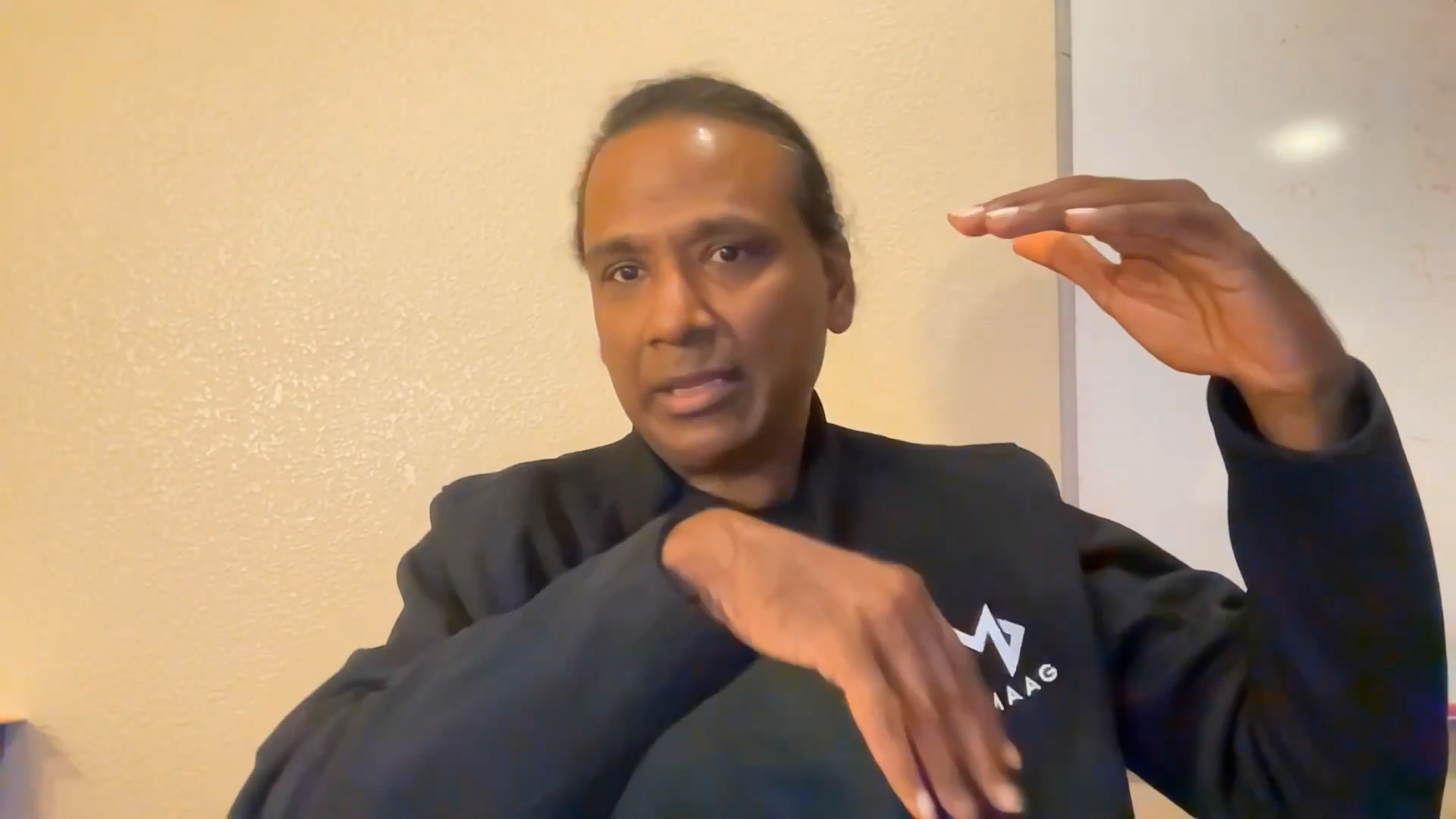
In this episode, Satish Padmanabhan, co-founder and CEO of DIMAAG, unpacks his company’s innovations for the critical power infrastructure shift needed to sustain the AI revolution.
Satish is a genuine serial entrepreneur, with DIMAAG being his seventh venture and also his “longest job” as he jokes. The company’s evolution goes from a smart factory quality control platform that verified 220 million disk actuators monthly to designing electric tractors to heavy-duty electrification.
Satish teamed up with Tesla veteran Ian Wright to start DIMAAG and they have notched up deep intellectual property in the areas including thermal management.
Today, DIMAAG is tapping its expertise to offer solutions such as ZettaWatt, an innovative 800V DC platform, that reduces disruptions as AI data centres connected to power grids become increasingly power hungry, driven by surging AI chip power density.
We also dive into Satish’s views on the physical scalability limits of Large Language Models (LLMs) with current solutions, why hard, unglamorous engineering is making a massive comeback, and his insights into how global investors have begun to take notice of India’s deep tech opportunities.
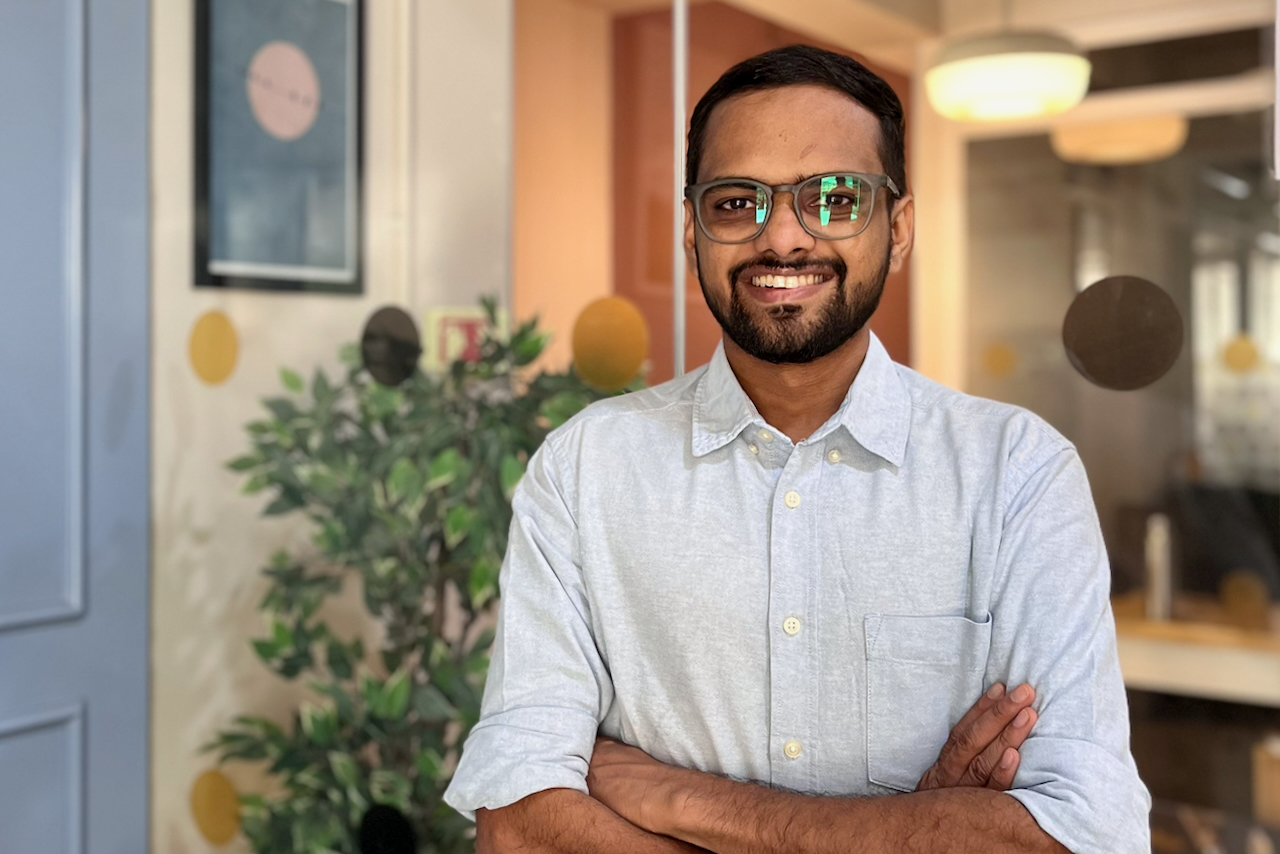
In this episode, I’m joined by Pardeep Garg, co-founder and CEO of CRID India — Centre for Research and Implementation for Decarbonization.
With a background spanning IISc in Bengaluru, MIT in the US, and multiple climate-tech startups, Pardeep is uniquely positioned at the intersection of technical research and real-world execution.
CRID India identifies itself as a think tank and implementation agency, focusing on “hard-to-abate” sectors in industry, and agriculture, where Pardeep points out that even though there exist well-understood technologies that are more energy efficient and therefore emission reducing, their adoption has not taken off, because of the initial costs involved, lack of awareness and so on.
In this episode, he discusses examples, such as heat pumps, which he says could be India’s next big success story, comparable to solar energy, and details his team’s work in building the nation’s first industrial heat map.
More efficient motors of IE 4 or IE 5 (international energy efficiency) rating are another example, as is drip irrigation.
We also discuss CRID India’s aim of becoming a “systems integrator” for energy transition in the country, where solving for climate change requires aligning policy, finance, and stakeholder interests beyond just engineering.
Indian Railways gets its first hydrogen fuel cell powered train
The modernization of Indian Railways has hitherto relied on continual expansion of overhead electrification of its vast broad-gauge network. The state-run network is now charting a more autonomous path toward decarbonization.
Prime Minister Narendra Modi flagged off the country’s first hydrogen fuel cell powered trainset, at Jind from where the train will make a 90 km journey to Sonipat, both towns in the northern Indian state of Haryana.
The fuel cell technology, using a proton-exchange electrolyser, generates electricity through an electrochemical reaction between hydrogen and atmospheric oxygen. The electricity is stored in lithium-ion batteries, which will power the train’s electric engine.
The project seeks to demonstrate that clean rail mobility can be achieved without relying entirely on an external power grid.
This new trainset (locomotives + trailer cars) revives the historical operational independence of steam and diesel locomotives — albeit with water vapour as its only by-product. Built using indigenous technology integrated by Medha Servo Drives and the Integral Coach Factory, the configuration features two driving power cars delivering 1,200 kW of power, pulling eight trailer coaches.
Capable of carrying roughly 2,600 passengers at design speeds of up to 110 kilometres per hour, the initiative marks a significant structural scaling up of a propulsion system that has hitherto been confined to much smaller regional deployments.
The deployment comes as rail operators worldwide face intensifying pressure to eliminate fossil fuels and meet strict national net-zero targets. While early adoption of hydrogen passenger trains has been concentrated in Europe—most notably in Germany — and via pilot programmes in China and Japan, these initiatives have generally been confined to modest two- or three-coach configurations.
India’s venture represents a bolder bet on the scale and commercial viability of high-capacity hydrogen transit, backed by the establishment of the country’s largest dedicated railway hydrogen refuelling facility at Jind to support continuous, regular operations.
“Most hydrogen passenger trains currently operating globally comprise only two or three coaches and are primarily deployed on short regional routes,” the Ministry of Railways noted in a press release yesterday. “In contrast, the Indian Railways trainset has been configured as a 10-coach passenger train with a capacity of around 2,600 passengers, demonstrating the scalability of hydrogen-powered rail transport for high-capacity passenger operations.”
Safety concerns, because of the highly combustible nature of hydrogen gas, and the steep infrastructure costs required to grow and sustain these trains are two important challenges.
To manage the safety risks inherent to handling a highly flammable, odourless gas, the network has implemented a multi-layered “defence in depth” safety system, certified by Germany’s TÜV SÜD. The ecosystem includes continuous leak detection, automatic fuel shut-offs, and specialized ventilation systems.
If the Jind–Sonipat trials prove commercially reliable, the railway ministry plans to expand the rollout to heritage lines such as the Kalka–Shimla route, marking a calculated transition from a novelty pilot to a core pillar of India’s broader National Green Hydrogen Mission.
In this episode, I’m joined by Mredul Sarda, an operator-investor in early-stage deep tech and now a cybersecurity entrepreneur. Mredul’s experience-packed journey began at IIT Bombay, where he earned a BTech in electrical engineering, and an MTech in deep learning. While at the institute, he was also a member of the team that designed and…
Founder Spotlight
A weekly recommendation of a founder conversation. Changes every Friday.
In this episode, I’m joined by Mredul Sarda, an operator-investor in early-stage deep tech and now a cybersecurity entrepreneur.
Mredul’s experience-packed journey began at IIT Bombay, where he earned a BTech in electrical engineering, and an MTech in deep learning. While at the institute, he was also a member of the team that designed and launched Pratham, widely thought of as India’s first student-led satellite.
After a stint in strategy consulting, his tryst with Indian startups started not with deep tech but via a vital role at the fintech company Slice, where he played an important role in scaling the venture to unicorn valuation.
Mredul, who was already an angel investor, co-founded Riceberg Ventures with Ankit Anand, Lino Gandola, and Shubham Raj. The firm launched its flagship $20 million Riceberg Ventures Premier Fund I in early 2025 to back global pre-seed deep tech ventures. Even as they expand Riceberg into Silicon Valley, Mredul and Shubham have also kicked off their own entrepreneurial venture in the area of AI-led cybersecurity, with their startup Causal Security.
Causal Security offers an AI-based platform building autonomous “AI hackers” to surface and defend vulnerabilities in enterprise infrastructure. Join us as to get a glimpse into Mredul’s vision for India’s sovereign technical capabilities and his own evolution from operator to investor to investor-entrepreneur.
Hi, wherever you are, I hope you’re doing well. Thank you for supporting my work by being a subscriber. It means a lot. Here’s today’s Deep Tech Dispatch. Happy reading and listening.
The Lede
If you’re interested in India’s semiconductor products ecosystem, here’s some news for you today. It’s one milestone for one young company, but one more significant step in India’s efforts to move from being almost entirely reliant on imports in a trillion-dollar industry to building our own supply chain.
For decades, India’s semiconductor industry resembled an architect designing villas for others while living in a rented flat. The country’s semiconductor engineers, who constitute approximately 20 percent (a widely accepted industry estimate) of the global chip-design workforce, have long generated intellectual property for foreign titans while India remained dependent on imports for its own consumption.…
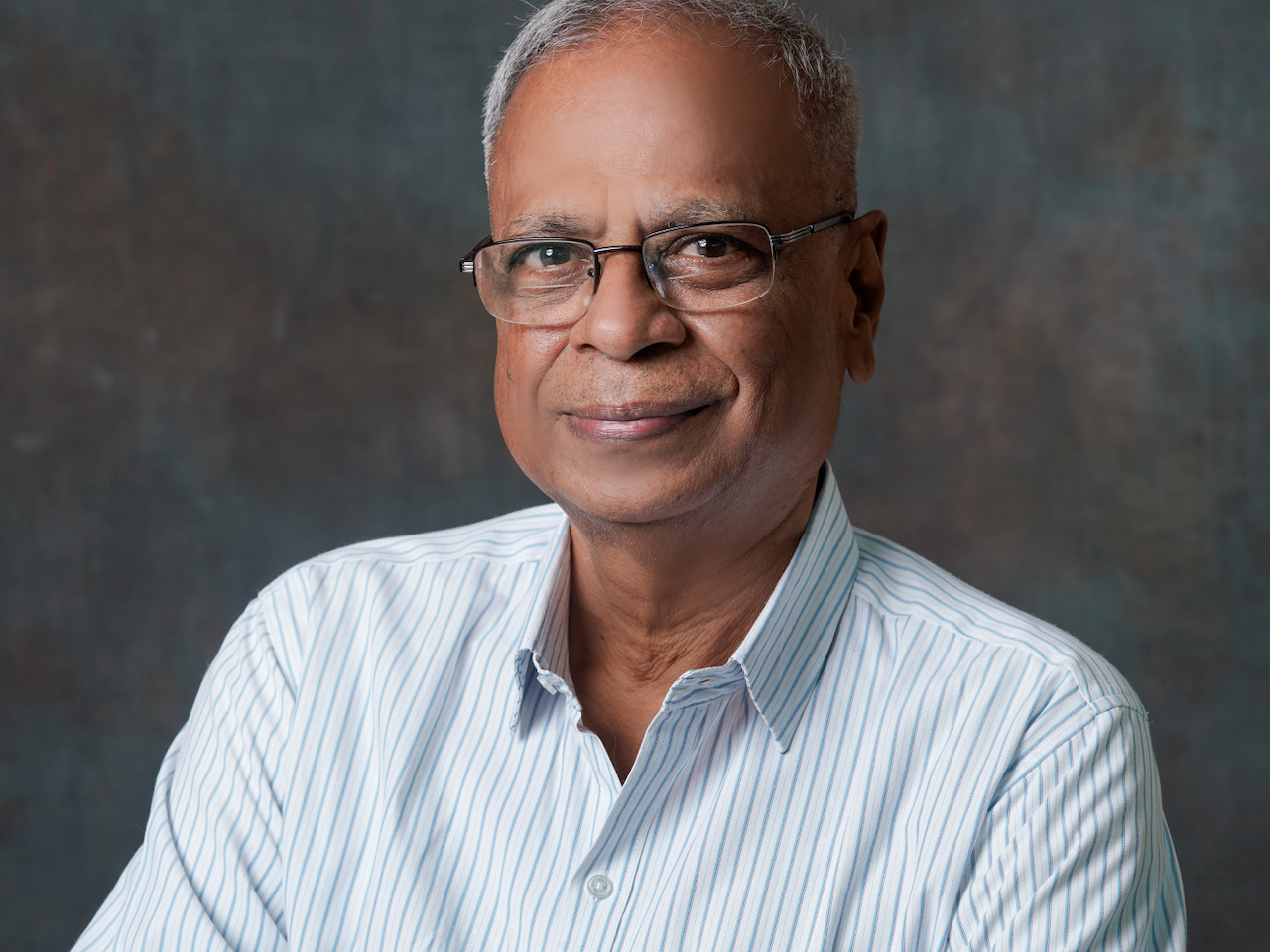
In this episode, I’m joined by Professor Ashok Jhunjhunwala, a doyen among India’s champions of technology-led innovation for the masses, to discuss his latest moonshot venture: the ITEL Foundation (Immersive Technology and Entrepreneurship Lab). After decades of bridging academia and industry at the IIT Madras Research Park, over the last two years, Professor Jhunjhunwala has…
That’s it for today. When you have a minute, please would you share this with friends who might be interested in India’s deep tech startups. Here’s wishing you a great rest of the day.
For decades, India’s semiconductor industry resembled an architect designing villas for others while living in a rented flat. The country’s semiconductor engineers, who constitute approximately 20 percent (a widely accepted industry estimate) of the global chip-design workforce, have long generated intellectual property for foreign titans while India remained dependent on imports for its own consumption.
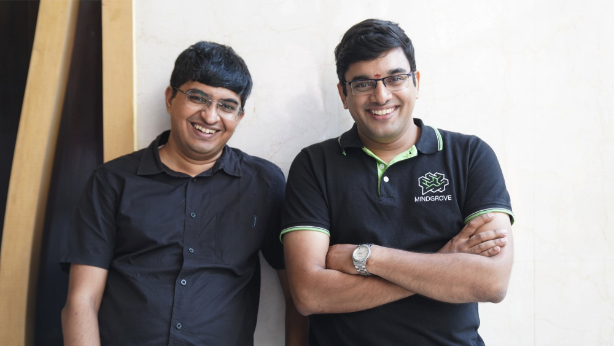
A new generation of chip design startups is now on the rise and their commercial trajectories, like that of Mindgrove Technologies, suggest the tenants are finally building their own estate. Sticking with Mindgrove for this piece, by securing high-volume integrations with local manufacturers, the IIT Madras-incubated venture is fast moving from lab to market.
Mindgrove has just announced a memorandum of understanding with Prama India, a leading domestic surveillance company, marking a transition from laboratory validation to real-world volume. Prama will integrate Mindgrove’s Vision SoC — a GHz-class processor funded under the government’s Design Linked Incentive (DLI) scheme — across its commercial security product line, according to a press release.
This represents an instance of an Indian fabless startup successfully navigating the “valley of death” between a prototype and a mass-market production line, targeting a segment where reliability and security are paramount. Fingers crossed that there will be more and in greater frequency.
Note for example, HrdWyr, backed by Ideaspring Capital, will soon ship a processor that domestic consumer electronics company boAt has already signed on to buy as an anchor customer.
India’s semiconductor startups are attempting to carve out a space for themselves in a global market that is projected to exceed $1.3 trillion this year, even as the industry fragments along geopolitical fault lines. Note the latest memory chip shortage and its repercussions.
As a “Silicon Curtain” of export controls and supply-chain de-risking descends between Western powers and Chinese manufacturing hubs, major economies are racing to secure “trusted” digital infrastructure. India is positioning itself as a resilient third pole in this realignment, tapping the open-source RISC-V architecture to build sovereign hardware that is immune to unilateral licensing restrictions.
“For Indian fabless semiconductor companies, credibility is built when products leave the lab and enter sustained deployment. This engagement validates our Vision SoC as a production-ready platform capable of meeting performance, reliability, and scale requirements in real-world security systems,” Shashwath TR, Mindgrove’s co-founder and CEO said in the press release.
Mindgrove’s deal with Prama follows its commercial partnership with Pinetics, which focuses on integrating Mindgrove’s SoCs into a broader range of commercial applications, including biometric access control systems, smart locks, and camera solutions. By extending the now production-ready Secure IoT chip into specific modules and products, the collaboration aims to create a more complete, domestic electronics stack.
In 2025 Mindgrove also teamed up with Bosch Global Software Technologies (BGSW) in an agreement that saw the startup supplying chips and boards for field testing in automotive and industrial environments, winning a stamp of approval from a global heavyweight. This collaboration allowed Mindgrove to refine its software stack and prove its silicon’s reliability under the stringent safety standards of industrial automation.
“Our collaboration with Mindgrove marks an important milestone in advancing indigenous semiconductor capabilities for next generation video security solutions,” Ashish P Dhakan, Managing Director and CEO, Prama India, said in the press release. “By combining Mindgrove’s semiconductor design expertise with Prama’s extensive experience in video security, product engineering, compliance, and large-scale deployments, we aim to develop world-class solutions that are secure, scalable, and globally competitive.”
Beyond technology development, this collaboration will help build strategic capabilities within India’s semiconductor ecosystem, foster innovation, strengthen supply-chain resilience, and support the Government of India’s Atmanirbhar Bharat vision in critical technology sectors, Dhakan notes.
This all could mean accelerated commercialisation for Mindgrove’s chips — it has two platforms currently, one for Secure IoT, and the other, the Vision SoC — and encouragement for the chip design company to lean into its product development plans. For India, this is another small, but important step forward in building a local semiconductor product ecosystem.