In this episode, I bring you a conversation with Anoop Srikantaswamy, founder and CEO of Moonrider, an electric tractor startup in Bengaluru. Anoop and his fellow founder Ravi Kulkarni bring deep background in the industry, having previously worked at automotive giants such as Toyota and Volvo Group.
Mechanical engineers by training, the two are entrepreneurs at heart, with Anoop having previously attempted a hyper-local medicine delivery venture while Ravi co-founded another electric mobility venture that he exited.
Anoop recalled that the idea for Moonrider was sparked by a conversation with a progressive farmer, who noted that while diesel is expensive, farm electricity is often free. Today, Moonrider is a vertically integrated leader, developing proprietary battery technology and power electronics in-house to achieve price parity with diesel.
In this conversation, we explore their moonshot journey — named in honour of the Chandrayaan launch — and discuss the future of connected and autonomous farming. Join us for an inside look at how Moonrider aims to drive the global shift toward sustainable, electric mechanization.
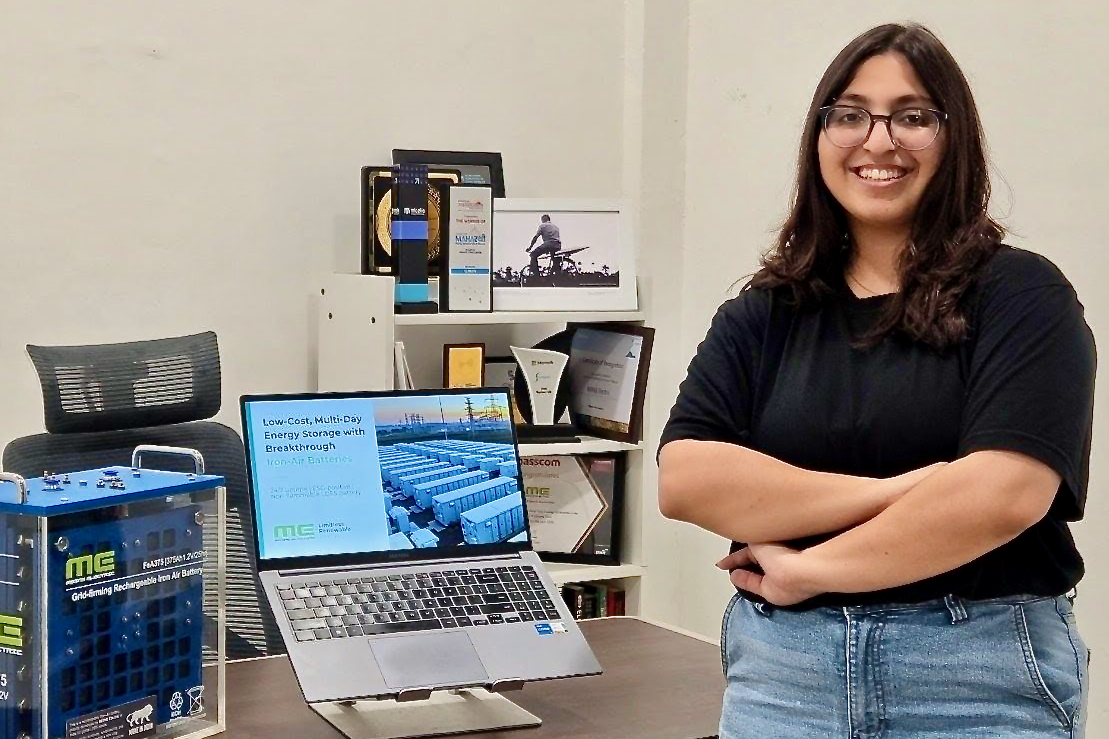
In this episode, Stuti Kakkar, co-founder of MEINE Electric, a battery energy storage tech startup, unpacks the government’s proposed Approved List of Battery Manufacturers (ALBM) that is reportedly in the works as part of its ambitious $38 billion push to deploy 47 gigawatts of battery storage.
Similar to the solar industry’s ALMM framework, this list aims to mandate localised supply chains for government projects, reducing a heavy reliance on imports, particularly from China, which currently controls over 90 percent of the supply chain. Stuti explains why this move is a game-changer for hardware startups.
While traditional lithium-ion batteries face domestic mineral shortages, alternative chemistries like Iron-Air can be up to 95 percent indigenous from day zero, she says.
Stuti also touches upon how these policy shifts provide the demand visibility for hardware-centric startups, which is needed to scale India’s deep-tech ecosystem.
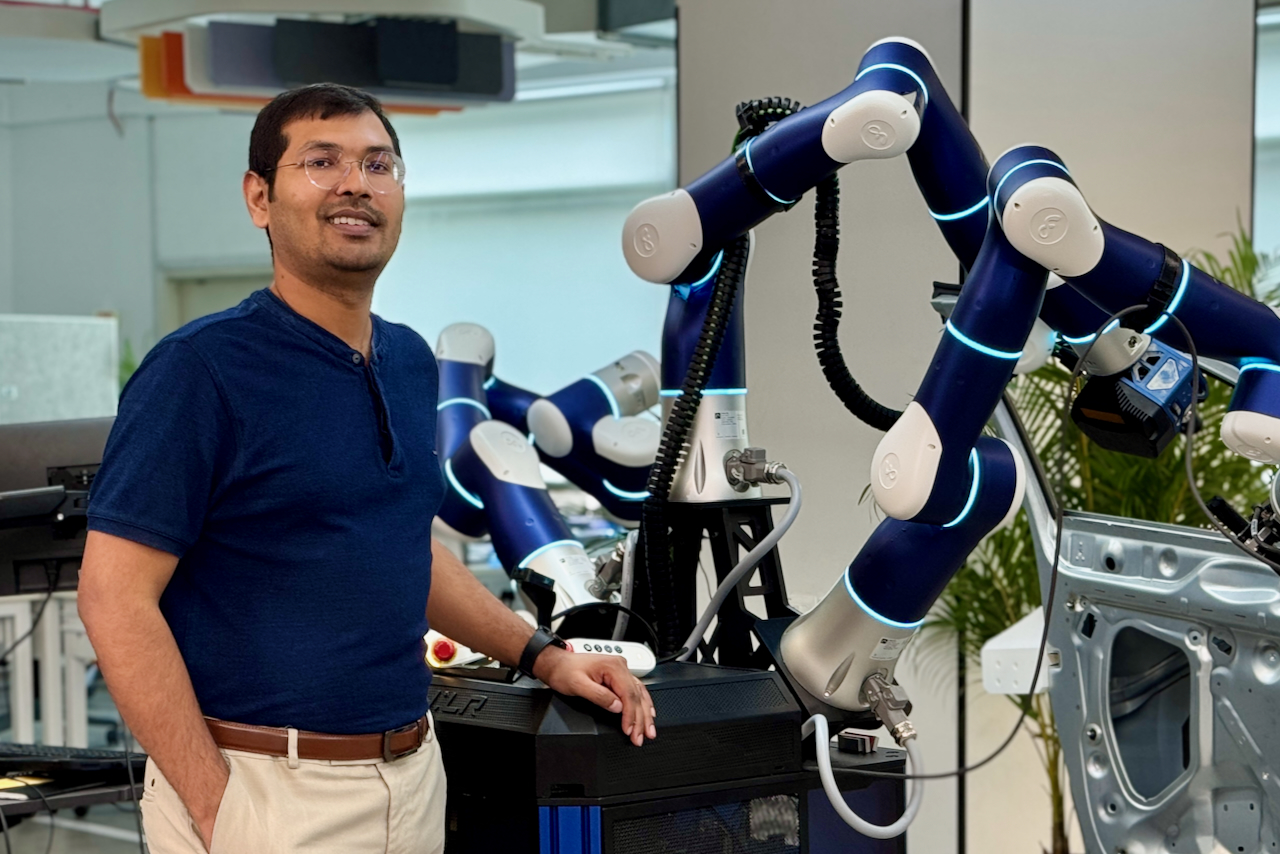
In this episode, I catch up with Saurabh Chandra, founder and CEO at Ati Motors, to discuss his views on how factory automation is evolving in the era of physical AI, as robots finally begin to “break out of the yellow cages” of safety zones.
Ati Motors makes autonomous mobile robots for materials movement in factories, and its customers include several Fortune 500 companies. As Ati expands its footprint into the US market, Saurabh outlines a future where Physical AI and software agents work in tandem to redefine the “Digital Assembly Line.”
The idea of a “lights out” factory or a “dark factory” is decades old. Engineers dreamed of fully automated installations where robots and machines took over — without human intervention — and made useful things for us. Cars, for example.
But a combination of both technical challenges and real-world non-engineering problems ensured that such factories remained more science fiction and less reality. Until recently. Today, many experts in the industry and advanced manufacturing believe that we’re approaching a tipping point with respect to automation and robotics technologies.
In this conversation, Saurabh outlines the idea of an AI-led materials movement orchestration platform that Ati has already deployed with some early customers. The idea is that factory executives are beginning to realize that the real value on the shop floor isn’t the robot itself, but the material it moves.
Saurabh explains why traditional ERP systems often fail to track Work-in-Progress (WIP) inventory, leaving a visibility problem as SKU complexity has multiplied manifold over the last 15 years. By creating a “spatial system of record” that tracks every trolley, bin, and staging area in real-time, Ati Motors is helping global giants move from intuitive management to quantified, data-driven orchestration.
Global manufacturing is currently caught in a pincer movement of structural labour shortages across advanced economies and a geopolitical push to reshore production closer to end consumers. As the “factory of the world” model decentralises away from China, the future of Western industrial hubs depends on their ability to integrate “physical AI” that can handle the hyper-personalised, high-SKU demands of modern commerce.
This manufacturing arms race, increasingly prioritized by the boards of Fortune 500 companies, is turning autonomous orchestration from an experimental project into the essential infrastructure of 21st-century industrial sovereignty.
“A lot of people in large companies, for whom status quo was their friend, find that situation is now absolutely in the past,” Saurabh notes during the interview. And at Ati, “we have really transformed into an organization where the robots are the means to the end, which is finally making sure that the factory runs in the way it’s supposed to. The goal is to create a system of record for the shop floor — integrating physical agents, software agents, and humans into a single, intelligent orchestration layer.”
The platform, Ati Flow, also considers how physical AI or robots, software AI agents and humans will all interact making factories of the future more efficient and sustainable. And Saurabh gives us a sense of how the journey to the dark factory will likely involve three phases and how he thinks Ati can catalyse and facilitate that transformation.
In this episode, we explore the rapidly evolving world of physical intelligence with Arjun Dutt, a Partner at Bain & Company and former entrepreneur. As generative AI transitions from digital interfaces into the physical world, Arjun explains why humanoid robots are emerging as a solution to the worsening labour shortages, especially in the so-called ‘brownfield’ plants in many advanced economies.
We dive into Bain’s four-point definition of humanoids — adaptive intelligence, spatial perception, bipedal dexterity, and sustained power — and talk about how the current battery technologies remain the “long pole in the tent” for true autonomy.
Arjun outlines the three waves of adoption that are discussed in a recent note that he co-authored, predicting that while industrial brownfield settings will see scale within three to five years, consumer-centric home robots are at least a decade away.
You will also find interesting insights on the following topics: The role of generative AI as a “foundational capability,” allowing robots to learn via observation and training data rather than rigid, scenario-based programming; the evolution of specific task-oriented robots versus truly general-purpose humanoids; and where might the eventual “control points” lie, as Arjun put it, of humanoid robots – meaning, who’ll control the most critical technologies in these robots?
Lastly, we touched upon his advice for India’s deep tech entrepreneurs, discussing the merits of “going narrow” and how to navigate the reliability and regulatory hurdles of the US market.
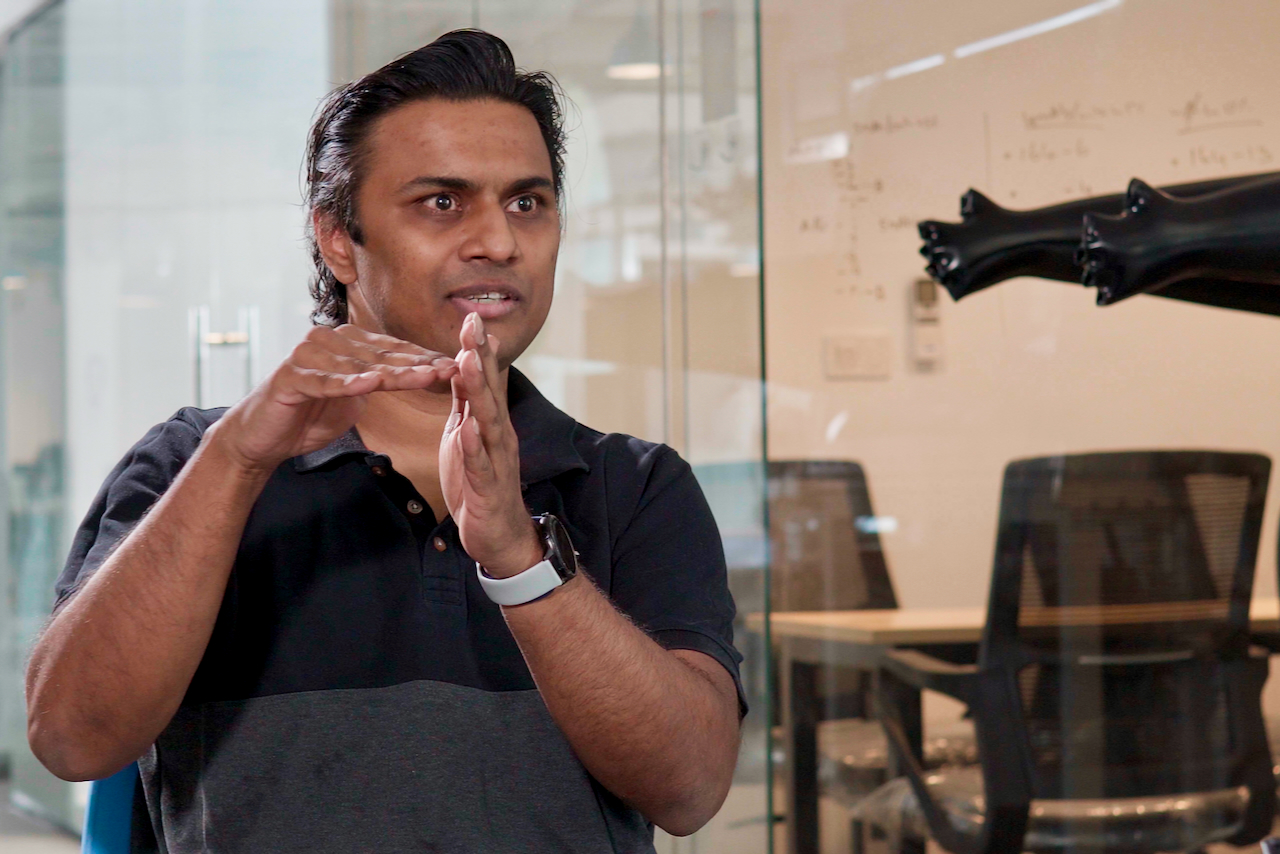
In today’s episode, we dive into the future of robotics with Gokul NA, founder of CynLr, or Cybernetics Laboratory, perhaps one of India’s most advanced companies in this field.
CynLr is headquartered in Bengaluru, with an advanced R&D Lab in Switzerland and a growing customer-facing operation in the US, where Gokul’s fellow founder Nikhil Ramaswamy is based.
The entrepreneur duo and its 85-member team are tackling a challenge that scientists and engineers have been working on for several decades: the ability for robots to intuitively handle unfamiliar objects without custom programming or prior training.
In this conversation, Gokul explains their new “Object Intelligence Stack,” a system designed to imitate some of the functions related how a human brain might learn — much like a baby impulsively grasping a new toy without knowing its name or purpose.
By collaborating with the Centre for Neuroscience at the Indian Institute of Science, CynLr is translating brain-function research into a sophisticated software and sensor framework. Shifting the focus from algorithms that work on data to the “physics of objects,” CynLr’s intelligence stack is what Gokul describes as the precursor to a “manipulation OS.”
Drawing parallels to Apple in the 1980s, Gokul shares his vision for a future of “object computers” and micro-factories – important components of CynLr’s vision for global manufacturing, where instead of Giga-factories, we might have fabrication facilities as small as a car dealership or even a garage.
Chapters
(00:00) Challenges of building a deep tech organization in an absent industry
(05:58) Imitating the human brain’s ability to handle unfamiliar objects
(09:18) Partnering with neuroscience researchers to replicate human intuition
(11:32) Developing a manipulation operating system and the future object store
(19:47) Automating assembly for automotive and semiconductor manufacturing
(25:17) Transitioning from rigid gigafactories to software-defined micro-factories
(35:49) Fostering a deep tech ecosystem to address the brain drain
(40:18) Strategic funding goals and the technical roadmap for scaling
Gokul and Nikhil are backed by investors including Speciale Invest, growX ventures, Pavestone VC, Athera Venture Partners (formerly Inventus India), Anicut Capital, Arali Ventures, Redstart Labs, and several other institutional and angel investors.
CynLr’s long-term vision also involves creating a manipulation operating system and an “object store” and a “task store” to transform flexible manufacturing, just as the App Store transformed the smartphone.
Currently, they are deploying these solutions in the automotive and semiconductor industries to automate some complex manual assembly processes.
In this conversation, Gokul also talks about some of the challenges of building a company like CynLr in India, where many important ingredients are missing, and what he thinks the industry can do to change that.
There are challenges beyond importing sophisticated components that India’s deep tech startups can’t yet source locally. Some of these challenges are equally or more fundamental. I had a chance to get some insights on this from Apoorv Shaligram, founder and CEO at e-TRNL Energy, recently. Apoorv, his fellow founder Uttam Sen, and their team are innovating new cell architectures to make cells, batteries and their applications safer, more reliable and better alternatives to fossil fuel. They are backed by well-known investors including Speciale Invest, Micelio, Navam Capital, Indian Angel Network, and Anicut. Check out the related video for the full conversation with Apoorv. Here’s a one-minute view on how the real science and engineering knowhow underlying the products that many Indian deep tech startups are developing has to be acquired ground up.