Tag: AMRs

  • Saurabh Chandra on ‘future factory’ vision in era of physical AI

    Saurabh Chandra on ‘future factory’ vision in era of physical AI

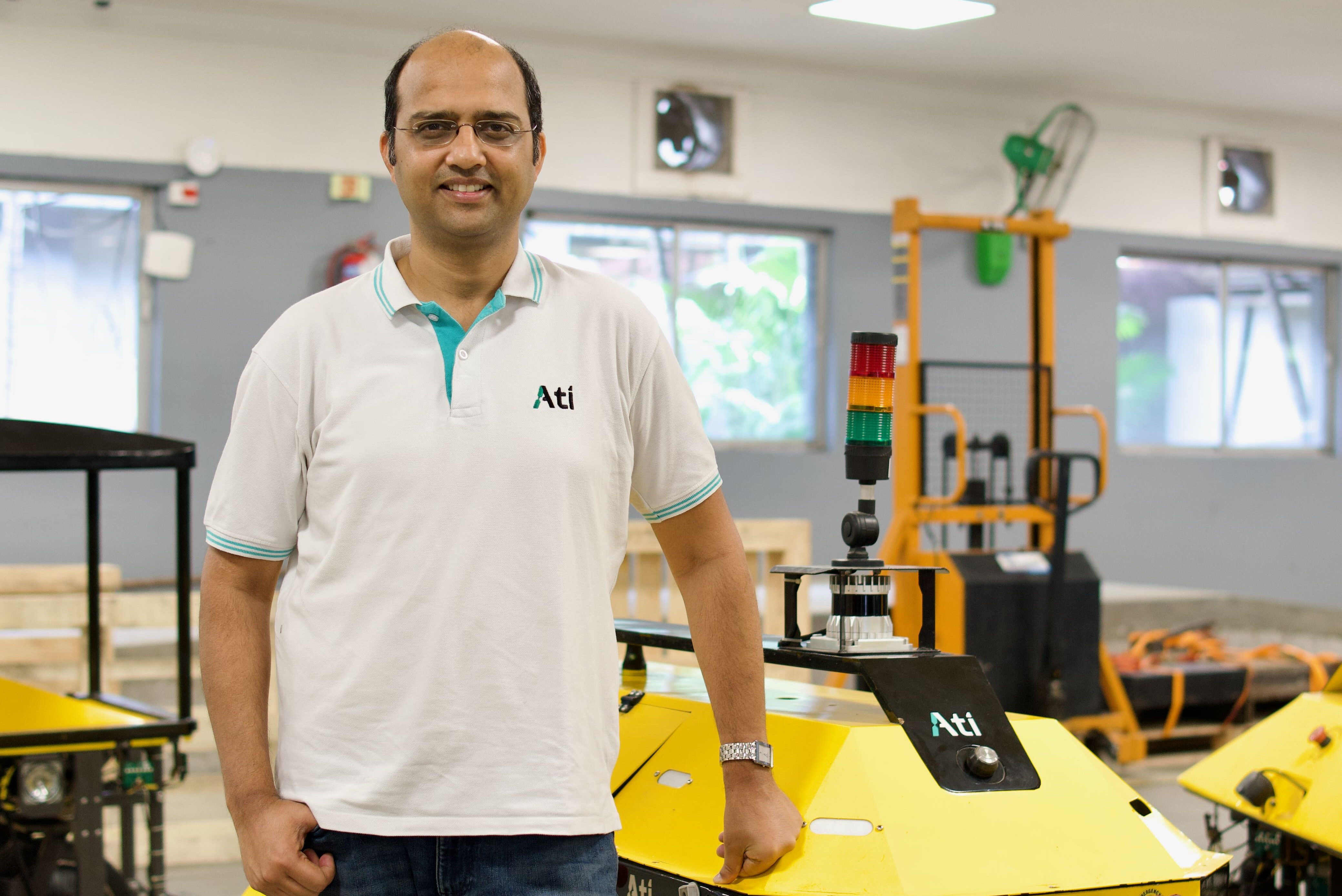
    In this episode, I catch up with Saurabh Chandra, founder and CEO at Ati Motors, to discuss his views on how factory automation is evolving in the era of physical AI, as robots finally begin to “break out of the yellow cages” of safety zones.

    Ati Motors makes autonomous mobile robots for materials movement in factories, and its customers include several Fortune 500 companies. As Ati expands its footprint into the US market, Saurabh outlines a future where Physical AI and software agents work in tandem to redefine the “Digital Assembly Line.”

    The idea of a “lights out” factory or a “dark factory” is decades old. Engineers dreamed of fully automated installations where robots and machines took over — without human intervention — and made useful things for us. Cars, for example.

    But a combination of both technical challenges and real-world non-engineering problems ensured that such factories remained more science fiction and less reality. Until recently. Today, many experts in the industry and advanced manufacturing believe that we’re approaching a tipping point with respect to automation and robotics technologies.

    In this conversation, Saurabh outlines the idea of an AI-led materials movement orchestration platform that Ati has already deployed with some early customers. The idea is that factory executives are beginning to realize that the real value on the shop floor isn’t the robot itself, but the material it moves.

    Saurabh explains why traditional ERP systems often fail to track Work-in-Progress (WIP) inventory, leaving a visibility problem as SKU complexity has multiplied manifold over the last 15 years. By creating a “spatial system of record” that tracks every trolley, bin, and staging area in real-time, Ati Motors is helping global giants move from intuitive management to quantified, data-driven orchestration.

    Global manufacturing is currently caught in a pincer movement of structural labour shortages across advanced economies and a geopolitical push to reshore production closer to end consumers. As the “factory of the world” model decentralises away from China, the future of Western industrial hubs depends on their ability to integrate “physical AI” that can handle the hyper-personalised, high-SKU demands of modern commerce.

    This manufacturing arms race, increasingly prioritized by the boards of Fortune 500 companies, is turning autonomous orchestration from an experimental project into the essential infrastructure of 21st-century industrial sovereignty.

    “A lot of people in large companies, for whom status quo was their friend, find that situation is now absolutely in the past,” Saurabh notes during the interview. And at Ati, “we have really transformed into an organization where the robots are the means to the end, which is finally making sure that the factory runs in the way it’s supposed to. The goal is to create a system of record for the shop floor — integrating physical agents, software agents, and humans into a single, intelligent orchestration layer.”

    The platform, Ati Flow, also considers how physical AI or robots, software AI agents and humans will all interact making factories of the future more efficient and sustainable. And Saurabh gives us a sense of how the journey to the dark factory will likely involve three phases and how he thinks Ati can catalyse and facilitate that transformation.

  • Gokul NA at CynLr on a ‘manipulation OS’ for robots

    Gokul NA at CynLr on a ‘manipulation OS’ for robots

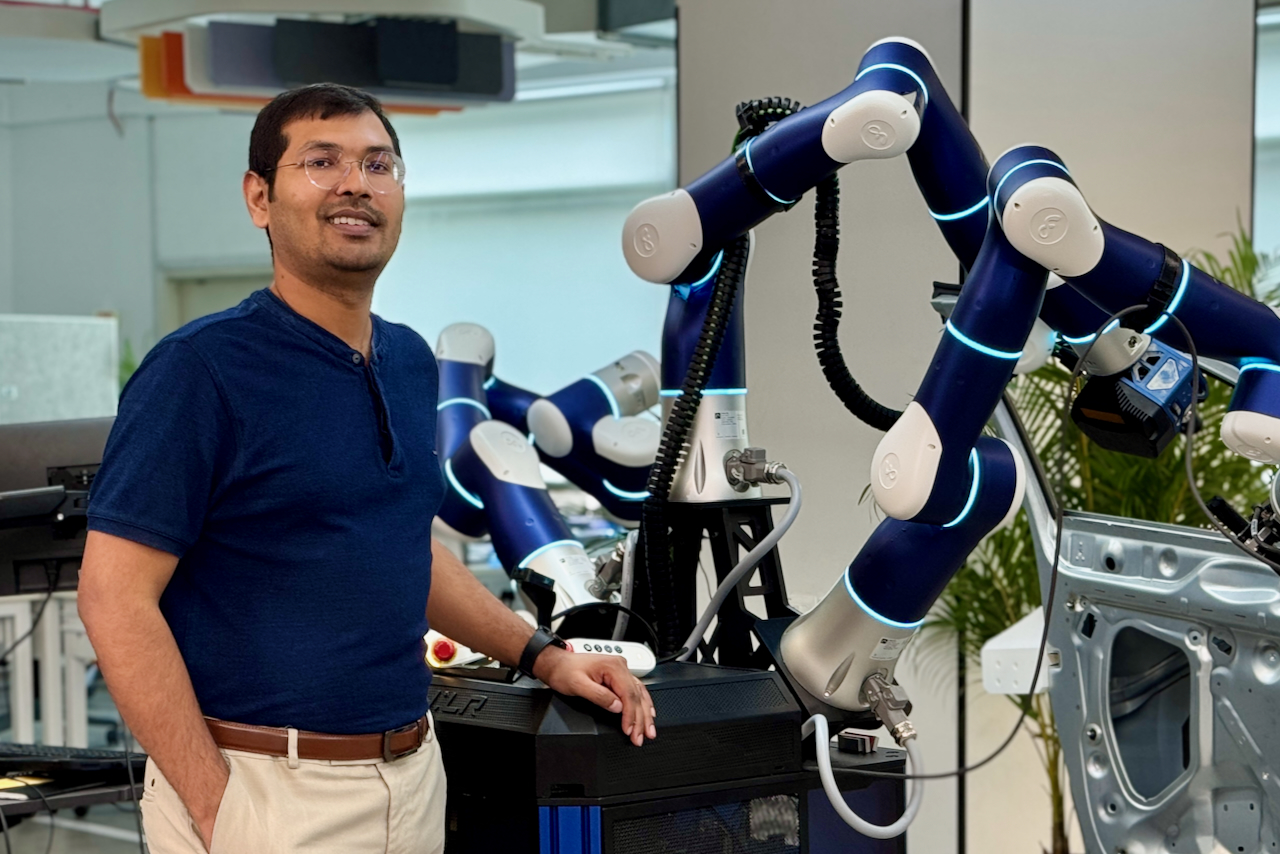
    Coming up, a conversation with Gokul NA, founder and head of product, design & brand at CynLr (Cybernetics Laboratories), a robotics startup in Bengaluru.

    Gokul, his fellow founder Nikhil Ramaswamy, and their team at CynLr, have recently released what he described as an Object Intelligence Stack. The technology aims to mimic the curiosity and adaptability of a human infant, allowing robots to manipulate unfamiliar items without specific prior training.

    By collaborating with the Centre for Neuroscience at the Indian Institute of Science, CynLr is translating brain-function research into a sophisticated software and sensor framework. Their long-term vision involves creating a manipulation operating system and an “object store” and a “task store” to transform flexible manufacturing, just as the App Store transformed the smartphone.

    Currently, they are deploying these solutions in the automotive and semiconductor industries to automate some complex manual assembly processes. You can catch the full conversation on Friday, March 6 right here or wherever you get your podcasts.

    Here’s a one-minute preview with Gokul envisioning a future “manipulation OS” for robots of which the object intelligence stack is the precursor.

  • Perceptyne’s founders on why 2026 could be the year of deployment of robots

    Perceptyne’s founders on why 2026 could be the year of deployment of robots

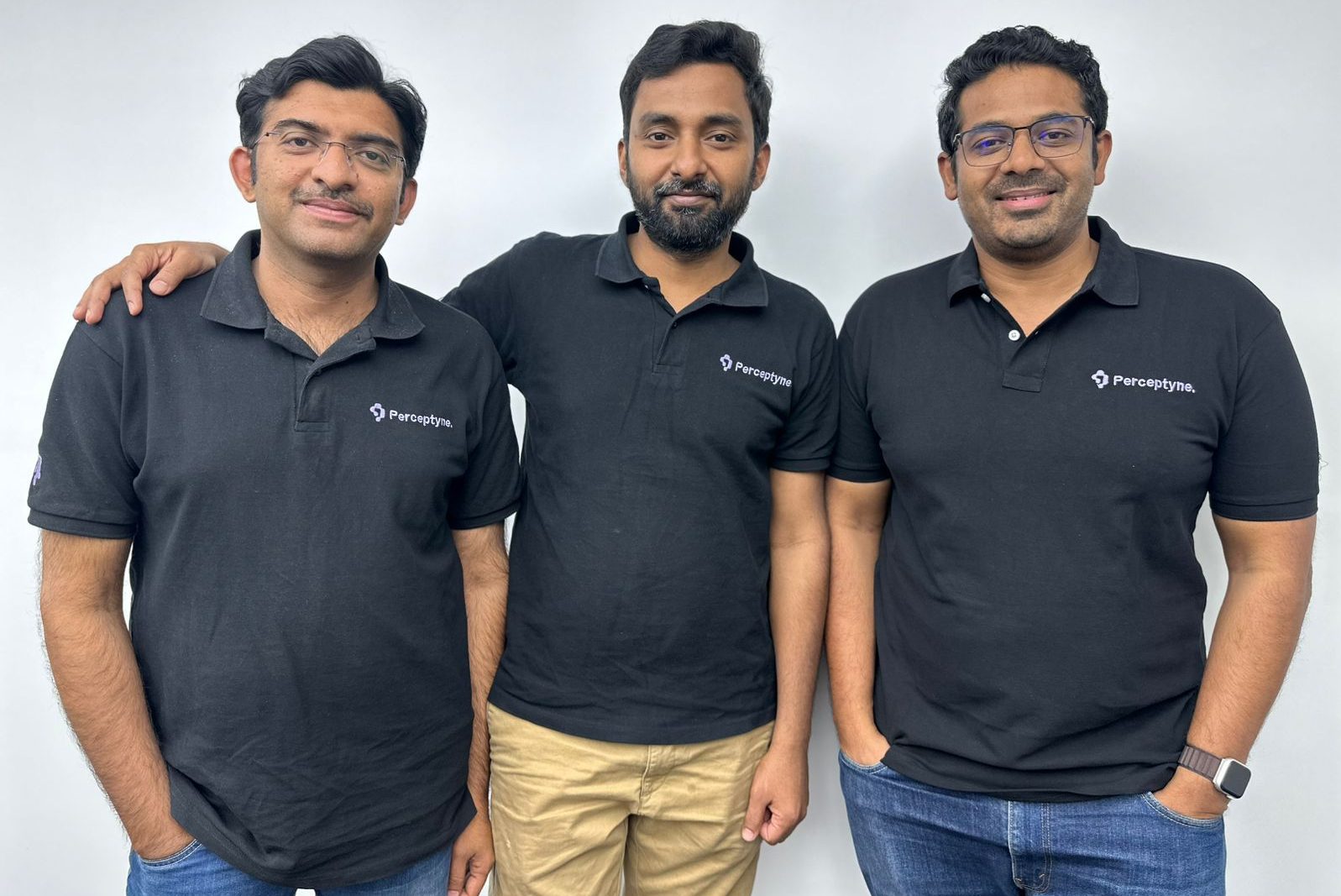
    In this year’s first episode, I’m joined by Mrutyunjaya NRaviteja Chivukala and Jagga Raju N to unpack why and how they started Perceptyne Robots, and what it takes to build an AI-native robotic system out of India.

    Perceptyne is a Hyderabad-based company building dexterous, dual-arm, intelligent robots for industrial automation, currently focused on automotive and electronics manufacturing lines.

    The founders explain the gap they saw on real shop floors, where many assembly stations still rely on manual work because traditional approaches cannot handle unstructured inputs, fine force control, or frequent product changes.

    The conversation goes into their vertically integrated hardware, including mobile configurations, and their PR-PhI “physical intelligence” software layer that orchestrates perception, control, and imitation-learning–based skills like visual servo, slip-free grasping, and force-based assembly.

    You will also hear their take on the state of India’s robotics ecosystem, the evolution of robots as a combined hardware-and-software challenge, and how they are moving from pilots with global automotive and electronics manufacturers toward larger deployments. Perceptyne, which turns four this year, is backed by two well-known deep-tech VC firms,  Yali Capital and Endiya Partners.

  • Autonomous mobile robots: Five takeaways from a conversation with Saurabh Chandra at Ati Motors

    Autonomous mobile robots: Five takeaways from a conversation with Saurabh Chandra at Ati Motors

    In this episode, Saurabh Chandra, co-founder and CEO of Ati Motors in Bengaluru, talks about how autonomous mobile robots (AMRs) are set to completely change factories, warehouses and an increasing number of other environments.

    Backed by investors including MFV Partners, Exfinity Ventures, NGP Capital and Blume Ventures, Ati is shipping its AMRs to some of the biggest manufacturing names in India, Southeast Asia and the US.

    Chandra talks about Ati’s own family of robots, named Sherpa, some early engineering decisions that have stood the company in good stead, and how Ati can go from shipping hundreds of robots to thousands, and more. We also briefly touched upon lessons from building a deep tech robotics company out of India.

    Here are my five top takeaways from the conversation.

    Early engineering decision to avoid teleoperation from the start 

    Ati Motors made a deliberate early engineering choice to design its robots for full autonomy without any dependency on a teleoperator — a person remotely controlling or assisting the robot during exceptions or tough situations. While it was initially tempting to include teleoperation as a safety net for handling edge cases, the engineering team argued that this would become a crutch, making it harder to ever achieve true, robust autonomy.

    This decision led to a longer initial development phase, as the team had to ensure the robots could handle all real-world scenarios independently. However, this approach ultimately paid off by forcing the team to build a more reliable and resilient system, setting Ati Motors apart.

    “Don’t take even a screw for granted. This is really one of the places where for want of a nail, the kingdom can be lost.”

    Saurabh Chandra, Co-Fouder and CEO, Ati Motors

    Ati’s full-stack approach: comprehensive in-house development and integration

    Ati’s full-stack approach means the company develops every critical aspect of its AMRs in-house — from navigation and localization algorithms to vehicle design, perception modules, and fleet management software, although some individual specialized components such as sensors aren’t made in India and have to be imported.

    By owning the tech stack, Ati ensures its robots are purpose-built for challenging factory conditions, can be quickly adapted to new customer needs, and deliver robust, reliable performance with little dependence on external infrastructure or third-party systems.

    Lessons from building Ati out of Bengaluru and India

    A key lesson from building Ati Motors out of Bangalore and India is the tremendous advantage of tapping the city’s multidisciplinary talent pool and its robust, under-appreciated manufacturing ecosystem – well before the city came to be known for its IT services prowess.

    Chandra highlights that Bengaluru offers access to both technical expertise and a strong base of manufacturing customers, enabling rapid product iteration and real-world feedback that even locations like California cannot match.

    The rich local supply chains from India’s electric vehicle (EV) industry provide unique cost and innovation benefits, as Ati can co-develop and customize key components with local partners — an advantage rare outside of a few global markets.

    Top priority: scale from shipping hundreds of robots to thousands

    One of Ati’s top priorities today is to scale its operations so it can meet the growing demand for its robots and move from shipping hundreds of units to thousands.

    This means accelerating deployment, expanding manufacturing capacity, and streamlining processes to handle much higher volumes efficiently. The company is also focused on improving tooling and support for its partners, enabling them to deploy and manage robots more independently, which is essential for rapid global expansion and for reaching new customers across North America, Southeast Asia, and potentially Europe and Japan.

    By prioritizing scalable operations and robust partner enablement, Ati aims to solidify its leadership in industrial automation and make its robotic solutions accessible to a far broader range of businesses worldwide.

    Chandra’s advice to aspiring deep tech entrepreneurs in India

    Aspiring deep tech entrepreneurs, especially in the hardware space in India, should be prepared for the immense complexity and challenges involved, Chandra says. For example, how does one crack the issue of quality and efficiency at the same time at low production volumes.

    He notes that hardware ventures require a wide range of expertise and that, at early stages, both founders and vendors may lack experience, making it harder to achieve desired outcomes.

    Chandra cautions against underestimating any detail — even the smallest component can be critical to success. He suggests that, while it is important to be ambitious, entrepreneurs should also recognize the value of getting specific parts right.

    “Don’t take even a screw for granted,” he says. “This is really one of the places where for want of a nail, the kingdom can be lost.”

  • Autonomous mobile robots: Saurabh Chandra at Ati Motors on the future of manufacturing

    Autonomous mobile robots: Saurabh Chandra at Ati Motors on the future of manufacturing

    My guest today is Saurabh Chandra, co-founder and CEO of Ati Motors, an autonomous mobile robots (AMRs) venture in Bengaluru. In this conversation, Saurabh talks about how the robots are coming – changing the industrial manufacturing landscape forever.

    He talks about Ati’s own family of robots, named Sherpa, some early engineering decisions that have stood the company in good stead, and how Ati can go from shipping hundreds of robots to thousands, and more. We also briefly touched upon lessons from building a deep tech robotics company out of India.

    Under Chandra’s leadership, Ati Motors has become a pioneer in developing AMRs for material movement in factories and warehouses. Unlike traditional automated guided vehicles (AGVs), Ati’s Sherpa robots are engineered to perform in the most challenging industrial environments — handling gradients, potholes, clutter, and even outdoor conditions.

    This is made possible by a full-stack, first-principles approach and the use of advanced 3D LiDAR-based navigation, which allows Sherpa robots, today best known for their tugging capabilities, to operate without any external markers, reflectors, or teleoperation. All autonomy is processed onboard, ensuring robust performance even in environments with unreliable connectivity.

    Ati’s current portfolio of AMRs include the Sherpa Tug, Sherpa Lifter, Sherpa Pallet Mover, and Sherpa Pivot. The company has some 50 customers in India, Southeast Asia and North America, Chandra says, including names such as Forvia and Hyundai.

    On building AMRs out of India, Chandra credits Bengaluru’s multidisciplinary talent pool and thriving manufacturing ecosystem as important advantages that support innovation. The day isn’t that far away when, in factories and warehouses and other such complexes, “whatever moves is going to be autonomous,” he says.