Daily brief on deep tech and climate tech news from India and around the world

Amazon deploys one million robots, launches AI to boost warehouse efficiency
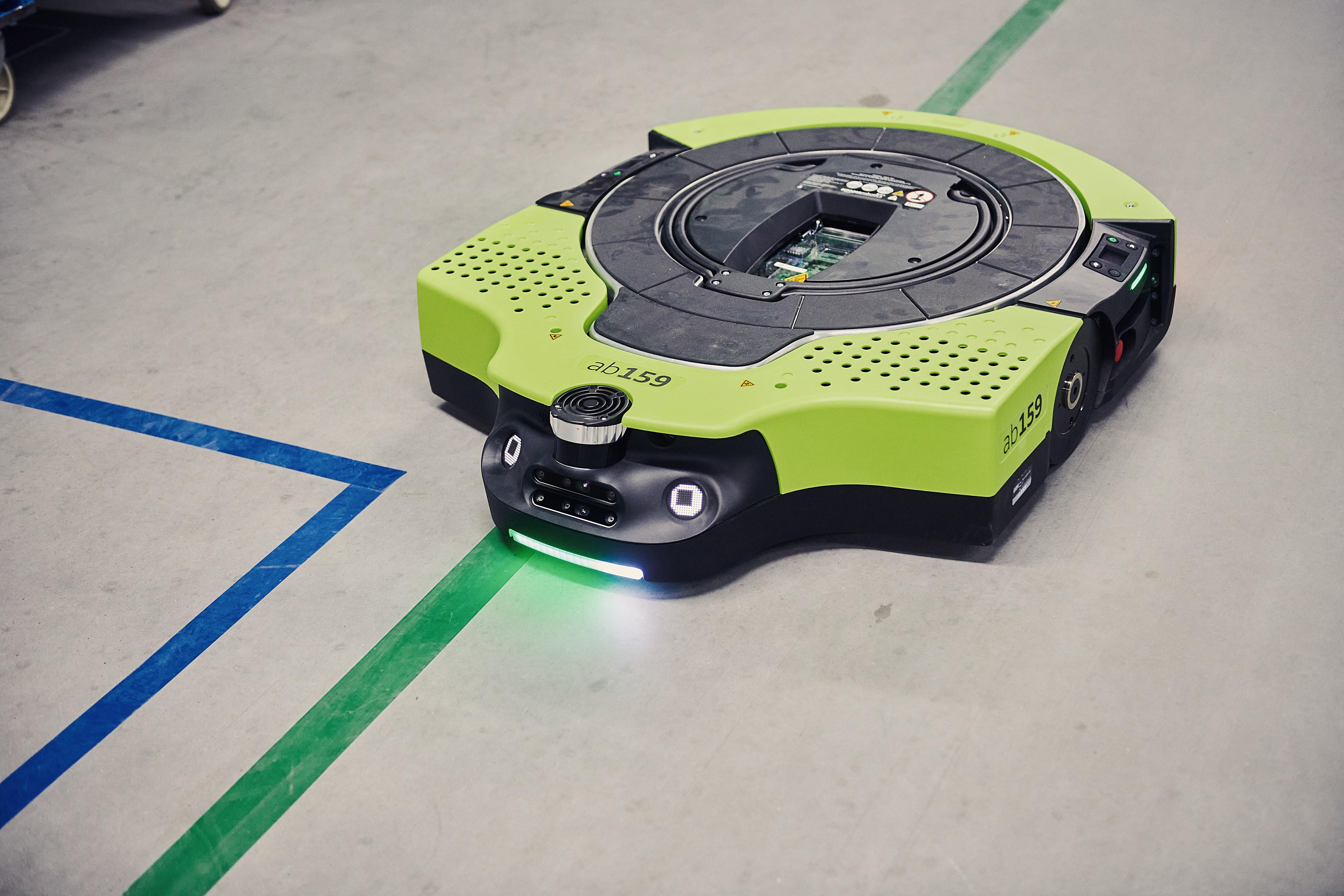
Amazon has surpassed the deployment of one million industrial robots, marking a major automation milestone as its latest system began operations in a Japanese fulfillment center, the Association for Advancing Automation reports.
Amazon also introduced DeepFleet, a generative AI model designed to optimize robot coordination across more than 300 global facilities, improving travel efficiency by 10 percent. More than 700,000 employees have been retrained to work alongside robots, reflecting Amazon’s ongoing integration of advanced robotics and AI into its operations.
Listen to the podcast
Genesis AI emerges from stealth with $105 million to build universal robotics AI platform
Genesis AI, a global physical AI research lab, has launched with $105 million in seed funding co-led by Eclipse Ventures and Khosla Ventures, the Canadian venture said in a press release.
The company aims to develop a universal robotics foundation model and a horizontal platform for general-purpose physical AI, using a proprietary physics simulation engine to generate high-quality synthetic data.
Genesis AI’s approach seeks to automate a broad range of physical tasks, addressing the vast, largely unautomated global labor market.
Catalio Capital closes $400 million fourth fund to back innovative healthcare startups
Catalio Capital Management has closed its fourth venture fund, Catalio Nexus Fund IV, with over $400 million in commitments from global institutional investors, the New York firm said in a press release. The fund will support breakthrough biomedical technology companies, including 16 early investments such as PinkDx and Superluminal Medicines.
Catalio’s strategy focuses on partnering with leading scientists and entrepreneurs to launch and grow life sciences startups, even as the biotech sector faces a challenging funding environment.
Flexible zinc–ion batteries with new hydrogel electrolyte maintain stable voltage even when bent
Researchers at the Hefei Institutes of Physical Science, Chinese Academy of Sciences, have developed a flexible aqueous zinc–ion battery using a novel hydrogel electrolyte made from urea and zinc acetate, Tech Xplore reports.
The battery’s hydrogel can stretch up to 557% and withstand significant compression, maintaining stable voltage even when bent to 180°. This innovation addresses durability and leakage issues, making the battery ideal for portable and wearable devices while remaining cost-effective and eco-friendly.
Indian scientists develop lanthanum-doped silver niobate for next-generation supercapacitors
A team led by Dr. Kavita Pandey at Bengaluru’s Centre for Nano and Soft Matter Sciences, in collaboration with Aligarh Muslim University, has engineered a lanthanum-doped silver niobate material that dramatically boosts supercapacitor performance, according to a press release from India’s Ministry of Science and Technology.
The innovation delivers 118 percent energy retention and 100 percent coulombic efficiency, which is a measure of total charge extracted from an electrochemical device during discharge versus the total charge put in during charging.
The research team demonstrated a prototype successfully powering an LCD display. This breakthrough, published in the Journal of Alloys and Compounds, could advance high-efficiency, eco-friendly energy storage for electronics and renewable systems.
Climeworks raises $162 million to expand direct air capture tech for carbon removal
Climeworks has raised $162 million in equity funding, bringing its total raised to more than $1 billion, according to a press release from the Swiss venture. This is the most for any pure-play carbon removal venture, Tech Funding News notes.
The investment, led by BigPoint Holding and Partners Group, will accelerate Climeworks’ rollout of its Generation 3 direct air capture technology and global expansion. Climeworks aims to capture 1 billion tons of CO₂ by 2050, positioning itself as a leader in permanent, verifiable carbon removal solutions.
“Direct Air Capture has gone from experiment to essential, and we’re focused on scaling it,” Christoph Gebald, co-CEO and co-founder of Climeworks said in the press release. The company has a hybrid business model that combines long-term innovation and present-day commercial applications of its technology to generate revenue, he added.
In Conversation
In-depth conversations with entrepreneurs, investors, industry leaders and other stakeholders building India’s deep tech and climate tech ecosystems.


Insight
Takeaways from conversations with entrepreneurs, investors, industry leaders and other stakeholders building India’s deep tech and climate tech ecosystems.