In this episode, I’m joined by Pardeep Garg, co-founder and CEO of CRID India — Centre for Research and Implementation for Decarbonization.
With a background spanning IISc in Bengaluru, MIT in the US, and multiple climate-tech startups, Pardeep is uniquely positioned at the intersection of technical research and real-world execution.
CRID India identifies itself as a think tank and implementation agency, focusing on “hard-to-abate” sectors in industry, and agriculture, where Pardeep points out that even though there exist well-understood technologies that are more energy efficient and therefore emission reducing, their adoption has not taken off, because of the initial costs involved, lack of awareness and so on.
In this episode, he discusses examples, such as heat pumps, which he says could be India’s next big success story, comparable to solar energy, and details his team’s work in building the nation’s first industrial heat map.
More efficient motors of IE 4 or IE 5 (international energy efficiency) rating are another example, as is drip irrigation.
We also discuss CRID India’s aim of becoming a “systems integrator” for energy transition in the country, where solving for climate change requires aligning policy, finance, and stakeholder interests beyond just engineering.
Hi, wherever you’re reading this, I hope you’re doing well. Thank you for supporting my work by being a subscriber. It means a lot.
A new episode on the podcast: a conversation with the founders of Mitti Labs
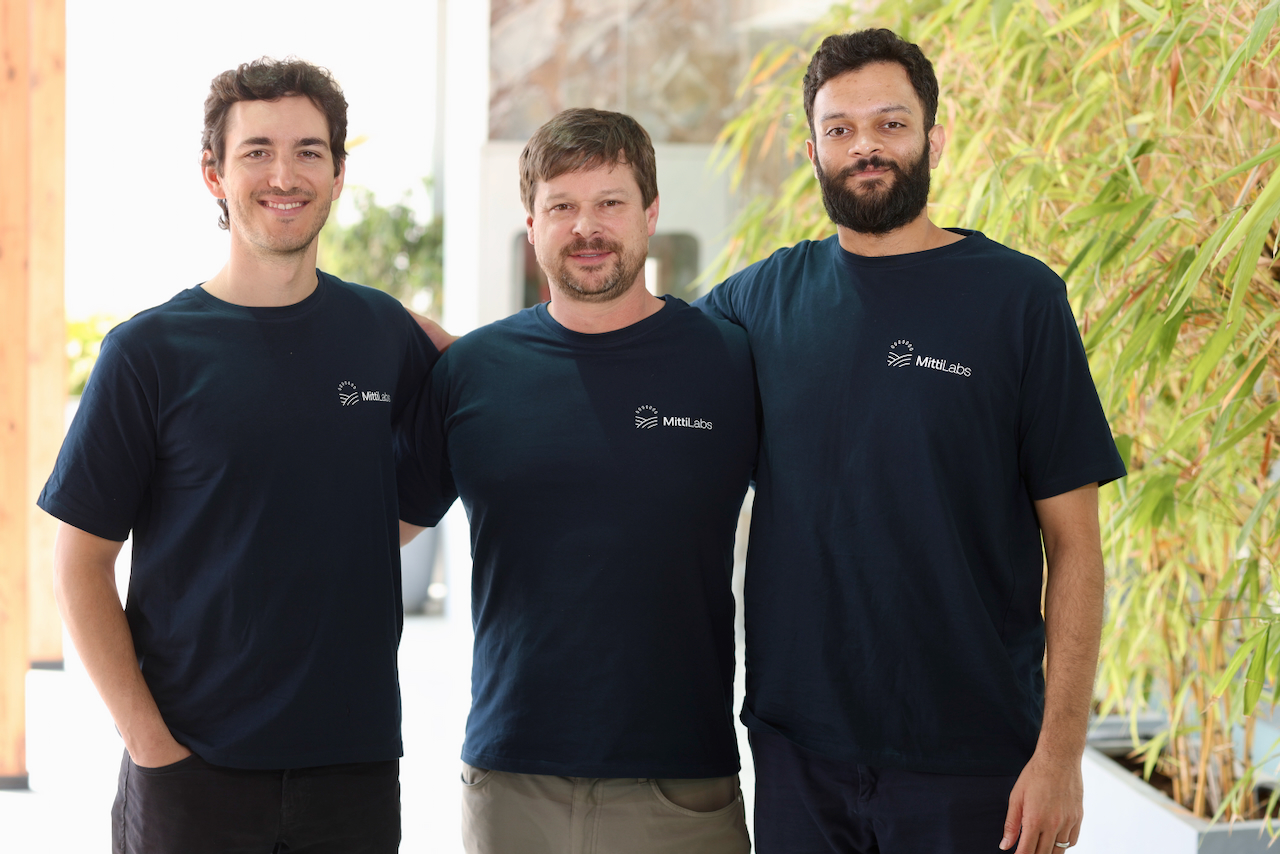
It’s World Environment Day today, and the latest episode on my podcast features a conversation with the founders of Mitti Labs on their carbon project to help rice farmers cut methane emissions from their fields, save water and make money from the sale of the carbon credits generated from the green house gas reduction.
$12.8 billion: Cumulative climate tech funding in India according to a new report
Tracxn, a global private markets data provider, has just released its India Climate Tech Report 2026, saying that the sector is becoming increasingly investible.
On Tuesday, I’ll publish Part 2 of a wonderful conversation with Naganand Doraswamy (managing partner) and Suryaprakash Konanuru (CTO), founders of Ideaspring Capital. We talk about what might represent the ‘Flipkart moment’ of deep tech in India, and plans for the VC firm ahead.
That’s it for today. When you have a minute, please would you share this with friends who might be interested in India’s deep tech and climate tech startups. Here’s wishing you a great rest of the day.
In today’s episode, on the occasion of World Environment Day, I bring you a conversation with Devdut Dalal (Dev), Xavier Laguarta Soler (Xavi) and Nathan Torbick (Nate), founders of Mitti Labs.
Rice is a nutritional staple for nearly half the human population. Its cultivation is also a formidable contributor to global warming, accounting for 10-12 percent of all methane emissions from human activity. And Methane is 80-86 times more potent than CO2 in warming the planet over a 20-year timeframe, and about 28 times over a century.
Growing rice also takes up 40 percent of the world’s freshwater resources. By drowning their fields to suppress weeds, farmers have inadvertently cultivated methanogenic microbes that release this ‘super pollutant.’ At Mitti Labs, Harvard Business School alumni Dev and Xavi have teamed up with Nate, a distinguished scientist who’s worked NASA and JaXA, to build a “full-stack” remedy.
They started work in India first some three years ago, persuading farmers to try out a technique known as Alternate Wetting and Drying (AWD) that entails periodically drain their fields, interrupting the anaerobic feast of methane-producing bacteria.
This is a known practice developed at the International Rice Research Institute. What the entrepreneurs at Mitti Labs are doing, however, is to plug in an innovative digital Monitoring, Reporting, and Verification (dMRV) platform. Using tools including satellite data and digital twins of the farms they aim to convert the methane reductions from AWD to equivalent carbon credits.
The plan at this venture, which is backed by the VC investor Lightspeed, is to become a vertically integrated carbon project developer providing farmers with free tools and a share of the revenue from the sale of the carbon credits.
Dev, Xavi and Nate, and their 100-plus team are already working with some 70,000 farmers in India, through partnerships with various NGOs and other such grassroots organisations that work closely with the farmers.
Their long-term success hinges on mobilising a substantial share of some 150 million smallholder rice growers who have farmed the same way for generations.
Rice is one of our biggest staples, here in India, but the way our farmers grow it is becoming increasingly unsustainable, as it contributes to depleting our water tables to dangerous levels.
Rice cultivation is also responsible for 10-12 percent of all methane released into the atmosphere from human activity — a gas that is 80-86 more potent than CO2 in warming the planet over a 20-year period.
Devdut Dalal, Xavier Laguarta Soler and Nathan Torbick, founders of Mitti Labs, have a plan to change this, at scale. And they’re already persuading some 70,000 rice farmers in India to try out their science-backed methods.
In the process, they also want to translate the reduced methane emissions to equivalent carbon credits, so that the farmers benefit from a share of the money from the sale of those credits.
Catch the full conversation on Friday, June 5, World Environment Day, right here or wherever you get your podcasts. Here’s a quick preview, with Nate giving us a sense of the potential for methane reduction and the water savings.
The transition to a low-carbon economy is often framed as a struggle resulting from a combination of engineering challenges and lack of political willpower. A new vision paper argues that the true bottleneck is an information deficit. The Climate and Sustainability Data Exchange (CSDX), a proposed universal digital infrastructure, seeks to move beyond “siloed, project-level fixes” to provide the “shared rails” necessary for a planetary-scale coordination system.
The CSDX vision paper is the result of a collaboration between StepChange and Beckn. StepChange, a climate-tech venture in Bengaluru founded by MIT alumni Ankit Jain and Sidhant Pai, provides a strategic framework for managing ESG, carbon accounting, and climate risk.
Beckn, now called Network for Humanities (NFH, previously the Beckn Foundation), is an international network of labs focused on building open, interoperable digital infrastructure for population-scale systems. It offers the eponymous Beckn protocol, a foundational open protocol that enables interoperable, decentralized digital interactions without reliance on central platforms.
It was co-founded in 2019 by Nandan Nilekani, founding chairman of Aadhaar, India’s Unique ID Authority, Pramod Varma, Aadhaar’s former chief architect, and Sujith Nair, who also serves as its Steward, according to his LinkedIn profile.
The current landscape of sustainability data is a thicket of fragmented portals and manual entries, particularly in the Global South, where information is “limited in quality, expensive to access, and fragile in trust,” the authors of the paper say. Without a common language, capital is frequently mispriced, and the progress of supply chains remains invisible to the regulators and financiers who might otherwise reward decarbonization, they add.
StepChange and Beckn envision a neutral alliance of core members who will act as stewards for the infrastructure, maintaining common schemas and onboarding policies to keep the digital rails accessible and transparent. By combining their technological and environmental expertise, the collaboration seeks to create a federated network where producers, financiers, and regulators can exchange trusted sustainability data at near-zero marginal cost.
The proposal arrives as global climate-driven disaster costs surpass $400 billion annually and energy-related CO₂ emissions have climbed to an all-time high of 37.8 gigatonnes. With atmospheric concentrations now 50 percent higher than pre-industrial levels, the CSDX initiative aims to standardize the reporting of ESG, carbon accounting, and climate risk to bridge the “data-poor” gap that currently prevents global markets from pricing resilience accurately.
“Like railways, container shipping, or the internet, CSDX provides a minimal, interoperable digital rail that allows any actor to publish and pull records in a common language, at near-zero marginal cost,” StepChange and NFH say.
ESG Management captures the broad set of non-financial outcomes enterprises create across environment, society, and governance.
Carbon Accounting provides a rigorous, quantifiable subset of environmental impacts with unique salience for decarbonization.
Climate Risk ensures that external climate dynamics are translated into financial terms, enabling efficient capital allocation and resilience planning.
Using the Beckn protocol, CSDX envisions a federated architecture where data is “governed at source while becoming globally discoverable.” By aligning with global frameworks like the ISSB and CSRD, the platform ensures that “water-withdrawal intensity,” for example, or “Scope 3” emissions mean the same thing to a textile factory in Nairobi as they do to a bank in Frankfurt.
This is not merely an exercise in corporate disclosure; it is an attempt to create a “functioning control system for the real economy,” where sustainability is embedded into every purchase order and loan decision.
In this episode, I’m joined by Simmi Sareen and Shravan Shankar, co-founders of Climake, a climate finance platform and advisory, to talk about their fifth annual report on the state of climate finance in India – 2025 edition.
In 2024, equity capital deployed reached $9.4 billion, about double from the previous year, with public markets absorbing 60 percent of all funding. Simmi and Shravan also talk about some consequential shifts: such as the emergence of a public capital ecosystem that routes money to climate solutions that can be vital while not being attractive to venture capital investors.
The two co-founders have formally tracked this evolution ever since they founded Climake in the middle of the Covid pandemic, and much longer in various capacities before that. Simmi brings to Climake two decades of mainstream finance experience, including at a global investment bank, and she’s previously built a climate-focused fintech and debt platform.
Shravan has built his career across sustainability policy, innovation ecosystems, and climate entrepreneurship. Their annual State of Climate Finance reports are increasingly widely accepted in the industry as investor look at India-specific decisions.
In this conversation they talk about what their fifth report reveals: a $2 trillion capital requirement through 2035, a substantive shift toward adaptation financing, and the expanding role of public markets in sectors like wastewater treatment and solar components that aren’t attractive from a VC’s perspective.
The discussion spans emerging technologies from sustainable fuels and flow batteries to seaweed-based biochar solutions, the persistent gaps in growth-stage capital for asset-heavy climate enterprises, and how adaptation will reshape investment contours as it becomes increasingly urgent.