Tag: entrepreneurship

  • Ethereal Machines founders’ early services pivot begins to pay off

    Ethereal Machines founders’ early services pivot begins to pay off

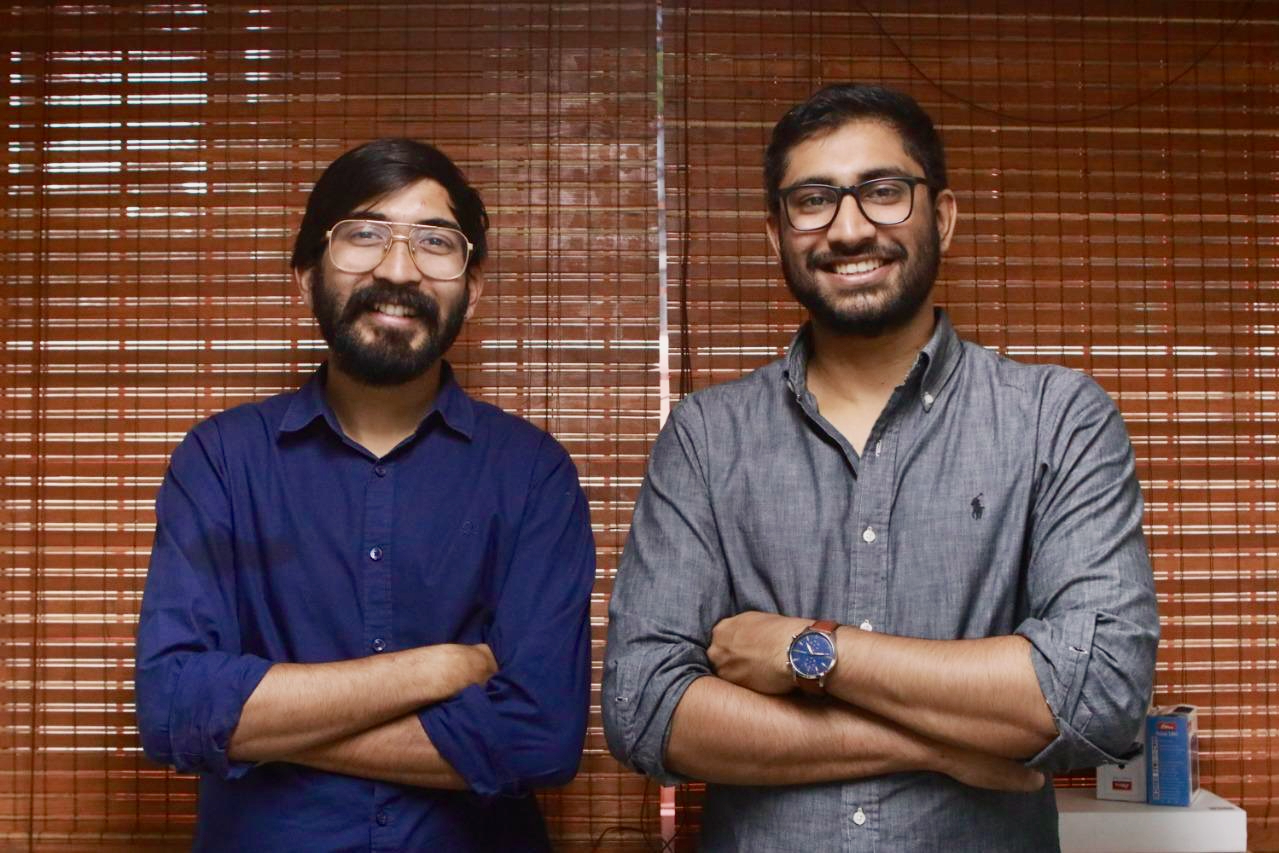
    It became clear fairly early to Kaushik Mudda and Navin Jain, founders of Ethereal Machines, that when it came to a new hi-tech hardware product offered by a startup, in India, everything from funding to sales would be a steep uphill battle.

    Instead of giving up, or starting something else, they made an innovative pivot. They knew their CNC machines were really good. Potential customers were already giving them good feedback on the samples of various components that their machines were turning out.

    They decided to pivot and seize that very opportunity – to make components for customers, with their own machines – instead of trying to sell the machines. They went all-in on their machining-as-a-service strategy.

    Looks like that playbook is beginning to pay off for them. New well known investors have come onboard to back their startup’s Series B round, Kaushik and Navin announced yesterday, confirming various earlier reports.

    The RVCE alumni, who started Ethereal even as they were graduating (but more formally in 2016), have now scored $28.5 million, giving them the financial wherewithal to expand their capacity significantly and put them on the road to scale and longer term success.

    That brings their total funding to $52 million. In addition to Blume Ventures, which backed the 10-year-old company in 2019, which was probably the founders’ first institutional investor cheque, and Peak XV Partners, which backed their Series A about a year ago, they now count Avataar Venture Partners as an investor. Avataar led the Series B investment with Peak XV investing.

    Moneycontrol reports that the funds be used to build a 300,000 sq. ft. factory in Doddaballapura near Bengaluru, and boost critical R&D, including an AI-powered factory software platform, Vesper, and “India’s first proprietary multi-axis CNC controller.”

    The new factory will raise capacity six-fold, according to the report. Ethereal is also stepping up its business with makers of semiconductor manufacturing equipment, and expanding teams in the US and Europe.

    Note that for now, their website doesn’t have a products tab for customers to click on and that’s fair — they want to project their focus on their machining services expertise to the external world. But, can, or should Kaushik and Navin also sell the CNC machines themselves. Made-in-India precision manufacturing gear that can hold its own against German or Japanese engineering?

  • Ideaspring Capital’s founders on their entrepreneurs turned VCs life | Preview

    Ideaspring Capital’s founders on their entrepreneurs turned VCs life | Preview

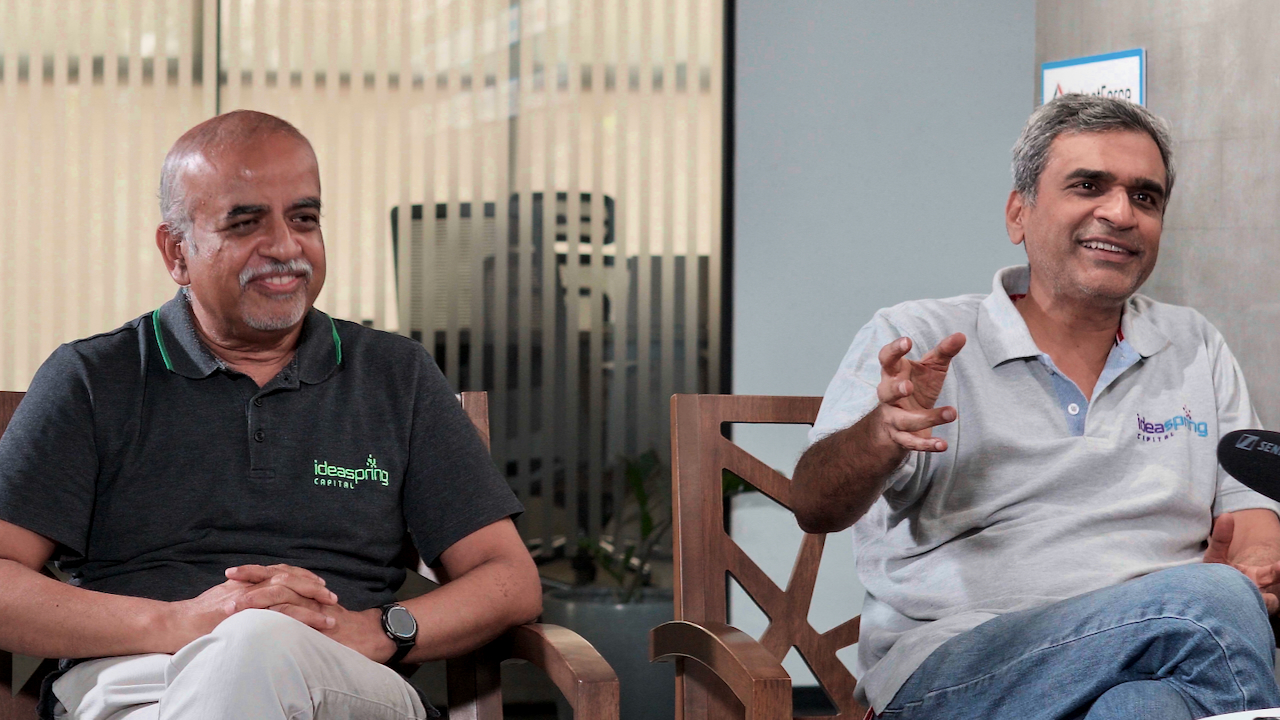
    Naganand Doraswamy, managing partner, and Suryaprakash Konanuru, CTO at Ideaspring Capital, a well known deep tech VC firm in Bengaluru, sat down with me recently for an interview, which I’m publishing in two parts.

    Catch Part 2, the concluding part, tomorrow, in which they talk about the raise-invest-grow-exit imperative of venture investing, and what that means for investing in deep tech startups in India.
    What’s happening in India’s top science and engineering schools when it comes to the lab-to-market journey? How is AI changing VC in deep tech and the ‘Flipkart moment’ of deep tech in India.

  • A proper newsletter, and other thoughts | Deep Tech Dispatch #1

    A proper newsletter, and other thoughts | Deep Tech Dispatch #1

    Hi,

    Wherever you’re reading this, I hope you’re doing well.

    My news today is that I’m attempting to bring you a proper newsletter, instead of just the basic alerts as and when I publish a post. I guess this is part of the ‘what next’ as I step into the second year of my podcast.

    The featured image above is an AI generated one, as you would have guessed. My prompt to generate it was something like this: “A new newsletter on deep tech in India gently floating into a mailbox on a reader’s smartphone.”

    And then it it took a couple more tweaks to get the colours of the newsletter to reflect my logo’s colours. Probably not very original, but It’ll do. Let me know what you think, if you feel like commenting below. So let’s go.

    Two headlines that caught my attention

    Govt plan to replace old commercial vehicles in Delhi-NCR

    The Union Cabinet approved a ₹9,585 crore, two-year scheme to replace approximately 2.07 lakh old trucks and buses (BS-IV or earlier) in the Delhi-NCR region. The initiative offers financial incentives, tax concessions, and discounts to encourage transitioning to cleaner BS-VI or electric vehicles, aiming to curb air pollution.

    Why this matters: This could move the needle on accelerating the electrification of the transport sector in the national capital.

    India remains engaged with the US over proposed tariff hikes

    India is actively negotiating with the United States regarding proposed Section 301 tariff hikes on 60 economies. While the USTR seeks public feedback on these measures ahead of July hearings, India is concurrently finalizing a bilateral framework agreement to address the issue and protect trade interests.

    Why this matters: The final outcome of these negotiations will have a bearing on India’s deep tech startups too — from what they still need to import to how overseas investors view India-domiciled deep tech ventures, potentially affecting their funding.

    Coming up: World Environment Day

    Tomorrow is World Environment Day, and coming up on India Tech Report is an interview with Devdut Dalal (Dev), Xavier Laguarta Soler (Xavi) and Nathan Torbick (Nate), founders of Mitti Labs, on their plan to help rice farmers cut methane emissions from their fields, save water and eventually make money by selling the methane reductions as carbon credits.

    Mitti Labs, while headquartered in the US with a team in India, is a truly multinational startup, with Dev in Bengaluru, India, his Harvard mate Xavi in Barcelona, Spain and Nate, a noted scientist who’s worked at NASA, in Durham, New Hampshire in the US.

    It’s a longish interview and in fact would have gone on longer if Nate hadn’t had to jump off, after joining the call first and being patient with all my questions for about 75 minutes. But do listen to even a few minutes randomly — I’ll be sure to add chapter markers.

    Meanwhile, here’re a couple of previews that are already out to give you taste of what they had to say.

    And if you’re interested in more on World Environment Day, like for example, it has a theme and a host (the Republic of Azerbaijan, this year), here’s just a suggestion on where to start:
    https://www.worldenvironmentday.global/2026/about/theme-and-host

    Next week

    On Tueday, I’ll publish Part 2 of a conversation with Naganand Doraswamy and Suryaprakash Konanuru, founders of Ideaspring Capital, a leading early-stage deep tech venture capital firm in India, based in Bengaluru.

    Ideaspring celebrated their 10th year anniversary earlier this year, and we covered a lot of ground in the interview. Part 1 starts with a discussion of their latest investment, the $13 million Series A fuding at HrdWyr, a chip design startup that the vc firm led. Check out the episode below.

    That’s it for today. A couple of other things I did in recent weeks are, I tried to clean up and declutter the website. Think it looks decent now, but work in progress, as always. And I went back to Transistor to host my podcast, so you the listener gets a clean and efficient podcast player on every page and post.

    Let me know what you think. I’ll try my best to be consistent. Please support my work by sharing this with your friends. I wish you a great rest of the day.

  • India withdraws bid to host COP33, US restores some carbon funds, Microsoft clarifies on purchases

    India withdraws bid to host COP33, US restores some carbon funds, Microsoft clarifies on purchases

    (00:22) Microsoft clarifies stance on carbon credits purchases

    Microsoft issued a clarification after reports earlier this month that it had informed carbon credit developers of a temporary halt in new purchases. That news, reported first by Heatmap News, had caused immediate ripples in the carbon removal sector, as Microsoft has been the market’s dominant force, representing roughly 90 percent of global durable carbon removal purchases in 2025.

    Microsoft Chief Sustainability Officer Melanie Nakagawa clarified that the “carbon removal program has not ended,” according to reports including those from ESG Dive and ESG Today. The company remains committed to its goal of becoming carbon negative by 2030.

    (01:20) Fission startup X-energy files for $800 million IPO

    Nuclear energy startup X-energy has officially launched its investor roadshow, filing for an initial public offering to raise up to $800 million, TechCrunch reports. The Maryland-based company is targeting a valuation of approximately $7.5 billion, with shares priced between $16 and $19.

    (02:13) Inertia partners US national lab to commercialise fusion science

    Inertia Enterprises has signed a landmark strategic partnership with Lawrence Livermore National Laboratory (LLNL) to transition experimental fusion science into a commercial energy source. The collaboration includes a licensing agreement for nearly 200 patents and joint research focused on scaling the laser-driven technology used to achieve “ignition” at the National Ignition Facility.

    (03:30) Battery recycler Ascend Elements files for bankruptcy

    Ascend Elements, a leading U.S. battery recycling startup, has officially filed for Chapter 11 bankruptcy protection to address a critical liquidity crisis, MLQ.ai reports. Despite raising over $500 million from high-profile investors like Honda and SK On, the company faced insurmountable financial pressure from plummeting lithium-ion material prices and significant construction delays at its primary facilities.

    (04:47) US Department of Energy restores $1.2 billion for carbon removal

    The US Department of Energy (DOE) has reversed its decision to cancel funding for major climate initiatives, restoring support for carbon direct air capture (DAC) projects previously awarded under the Biden administration, World Energy News reports. The move, confirmed in a report to Congress, ensures that nearly 2,000 projects will retain their funding after a period of intense review by the current administration.

    (05:37) India officially withdraws bid to host UN climate summit in 2028

    The Indian government has formally rescinded its offer to host the 33rd United Nations Climate Change Conference (COP33) in 2028, Reuters reports. Ministry of External Affairs spokesperson Randhir Jaiswal confirmed the withdrawal after a press briefing on Friday last, stating that “several issues” were considered following a review of the country’s commitments for that year.

    (06:26) Steel emissions reduction target

    India’s own efforts continue, towards meeting its target of hitting net zero by 2070. The Indian government has drafted a comprehensive National Steel Policy roadmap aiming to double the nation’s crude steel capacity to 400 million tonnes by 2035-36. According to internal documents and recent ministry briefings at the Bharat Steel 2026 summit, this expansion will be paired with a mandatory 25% reduction in carbon emissions intensity, Reuters reported earlier this month.

    (07:37) World Bank shareholders seek solution to preserve climate strategy

    International shareholders of the World Bank, led by France, are urgently seeking ways to maintain the lender’s climate change financing strategy after its official expiration in June, Reuters reports. French development minister Éléonore Caroit stated during the IMF-World Bank spring meetings in Washington that letting the current action plan lapse is “unacceptable.”

  • Beyond Government: Gokul NA’s hard truths for industry in deep tech

    Beyond Government: Gokul NA’s hard truths for industry in deep tech

    Once upon a time, it used to be a popular joke in many industry speeches in India — one that government leaders used to sportively join in — that the IT services industry grew “despite the government.” Of course, it was untrue. Several forward-thinking officials and technocrats in governments both at the central and state levels played a strong role in helping that industry grow. As did many top political leaders.

    Today, with deep tech, while micro-procedural frustrations still very much remain, no one needs to say they need to grow despite the government. Public support is visible and hundreds of thousands of crores of rupees are being committed in mission mode to R&D and Innovation.

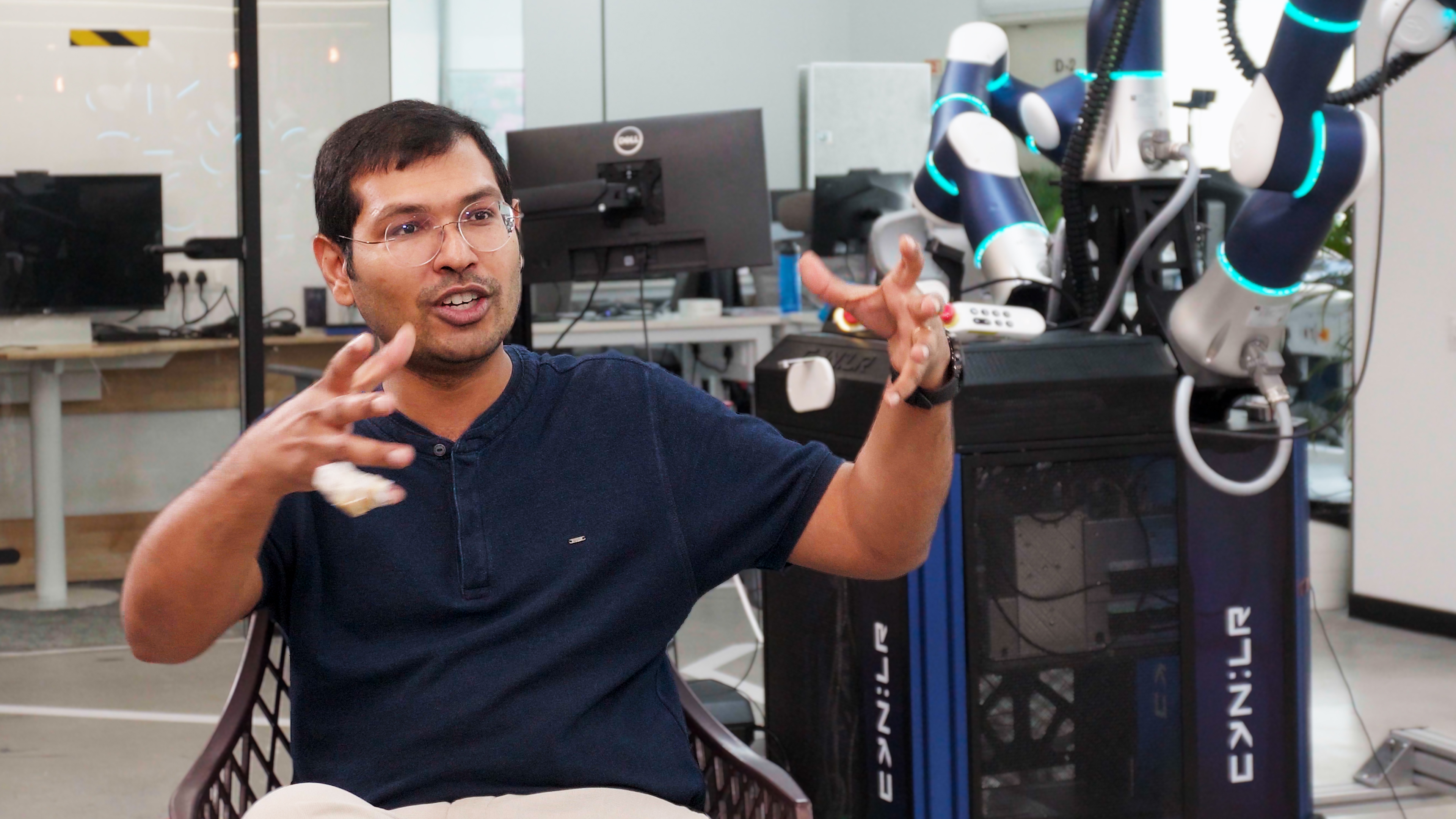
    In a recent conversation with India Tech Report, Gokul NA, founder of CynLr, a robotics venture based in Bengaluru, spoke about the other side of the table — those representing private industry, and what they need to do if India’s deep tech ventures are to have a serious chance in the long term.

    Catch the full conversation by clicking on the the related post link below. Here’s two minutes on the need for exporting “homegrown IP,” building world-class research clusters and more.

  • Ganapathy Subramaniam on Yali’s deep tech startup bets in India — Part 1

    Ganapathy Subramaniam on Yali’s deep tech startup bets in India — Part 1

    In today’s episode, Ganapathy ‘Gani’ Subramaniam, founding managing partner of Yali Capital, a deep-tech VC firm in Bengaluru, joins me to discuss the firm’s debut fund, which had its final close about two months ago.

    At Rs. 893 crore (about $104 million), this is perhaps India’s biggest deep-tech-only fund currently, backed by Marquee names such as Qualcomm, India’s Department for Promotion of Industry and Internal Trade, Infosys Innovation Fund, The Tata Group, and Intel Corp. CEO Lip-Bu Tan, who’s an advisor to the fund.

    Gani’s career traces a journey from semiconductor design engineer, starting with Texas Instruments, to building his own block-level chip design startup Cosmic Circuits, which was later acquired by Cadence Design Systems, to VC investor through several years at Celesta Capital, a well-known multinational deep tech fund, before starting Yali.

    As many of you would know, Yali’s founding partners, Gani and Mathew Cyriac, partner Karthikeyan Madathil and CFO Sunil S Patil bring formidable industry experience to their endeavour – collectively over a century of experience in semiconductors, aerospace and of course VC and private equity.

    In this conversation, we cover Yali’s approach to deep tech in India, which includes investing not only in early stage startups but also, selectively, some advanced late stage ventures. Gani also gives us a quick overview of the investments they’ve already made.

    The conversation also offers some context on how Indian deep tech startups are navigating challenges of scale and commercialization, and why Yali Capital is betting on the next decade of deep tech innovation.