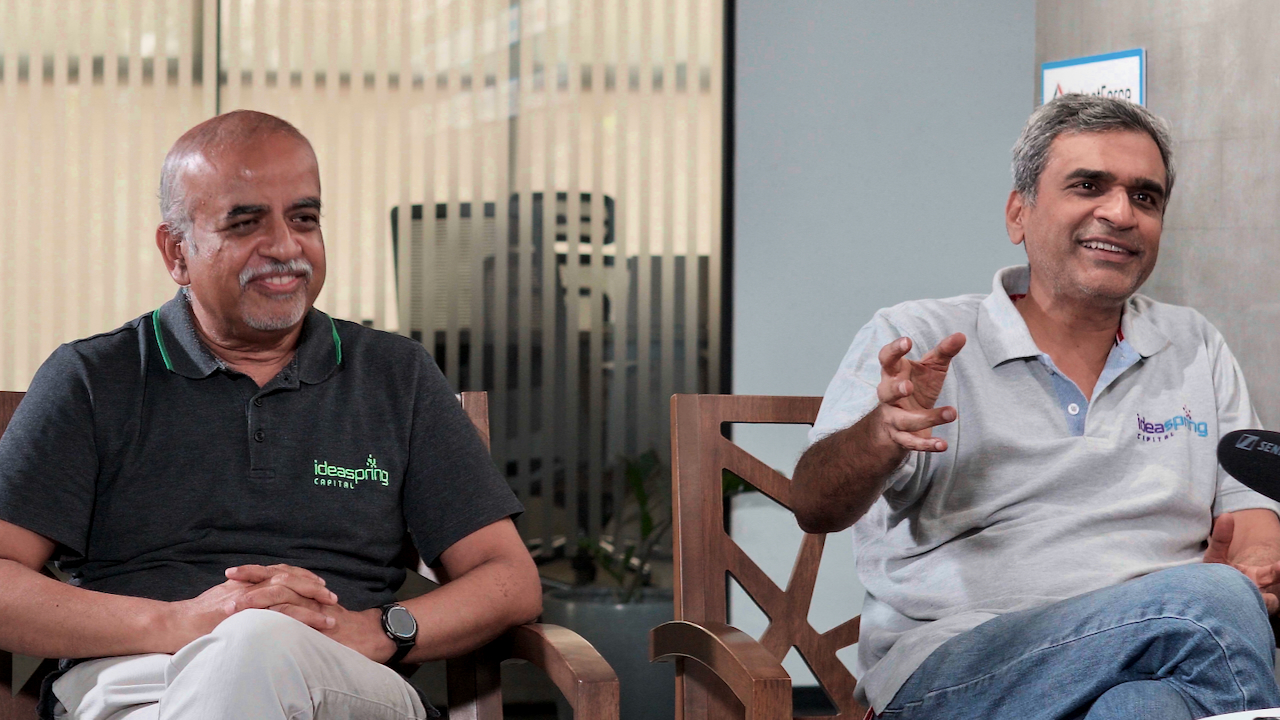
Today is the first day of the second year of this podcast. And in today’s episode of Conversations, I’m really happy to bring you Part 1 of an interview with Naganand Doreswamy, managing partner, and Suryaprakash Konanuru, CTO, at Ideaspring Capital.
They are among those few VC investors in India who were backing deep tech startups long before the government’s massive research and development and innovation fund prompted everyone to want to grab a share of the pie.
This was a rich conversation for me to record, with plenty of plain speak without jargon that’s characteristic of these two VCs. We jumped right in, with Ideaspring’s latest investment, the $13 million Series A round that they led at the semiconductor company HrdWyr, how that reflects their views on deep tech investing today in India, what the RDIF has done and challenges that remain.
I hope you enjoy listening to this as much as I did recording it.
Catch the second half of this conversation on Tuesday next week, where we talk about what might represent the ‘Flipkart moment’ of India’s deep tech sector, and Ideaspring’s next fund.
One could think of ‘Mitti’ — the Hindi word for soil — as representing the grounded foundation of a cooler future. And for us in India while rice that grows in our soil is a daily staple, its traditional cultivation is a hidden climate hazard. Rice cultivation worldwide is responsible for 10-12 percent of human-caused methane emissions. It also consumes staggering amounts of water.
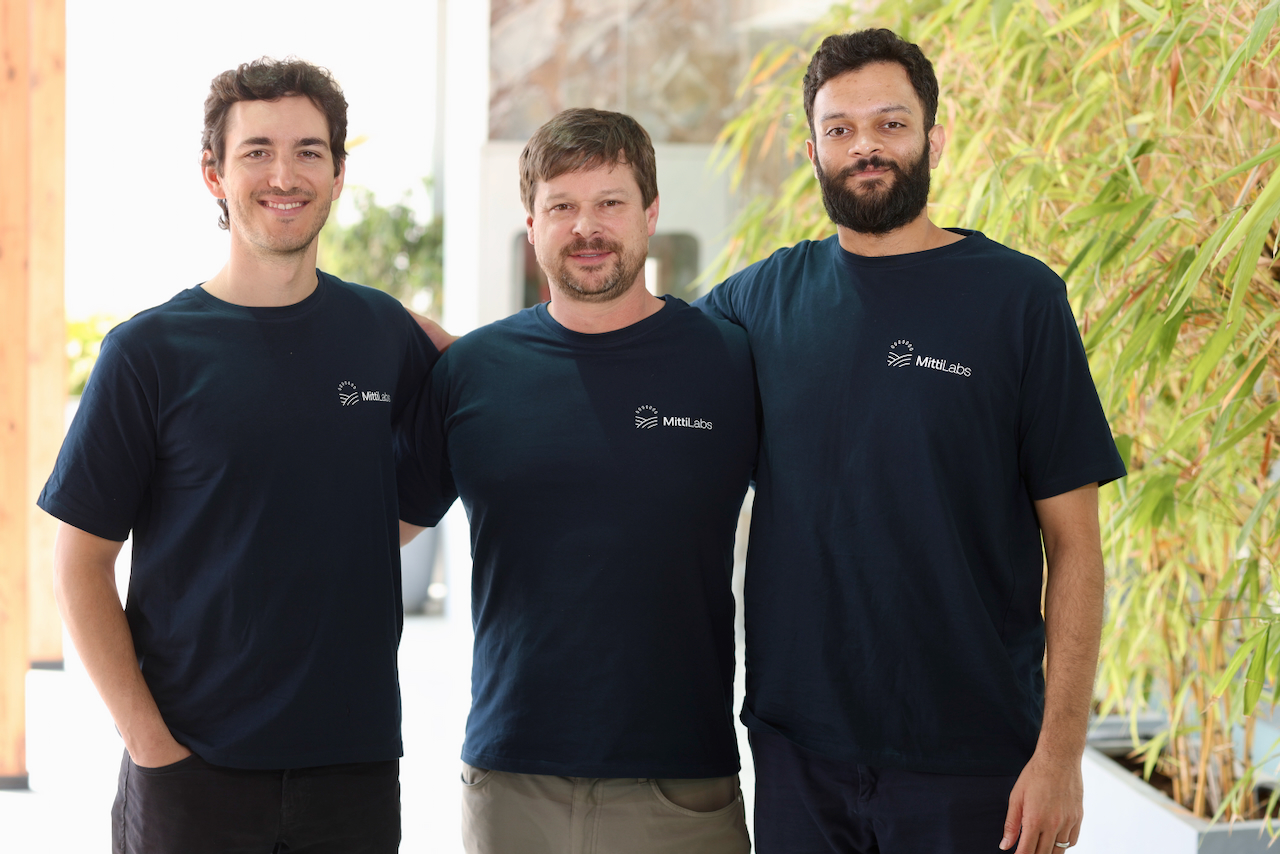
Coming up next on Conversations at India Tech Report, Devdut Dalal (Dev), Xavier Laguarta Soler (Xavi), and Nathan Torbick (Nate), co-founders of Mitti Labs talk about how they are turning rice farming into a powerful vehicle for climate action – specifically targeting methane emissions from rice fields.
Since launching in late 2023, this “full stack” climate-tech startup has scaled from an idea that Harvard alumni Dev and Xavi had to a VC-funded startup (investors include Lightspeed) touching some 70,000 small-holder farmers in India today. Mitti Labs is helping the farmers change how they water their rice crops in a manner that reduces methane emissions, cuts water use and even makes the crops hardier, the entrepreneurs say.
Nate, a distinguished scientist, adds the science and tech experience, helping Mitti Labs tap satellite remote sensing and data analytics to build a digital Monitoring, Reporting, and Verification (dMRV) system, to track methane reductions at the field level. By converting these environmental wins into high-quality carbon credits, Mitti Labs aims to provide direct financial incentives and free advisory services to the farmers.
Catch the episode on June 5, World Environment Day, right here, or wherever you get your podcasts. Here’s a preview with Xavi and Dev laying out their basic thesis.
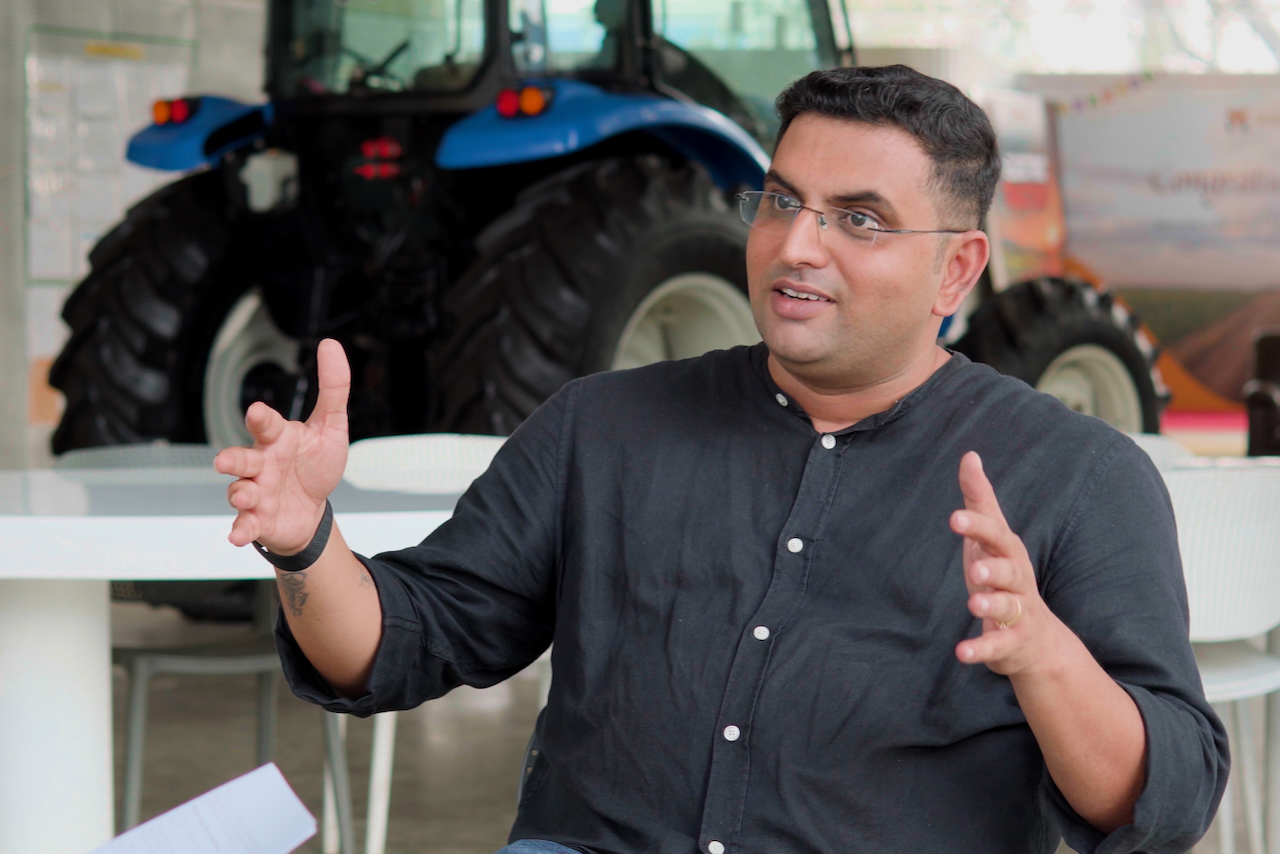
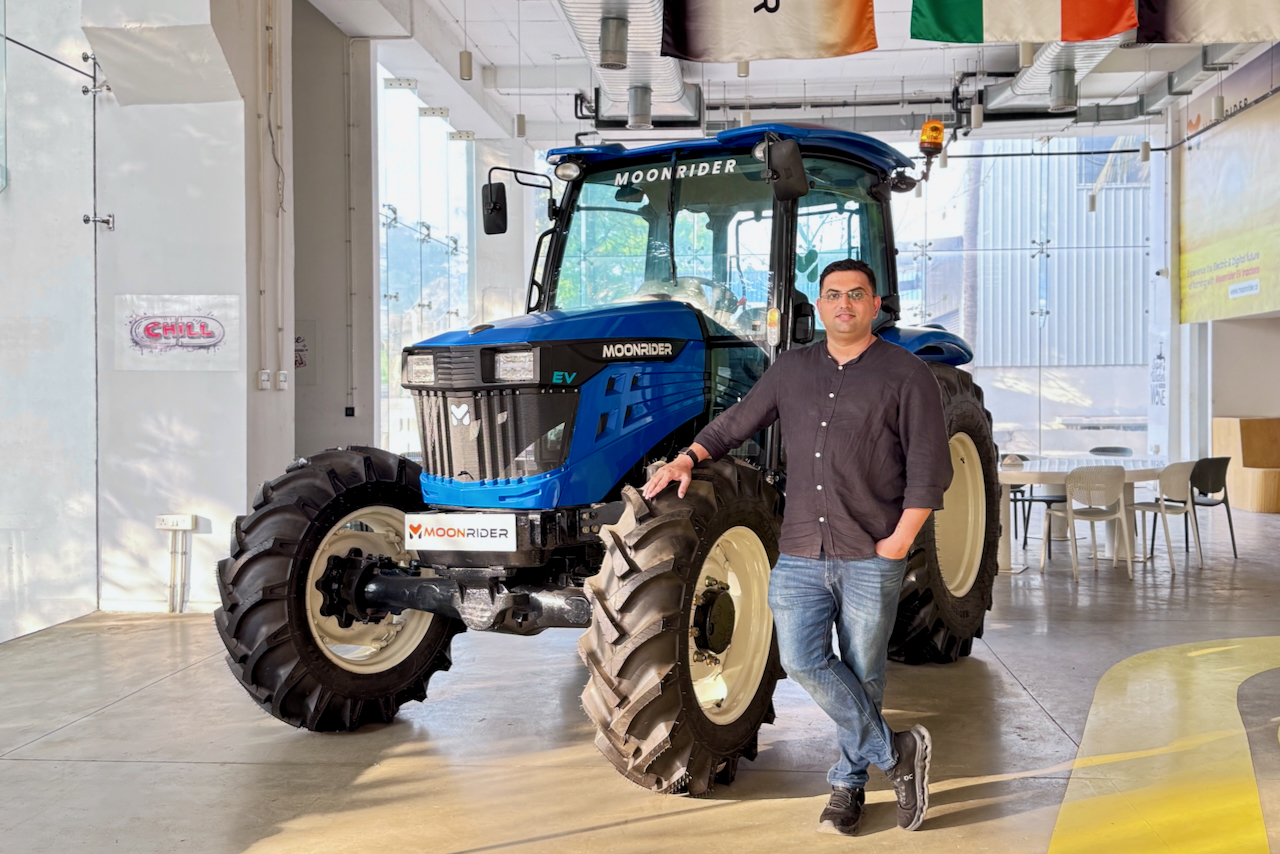
In this episode, I bring you a conversation with Anoop Srikantaswamy, founder and CEO of Moonrider, an electric tractor startup in Bengaluru. Anoop and his fellow founder Ravi Kulkarni bring deep background in the industry, having previously worked at automotive giants such as Toyota and Volvo Group.
Mechanical engineers by training, the two are entrepreneurs at heart, with Anoop having previously attempted a hyper-local medicine delivery venture while Ravi co-founded another electric mobility venture that he exited.
Anoop recalled that the idea for Moonrider was sparked by a conversation with a progressive farmer, who noted that while diesel is expensive, farm electricity is often free. Today, Moonrider is a vertically integrated leader, developing proprietary battery technology and power electronics in-house to achieve price parity with diesel.
In this conversation, we explore their moonshot journey — named in honour of the Chandrayaan launch — and discuss the future of connected and autonomous farming. Join us for an inside look at how Moonrider aims to drive the global shift toward sustainable, electric mechanization.
Coming up, a conversation with Anoop Srikantaswamy, founder and CEO of Moonrider, an electric tractor maker in Bengaluru. Catch the full interview on Tuesday, May 19th right here, or wherever you get your podcasts. Here’s a short preview, in which Anoop talks about the state of commercialisation of autonomous tractors and what they might be like in the future. He also talks about the bigger picture in agriculture in which autonomous gear will be important, but one of multiple factors.
(00:00) Just the headlines, if you only have a minute
(01:26) The Polsky Center selects 20 Indian startups for first accelerator
The University of Chicago’s Polsky Center has named 20 startups to the first cohort of its India Deep Tech Accelerator, a global programme for IIT-affiliated ventures. The 10-week accelerator is designed to help founders turn research-heavy ideas into market-ready companies through workshops, coaching, and access to customers, partners and investors in India and the US.
The cohort spans AI, robotics, climate and energy, healthtech, semiconductors, space and industrial software. Selected companies include Adaapt, Augle.AI, BioSky Space Innovations, Curium Life, Folium Sensing, NXPEC Technologies, Timble AI and Zodhya Technologies.
The first cohort of the India deep tech accelerator at University of Chicago’s Polsky Center. Image courtesy Polsky Center.
(02:20) C-CAMP opens applications for NBEC 2026
C-CAMP has opened applications for the 9th National Bio Entrepreneurship Competition, a platform for bio-entrepreneurs, startups, student teams, researchers and innovators in the life sciences. The programme will offer mentorship, industry exposure and funding support, with selected startups and individuals eligible for cash prizes and investment opportunities of up to INR 20 crore.
Student teams can win up to INR 10 lakh, and shortlisted applicants will attend a two-day bootcamp led by experts from IIM Ahmedabad. The competition was launched by Karnataka IT/BT Minister Priyank Kharge at C-CAMP.
(03:15) IIT Madras opens California hub for Indian deep-tech startups
IIT Madras Global Research Foundation has launched its first US centre in Menlo Park, California, to help Indian deep-tech startups scale internationally. The hub, established with CA Startups, will focus on research, startup incubation, commercialisation and access to global capital, markets and partnerships.
The project carries a planned investment of $7.5 million, including a $4.5 million greenfield investment from IITM Global. The centre is positioned near Silicon Valley and is intended to strengthen India–US innovation ties, with a second US centre planned for the East Coast.
(04:02) IIT Bombay launches India’s first CCUS field lab
IIT Bombay has inaugurated an integrated pilot facility for carbon capture, utilisation and storage, marking India’s first end-to-end CCUS field laboratory. The project combines an indigenous carbon capture plant with geological CO2 sequestration in Deccan basalt formations, and was launched by Union Education Minister Dharmendra Pradhan under the Bharat Innovates 2026 initiative.
The institute said the facility uses a patented aqueous CO2 capture technology and is meant to support India’s long-term net-zero goals through a self-reliant carbon mitigation model.
(04:49) Government maps climate risk in 651 farm districts
The Centre has assessed climate vulnerability across 651 predominantly agricultural districts and found 310 to be at risk, including 109 classified as very highly vulnerable and 201 as highly vulnerable. The assessment, carried out under ICAR’s National Innovations in Climate Resilient Agriculture programme using IPCC protocols, is being used to scale up climate-resilient farming practices, district agriculture contingency plans and farmer support measures across India.
ICAR has also expanded climate-resilient technologies through model villages, KVKs and training programmes, while the government is promoting crop insurance, water-efficient irrigation and resilient seed varieties to help farmers cope with droughts, floods and heat stress.
(05:52) India’s clean energy transition bolsters economic resilience
Clean energy transition is now central to India’s economic resilience and growth strategy, Union Minister for New and Renewable Energy Pralhad Joshi said at the CII Green Business Summit 2026. He highlighted that India has achieved 47 percent of its power capacity from non-fossil sources, ahead of schedule for the 2030 target of 50 percent, with renewables growing at 15.4 percent annually against 4.1 percent for fossil fuels.
Minister Joshi emphasised investments in green hydrogen, battery storage and nuclear energy as key to energy security and net-zero goals by 2070.
(06:41) Flo Mobility raises $2.5 million in pre-Series A
Bengaluru-based construction robotics startup Flo Mobility has raised $2.5 million in a pre-Series A round co-led by Mela Ventures and Arali Ventures. The funding will scale manufacturing, enhance its AI and autonomy stack, expand deployments across India and enter international markets, particularly the Middle East.
The company builds autonomous robots for material movement on construction sites, addressing labour shortages and improving efficiency. Flo Mobility’s robots are already deployed across 10 Indian states with clients including Larsen & Toubro, Godrej Properties and Sobha.
(07:28) HrdWyr raises $13 million Series A to build AI-native chips
HrdWyr has raised $13 million in Series A funding led by Ideaspring Capital, with participation from Singularity AMC, Avatar Growth Capital and Persistent Systems. The fabless semiconductor company in Bengaluru will use the capital to accelerate development of its AI-native System-on-Chip products and expand customer engagements across global markets.
HrdWyr said its chips are designed for “Physical AI” use cases, with a focus on edge intelligence, lower power consumption and faster response times. The company also highlighted a recent strategic collaboration with boAt as early validation of its approach.
Coming up on Tuesday, 19th May, Anoop Srikantaswamy, founder and CEO of Moonrider, a electric tractor startup on Bengaluru, talks about a range of topics — from product innovation to reducing dependence on China to what tractors will be like in the future as they go autonomous.
Catch the full conversation right here or wherever you get your podcasts. Here’s a short preview.