Rice is one of our biggest staples, here in India, but the way our farmers grow it is becoming increasingly unsustainable, as it contributes to depleting our water tables to dangerous levels.
Rice cultivation is also responsible for 10-12 percent of all methane released into the atmosphere from human activity — a gas that is 80-86 more potent than CO2 in warming the planet over a 20-year period.
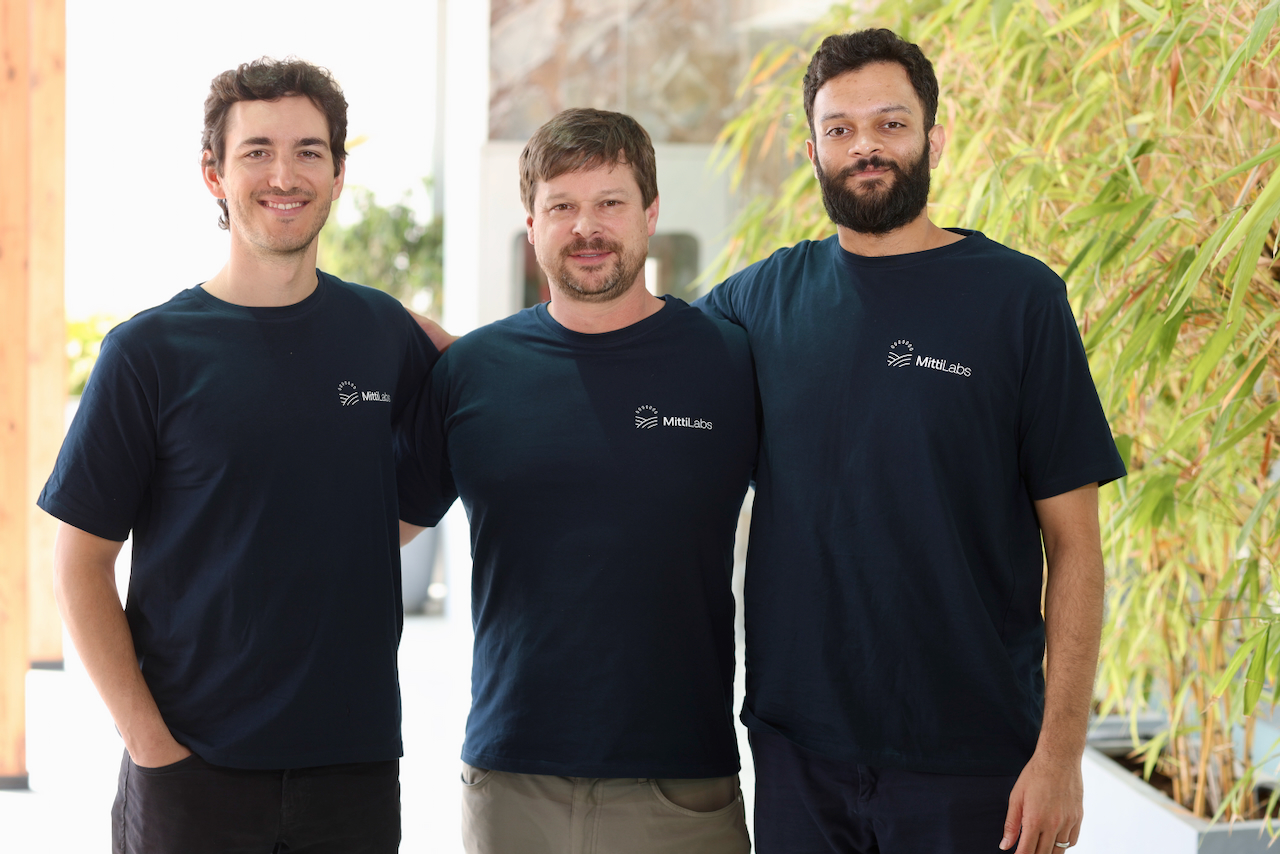
Devdut Dalal, Xavier Laguarta Soler and Nathan Torbick, founders of Mitti Labs, have a plan to change this, at scale. And they’re already persuading some 70,000 rice farmers in India to try out their science-backed methods.
In the process, they also want to translate the reduced methane emissions to equivalent carbon credits, so that the farmers benefit from a share of the money from the sale of those credits.
Catch the full conversation on Friday, June 5, World Environment Day, right here or wherever you get your podcasts. Here’s a quick preview, with Nate giving us a sense of the potential for methane reduction and the water savings.
The transition to a low-carbon economy is often framed as a struggle resulting from a combination of engineering challenges and lack of political willpower. A new vision paper argues that the true bottleneck is an information deficit. The Climate and Sustainability Data Exchange (CSDX), a proposed universal digital infrastructure, seeks to move beyond “siloed, project-level fixes” to provide the “shared rails” necessary for a planetary-scale coordination system.
The CSDX vision paper is the result of a collaboration between StepChange and Beckn. StepChange, a climate-tech venture in Bengaluru founded by MIT alumni Ankit Jain and Sidhant Pai, provides a strategic framework for managing ESG, carbon accounting, and climate risk.
Beckn, now called Network for Humanities (NFH, previously the Beckn Foundation), is an international network of labs focused on building open, interoperable digital infrastructure for population-scale systems. It offers the eponymous Beckn protocol, a foundational open protocol that enables interoperable, decentralized digital interactions without reliance on central platforms.
It was co-founded in 2019 by Nandan Nilekani, founding chairman of Aadhaar, India’s Unique ID Authority, Pramod Varma, Aadhaar’s former chief architect, and Sujith Nair, who also serves as its Steward, according to his LinkedIn profile.
The current landscape of sustainability data is a thicket of fragmented portals and manual entries, particularly in the Global South, where information is “limited in quality, expensive to access, and fragile in trust,” the authors of the paper say. Without a common language, capital is frequently mispriced, and the progress of supply chains remains invisible to the regulators and financiers who might otherwise reward decarbonization, they add.
StepChange and Beckn envision a neutral alliance of core members who will act as stewards for the infrastructure, maintaining common schemas and onboarding policies to keep the digital rails accessible and transparent. By combining their technological and environmental expertise, the collaboration seeks to create a federated network where producers, financiers, and regulators can exchange trusted sustainability data at near-zero marginal cost.
The proposal arrives as global climate-driven disaster costs surpass $400 billion annually and energy-related CO₂ emissions have climbed to an all-time high of 37.8 gigatonnes. With atmospheric concentrations now 50 percent higher than pre-industrial levels, the CSDX initiative aims to standardize the reporting of ESG, carbon accounting, and climate risk to bridge the “data-poor” gap that currently prevents global markets from pricing resilience accurately.
“Like railways, container shipping, or the internet, CSDX provides a minimal, interoperable digital rail that allows any actor to publish and pull records in a common language, at near-zero marginal cost,” StepChange and NFH say.
ESG Management captures the broad set of non-financial outcomes enterprises create across environment, society, and governance.
Carbon Accounting provides a rigorous, quantifiable subset of environmental impacts with unique salience for decarbonization.
Climate Risk ensures that external climate dynamics are translated into financial terms, enabling efficient capital allocation and resilience planning.
Using the Beckn protocol, CSDX envisions a federated architecture where data is “governed at source while becoming globally discoverable.” By aligning with global frameworks like the ISSB and CSRD, the platform ensures that “water-withdrawal intensity,” for example, or “Scope 3” emissions mean the same thing to a textile factory in Nairobi as they do to a bank in Frankfurt.
This is not merely an exercise in corporate disclosure; it is an attempt to create a “functioning control system for the real economy,” where sustainability is embedded into every purchase order and loan decision.
Coming up, tomorrow, a conversation with Apoorv Shaligram, founder and CEO at e-TRNL Energy in Bengaluru, where he and fellow founder Uttam Sen are innovating the next generation battery cell architectures and advanced manufacturing processes.
Apoorv and Uttam recently announced raising Rs. 27.4 crore (About $3 million) in seed funding, led by IAN Group (Indian Angel Network), with Navam Capital, and existing investors Speciale Invest, Micelio and others also joining in. You can catch the full conversation right here, or wherever you get your podcasts. Here’s a 60-second preview with Apoorv talking about how the deep tech landscape in India is undergoing a government-led transformation.
So, this morning, I drove up to the new office that Apoorv Shaligram and Uttam Kumar Sen and their team at e-TRNL Energy have set up – still being given some final touches before a formal inauguration soon.
Sat down with Apoorv to record the next episode of Conversations. And it’s always an awesome experience to do this in-person, in whatever conditions present themselves onsite, in terms of light and sound. (I did carry two Neever panels and my DJI wireless mics, and more on that in a separate note.)
I’ve had the privilege of being acquainted with this deep-tech entrepreneur duo – IIT Bombay alumni – almost from the time they set up e-TRNL and, in one early conversation a few years ago, they’d tried to help me understand the tech innovations they had in mind.
Today, we caught up in the context of their recent announcement of having raised Rs. 27.4 crore (About $3 million) in seed funding, led by IAN Group (Indian Angel Network), with Navam Capital, and existing investors Speciale Invest, Micelio and others also joining in.
We also spoke about the funding experience — what’s changed, what worked, best practices and so on. Catch all of that in the full conversation right here, or wherever you get your podcast, on Friday, Feb. 20.
Here’s a 90-second preview, with Apoorv explaining 3DEA, their 3D electrodes architecture.
By the way, I also just started a WhatsApp channel for anyone who prefers to keep track of their deep tech news and views that way.
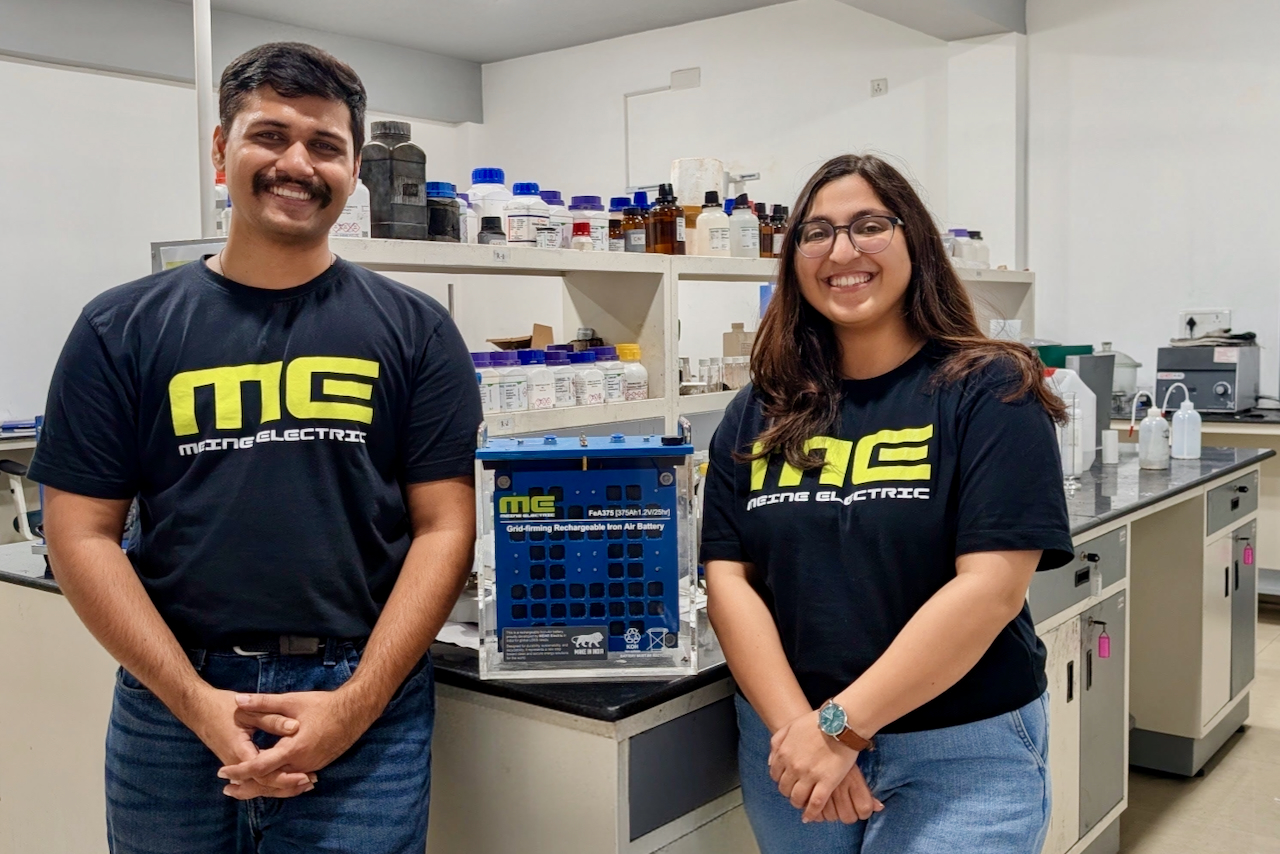
MEINE Electric is an Indian deep-tech startup in Chennai, developing iron-air battery systems designed for long-duration energy storage of 16 to 24 hours. Founders Priyansh Mohan and Stuti Kakar hope that these batteries will help accelerate India’s transition to net zero carbon emissions.
They use a process of controlled reversible rusting to create a cost-effective, sustainable alternative to lithium-ion batteries and pumped hydro storage. By utilizing abundant materials like iron, air, and water, they aim to provide 100 percent renewable energy reliability for energy-intensive industries such as mining and data centres.
Their proprietary innovations include fast-charging capabilities and a unique gas-diffusion electrode that is compatible with high-volume manufacturing. The venture has secured pre-seed funding and plans to showcase its first product pilot later this year. Ultimately, they envision building a renewable energy ecosystem to stabilize the grid as global power demands shift toward green sources.
You can catch the full conversation right here, or wherever you get your podcasts. Here’s a quick point on how the founders are innovating to develop their product for scale.
In this episode, I’m joined by Priyansh Mohan and Stuti Kakkar, school friends turned co-founders at MEINE Electric, to talk about their innovations in developing iron-air battery energy storage systems (BESS) for long duration energy storage (LDES).
Renewable energy in India faces a fundamental problem of timing. Solar panels and wind turbines produce electricity when nature dictates, not necessarily when industrial factories require it. For the green transition to succeed, power must be stored for the long hours when the sun is down or the wind is still. While lithium-ion batteries serve short durations, they remain too costly for day-long storage.
Priyansh and Stuti are innovating in the area of controlled, reversible rusting, with the aim of providing energy storage for 16 to 24 hours at prices lower than with current options such as pumped hydro storage and of course lithium-ion batteries. Their approach uses materials abundantly available — iron, air, and water — to avoid the complicated supply chains associated with rarer metals.
“At the core of it, it’s just reversible rusting. We all know that iron rusts — it’s not a reaction that’s unknown to humanity — but to do it in a controlled fashion at a greater efficiency so it acts as a battery is where our innovation and the whole magic lies.”
Stuti Kakkar and Priyansh Mohan
In this episode, we get a peek into the engineering innovations behind their technology and some of the challenges that remain in the way of building deep tech companies from India. Backed by Rebalance, Antler, Venture Catalysts, gradCapital, and Anna Incubator, Stuti and Priyansh have recently raised a pre-seed investment in their venture.
They expect to showcase a pilot-ready version of their first product as early as later this year.