Tag: news

  • Khosla, Eclipse fund Genesis AI’s vision for robotics foundation model, Climeworks hits $1 bln, and more

    Khosla, Eclipse fund Genesis AI’s vision for robotics foundation model, Climeworks hits $1 bln, and more

    Daily brief on deep tech and climate tech news from India and around the world

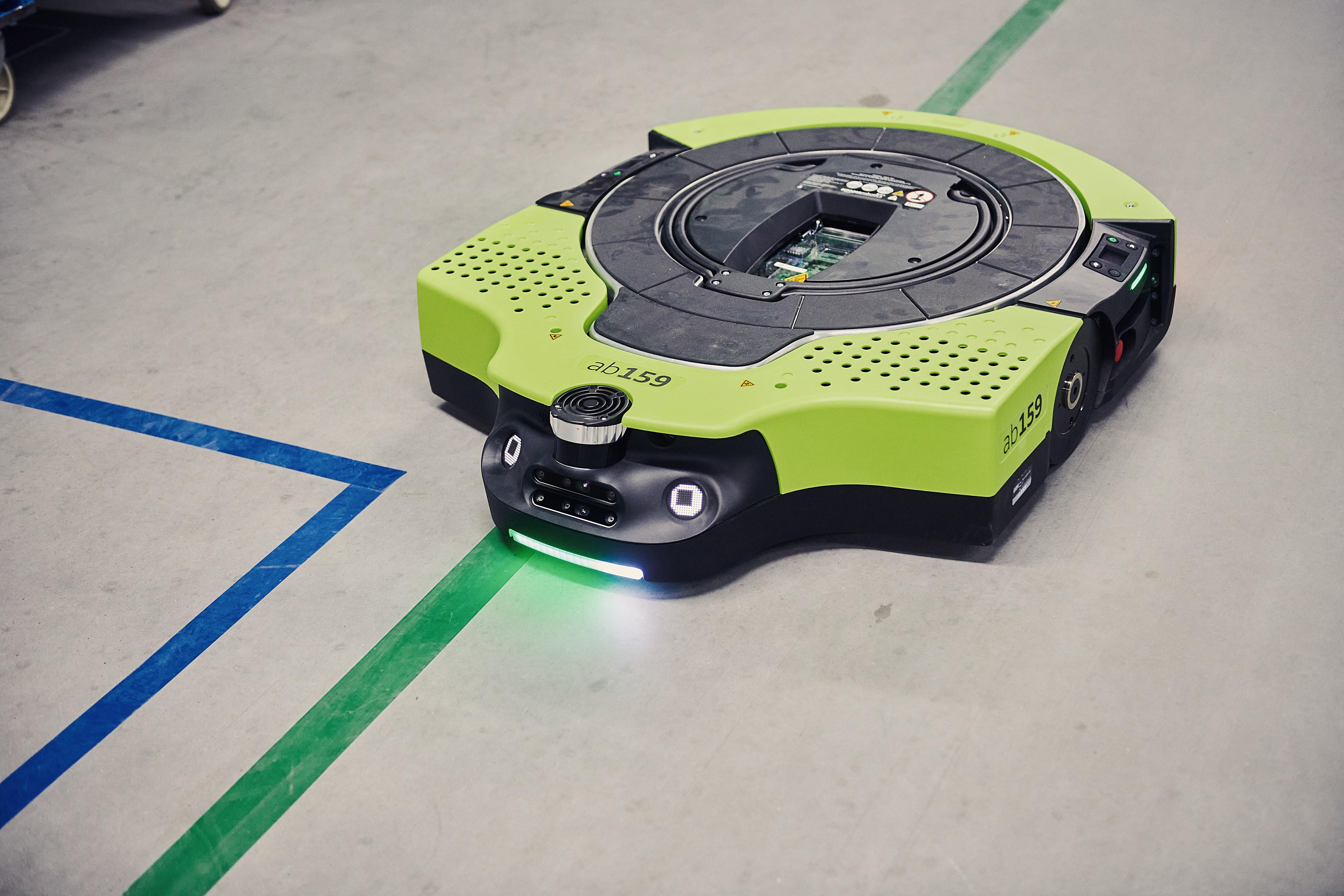
    Proteus, Amazon’s first fully autonomous robot.

    Amazon deploys one million robots, launches AI to boost warehouse efficiency

    Amazon has surpassed the deployment of one million industrial robots, marking a major automation milestone as its latest system began operations in a Japanese fulfillment center, the Association for Advancing Automation reports.

    Amazon also introduced DeepFleet, a generative AI model designed to optimize robot coordination across more than 300 global facilities, improving travel efficiency by 10 percent. More than 700,000 employees have been retrained to work alongside robots, reflecting Amazon’s ongoing integration of advanced robotics and AI into its operations.

    Listen to the podcast

    Genesis AI emerges from stealth with $105 million to build universal robotics AI platform

    Genesis AI, a global physical AI research lab, has launched with $105 million in seed funding co-led by Eclipse Ventures and Khosla Ventures, the Canadian venture said in a press release.

    The company aims to develop a universal robotics foundation model and a horizontal platform for general-purpose physical AI, using a proprietary physics simulation engine to generate high-quality synthetic data.

    Genesis AI’s approach seeks to automate a broad range of physical tasks, addressing the vast, largely unautomated global labor market.

    Catalio Capital closes $400 million fourth fund to back innovative healthcare startups

    Catalio Capital Management has closed its fourth venture fund, Catalio Nexus Fund IV, with over $400 million in commitments from global institutional investors, the New York firm said in a press release. The fund will support breakthrough biomedical technology companies, including 16 early investments such as PinkDx and Superluminal Medicines.

    Catalio’s strategy focuses on partnering with leading scientists and entrepreneurs to launch and grow life sciences startups, even as the biotech sector faces a challenging funding environment.

    Flexible zinc–ion batteries with new hydrogel electrolyte maintain stable voltage even when bent

    Researchers at the Hefei Institutes of Physical Science, Chinese Academy of Sciences, have developed a flexible aqueous zinc–ion battery using a novel hydrogel electrolyte made from urea and zinc acetate, Tech Xplore reports.

    The battery’s hydrogel can stretch up to 557% and withstand significant compression, maintaining stable voltage even when bent to 180°. This innovation addresses durability and leakage issues, making the battery ideal for portable and wearable devices while remaining cost-effective and eco-friendly.

    Indian scientists develop lanthanum-doped silver niobate for next-generation supercapacitors

    A team led by Dr. Kavita Pandey at Bengaluru’s Centre for Nano and Soft Matter Sciences, in collaboration with Aligarh Muslim University, has engineered a lanthanum-doped silver niobate material that dramatically boosts supercapacitor performance, according to a press release from India’s Ministry of Science and Technology.

    The innovation delivers 118 percent energy retention and 100 percent coulombic efficiency, which is a measure of total charge extracted from an electrochemical device during discharge versus the total charge put in during charging.

    The research team demonstrated a prototype successfully powering an LCD display. This breakthrough, published in the Journal of Alloys and Compounds, could advance high-efficiency, eco-friendly energy storage for electronics and renewable systems.

    Climeworks raises $162 million to expand direct air capture tech for carbon removal

    Climeworks has raised $162 million in equity funding, bringing its total raised to more than $1 billion, according to a press release from the Swiss venture. This is the most for any pure-play carbon removal venture, Tech Funding News notes.

    The investment, led by BigPoint Holding and Partners Group, will accelerate Climeworks’ rollout of its Generation 3 direct air capture technology and global expansion. Climeworks aims to capture 1 billion tons of CO₂ by 2050, positioning itself as a leader in permanent, verifiable carbon removal solutions.

    “Direct Air Capture has gone from experiment to essential, and we’re focused on scaling it,” Christoph Gebald, co-CEO and co-founder of Climeworks said in the press release. The company has a hybrid business model that combines long-term innovation and present-day commercial applications of its technology to generate revenue, he added.


    In Conversation

    In-depth conversations with entrepreneurs, investors, industry leaders and other stakeholders building India’s deep tech and climate tech ecosystems.

    Insight

    Takeaways from conversations with entrepreneurs, investors, industry leaders and other stakeholders building India’s deep tech and climate tech ecosystems.

  • India approves $12 billion R&D and I fund, Loopworm’s insect protein tech, Aureka’s sustainable diamonds get Peak XV sparkle, and more

    India approves $12 billion R&D and I fund, Loopworm’s insect protein tech, Aureka’s sustainable diamonds get Peak XV sparkle, and more

    Daily brief on deep tech and climate tech news from India and around the world

    Rajiv Ganth, founder and CEO, CIMware, is leading innovation that can help make data centre power use more efficient and therefore boost sustainability.

    Google signs landmark deal with Commonwealth Fusion Systems to commercialize fusion energy

    Google has entered its first commercial fusion energy agreement, committing to purchase 200 megawatts of clean power from Commonwealth Fusion Systems’ (CFS) inaugural ARC (affordable, robust and compact) plant in Virginia, expected to go online in the early 2030s.

    The partnership deepens Google’s investment in CFS, a Massachusetts-based MIT spinout, and includes an option to offtake power from future ARC facilities. The move signals growing confidence in fusion’s potential to deliver scalable, carbon-free electricity to meet surging energy demand from big tech data centres.

    Listen to the podcast

    Omnisent secures $3 million to pioneer acoustic AI for industrial intelligence

    Omnisent, a sound technologies and AI startup in Munich, Germany, has raised $3 million in a pre-seed round led by Atlantic Labs, Tech Funding News reports.

    The startup, founded in late 2024 by Robin Daiber, Ann-Kristin Balve, and Adrien Jathe, has developed a platform that uses proprietary ultra-low-power sonic sensors and a large acoustic AI model to convert industrial noise into real-time insights, targeting inefficiencies like compressed air leaks.

    The fresh funds will support R&D, team growth, and a commercial launch in Q4 2025, as Omnisent aims to expand into energy, defence, and smart cities.

    CIMware raises $2.3 million to tackle data center scalability with sustainable smart switch

    CIMware, a data centre infrastructure venture in Bengaluru, has raised $2.3 million in Pre-Series-A funding led by Transition VC, the company said in a press release. CIMware was founded in 2019 by Rajiv Ganth, a veteran in distributed systems and data centre engineering.

    Ganth, who has previously worked at companies including LSI and Dell EMC, leads CIMware’s push to address data centre scalability and efficiency with its patented Composable Infrastructure Module, a converged smart switch built in India. CIMware says its technology can reduce power consumption by up to 80 percent, offering a more sustainable alternative for AI-driven workloads, according to the release.

    Loopworm raises $3.25 million to commercialize silkworm-based protein platform

    Loopworm, a biomanufacturing startup in Bengaluru, has raised $3.25 million in a pre-Series-A round led by WaterBridge Ventures and Japan’s Enrission India Capital, Entrackr reports.

    Founded by IIT-Roorkee alumni Ankit Alok Bagaria and Abhi Gawri in 2019, Loopworm has developed a reactor-free system using silkworms to produce recombinant proteins for diagnostics and animal vaccines, promising faster, cheaper, and more sustainable production. Backed by investors including Omnivore, the company operates a 6,000-tonne-per-year insect processing facility and exports to Europe, South America, and ASEAN markets.

    Aukera raises $15 million led by Peak XV Partners to expand lab-grown diamond retail

    Aureka, a lab-grown diamond jewellery startup, has raised $15 million in growth capital led by Peak XV Partners, with participation from Fireside Ventures, Sparrow Capital, Prath Ventures, and Alteria Capital.

    The Bengaluru-based company will use the funds to expand its retail footprint, enhance product offerings, and strengthen its omnichannel presence. Founded two years ago by Lisa Mukhedkar and Kumar Saurabh, Aukera operates 13 stores nationwide and aims to lead India’s rapidly growing lab-grown diamond market amid rising demand for sustainable luxury.

    India’s Cabinet approves $12 billion R&D and innovation fund to boost private R&D in strategic sectors

    India’s Union Cabinet, chaired by Prime Minister Narendra Modi, has approved an R&D and Innovation (RDI) Scheme, establishing a Rs. 1 lakh crore ($12 billion) fund to catalyze private sector investment in research, development, and innovation across strategic and sunrise sectors.

    The scheme offers long-term, low or zero-interest financing to overcome funding barriers and promote technology adoption, self-reliance, and competitiveness, according to a press release yesterday.

    A two-tier funding structure will be managed by the Anusandhan National Research Foundation, with the Department of Science and Technology as the nodal agency. The RDI Scheme aims to finance transformative projects, support acquisition of critical technologies, and facilitate a Deep-Tech Fund of Funds, positioning India for global leadership in innovation as it targets developed nation status by 2047.


    In Conversation

    In-depth conversations with entrepreneurs, investors, industry leaders and other stakeholders building India’s deep tech and climate tech ecosystems.

  • Deep tech wrap on Friday: Green hydrogen solutions rise in India, aerospace startup Raphe scores $100 million, and more

    Deep tech wrap on Friday: Green hydrogen solutions rise in India, aerospace startup Raphe scores $100 million, and more

    Daily brief on deep tech and climate tech news from India and around the world

    Illustrative image. India needs high-altitude drones to support its troops across the Himalayas, or for rescue operations and several other civilian applications as well.

    JuliaHub unveils Dyad to accelerate hardware development with AI-powered modeling

    JuliaHub has launched Dyad, a new system that integrates Scientific Machine Learning, Generative AI, and traditional physics modeling to revolutionize hardware system design, according to a post from the eponymous company. Dyad offers both textual and graphical interfaces, agentic AI workflows, and seamless simulation tools, supporting the entire product lifecycle for industries like aerospace and energy.

    Under a source-available license, Dyad aims to bring modern software agility and collaboration to engineering, making advanced modeling accessible, safe, and efficient for critical applications.

    Listen to the podcast

    APac ex-Japan IoT spending to reach $355 billion by 2029, driven by manufacturing and smart technologies

    Internet of Things (IoT) spending in the Asia Pacific region (ex-Japan) will grow from $241 billion in 2025 to $355 billion by 2029, with a 12.6 percent CAGR, technology market researcher IDC said in a recent post.

    Manufacturing, government, retail, and utilities will drive over half of 2025’s spending, while healthcare and transportation will see the fastest growth. Hardware, especially sensors and modules, will dominate spending, with China, India, and Indonesia leading growth. Key trends include smart factories, supply chain resilience, and real-time analytics adoption.

    John Cockerill Hydrogen raises €116 million to boost global green hydrogen expansion

    John Cockerill Hydrogen has secured a €116 million capital increase to advance its strategic development and international growth, the hydrogen electrolyser and industrial equipment maker said in a press release.

    Supported by Belgian investors SFPIM and Wallonie Entreprendre, and new partner Fluxys, the funding strengthens the company’s Belgian roots and global reach.

    The capital will support large-scale electrolyser production in Europe and India, including India’s largest green ammonia project. The group’s Indian unit is listed in Mumbai.

    This investment advances John Cockerill’s leadership in pressurized alkaline electrolyser technology, reinforcing its commitment to sustainable, cost-effective green hydrogen solutions worldwide, according to the press release.

    Toyota Kirloskar Motor and Ohmium partner to pilot green hydrogen microgrids for India’s clean energy future

    Meanwhile, Toyota Kirloskar Motor and Ohmium International have signed an MoU to co-develop green hydrogen-based microgrid solutions in India. The collaboration combines Toyota’s fuel cell expertise with Ohmium’s modular PEM electrolyzer technology to design scalable, efficient, and cost-effective hydrogen power systems for diverse applications, including data centers and remote areas.

    The partnership aims to prototype and test integrated electrolyzer-fuel cell microgrids, supporting India’s National Green Hydrogen Mission and advancing the country’s carbon neutrality and energy independence goals.

    Cummins India launches Battery Energy Storage Systems to accelerate clean energy transition

    Cummins India Limited has launched its Battery Energy Storage Systems, expanding its sustainable solutions portfolio to support India’s clean energy goals, the industrial company said in a press release.

    The modular, scalable units — available in 10ft and 20ft containers with capacities from 200kWh to 2MWh — use advanced lithium ferrophosphate batteries and integrated liquid cooling for safety and long life, according to the release.

    Designed for industries such as manufacturing, data centers, and mining, these systems enable seamless integration of renewables, grid stability, and optimized energy costs, the company said.

    Ericsson expands Bengaluru R&D to boost 5G chip design and India’s semiconductor ecosystem

    Ericsson is expanding its Bengaluru R&D operations with a dedicated Application-Specific Integrated Circuit (ASIC) development unit, adding over 150 engineering roles. This move strengthens Ericsson’s global semiconductor design capabilities and supports India’s growing tech ecosystem.

    The new unit will focus on developing custom Ericsson Silicon System on a Chip (SoC) solutions, essential for high-performance, energy-efficient 5G network equipment. The expansion aligns with Ericsson’s $5 billion annual R&D investment and India’s ambitions to become a semiconductor innovation hub.

    Antler Bio raises $4.3 million to expand gene expression tech for smarter, more resilient dairy farming

    Antler Bio has secured $4.3 million in funding, led by The First Thirty Ventures, to scale its EpiHerd gene expression platform across Europe, Tech Funding News reports. EpiHerd analyzes how cows’ genes respond to environmental and nutritional stressors, delivering data-driven insights that boost milk yields, quality, and herd health. Already used on over 100 farms, the system has achieved up to 22 percent higher milk yields and a 7:1 ROI. The funding will accelerate expansion and further technology development.

    Raphe mPhibr raises $100M to scale indigenous drone manufacturing and global defense ambitions

    Raphe mPhibr has secured $100 million in Series B funding led by General Catalyst, marking the largest private capital raise by an Indian aerospace manufacturer, according to a press release by the Noida based startup.

    Founded in 2016, Raphe designs and manufactures end-to-end unmanned aerial systems (UAS), including drone swarms and high-altitude UAVs, entirely in India.

    Serving more than 10 government agencies, the company has achieved 4x revenue growth for four years, remains profitable, and plans to expand globally, emphasizing sovereign technology and local manufacturing.


    In Conversation

    In-depth conversations with entrepreneurs, investors, industry leaders, and other stakeholders building India’s deep tech and climate tech ecosystems.

    Insight

    Takeaways from conversations with entrepreneurs, investors, industry leaders, and other stakeholders building India’s deep tech and climate tech ecosystems.

  • Rare-Earth free electric motors: Six takeaways from a conversation with Bhaktha Keshavachar at Chara

    Rare-Earth free electric motors: Six takeaways from a conversation with Bhaktha Keshavachar at Chara

    Bhaktha Ram Keshavachar, founder and CEO of Chara Technologies in Bengaluru, is leading an effort to develop motors that don’t need the conventional permanent magnets, whose make up includes rare-Earth metals, the processing of which is almost entirely controlled by China. The mining and processing of these minerals also has an environmental impact.

    Bhaktha and his fellow founders Ravi Prasad and Mahalingam Koushik, bring decades of industry expertise to their venture. Founded in 2019, Chara has engineered what are called reluctance motors. Unlike the traditional motors, reluctance motors don’t have permanent the magnets that need rare Earth minerals such as neodymium or samarium. Magnetic fields are instead created by the electric current in the windings around the stationary part (stator) of these motors.

    In my recent conversation with him, Bhaktha discusses Chara’s technical pivots, manufacturing milestones, industry partnerships, and the challenges of deep tech entrepreneurship in India. He also shares insights on talent development, the evolving ecosystem, and Chara’s plans for global expansion. Here are my top six takeaways.

    1. Rare earth-free motor technology addresses a critical global supply chain risk

    Most high-efficiency electric motors today rely on rare earth magnets, which are expensive, environmentally damaging to extract, and subject to geopolitical risk — especially as China controls over 90 percent of the global supply chain. Chara’s technology, based on reluctance motors, eliminates the need for rare earths, offering a strategic solution to this problem.

    1. Product-market fit is emerging fastest in off-highway and industrial applications

    While Chara initially targeted India’s large two-wheeler and three-wheeler market, Bhaktha notes that the most immediate traction has come from off-highway uses such as agricultural equipment, golf carts, turf care machines, and compressors. These sectors value Chara’s high-efficiency, rare earth-free motors and have helped the company build early credibility.

    1. Strategic partnerships and manufacturing scale are key to customer confidence

    A major milestone for Chara is its partnership with Greaves Cotton, which will manufacture and distribute Chara’s motors under license. Bhaktha explains that large customers are wary of “startup risk” and prefer established suppliers; this partnership provides the scale and distribution needed to win bigger deals and accelerate adoption.

    1. Chara’s deep R&D helped the startup develop a market-ready product

    The company’s early years involved a challenging pivot from switched reluctance motors, which proved too noisy, to synchronous reluctance motors. Chara invested heavily in core R&D, especially in software algorithms to control non-linear motor behavior, resulting in a certified, field-deployed product that matches the performance of traditional motors.

    1. Building a deep tech team in India requires nurturing core engineering talent

    Bhaktha notes a shortage of experienced engineers in electromagnetics and mechanical domains, as most graduates prefer software careers. Chara addresses this by hiring young engineers with some experience and training them further in the requisite foundational physics and engineering, which is essential for their multidisciplinary innovation.

    1. Chara’s next phase is focused on scaling sales and global expansion

    With technical challenges largely solved and products certified, Bhaktha says Chara’s top priority is now sales and deployment — both in India and internationally. The company is targeting new product development for larger vehicles and is actively pursuing business in Europe and the US, tapping global interest in rare earth alternatives and recent geopolitical shifts.

  • India’s AI and deep tech opportunity, Jua raises funding for Earth simulation, and a New Mexico deep tech coalition

    India poised to become global leader in AI and deep tech, say experts

    India is at a pivotal moment to lead the world in artificial intelligence and deep tech, leveraging its vast digital data resources, according to global experts at the India Global Innovation Connect 2025 in Bengaluru, Times of India reports.

    Speakers highlighted India’s strategic advantage in data, the need for deeper process reforms, and urgent educational changes to prepare for quantum and AI-driven futures.

    Industry leaders emphasized that integrating AI into enterprise systems will be a key competitive edge, unlocking productivity and growth. India’s momentum positions it as a potential global hub for technological breakthroughs in the coming decade.

    Listen to the episode

    Accenture and NVIDIA partner to help AI startups scale enterprise solutions

    Accenture has announced an expanded initiative, in collaboration with NVIDIA Inception, to help high-potential AI startups transition from breakthrough ideas to scalable enterprise solutions, the tech services and consulting giant said in a press release.

    The program will provide startups with market intelligence, technical workshops, and access to Accenture’s industry expertise and NVIDIA’s developer ecosystem.

    The first phase targets marketing and customer experience AI solutions, aiming to accelerate innovation and enterprise readiness. The partnership is designed to bridge the gap between innovation and market impact, supporting startups in delivering meaningful, industry-wide transformation.

    AI, blockchain, and IoT to boost climate tech innovation in 2025

    Emerging technologies such as artificial intelligence, blockchain, and the Internet of Things (IoT) are revolutionizing climate tech in 2025, AppInventiv, an on-demand software developer, notes in a blogpost.

    AI is enabling smarter sustainability by optimizing energy use, managing emissions, and building climate resilience. Blockchain is enhancing transparency in carbon credit trading and emission tracking, while IoT devices provide real-time environmental monitoring for air, water, and soil quality.

    These tools are empowering startups to create scalable, transparent, and effective solutions for global sustainability challenges, opening new opportunities for impact and profitability in climate action.

    Zurich startup Jua raises €10M to launch AI-based Earth simulation platform

    Jua, a Zurich-based climate tech startup, has secured €10 million in Series A funding to accelerate the rollout of its AI-based Earth simulation platform, Tech Startups reports. The platform uses proprietary physics-based models to forecast weather and energy market dynamics, helping energy companies and other industries make better planning decisions.

    The round was co-led by Ananda Impact Ventures and Future Energy Ventures, with existing backers also participating. Jua claims its Earth Intelligence platform is the world’s most advanced in its category, promising to enhance climate and energy risk forecasting for commercial applications.

    Leading venture funds launch coalition for deep tech investment in New Mexico

    A new coalition for deep tech investment has been launched by leading venture funds in partnership with Roadrunner Venture Studios and the New Mexico State Investment Council, Quantum Insider reports. The initiative aims to bridge the gap between frontier science in laboratories and the venture capital needed to commercialize world-changing ideas.

    Organizers emphasize that deep tech startups require different support structures compared to traditional startups, focusing on long-term, high-impact innovations in fields like quantum computing, advanced materials, and climate solutions.

  • BharatGen AI, Ather and Infineon, China’s rare earth India impact, and MFV’s new pre-seed fund

    Photo of Republic Day-themed art installations India Republic Day publ

    India launches Bharat Gen, first government-funded multimodal AI language model for Indian languages

    Union Minister Dr. Jitendra Singh launched Bharat Gen, India’s first indigenously developed, government-funded, AI-based multimodal large language model (LLM) for Indian languages at the BharatGen Summit, according to a statement yesterday by the ministry of science and technology.

    Developed under the National Mission on Interdisciplinary Cyber-Physical Systems and led by IIT Bombay, BharatGen integrates text, speech, and image processing in 22 Indian languages to provide region-specific AI solutions across sectors like healthcare, education, and governance. Supported by a consortium of academic and industry leaders, BharatGen aims to make AI ethical, inclusive, and rooted in Indian values, empowering innovation and citizen engagement nationwide.

    Listen to the episode

    Ather Energy and Infineon partner to boost India’s electric two-wheeler innovation with advanced semiconductors

    Ather Energy and Infineon Technologies have signed a Memorandum of Understanding to jointly develop advanced semiconductor technologies for India’s electric two-wheeler market, the two companies said in a press release recently.

    The partnership aims to enhance the efficiency, safety, and reliability of light electric vehicles (LEVs) and charging infrastructure using Infineon’s microcontrollers, sensors, and SiC/GaN (Silicon Carbide / Gallium Nitride) technologies, combined with Ather’s design expertise.

    Executive Director and CTO Swapnil Jain says this collaboration helps Ather contribute to the EV ecosystem as well, as India seeks to hit 30 percent of auto sales with EVs by 2030. Ather and Infineon will work to make its electric scooters more energy-efficient, cost-effective, and appealing to consumers, while also exploring new innovations in sensing and safety systems.

    China’s rare earth export curbs could threaten India’s booming electric two-wheeler market

    Meanwhile, India’s electric two-wheeler sales have surged by a third, NDTV Profit reports, but the industry faces a looming shortage of rare earth metals as China has imposed strict export restrictions, requiring special licenses and slowing supply to automakers.

    China, which controls about 90 percent of global rare earth processing, has not granted export licenses to Indian companies, raising concerns that production could halt if the situation persists.

    Despite the sales boom, the sector’s growth in India is threatened by these supply chain disruptions, as rare earth metals are critical for manufacturing electric vehicle motors and batteries.

    MFV Partners launches $25M deep tech fund with University of Chicago, expands investments including Indian startups

    In some deep tech VC funding news, MFV Partners has launched Harper Court Ventures Fund I, a $25 million fund in exclusive partnership with the University of Chicago, to invest in pre-seed deep tech startups from the university’s ecosystem, focusing on quantum computing, life sciences, energy, and AI.

    The fund has already invested in Flow Medical, SimCare AI, and Beacon. MFV’s portfolio company Conifer emerged from stealth, and MFV participated in new funding rounds for Chef Robotics, Irrigreen, and ReScale.

    Karthee Madasamy, founding managing partner of MFV Partners, has played an important role in India’s startup ecosystem, notably by establishing Qualcomm Ventures’ India operations in 2008 and leading early investments in companies such as MapMyIndia, Apalya, Kirusa, and Tessolve.

    During his 11-year tenure as managing director at Qualcomm Ventures, he was instrumental in supporting Indian deep tech and mobile technology startups, and he continues to back Indian innovators through MFV Partners, including investments in Ati Motors, an autonomous mobile robots (AMR) company in Bangalore.