Tag: semiconductor

  • Mindgrove Technologies: Indian silicon moves from lab to market

    Mindgrove Technologies: Indian silicon moves from lab to market

    For decades, India’s semiconductor industry resembled an architect designing villas for others while living in a rented flat. The country’s semiconductor engineers, who constitute approximately 20 percent (a widely accepted industry estimate) of the global chip-design workforce, have long generated intellectual property for foreign titans while India remained dependent on imports for its own consumption.

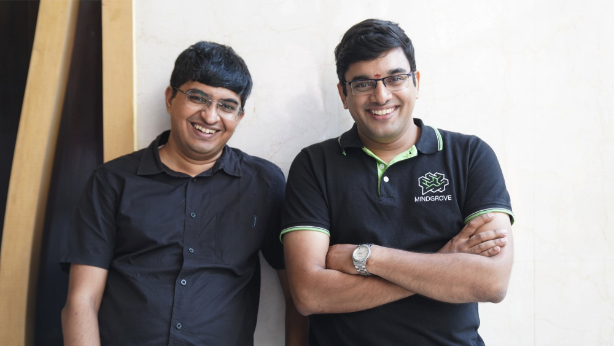
    A new generation of chip design startups is now on the rise and their commercial trajectories, like that of Mindgrove Technologies, suggest the tenants are finally building their own estate. Sticking with Mindgrove for this piece, by securing high-volume integrations with local manufacturers, the IIT Madras-incubated venture is fast moving from lab to market.

    Mindgrove has just announced a memorandum of understanding with Prama India, a leading domestic surveillance company, marking a transition from laboratory validation to real-world volume. Prama will integrate Mindgrove’s Vision SoC — a GHz-class processor funded under the government’s Design Linked Incentive (DLI) scheme — across its commercial security product line, according to a press release.

    This represents an instance of an Indian fabless startup successfully navigating the “valley of death” between a prototype and a mass-market production line, targeting a segment where reliability and security are paramount. Fingers crossed that there will be more and in greater frequency.

    Note for example, HrdWyr, backed by Ideaspring Capital, will soon ship a processor that domestic consumer electronics company boAt has already signed on to buy as an anchor customer.

    India’s semiconductor startups are attempting to carve out a space for themselves in a global market that is projected to exceed $1.3 trillion this year, even as the industry fragments along geopolitical fault lines. Note the latest memory chip shortage and its repercussions.

     As a “Silicon Curtain” of export controls and supply-chain de-risking descends between Western powers and Chinese manufacturing hubs, major economies are racing to secure “trusted” digital infrastructure. India is positioning itself as a resilient third pole in this realignment, tapping the open-source RISC-V architecture to build sovereign hardware that is immune to unilateral licensing restrictions.

    “For Indian fabless semiconductor companies, credibility is built when products leave the lab and enter sustained deployment. This engagement validates our Vision SoC as a production-ready platform capable of meeting performance, reliability, and scale requirements in real-world security systems,” Shashwath TR, Mindgrove’s co-founder and CEO said in the press release.

    Mindgrove’s deal with Prama follows its commercial partnership with Pinetics, which focuses on integrating Mindgrove’s SoCs into a broader range of commercial applications, including biometric access control systems, smart locks, and camera solutions. By extending the now production-ready Secure IoT chip into specific modules and products, the collaboration aims to create a more complete, domestic electronics stack.

    In 2025 Mindgrove also teamed up with Bosch Global Software Technologies (BGSW) in an agreement that saw the startup supplying chips and boards for field testing in automotive and industrial environments, winning a stamp of approval from a global heavyweight. This collaboration allowed Mindgrove to refine its software stack and prove its silicon’s reliability under the stringent safety standards of industrial automation.

    “Our collaboration with  Mindgrove marks an important milestone in advancing indigenous semiconductor capabilities for next generation video security solutions,” Ashish P Dhakan, Managing Director and CEO, Prama India, said in the press release. “By combining Mindgrove’s semiconductor design expertise with Prama’s extensive experience in video security, product engineering, compliance, and large-scale deployments, we aim to develop world-class solutions that are secure, scalable, and globally competitive.”

    Beyond technology development, this collaboration will help build strategic capabilities within India’s semiconductor ecosystem, foster innovation, strengthen supply-chain resilience, and support the Government of India’s Atmanirbhar Bharat vision in critical technology sectors, Dhakan notes.

    This all could mean accelerated commercialisation for Mindgrove’s chips — it has two platforms currently, one for Secure IoT, and the other, the Vision SoC — and encouragement for the chip design company to lean into its product development plans. For India, this is another small, but important step forward in building a local semiconductor product ecosystem.

  • Custom silicon: Ramamurthy Sivakumar at HrdWyr on the opportunity to build from India for the world

    Custom silicon: Ramamurthy Sivakumar at HrdWyr on the opportunity to build from India for the world

    In today’s episode, Ramamurthy Sivakumar, co-founder and CEO at HrdWyr, a semiconductor design startup in Bengaluru, talks about the company’s plans after recently raising $13 million in Series A funding, in an investment led by Ideaspring Capital.

    The company was co-founded in 2023 by Siva and Ganesh Guruswamy, both industry veterans spanning companies including Intel, AMD, Sandisk and Motorola.

    In this conversation, Siva talks about how the era of custom silicon is upon us and what the AI-led opportunity represents. The company specialises in System-on-Chip (AISoC) designs tailored for edge computing and applications like electric vehicles and industrial equipment.

    HrdWyr’s first product, named Indus 1011, is expected to hit the market by the end of this year, Siva says. In August last year, the company had announced it had picked Tata Electronics as the packaging partner and also that Indian consumer electronics company boAt would be an anchor customer for the chip — a small, but historic milestone for India’s semiconductor aspirations.
    boAt is to use this chip, which offers power management as a core feature, in its truly wireless earbuds charging case.

    As many of you know, startups such as HrdWyr are getting funded in the time of a broader national push in India for semiconductor self-reliance, supported by significant government investment. Siva notes, however, that significant challenges remain, such as the lack of timely and adequate funding at critical stages.

    Still, he thinks that the only way forward is to look at the aggregate of all the ongoing efforts — from startups such as HrdWyr to conglomerates like Tata setting up foundries and OSATs — as an opportunity to tap a trillion-dollar sector, and, as a nation building mission.

  • Coming up: Ramamurthy Sivakumar at HrdWyr on the implications of building chips from India

    Coming up: Ramamurthy Sivakumar at HrdWyr on the implications of building chips from India

    In August last year, a little known semiconductor startup (at the time) founded by two industry veterans from India, announced a small, but historic milestone. Not just for themselves, but the country.

    The startup, HrdWyr Ventures, now more popularly, just HrdWyr, had struck two partnerships, one with Tata Electronics for the packaging of its first chip, and the other with boAt, the consumer electronics company, as an anchor customer for the new processor.

    boAt would use their chip, named Indus 1011, in its truly wireless stereo earbuds charging cases, the companies had announced. Earlier this month, HrdWyr announced the successful close of its Series A funding round, raising $13 million in an investment led by the well known Bengaluru deep tech VC firm Ideaspring Capital.

    Last week, I got a chance to sit down with Ramamurthy Sivakumar, co-founder and CEO of HrdWyr to get a sense of what next for him, Ganesh Guruswamy, and their team of 18 engineers.

    Catch the full interview right here tomorrow, 6 a.m. IST. Here’s a quick preview, in which Siva talks about the practical decisions semiconductor entrepreneurs have to make, especially when they decide to go build in a nascent ecosystem such as the one in India.

  • Deep tech India momentum: 10 noteworthy developments so far in 2025

    India’s deep tech sector gains momentum through April 2025

    India’s deep tech sector witnessed some serious momentum heading into May. Notably, deep tech startups attracted $324 million in funding in the first four months of 2025, more than double the previous year’s figure for the same period, Economic Times reported, citing data from Venture Intelligence.

    While the absolute number is modest, compared with the leading deep tech hubs of the world, this increase does reflect growing investor confidence, and a gradually maturing ecosystem in India. Now here are 10 noteworthy developments in deep tech in India in 2025, in no particular order.

    Listen to the episode

    1. Netradyne’s $90 million investment

    Netradyne, an AI-powered fleet management platform, secured $90 million led by Qualcomm Ventures and Point72 Ventures. Their cutting-edge computer vision and deep learning solutions are transforming real-time driver and fleet safety analytics.

    2. SpotDraft’s $54 million raise

    SpotDraft, specializing in AI-based contract management, raised $54 million. Its platform leverages machine learning to automate and optimize legal contract workflows for enterprises in India and beyond.

    3. Infinite Uptime’s $35 million for predictive maintenance

    Infinite Uptime, a predictive maintenance platform, raised $35 million. The company uses IoT and AI to monitor industrial equipment, reducing downtime and boosting operational efficiency.

    4. Tonbo Imaging’s $21 million for defense tech

    Tonbo Imaging, a leader in advanced imaging and sensor systems for defense, secured $21 million. Their technology enhances surveillance, targeting, and situational awareness for the armed forces.

    5. Inspecity’s $19.5 million series A funding

    Inspecity Space, a Mumbai-based startup focused on in-orbit satellite servicing and space robotics, raised $19.5 million in a Series A round led by Nexus Venture Partners. This funding will help accelerate the development of India’s first in-orbit satellite servicing missions.

    6. Agnikul Cosmos: 3D-printed rocket engine advances

    Agnikul Cosmos, incubated at IIT Madras, conducted further advanced tests on its 3D-printed rocket engine. The company’s milestones highlight India’s private space tech capabilities in advanced manufacturing and innovation.

    7. Mindgrove Technologies: indigenous semiconductor breakthrough

    Mindgrove Technologies, a fabless semiconductor startup, successfully taped out its 28nm Secure-IOT chip based on RISC-V architecture. This chip strengthens India’s domestic hardware ecosystem and reduces reliance on imports.

    8. ImmunoAct’s indigenous CAR-T cell therapy

    ImmunoAct, in collaboration with IIT Bombay and Tata Memorial Hospital, developed an indigenous CAR-T cell therapy for cancer. This breakthrough offers advanced, locally developed treatment options for Indian patients.

    9. India’s sovereign AI efforts

    The IndiaAI Mission has now named four startups to build AI models for the country. These are Sarvam AI, Soket AI, Gnani AI and Gan AI. IndiaAI allocated ₹10,372 crore (approx. $1.25 billion) to accelerate AI research and talent development.

    10. Pixxel’s hyperspectral imaging satellites

    Pixxel, a Bengaluru-based space tech startup, is building a constellation of hyperspectral imaging satellites. These will provide high-resolution, real-time imagery for agriculture, climate monitoring, and disaster response, positioning India as a leader in commercial space applications.