Tag: Semiconductors

  • Shipping custom silicon from India, ambition must get practical and other lessons from an Intel veteran | Deep Tech Dispatch #9

    Shipping custom silicon from India, ambition must get practical and other lessons from an Intel veteran | Deep Tech Dispatch #9

    Hi,

    Wherever you’re reading this, I hope you’re doing well. Thank you for supporting my work by being a subscriber. It means a lot.

    A couple of headlines that caught my attention

    HCLTech to acquire 10.46 percent stake in Sarvam AI

    HCLTech will invest Rs. 1,427.25 crore for a 10.46 percent stake in Sarvam AI, leading its $234 million Series B funding round to advance sovereign AI.

    India and France adopt Innovation Roadmap 2030

    India and France have adopted the Innovation Roadmap 2030, establishing a framework for bilateral cooperation in trusted AI, critical technologies, and academic mobility.

    The Lede

    It boils down to what is viable, especially when it comes to an endeavour like making a semiconductor chip from a nascent ecosystem like the one in India, with the expectation that customers will actually buy it in volume.

    That means, even if two founders are industry veterans and they’ve assemble a strong team of engineers, designers and marketers, everything gets determined by how much money is available. In India, a Series A is in the range of $10-15 million for a chip design company, and sometimes less. And, it takes a long time to raise even this.

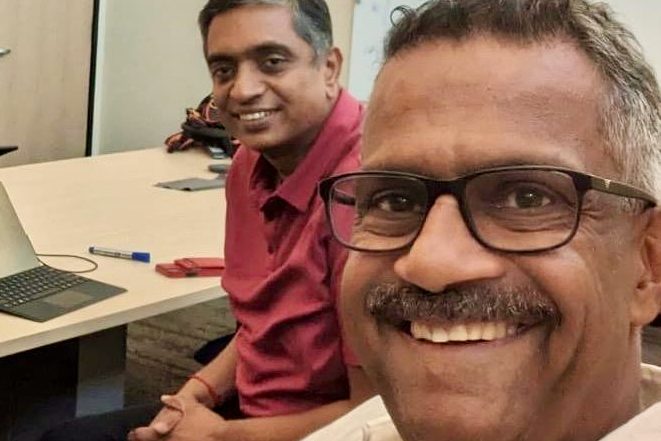
    Siva and Ganesh, who’ve together close to half a century of experience under their belt, look at HrdWyr as a commercial enterprise for sure — they have VC investors, after all — but also as a “nation building” contribution.

    And the investors who led their Series A are like-minded. Naganand Doraswamy and Suryaprakash Konanuru at Ideaspring Capital, would like to back ventures like HrdWyr with as long a runway as they can make possible, but with the limited resources of an early stage VC firm.

    HrdWyr, founded in 2023, is following through by year end on the small, but historic, milestone it announced August last, as you’ll hear in the conversation. I’d love to hear your thoughts.

    Custom silicon: Ramamurthy Sivakumar at HrdWyr on the opportunity to build from India for the world

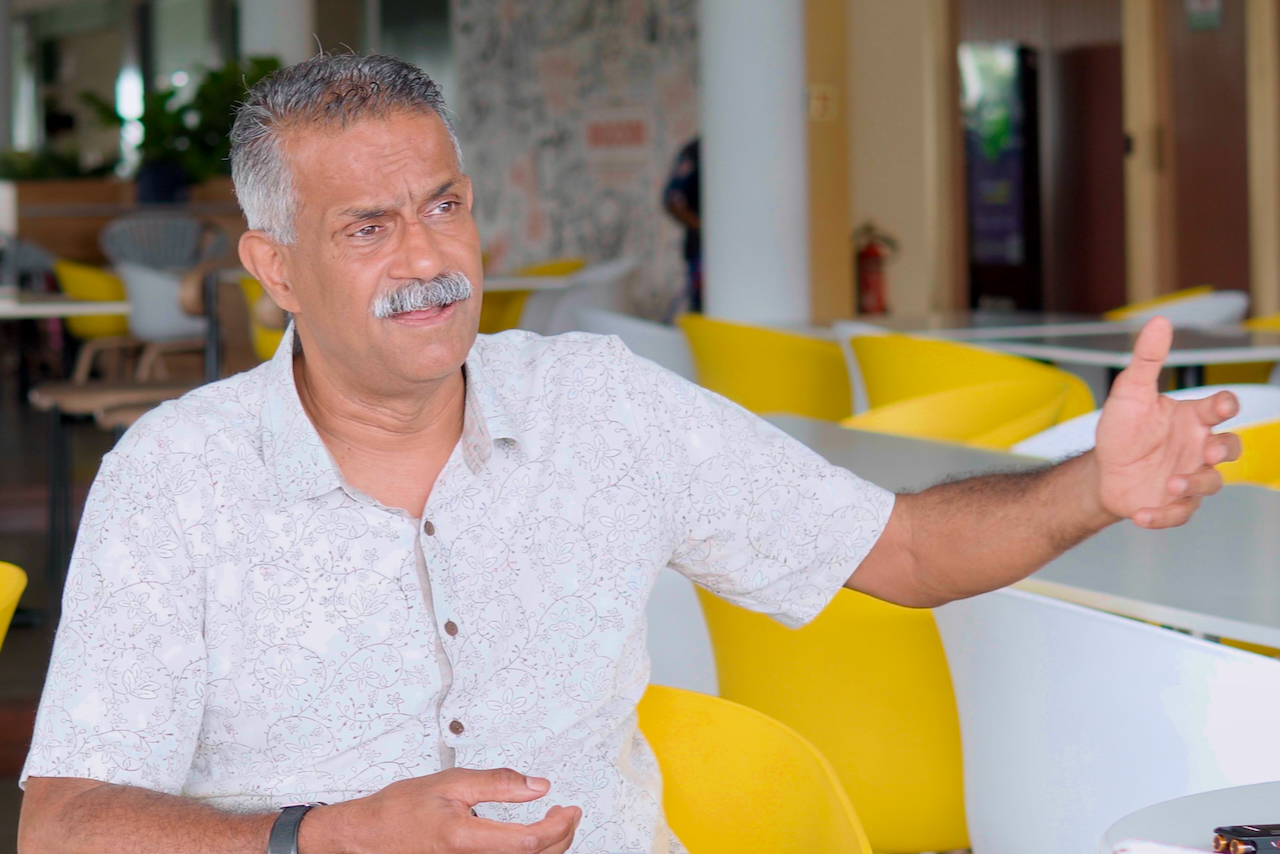
    In today’s episode, Ramamurthy Sivakumar, co-founder and CEO at HrdWyr, a semiconductor design startup in Bengaluru, talks about the company’s plans after recently raising $13 million in Series A funding, in an investment led by Ideaspring Capital. The company was co-founded in 2023 by Siva and Ganesh Guruswamy, both industry veterans spanning companies including Intel,…

    Today’s Pick

    A daily recommendation of a conversation with a founder, VC investor or industry executive, or an interesting text read as well

    Founder Spotlight

    A weekly recommendation of interviews with founders. From the Conversations section of ITR’s archive. Changes every Friday.

    That’s it for today. When you have a minute, please would you share this with friends who might be interested in India’s deep tech and climate tech startups. Here’s wishing you a great rest of the day.

  • What building from India means for a semiconductor veteran founder  | Deep Tech Dispatch #8

    What building from India means for a semiconductor veteran founder | Deep Tech Dispatch #8

    Hi,

    Wherever you’re reading this, I hope you’re doing well. Thank you for supporting my work by being a subscriber. It means a lot.

    The lede

    Coming up: Ramamurthy Sivakumar at HrdWyr on the implications of building chips from India

    In August last year, a little known semiconductor startup (at the time) founded by two industry veterans from India, announced a small, but historic milestone. Not just for themselves, but the country.

    The startup, HrdWyr Ventures, now more popularly, just HrdWyr, had struck two partnerships, one with Tata Electronics for the packaging of its first chip, and the other with boAt, the consumer electronics company, as an anchor customer for the new processor.

    boAt would use their chip, named Indus 1011, in its truly wireless stereo earbuds charging cases, the companies had announced. Earlier this month, HrdWyr announced the successful close of its Series A funding round, raising $13 million in an investment led by the well known Bengaluru deep tech VC firm Ideaspring Capital.

    Last week, I got a chance to sit down with Ramamurthy Sivakumar, co-founder and CEO of HrdWyr to get a sense of what next for him, Ganesh Guruswamy, and their team of 18 engineers.

    Catch the full interview right here tomorrow, 6 a.m. IST. Here’s a quick preview, in which Siva talks about the practical decisions semiconductor entrepreneurs have to make, especially when they decide to go build in a nascent ecosystem such as the one in India.

    Today’s Pick

    A daily recommendation of a conversation with a founder, VC investor or industry executive, or an interesting text read as well

    Founder Spotlight

    A weekly recommendation of interviews with founders. From the Conversations section of ITR’s archive. Changes every Friday.

    That’s it for today. When you have a minute, please would you share this with friends who might be interested in India’s deep tech and climate tech startups. Here’s wishing you a great rest of the day.

  • Coming up: Intel veteran Ramamurthy Sivakumar on HrdWyr’s roadmap for AI-native chips from India

    Coming up: Intel veteran Ramamurthy Sivakumar on HrdWyr’s roadmap for AI-native chips from India

    HrdWyr, a Bengaluru-based semiconductor startup, recently secured $13 million in Series A funding led by Ideaspring Capital to advance its AI-native chip technology. The company specializes in System-on-Chip (AISoC) designs tailored for edge computing and real-world applications like electric vehicles and industrial equipment.

    A significant milestone for the firm is its partnership with boAt and Tata Electronics to produce the Indus 1011, a locally designed chip for audio wearables.

    Companies such as HrdWyr are getting funded in the time of a broader national push for semiconductor self-reliance, supported by significant government investment and rising market demand.

    Yesterday, I spoke to Co-founder and CEO Ramamurthy Sivakumar, an Intel Corp veteran, on HrdWyr’s plans. Catch the full interview right here on Tuesday, June 16th. Here’s a 90 second preview, with Siva talking about the massive influence of AI.

  • Polsky Center selects 20 Indian deep tech startups, new funding rounds at Flo Mobility, HrdWyr

    Polsky Center selects 20 Indian deep tech startups, new funding rounds at Flo Mobility, HrdWyr

    (00:00) Just the headlines, if you only have a minute

    (01:26) The Polsky Center selects 20 Indian startups for first accelerator

    The University of Chicago’s Polsky Center has named 20 startups to the first cohort of its India Deep Tech Accelerator, a global programme for IIT-affiliated ventures. The 10-week accelerator is designed to help founders turn research-heavy ideas into market-ready companies through workshops, coaching, and access to customers, partners and investors in India and the US.

    The cohort spans AI, robotics, climate and energy, healthtech, semiconductors, space and industrial software. Selected companies include Adaapt, Augle.AI, BioSky Space Innovations, Curium Life, Folium Sensing, NXPEC Technologies, Timble AI and Zodhya Technologies.

    The first cohort of the India deep tech accelerator at University of Chicago’s Polsky Center. Image courtesy Polsky Center.

    (02:20) C-CAMP opens applications for NBEC 2026

    C-CAMP has opened applications for the 9th National Bio Entrepreneurship Competition, a platform for bio-entrepreneurs, startups, student teams, researchers and innovators in the life sciences. The programme will offer mentorship, industry exposure and funding support, with selected startups and individuals eligible for cash prizes and investment opportunities of up to INR 20 crore.

    Student teams can win up to INR 10 lakh, and shortlisted applicants will attend a two-day bootcamp led by experts from IIM Ahmedabad. The competition was launched by Karnataka IT/BT Minister Priyank Kharge at C-CAMP.

    (03:15) IIT Madras opens California hub for Indian deep-tech startups

    IIT Madras Global Research Foundation has launched its first US centre in Menlo Park, California, to help Indian deep-tech startups scale internationally. The hub, established with CA Startups, will focus on research, startup incubation, commercialisation and access to global capital, markets and partnerships.

    The project carries a planned investment of $7.5 million, including a $4.5 million greenfield investment from IITM Global. The centre is positioned near Silicon Valley and is intended to strengthen India–US innovation ties, with a second US centre planned for the East Coast.

    (04:02) IIT Bombay launches India’s first CCUS field lab

    IIT Bombay has inaugurated an integrated pilot facility for carbon capture, utilisation and storage, marking India’s first end-to-end CCUS field laboratory. The project combines an indigenous carbon capture plant with geological CO2 sequestration in Deccan basalt formations, and was launched by Union Education Minister Dharmendra Pradhan under the Bharat Innovates 2026 initiative.

    The institute said the facility uses a patented aqueous CO2 capture technology and is meant to support India’s long-term net-zero goals through a self-reliant carbon mitigation model.

    (04:49) Government maps climate risk in 651 farm districts

    The Centre has assessed climate vulnerability across 651 predominantly agricultural districts and found 310 to be at risk, including 109 classified as very highly vulnerable and 201 as highly vulnerable. The assessment, carried out under ICAR’s National Innovations in Climate Resilient Agriculture programme using IPCC protocols, is being used to scale up climate-resilient farming practices, district agriculture contingency plans and farmer support measures across India.

    ICAR has also expanded climate-resilient technologies through model villages, KVKs and training programmes, while the government is promoting crop insurance, water-efficient irrigation and resilient seed varieties to help farmers cope with droughts, floods and heat stress.

    (05:52) India’s clean energy transition bolsters economic resilience

    Clean energy transition is now central to India’s economic resilience and growth strategy, Union Minister for New and Renewable Energy Pralhad Joshi said at the CII Green Business Summit 2026. He highlighted that India has achieved 47 percent of its power capacity from non-fossil sources, ahead of schedule for the 2030 target of 50 percent, with renewables growing at 15.4 percent annually against 4.1 percent for fossil fuels.

    Minister Joshi emphasised investments in green hydrogen, battery storage and nuclear energy as key to energy security and net-zero goals by 2070.

    (06:41) Flo Mobility raises $2.5 million in pre-Series A

    Bengaluru-based construction robotics startup Flo Mobility has raised $2.5 million in a pre-Series A round co-led by Mela Ventures and Arali Ventures. The funding will scale manufacturing, enhance its AI and autonomy stack, expand deployments across India and enter international markets, particularly the Middle East.

    The company builds autonomous robots for material movement on construction sites, addressing labour shortages and improving efficiency. Flo Mobility’s robots are already deployed across 10 Indian states with clients including Larsen & Toubro, Godrej Properties and Sobha.

    (07:28) HrdWyr raises $13 million Series A to build AI-native chips

    HrdWyr has raised $13 million in Series A funding led by Ideaspring Capital, with participation from Singularity AMC, Avatar Growth Capital and Persistent Systems. The fabless semiconductor company in Bengaluru will use the capital to accelerate development of its AI-native System-on-Chip products and expand customer engagements across global markets.

    HrdWyr said its chips are designed for “Physical AI” use cases, with a focus on edge intelligence, lower power consumption and faster response times. The company also highlighted a recent strategic collaboration with boAt as early validation of its approach.

  • How India’s chip startups are evolving: 5 takeaways from a conversation with Sunil Cavale and Vishal Katariya

    How India’s chip startups are evolving: 5 takeaways from a conversation with Sunil Cavale and Vishal Katariya

    Vishal Katariya (L) at Ankur Capital and Sunil Cavale at Speciale Invest have recently released their semiconductor startup landscape in India report.
    Vishal Katariya (L) at Ankur Capital and Sunil Cavale at Speciale Invest have recently released their semiconductor startup landscape in India report.

    In a recent episode of Conversations at India Tech Report, Sunil Cavale at Speciale Invest and Vishal Katariya from Ankur Capital discussed their report on the Semiconductor Startup Landscape in India, which was released last month. The two deep-tech VC investors outlined some of the top trends they see developing “on the ground”.

    They also spoke about what gave them a sense of optimism about this sector’s growth in India, including the personas of the founders of emerging startups, the deal flows and origination of capital and developments such as entrepreneurs seeking to go beyond fabless chip design into manufacturing in India for India and from India for the world. Here are my top five takeaways from the conversation.

    1. Funding maturation signals investor confidence

    India’s semiconductor startups are graduating faster through funding stages. Multiple companies — including Mindgrove, Netrasemi, and Morphing Machines — raised Series A rounds within 18 months of their seed funding. These rounds are two to three times larger than previous raises; Netrasemi’s was about 10 times bigger.

    The speed and scale reflect technical validation and market traction. Zoho, a software company, led Netrasemi’s recent round, signalling that non-traditional investors now see merit in the sector. Around $100 million has flowed to chip product startups in India over the past three years or so, mostly from domestic funds including Speciale Invest, Ankur Capital, Peak XV Partners and others.

    Growth capital remains limited compared with global standards, but the trajectory suggests that larger rounds will follow as products reach customers.

    2. India’s semicon ambitions expand beyond chip design

    Entrepreneurs are now building for the manufacturing side, not just fabless design. Startups are developing quality-inspection tools, lithography equipment, process innovations, and low-volume prototyping capabilities. This shift responds to government investment in fabrication and packaging infrastructure.

    The ecosystem is moving towards full-stack semiconductor capability — design, manufacturing, and packaging — rather than remaining concentrated in design services. Founders recognise that India’s semiconductor mission allocates substantial capital to manufacturing, creating a domestic market for ancillary technologies. This diversification reduces dependence on global supply chains and addresses geopolitical risks.

    3. Talent pool deepens with second-time founders, researchers turning entrepreneurs

    Industry experts widely believe India holds 20 per cent of global semiconductor design talent, much of it in services roles. A growing cohort has worked in multinational companies — Qualcomm, Texas Instruments, Intel — then spent years in Silicon Valley or Europe before returning to start-up semiconductor product companies in India.

    These founders bring experience beyond design: sales, business development, application engineering, and management. They understand how ecosystems function elsewhere and can build well-rounded teams. Four founder profiles dominate: academics commercialising decades of research, returnees from multinationals, second-time entrepreneurs, and recent graduates who studied abroad. Government schemes and policy support have incentivised these founders.

    4. Product diversity spans edge computing to compound semiconductors

    Startups are building chips for edge applications — IoT devices, cameras, smart meters — addressing high-volume, lower-value markets in India. Others focus on communication and radio-frequency products for 5G, 6G, radar, and defence.

    Compound semiconductor activity is emerging in gallium nitride and silicon carbide, led by teams from top institutions including IIT Bombay and IISc in Bangalore. Photonics startups are developing networking and interconnect technologies. Some companies target data-centre compute, while others integrate artificial intelligence into edge devices.

    Products vary in complexity, cost, and timescale: consumer electronics may reach market within two years, while high-performance computing or photonics chips need three to four years.

    5. Geopolitical and capital constraints remain substantial

    Taiwan dominates chip fabrication. ASML in the Netherlands controls the high-end lithography equipment. Geopolitical instability poses risks that affect all startups, not just Indian ones. Talent costs are high. Semiconductor engineers command premium salaries globally and in India.

    Startups often cannot afford top-tier multinational employees on current funding. Markets move quickly, creating product-fit risks. While acquisitions such as Kinara (bought by NXP for $300 million) demonstrate exit potential, Indian startups have not yet raised the hundreds of millions that global peers routinely secure.

  • India to modernise Semiconductor Laboratory spending Rs. 4,500 crore

    India to modernise Semiconductor Laboratory spending Rs. 4,500 crore

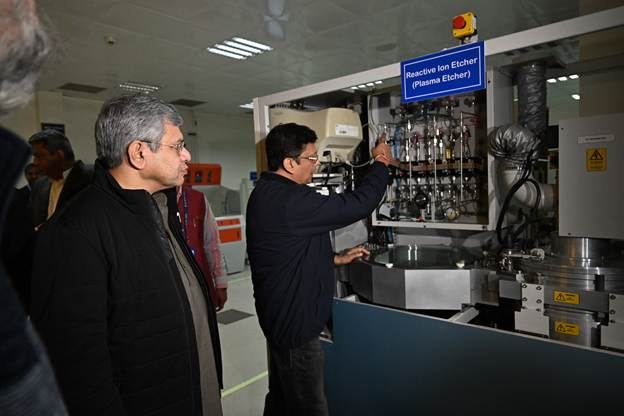
    India’s Electronics and IT Minister Ashwini Vaishnav recently visited SCL, and outlined a plan to modernise the chip facility.

    (00:20) India to invest Rs. 4,500 crore to modernise SCL Mohali

    India will invest Rs. 4,500 crore to modernise and expand the government-run Semiconductor Laboratory (SCL) in Mohali, targeting a 100-fold increase in wafer production while ruling out privatisation, Electronics and IT minister Ashwini Vaishnaw said during a site visit. SCL will support chip fabrication for students, startups and defence-linked agencies as part of a broader push for indigenous semiconductor capability, according to a statement from the ministry.

    Listen to the episode


    (00:55) Mixx Technologies raises $33 million series A funding

    Mixx Technologies, a US-based deep-tech startup founded by specialists from Intel and Broadcom, has raised $33 million in Series A funding led by ICM HPQC Fund alongside TDK Ventures, Systemiq Capital, and others. The capital will accelerate development of its HBxIO silicon-integrated optical engine, boost global R&D (including in India), and drive adoption of high-efficiency AI infrastructure platforms.

    (01:29) Lightspeed Photonics raises $6.5 million for optical AI chips

    Lightspeed Photonics has raised $6.5 million in a pre-Series A round led by Pi Ventures to scale its solderable optical interconnects for AI and high-performance computing data centres.  The Bengaluru-based startup claims 4x faster data transfer and roughly 2x lower power use than existing links, and plans to split the funds between R&D and commercial pilots through 2026.

    (02:01) Reditus Space plans reusable reentry vehicle for microgravity R&D 

    US startup Reditus Space has raised $7.1 million in seed funding to build ENOS, a reusable reentry spacecraft aimed at fast-turnaround missions for microgravity research and in-space manufacturing, Payload Space reports. The first ENOS flight, targeting a SpaceX rideshare next summer, will carry a pharma payload, reenter at over Mach 24, and test hardware designed for 20-plus missions and 40 kg payloads.

    (02:38) IonQ, CCRM to apply quantum tech to advanced therapies 

    IonQ has struck an investment and technology partnership with Canada’s Centre for Commercialization of Regenerative Medicine to apply hybrid quantum and quantum-AI tools to bioprocess optimization, disease modelling and advanced therapy manufacturing. IonQ becomes core tech partner across CCRM’s global network, with initial quantum-biotech projects in Canada and Sweden slated for 2026 as part of IonQ’s expanding European strategy.

    (03:10) Sparrow Quantum raises €27.5 million for photonic quantum chips 

    Denmark’s Sparrow Quantum has raised €27.5 million in Series A funding, in what it calls Scandinavia’s largest quantum-tech investment, to scale production of its Sparrow Core single-photon chip for room-temperature photonic quantum systems. The company plans to expand manufacturing and develop next-generation devices based on Niels Bohr Institute research, aiming to become a leading quantum chip supplier for European and global markets.

    (03:44) Vayavya Labs, SimDaaS tie up on autonomous mobility tools 

    Software engineering firm Vayavya Labs has signed an MoU with IIT Kanpur–incubated SimDaaS Autonomy to co-develop simulation-led tools for autonomous driving, ADAS and AI-based virtual validation. The partners will combine digital twin, virtual electronic control units and traffic-scenario simulation capabilities to accelerate virtual testing for complex Indian conditions and export solutions to global mobility markets.

    (04:17) AI-detected ‘hidden’ lion roar may boost conservation

    Scientists have identified a previously unknown “intermediary” lion roar that occurs alongside the classic full-throated call, using AI to sort thousands of recordings with about 95 percent accuracy. The added vocal signature can improve passive acoustic monitoring, helping estimate lion numbers and track individuals more reliably as wild populations fall to roughly 20,000–25,000 across Africa.