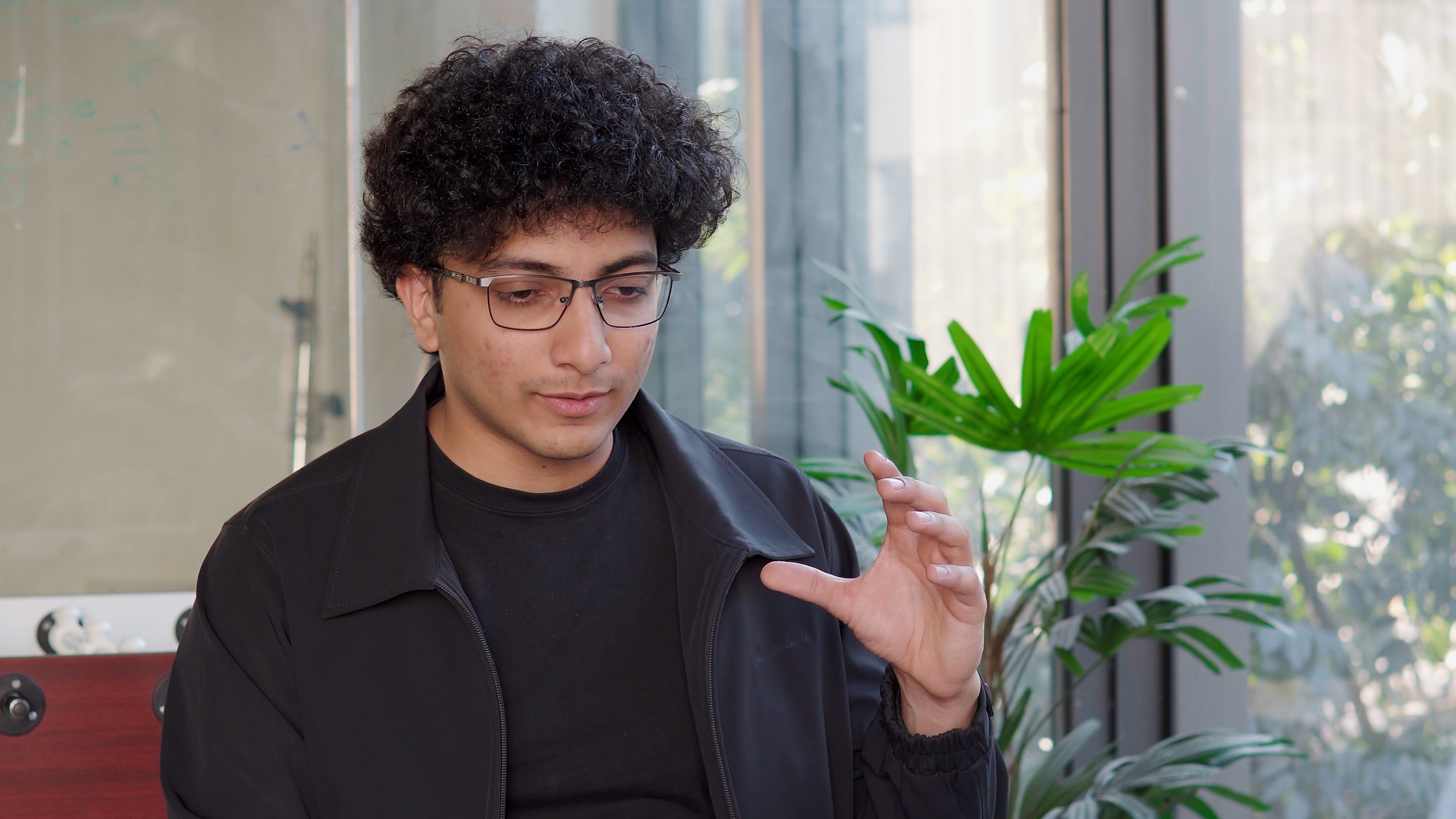
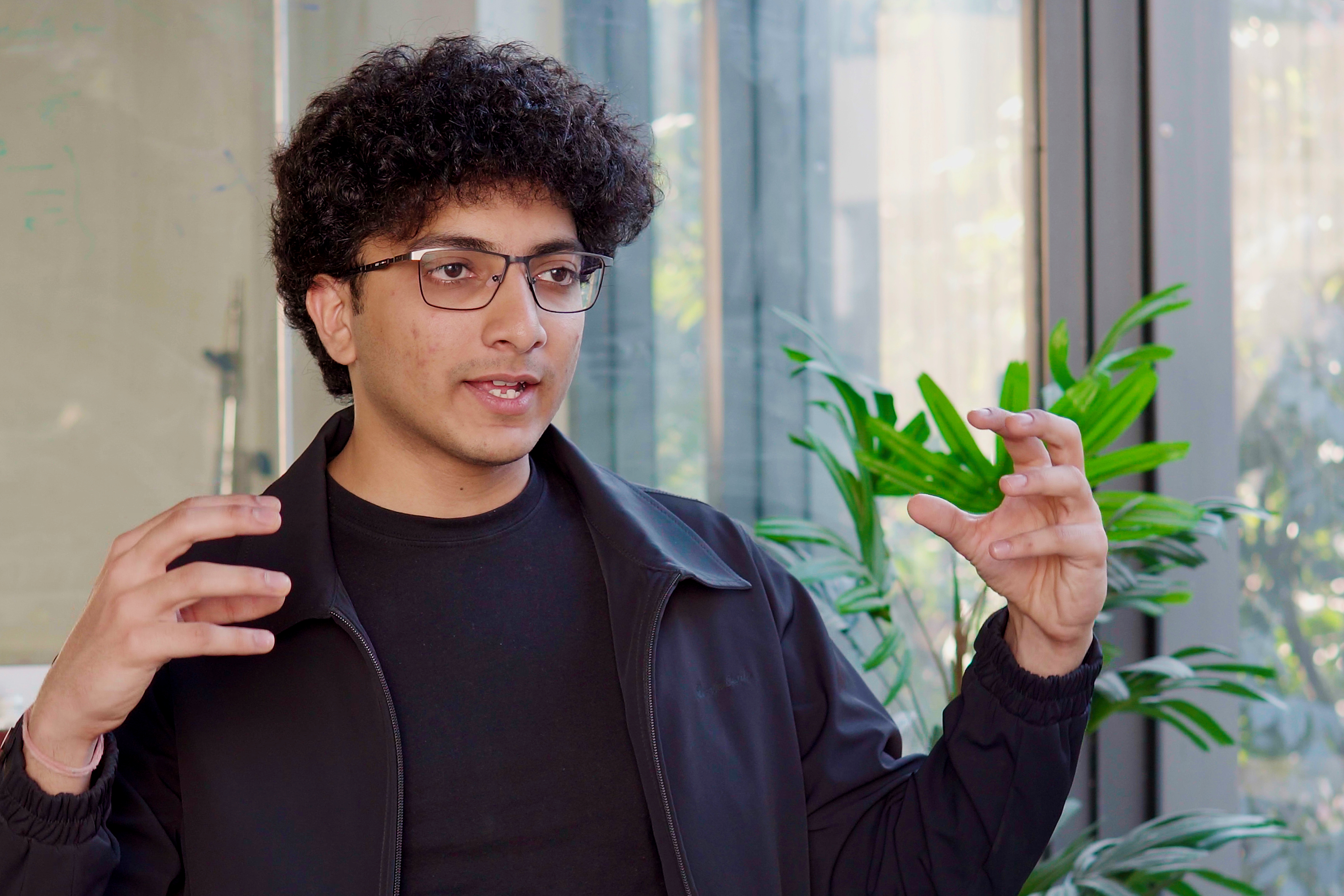
In a recent episode of Conversations at India Tech Report, Jay Panchal, founder and CEO at Aule Space spoke about his young space-tech startup’s vision to help build India’s robot workforce in space.
Aule is starting on that journey with the aim of launching a fleet of “jetpacks” that will work as mission extension vehicles for geostationary satellites and offer other applications in the defense sector as well. You can find the full conversation at indiatechreport.in or wherever you get your podcasts.
Here’s a quick point, with Jay talking about how he and his co-founders bring complementary skills to the table, their current team and immediate hiring needs – focused on core engineering.
In a recent episode of Conversations at India Tech Report, Jay Panchal, founder and CEO at Aule Space spoke about his young space-tech startup’s vision to help build India’s robot workforce in space.
Aule is starting on that journey with the aim of launching a fleet of “jetpacks” that will work as mission extension vehicles for geostationary satellites and offer other applications in the defense sector as well.
You can find the full conversation at indiatechreport.in or wherever you get your podcasts.
Here’s a quick chapter on some of Jay’s important formative experiences that set him on the path to entrepreneurship in the space economy.
Today I’m joined by Jay Panchal, founder and CEO of Aule Space, in Bengaluru. Jay started the company in 2024 with his fellow founders Nithyaa Giri, who’s Aule’s CTO, and Hrishit Tambi, its COO.
He talks about their efforts so far to develop “jetpacks” – sophisticated Mission Extension Vehicles (MEVs) designed for the task of rendezvous, proximity operations, and docking (RPOD).
The trio of entrepreneurs has just raised $2 million in pre-seed funding led by pi Ventures, a well-known deep tech VC firm in Bengaluru.
Aule Space founders (L-R) Hrishit Tambi, Jay Panchal and Nithyaa Giri. Image source: Aule Space. Edited by Hari Arakali.
Aule is developing an innovative non-cooperative docking mechanism, giving its jetpacks the ability to latch onto satellites and debris not originally designed for docking. Its design combines a satellite-agnostic docking mechanism with AI-driven guidance, navigation and control algorithms, aiming to field one of the world’s lightest and most cost-efficient RPOD satellite fleets.
The company is targeting use-cases from life extension of high-value geostationary communications satellites and debris removal to defence applications such as close-in inspection for space-domain awareness. With the long-term vision of establishing a robotic workforce in space, Jay hopes that over the next five years, Aule will operate a fleet of jetpacks. Their technology demonstrator could be ready as early as next year.