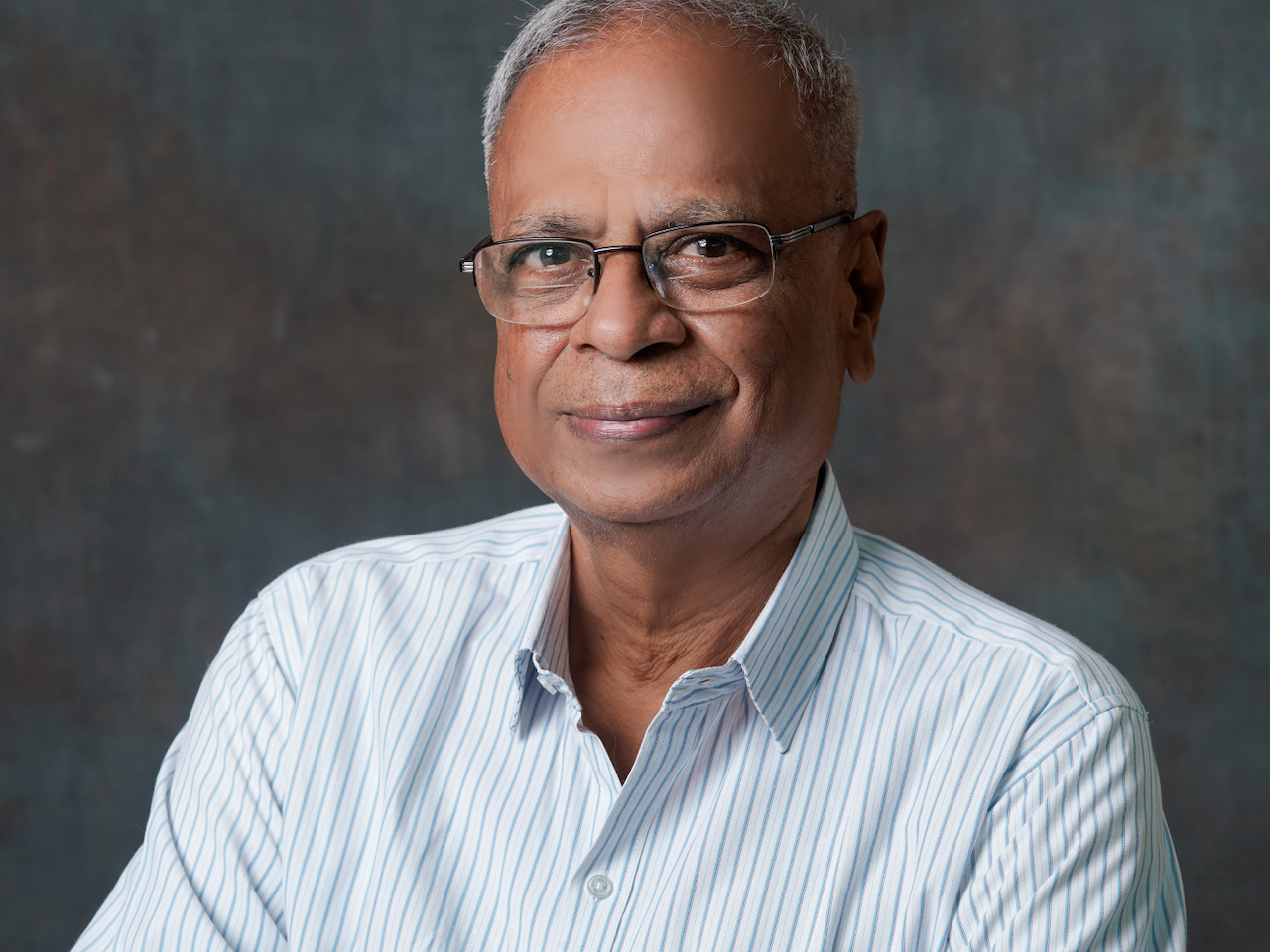
In this episode, I’m joined by Professor Ashok Jhunjhunwala, a doyen among India’s champions of technology-led innovation for the masses, to discuss his latest moonshot venture: the ITEL Foundation (Immersive Technology and Entrepreneurship Lab).
After decades of bridging academia and industry at the IIT Madras Research Park, over the last two years, Professor Jhunjhunwala has been chairing this ambitious industry consortium-led initiative to transform India into a global “product nation.”
We dive into ITEL’s unique model of forming scientific consortiums and nurturing young “Ranchos” to solve India’s most infrastructure problems – such as the need for affordable and reliable rapid mass transport, for example. Eliminating waterlogging in our cities after rains and floods, and slashing chemical fertilizer dependency in agriculture are other examples.
Join us as Professor Jhunjhunwala, who turned 73 last week, explains why achieving true technological sovereignty requires 20 million entrepreneurs who view failure as a mere stepping stone to success, a critical badge of experience. Discover how ITEL is building the future of Indian innovation, one impossible challenge at a time.
In my recent conversation with Vinod Shankar, founding partner at Java Capital, we discussed his note on how India could unlock a massive pool of capital and invest a trillion dollars in deep tech startups. Here’s a viewpoint on one of the topics, how corporate R&D and M&A play an important role in the growth of deep tech startups in the advanced economies. And how that’s been missing in India, so far.
Coming up in the next episode of Conversations at India Tech Report, Vinod Shankar, founding managing partner at Java Capital, discusses a note he wrote recently, calling on India’s ultra rich to back deep innovation in the country with just 10 percent of their money.
They can afford this, and he does so with his own money, Vinod says. The result of this collective effort, if it happens, could be the transformation of India’s science and engineering innovation landscape, he argues.
Catch the full interview right here on Tuesday, June 23 at 6 a.m. IST. Here’s a 90 second preview.
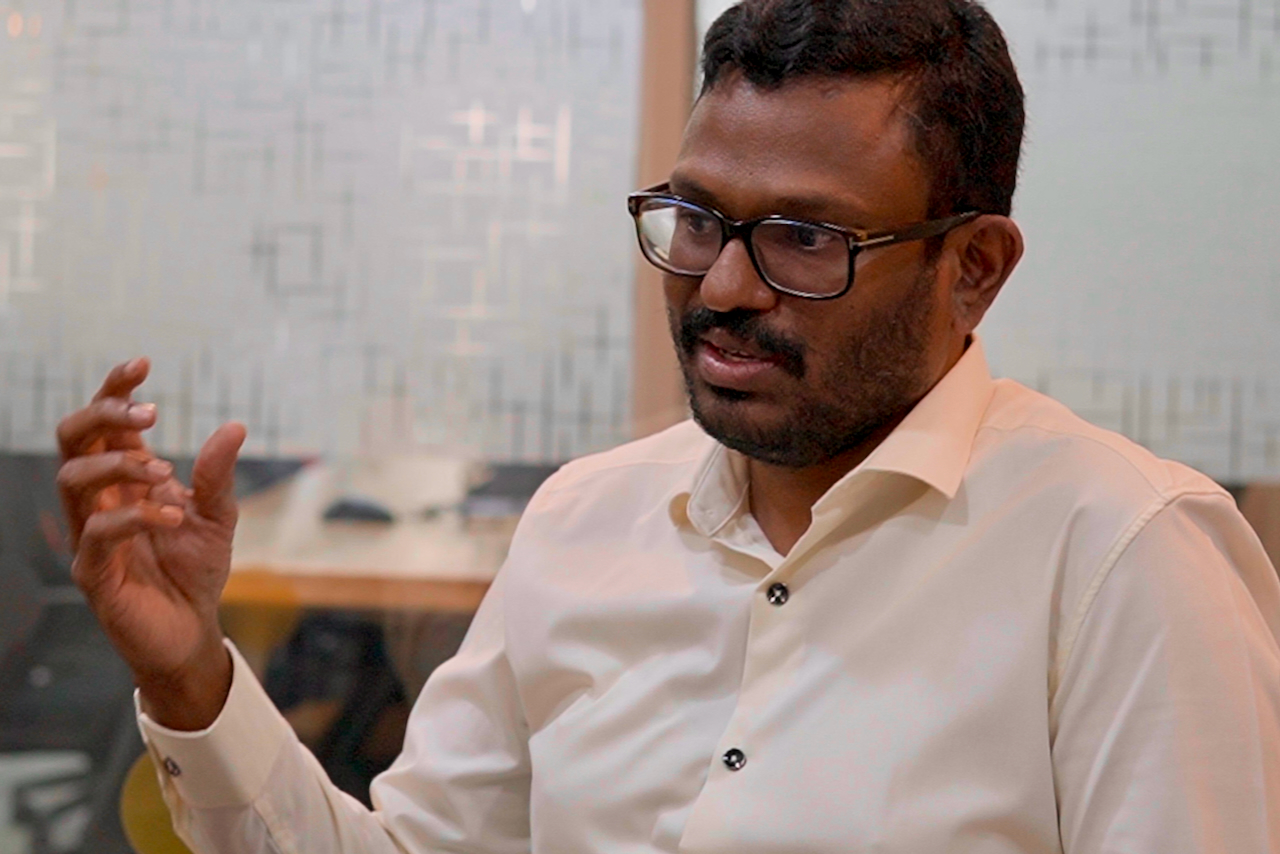
In today’s episode, Ramamurthy Sivakumar, co-founder and CEO at HrdWyr, a semiconductor design startup in Bengaluru, talks about the company’s plans after recently raising $13 million in Series A funding, in an investment led by Ideaspring Capital.
The company was co-founded in 2023 by Siva and Ganesh Guruswamy, both industry veterans spanning companies including Intel, AMD, Sandisk and Motorola.
In this conversation, Siva talks about how the era of custom silicon is upon us and what the AI-led opportunity represents. The company specialises in System-on-Chip (AISoC) designs tailored for edge computing and applications like electric vehicles and industrial equipment.
HrdWyr’s first product, named Indus 1011, is expected to hit the market by the end of this year, Siva says. In August last year, the company had announced it had picked Tata Electronics as the packaging partner and also that Indian consumer electronics company boAt would be an anchor customer for the chip — a small, but historic milestone for India’s semiconductor aspirations. boAt is to use this chip, which offers power management as a core feature, in its truly wireless earbuds charging case.
As many of you know, startups such as HrdWyr are getting funded in the time of a broader national push in India for semiconductor self-reliance, supported by significant government investment. Siva notes, however, that significant challenges remain, such as the lack of timely and adequate funding at critical stages.
Still, he thinks that the only way forward is to look at the aggregate of all the ongoing efforts — from startups such as HrdWyr to conglomerates like Tata setting up foundries and OSATs — as an opportunity to tap a trillion-dollar sector, and, as a nation building mission.
In today’s episode, I bring you Part 2 of an interview with Naganand Doraswamy, managing partner, and Suryaprakash Konanuru, CTO, at Ideaspring Capital in Bengaluru.
In this episode, we pick up the conversation with a brief discussion on what the two VC investors are seeing when it comes to the growth of translational research in India — and I want to add that this was in the broader sense of any movement from scientific lab to commercial product, and not just in the medical field, where the term originated.
And if you stick around you’ll hear Naganand and Suri discuss their views on how early-stage investing in deep tech is changing, can such investors make meaningful investments in highly capital intensive sectors such as robotics, nuclear fusion and quantum computing hardware, in India, getting something not quite right but moving on, and whether AI is changing their work as well, and in what ways.
And as promised in Part 1, we take a quick look at what might represent a ‘Flipkart moment’ in India’s deep tech sector, and the evolution of Ideaspring itself from Fund 1 to Fund 4.
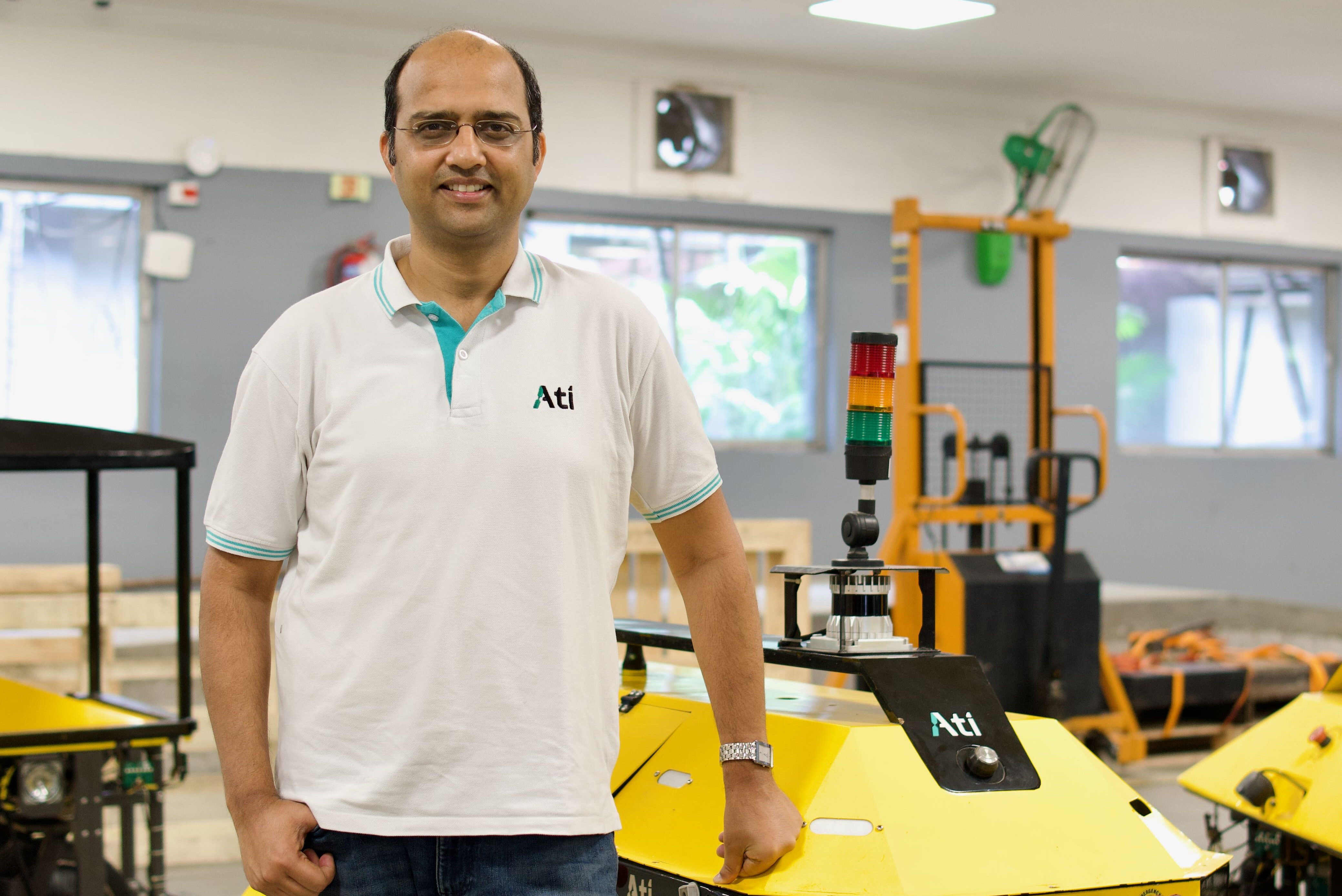
In this episode, Saurabh Chandra, co-founder and CEO of Ati Motors in Bengaluru, talks about how autonomous mobile robots (AMRs) are set to completely change factories, warehouses and an increasing number of other environments.
Backed by investors including MFV Partners, Exfinity Ventures, NGP Capital and Blume Ventures, Ati is shipping its AMRs to some of the biggest manufacturing names in India, Southeast Asia and the US.
Chandra talks about Ati’s own family of robots, named Sherpa, some early engineering decisions that have stood the company in good stead, and how Ati can go from shipping hundreds of robots to thousands, and more. We also briefly touched upon lessons from building a deep tech robotics company out of India.
Here are my five top takeaways from the conversation.
Early engineering decision to avoid teleoperation from the start
Ati Motors made a deliberate early engineering choice to design its robots for full autonomy without any dependency on a teleoperator — a person remotely controlling or assisting the robot during exceptions or tough situations. While it was initially tempting to include teleoperation as a safety net for handling edge cases, the engineering team argued that this would become a crutch, making it harder to ever achieve true, robust autonomy.
This decision led to a longer initial development phase, as the team had to ensure the robots could handle all real-world scenarios independently. However, this approach ultimately paid off by forcing the team to build a more reliable and resilient system, setting Ati Motors apart.
“Don’t take even a screw for granted. This is really one of the places where for want of a nail, the kingdom can be lost.”
Saurabh Chandra, Co-Fouder and CEO, Ati Motors
Ati’s full-stack approach: comprehensive in-house development and integration
Ati’s full-stack approach means the company develops every critical aspect of its AMRs in-house — from navigation and localization algorithms to vehicle design, perception modules, and fleet management software, although some individual specialized components such as sensors aren’t made in India and have to be imported.
By owning the tech stack, Ati ensures its robots are purpose-built for challenging factory conditions, can be quickly adapted to new customer needs, and deliver robust, reliable performance with little dependence on external infrastructure or third-party systems.
Lessons from building Ati out of Bengaluru and India
A key lesson from building Ati Motors out of Bangalore and India is the tremendous advantage of tapping the city’s multidisciplinary talent pool and its robust, under-appreciated manufacturing ecosystem – well before the city came to be known for its IT services prowess.
Chandra highlights that Bengaluru offers access to both technical expertise and a strong base of manufacturing customers, enabling rapid product iteration and real-world feedback that even locations like California cannot match.
The rich local supply chains from India’s electric vehicle (EV) industry provide unique cost and innovation benefits, as Ati can co-develop and customize key components with local partners — an advantage rare outside of a few global markets.
Top priority: scale from shipping hundreds of robots to thousands
One of Ati’s top priorities today is to scale its operations so it can meet the growing demand for its robots and move from shipping hundreds of units to thousands.
This means accelerating deployment, expanding manufacturing capacity, and streamlining processes to handle much higher volumes efficiently. The company is also focused on improving tooling and support for its partners, enabling them to deploy and manage robots more independently, which is essential for rapid global expansion and for reaching new customers across North America, Southeast Asia, and potentially Europe and Japan.
By prioritizing scalable operations and robust partner enablement, Ati aims to solidify its leadership in industrial automation and make its robotic solutions accessible to a far broader range of businesses worldwide.
Chandra’s advice to aspiring deep tech entrepreneurs in India
Aspiring deep tech entrepreneurs, especially in the hardware space in India, should be prepared for the immense complexity and challenges involved, Chandra says. For example, how does one crack the issue of quality and efficiency at the same time at low production volumes.
He notes that hardware ventures require a wide range of expertise and that, at early stages, both founders and vendors may lack experience, making it harder to achieve desired outcomes.
Chandra cautions against underestimating any detail — even the smallest component can be critical to success. He suggests that, while it is important to be ambitious, entrepreneurs should also recognize the value of getting specific parts right.
“Don’t take even a screw for granted,” he says. “This is really one of the places where for want of a nail, the kingdom can be lost.”