Tag: Warehouse automation

  • Humanoid future: Arjun Dutt at Bain on the coming waves of robots

    Humanoid future: Arjun Dutt at Bain on the coming waves of robots

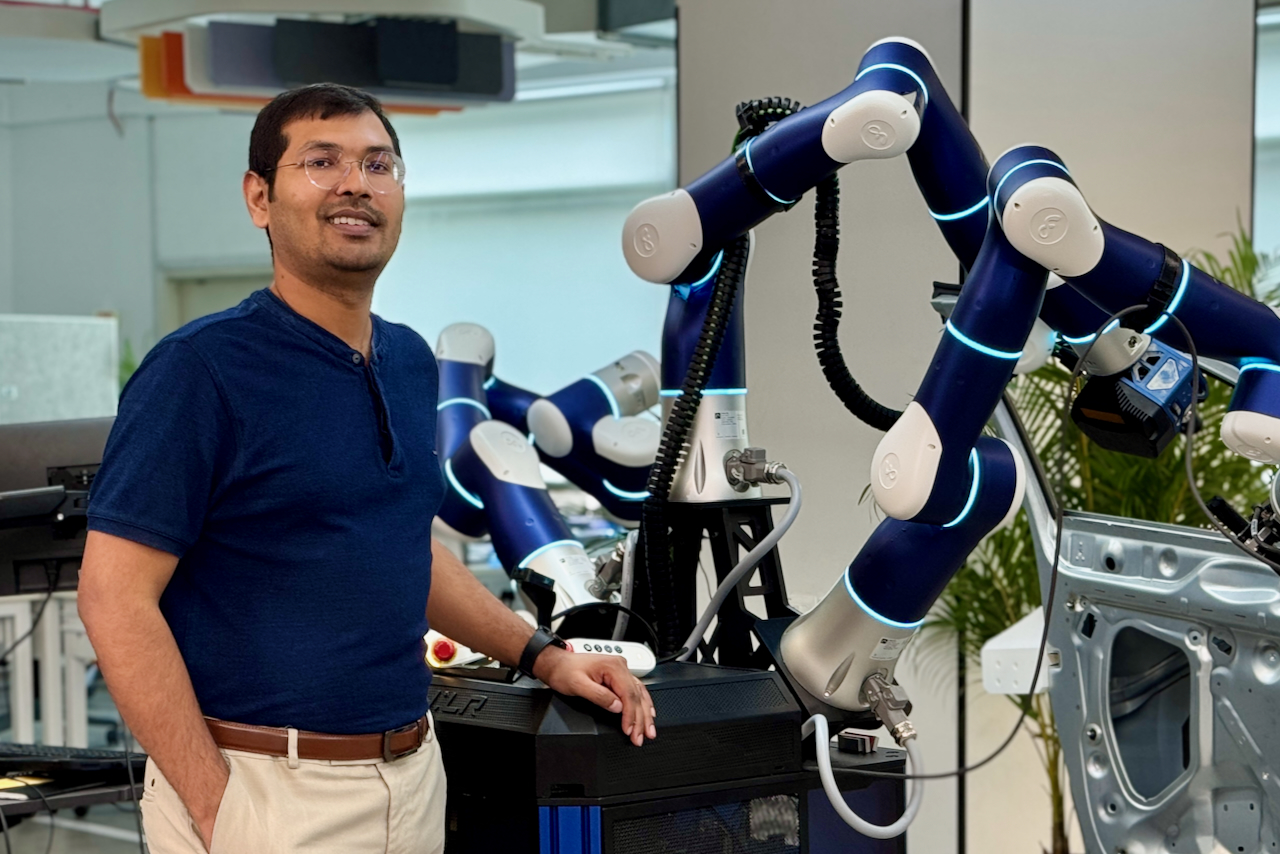
    In this episode, we explore the rapidly evolving world of physical intelligence with Arjun Dutt, a Partner at Bain & Company and former entrepreneur. As generative AI transitions from digital interfaces into the physical world, Arjun explains why humanoid robots are emerging as a solution to the worsening labour shortages, especially in the so-called ‘brownfield’ plants in many advanced economies.

    We dive into Bain’s four-point definition of humanoids — adaptive intelligence, spatial perception, bipedal dexterity, and sustained power — and talk about how the current battery technologies remain the “long pole in the tent” for true autonomy.

    Arjun outlines the three waves of adoption that are discussed in a recent note that he co-authored, predicting that while industrial brownfield settings will see scale within three to five years, consumer-centric home robots are at least a decade away.

    You will also find interesting insights on the following topics: The role of generative AI as a “foundational capability,” allowing robots to learn via observation and training data rather than rigid, scenario-based programming; the evolution of specific task-oriented robots versus truly general-purpose humanoids; and where might the eventual “control points” lie, as Arjun put it, of humanoid robots – meaning, who’ll control the most critical technologies in these robots?

    Lastly, we touched upon his advice for India’s deep tech entrepreneurs, discussing the merits of “going narrow” and how to navigate the reliability and regulatory hurdles of the US market.

  • Why ‘Factories will be the new products’: Gokul NA on the bigger picture behind CynLr’s Object Intelligence Stack

    Why ‘Factories will be the new products’: Gokul NA on the bigger picture behind CynLr’s Object Intelligence Stack

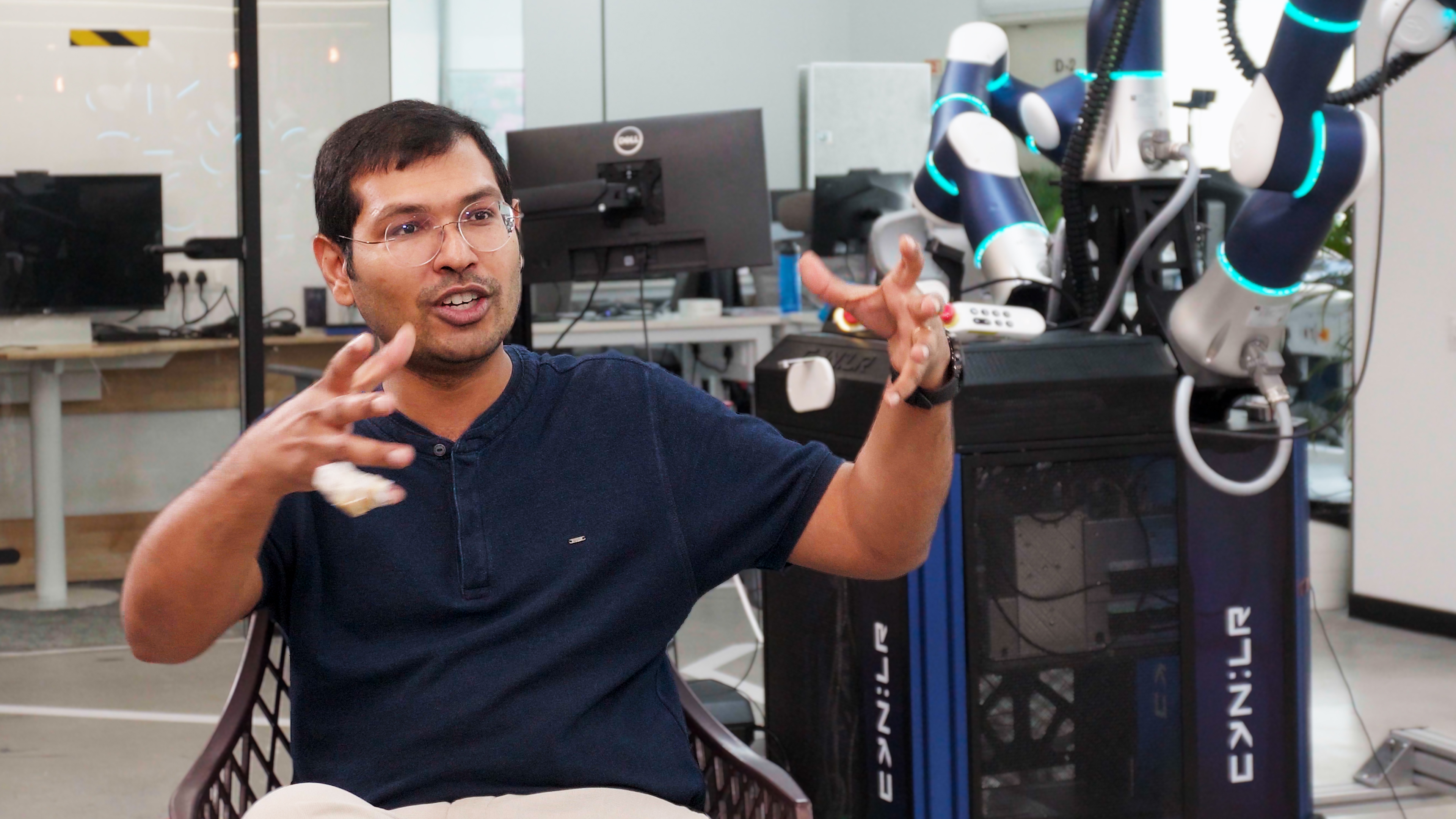
    In this excerpt from a recent conversation with India Tech Report, Gokul NA, founder of CynLr, explains his view of the bigger picture in developing the company’s “Object Intelligence Stack” for robots.

    Gokul, his fellow-founder Nikhil Ramaswamy and their 85-member team have put in some five years of R&D into this stack, which they see as a precursor to a general purpose “manipulation OS” for robots.

    In this view point, Gokul talks about today’s challenges that large manufacturers face, with the example of the auto sector, in an age of rapidly shifting consumer tastes. Robots that could quickly switch from one type of task to another could hold the key to genuine personalised product customisation in cars and the gadgets that go into them and therefore serve as a source of market expansion for the OEMs Gokul argues.

    Such robots could also help make factories and manufacturing significantly more sustainable by advancing material recycling —what if your new car could come from your old car or your new phone from your old phone, he asks.

    Today that recycling is very costly and therefore not attractive, but a robot that automates the effort could change the landscape, he says. In this scenario, it would also be possible to go from centralised, gargantuan Giga-factories to hyper-local “micro-factories” that offer personalisation plus sustainability.

  • Gokul NA on training robots to learn like infants: CynLr’s Object Intelligence Stack

    Gokul NA on training robots to learn like infants: CynLr’s Object Intelligence Stack

    In today’s episode, we dive into the future of robotics with Gokul NA, founder of CynLr, or Cybernetics Laboratory, perhaps one of India’s most advanced companies in this field.

    CynLr is headquartered in Bengaluru, with an advanced R&D Lab in Switzerland and a growing customer-facing operation in the US, where Gokul’s fellow founder Nikhil Ramaswamy is based.

    The entrepreneur duo and its 85-member team are tackling a challenge that scientists and engineers have been working on for several decades: the ability for robots to intuitively handle unfamiliar objects without custom programming or prior training.

    In this conversation, Gokul explains their new “Object Intelligence Stack,” a system designed to imitate some of the functions related how a human brain might learn — much like a baby impulsively grasping a new toy without knowing its name or purpose.

    By collaborating with the Centre for Neuroscience at the Indian Institute of Science, CynLr is translating brain-function research into a sophisticated software and sensor framework. Shifting the focus from algorithms that work on data to the “physics of objects,” CynLr’s intelligence stack is what Gokul describes as the precursor to a “manipulation OS.”

    Drawing parallels to Apple in the 1980s, Gokul shares his vision for a future of “object computers” and micro-factories – important components of CynLr’s vision for global manufacturing, where instead of Giga-factories, we might have fabrication facilities as small as a car dealership or even a garage.


    Chapters

    (00:00) Challenges of building a deep tech organization in an absent industry

    (05:58) Imitating the human brain’s ability to handle unfamiliar objects

    (09:18) Partnering with neuroscience researchers to replicate human intuition

    (11:32) Developing a manipulation operating system and the future object store

    (19:47) Automating assembly for automotive and semiconductor manufacturing

    (25:17) Transitioning from rigid gigafactories to software-defined micro-factories

    (35:49) Fostering a deep tech ecosystem to address the brain drain

    (40:18) Strategic funding goals and the technical roadmap for scaling


    Gokul and Nikhil are backed by investors including Speciale Invest, growX ventures, Pavestone VC, Athera Venture Partners (formerly Inventus India), Anicut Capital, Arali Ventures, Redstart Labs, and several other institutional and angel investors.

    CynLr’s long-term vision also involves creating a manipulation operating system and an “object store” and a “task store” to transform flexible manufacturing, just as the App Store transformed the smartphone.

    Currently, they are deploying these solutions in the automotive and semiconductor industries to automate some complex manual assembly processes.

    In this conversation, Gokul also talks about some of the challenges of building a company like CynLr in India, where many important ingredients are missing, and what he thinks the industry can do to change that.

  • Gokul NA at CynLr on a ‘manipulation OS’ for robots

    Gokul NA at CynLr on a ‘manipulation OS’ for robots

    Coming up, a conversation with Gokul NA, founder and head of product, design & brand at CynLr (Cybernetics Laboratories), a robotics startup in Bengaluru.

    Gokul, his fellow founder Nikhil Ramaswamy, and their team at CynLr, have recently released what he described as an Object Intelligence Stack. The technology aims to mimic the curiosity and adaptability of a human infant, allowing robots to manipulate unfamiliar items without specific prior training.

    By collaborating with the Centre for Neuroscience at the Indian Institute of Science, CynLr is translating brain-function research into a sophisticated software and sensor framework. Their long-term vision involves creating a manipulation operating system and an “object store” and a “task store” to transform flexible manufacturing, just as the App Store transformed the smartphone.

    Currently, they are deploying these solutions in the automotive and semiconductor industries to automate some complex manual assembly processes. You can catch the full conversation on Friday, March 6 right here or wherever you get your podcasts.

    Here’s a one-minute preview with Gokul envisioning a future “manipulation OS” for robots of which the object intelligence stack is the precursor.

  • Perceptyne’s founders on why 2026 could be the year of deployment of robots

    Perceptyne’s founders on why 2026 could be the year of deployment of robots

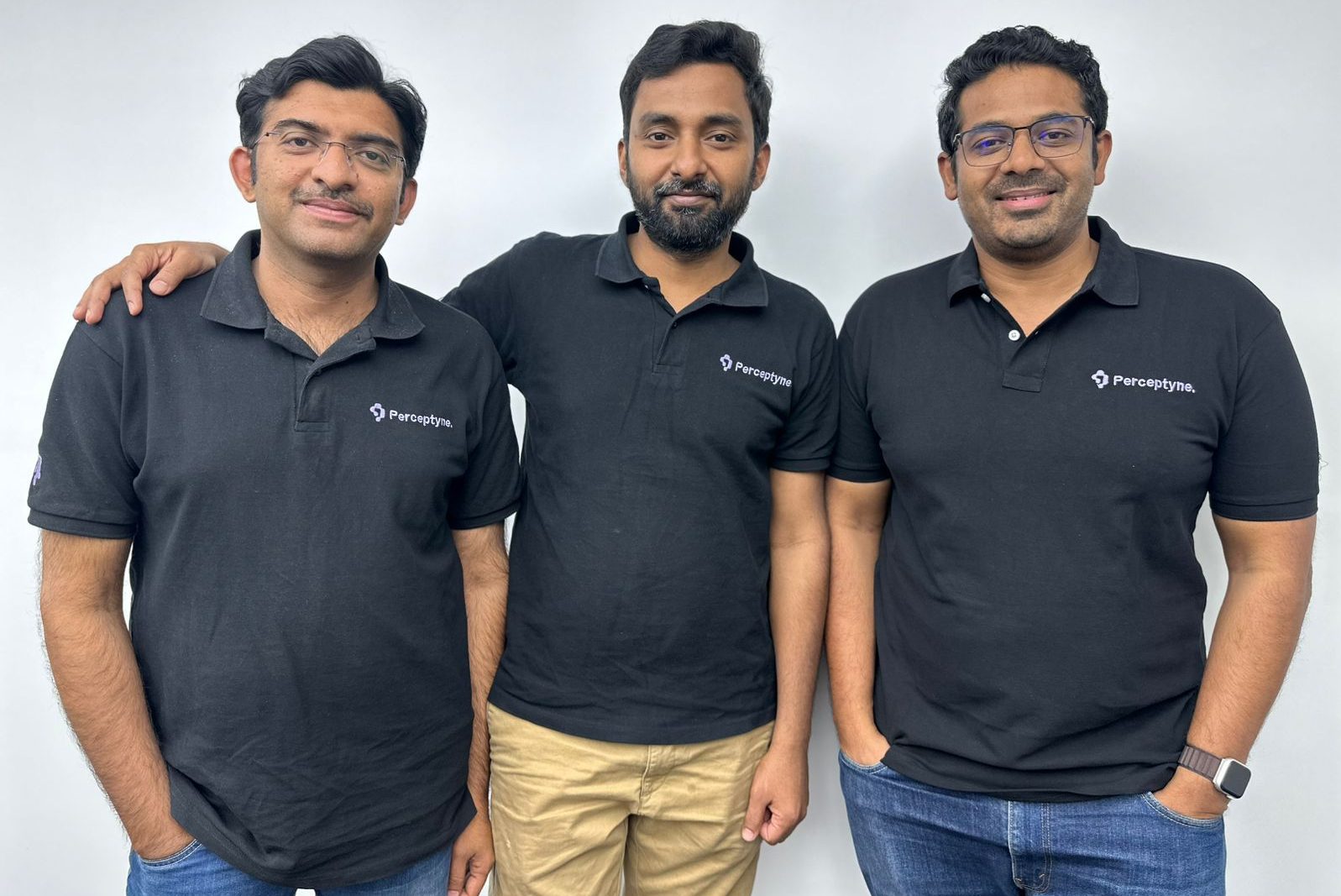
    In this year’s first episode, I’m joined by Mrutyunjaya NRaviteja Chivukala and Jagga Raju N to unpack why and how they started Perceptyne Robots, and what it takes to build an AI-native robotic system out of India.

    Perceptyne is a Hyderabad-based company building dexterous, dual-arm, intelligent robots for industrial automation, currently focused on automotive and electronics manufacturing lines.

    The founders explain the gap they saw on real shop floors, where many assembly stations still rely on manual work because traditional approaches cannot handle unstructured inputs, fine force control, or frequent product changes.

    The conversation goes into their vertically integrated hardware, including mobile configurations, and their PR-PhI “physical intelligence” software layer that orchestrates perception, control, and imitation-learning–based skills like visual servo, slip-free grasping, and force-based assembly.

    You will also hear their take on the state of India’s robotics ecosystem, the evolution of robots as a combined hardware-and-software challenge, and how they are moving from pilots with global automotive and electronics manufacturers toward larger deployments. Perceptyne, which turns four this year, is backed by two well-known deep-tech VC firms,  Yali Capital and Endiya Partners.