
Daily brief on deep tech and climate tech news from India and around the world.

Green Climate Fund approves record $1.2 billion for climate projects in developing nations
The Green Climate Fund has approved a record $1.2 billion for 17 new climate projects, mainly in Asia and Africa, to help vulnerable nations adapt to and mitigate climate change, Reuters reports. The investments include $227 million for green bond markets and $200 million for green finance in India. Reforms will speed up partnerships and project approvals, aiming to reduce accreditation time for local partners from 30 months to nine months.
Listen to the podcast
UN development summit endorses innovative taxes and finance tools to boost global climate funding
At a UN conference in Spain last week, 192 countries adopted the “Sevilla Commitment,” backing new climate finance tools such as taxes on the super-rich, levies on polluting transport, and debt swaps, Climate Home News reports.
Leaders urged carbon and airline ticket taxes, pre-arranged disaster aid, and easier access to international funds for developing nations. The summit stressed urgent action as climate impacts worsen, with richer countries called to lead on finance and support fair energy transitions worldwide.
UK launches first onshore wind strategy to double capacity and create 45,000 jobs by 2030
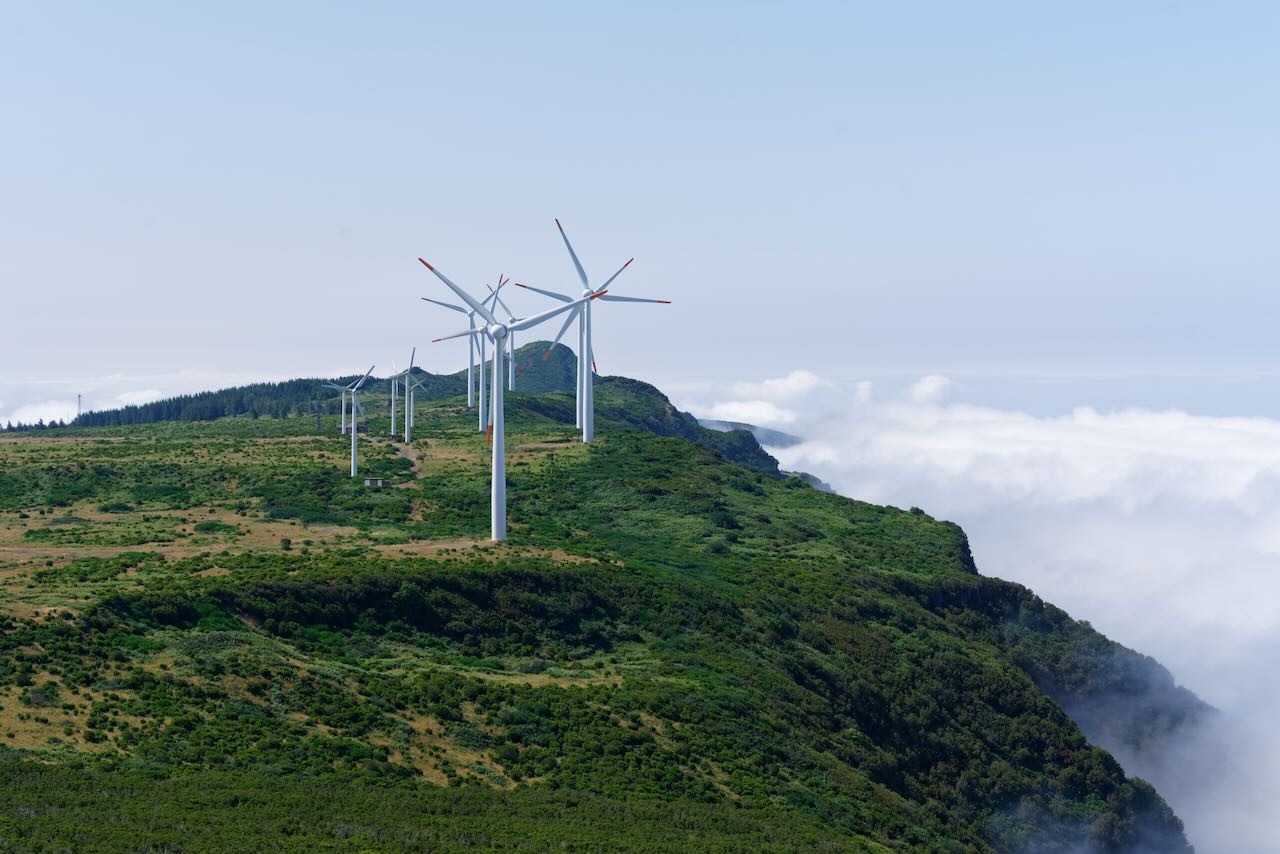
The UK government has unveiled its first-ever onshore wind strategy, aiming to nearly double capacity to 27–29 GW by 2030 and create up to 45,000 skilled jobs, according to a statement from the UK’s department of energy security and net zero.
Over 40 measures will accelerate project development, streamline planning, repower aging turbines, and offer community benefits. The plan reverses nearly a decade of stagnation, boosts energy security, and seeks billions in private investment, positioning onshore wind as a cornerstone of Britain’s clean energy future.
Global EV and battery investment surges, but China’s overcapacity and policy shifts challenge industry
Global investment in electric vehicles (EVs) and batteries is booming, with China leading in manufacturing and sales due to strong state support and a vast domestic market, according to a recent report from the Rhodium Group.
Europe is rapidly adopting EVs, relying heavily on imports, especially from China, while the US faces uncertainty as potential policy rollbacks threaten its growing domestic industry. Emerging markets are seeing fast EV adoption, often driven by affordable Chinese models, as the sector reaches a pivotal global transition point.
Crosstown raises $3.8 million to retrofit Europe’s gas turbines for hydrogen
Swiss startup Crosstown has secured CHF 3 million ($3.8 million) in seed funding to scale its patented H2R Burner technology, which enables existing gas turbines to run on 100 percent hydrogen or mixed renewable fuels. This innovation allows operators to cut CO₂ emissions by over 300,000 tons per 100MW turbine annually and reduce NOx by up to 80 percent, offering a cost-effective path to decarbonization without replacing current infrastructure.
New Climate Tech Readiness Index ranks industries on real-world climate technology adoption
Climate Insider has launched the Climate Technology Readiness Index, assessing how prepared emissions-intensive industries — like oil & gas, chemicals, and power — are to actually adopt and scale climate technologies, the climate tech industry media and market intelligence provider said in a recent post.
Unlike traditional indices that track climate pledges, this tool measures organizational capabilities, R&D investment, partnerships, and operational deployment. The index aims to bridge the gap between climate tech innovation and real-world implementation, providing critical intelligence for companies navigating urgent regulatory and decarbonization pressures.
AI-powered robots replace farm hands and herbicides, offering sustainable weeding solutions
Aigen, a US startup, has developed a solar-powered, AI-driven robot that autonomously removes weeds from fields, addressing labour shortages and herbicide resistance, according to an AFP report that was picked up by the Economic Times.
The robot, called Element, uses on-board cameras and AI to navigate crops – mimicking how human labourers would perform weeding – and eliminates the need for chemical weed killers. Priced at $50,000, Element aims to save farmers money, protect health, and promote climate-friendly agriculture, with robots already operating in cotton, tomato, and sugar beet fields.
In Conversation
In-depth conversations with entrepreneurs, investors, industry leaders and other stakeholders building India’s deep tech and climate tech ecosystems.


Insight
Takeaways from conversations with entrepreneurs, investors, industry leaders and other stakeholders building India’s deep tech and climate tech ecosystems.
Leave a Reply