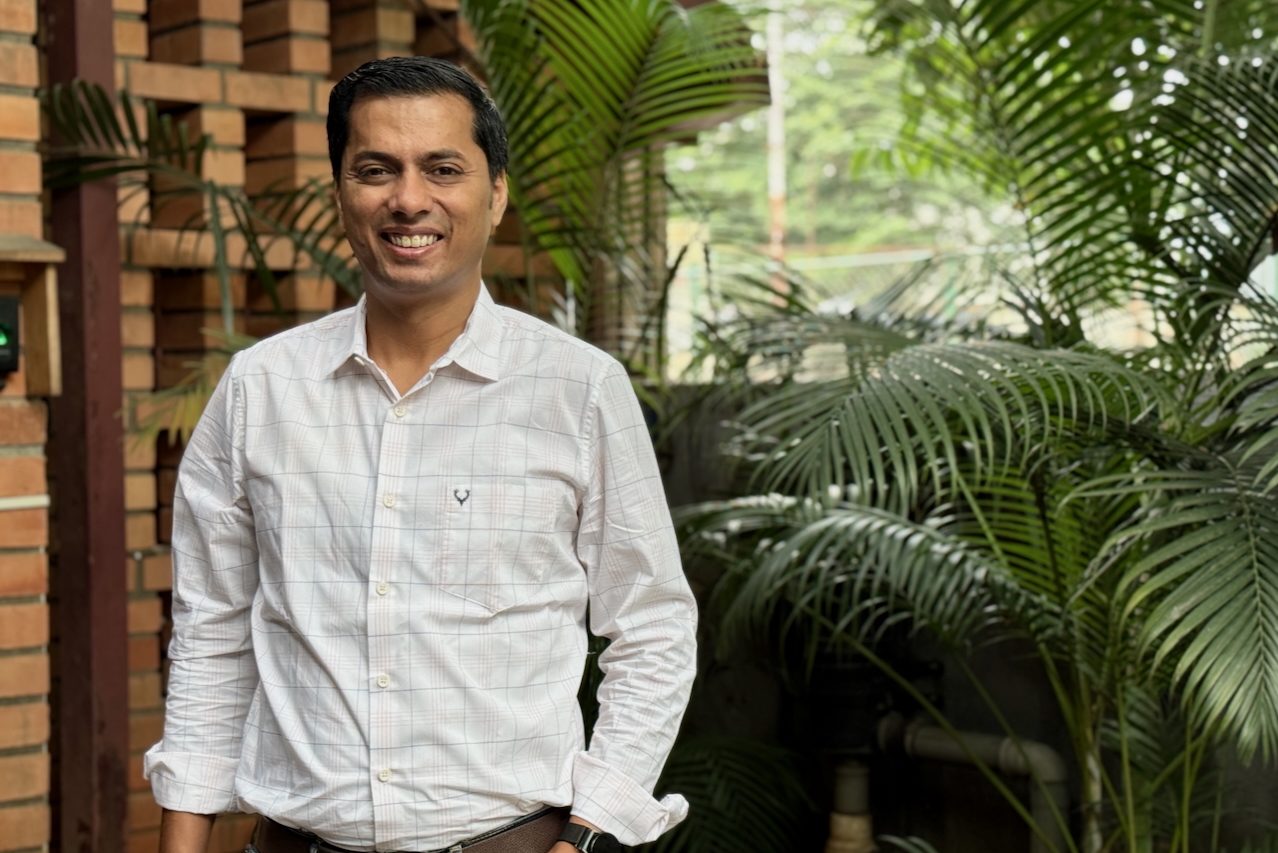
My guest in today’s episode is Arpit Agarwal, a partner at Blume Ventures, one of India’s best known early-stage sector-agnostic VC firms with a solid track record of backing what Arpit describes as frontier technologies.
In this episode, we discuss the challenges and advantages of building and scaling deep science and technology-based companies out of India. Arpit delves into his experience navigating the cycles of venture capital, the gradual shift to larger fund sizes at Blume, and the fundamentals that guide investment decisions.
He also comments on international dynamics, including the movement of talent and capital in the context of AI being widely seen as the biggest opportunity for founders and investors alike. He weighs in on the shifting balance between hardware and software within India’s deep tech scene and identifies some of the most interesting investment themes.
As Blume prepares to move into its fifth fund, Arpit is also happy to debate why sector-agnostic funds may be better placed to invest in deep tech.
In a recent episode, I spoke with Murari Ramkumar and Dr. Nagesh Kini, founders of Vimano, a deep-tech startup specializing in advanced nanotechnology and materials science. The company focuses on developing ion-conductive membranes that are critical components for energy transition applications, including redox flow batteries, electrolysers for green hydrogen production and proton exchange membrane (PEM) fuel cells.
In our conversation, Murari and Dr. Nagesh touched upon everything from how a chance meeting led to Vimano years later, the story behind the name of their startup and the various lessons from building a deep tech hardware company out of India. Here are my top 10 takeaways.
1. Founders’ journey: From Thermax to deep-tech entrepreneurship
Murari and Dr. Nagesh first met at Thermax, where Murari interned and Nagesh led R&D in emerging energy technologies. Their shared expertise in material science and exposure to energy conversion technologies inspired them to launch Vimano.
After years in academia and industry, they combined their experiences to address critical challenges in the energy transition, ultimately founding Vimano to develop advanced membrane technologies for clean energy applications.
2. The genesis and meaning behind the name Vimano
The name ‘Vimano’ is a blend of three words: ‘Virya’ (energy or intensity in Sanskrit), ‘ma’ from materials, and ‘no’ from nano. This reflects the company’s mission to create sustainable, efficient, and cost-effective materials through nanoscience for energy applications. The founders sought a name that reflected their focus on energy, materials, and nanotechnology.
Vimano’s innovation lies in its proprietary ion-conductive membranes, which are engineered for high performance in electrochemical devices like flow batteries, electrolysers, and fuel cells.
Their technology taps nanoscale features and custom material formulations. The team has developed specialized methods to scale up production while retaining nanoscale properties, enabling tailored solutions for specific industrial applications.
4. Real-world applications: Batteries, hydrogen, and satellites
Vimano’s membranes are targeted at uses including stationary power via flow batteries, hydrogen production and fuel cells, and satellite thermal management that India’s space agency ISRO is testing out as a potential import substitute product.
Flow batteries enable long-duration energy storage for grids, while hydrogen applications support green fuel generation and cleaner power from hydrocarbons. In satellites, these membranes provide passive thermal management, acting as efficient heat shields to protect sensitive electronics from extreme temperature variations in space.
5. Overcoming manufacturing challenges through ingenuity
Operating with limited funding, and bootstrapped for its first five years, Vimano built most of its manufacturing tools in-house, using local vendors and partners.
The founders’ backgrounds in both academia and industry enabled them to innovate frugally, scaling up from small lab samples to half-meter membranes. This hands-on approach allowed them to control costs, iterate quickly, and develop expertise in scaling nanomaterial-based products for industrial use.
6. Achieving product-market fit and commercialization milestones
Vimano is progressing through key commercialization stages, measuring success by technology readiness, manufacturing readiness, and adoption readiness levels. Their membranes are already in pilots at ISRO and are being evaluated by device manufacturers. While some applications are closer to full market adoption, others require further validation. The company’s focus is on demonstrating consistent quality and performance at scale to secure broader industry buy-in and achieve lasting product-market fit.
7. VC funding and growth trajectory
The company recently closed a $2.9 million seed round led by Ankur Capital, with additional support from syndicate partners. This funding will enable Vimano to expand manufacturing capacity, support R&D, and pursue pilot projects with industry partners.
Prior to this, Vimano operated with founder capital, grants, and early-stage investments. The current round provides a runway for 24 months, with the team remaining opportunistic about future fundraising as they scale.
8. Building a globally relevant supply chain from Bengaluru
Vimano’s headquarters and core team are based in Bengaluru, with plans to expand both domestically and in the US. While India offers cost advantages and a growing talent pool, the company also seeks to leverage advanced infrastructure and industry networks in the US and Europe.
Their business model is B2B, supplying device manufacturers and system integrators worldwide, with a strong export orientation due to the concentration of device makers abroad.
9. Focus on team and infrastructure for the next growth phase
Currently, Vimano has about 10 full-time and six part-time employees, with a strong emphasis on R&D and application development. The next phase involves building out manufacturing infrastructure, creating controlled environments for consistent production, and strengthening the team with both technical and commercial talent.
Achieving repeatable, high-quality manufacturing at scale is a top priority for enabling global supply and long-term competitiveness.
10. Vision: Turning a good product into a great, sticky solution
The founders are committed to transforming their promising technology into a “great product” that is indispensable to customers, even in legacy sectors with entrenched incumbents. Their goal is to build a globally relevant, resilient supply chain and become a key enabler in the clean energy transition.
Over the next two years, Vimano aims to consolidate its technological advances, scale production, and deepen customer relationships to secure a lasting foothold in the global energy market.
My guests today are Murari Ramkumar and Dr. Nagesh Kini, founders of Vimano, a deep-tech startup headquartered in Bengaluru, India, specializing in advanced nanotechnology and materials science.
The company focuses on developing ion-conductive membranes that are critical components for energy transition applications, including Redox flow batteries, electrolyzers for green hydrogen production and Proton Exchange Membrane (PEM) fuel cells.
These technologies are essential for enabling cost-effective, long-duration energy storage and supporting the global shift toward renewable energy systems.
In this conversation, Murari and Dr. Nagesh give us a glimpse into their journey that started with a chance encounter at Thermax and has grown to a venture-funded membrane technologies startup, with early customers including the Indian Space Research Organisation. They are now backed by early-stage deep science and tech focused investor Ankur Capital, a VC firm that’s among the leaders in backing founders in India in sectors ranging from agri and biotech to B2B supply chain.
In this episode, the two entrepreneurs also delve into some of the technical and entrepreneurial hurdles of building a deep-tech startup in India, from fashioning their own manufacturing tools to navigating the funding landscape and scaling up in a resource-constrained environment. In fact, Murari and Dr. Nagesh bootstrapped Vimano for five years before Ankur Capital led their first institutional funding round.
Whether you’re an entrepreneur, a scientist, or simply curious about the future of deep tech in India, in this episode we offer a glimpse into a journey of turning lab-scale innovation into globally relevant products and solutions.
In this week’s episode of In Conversation, I spoke with Kunal Khattar, founding managing partner at AdvantEdge Founders, a ‘sector-focused’ early-stage VC firm in New Delhi that’s well known for backing founders in the EV and mobility sectors in India.
AdvantEdge is into its 10th year now and known for backing startups like Rapido, Chalo, ZingBus, Park+, Baaz, Shuttl, and Exponent Energy, with close to 40 companies in its portfolio across its first two funds. The firm is close to announcing the first close of its third fund which has a targeted total of $75 million.
Kunal says his mission is to foster a 100 successful entrepreneurs in the mobility space. We discussed a range of connected topics, including why he expects the EV space to hit the J-curve growth stage over the next three to five years, how replacing the overall ICE economy in India is a trillion-dollar opportunity, and the rise of deep tech and new solutions like clean hydrogen in India’s mobility space.
Here are my top 10 takeaways.
1. AdvantEdge’s sector focus and founder-first philosophy
Khattar explains that AdvantEdge Founders was built with a clear mission: to create 100 successful founders, not just unicorns or high returns. The fund’s North Star metric is founder success, and this ethos shapes everything from team titles to investment decisions. AdvantEdge views itself as a startup, with an operator’s mindset, emphasizing hands-on support and deep partnership with entrepreneurs throughout their early journeys.
2. India’s $1 trillion EV opportunity and the Suzuki 2.0 moment
Khattar draws a parallel between India’s auto sector transformation after Suzuki’s entry and the current EV revolution. He believes the transition from internal combustion engines (ICE) to electric vehicles could create $1 trillion in market value across OEMs, component suppliers, dealerships, financing, insurance, and energy distribution — mirroring the ecosystem Suzuki built, but now cantered on electrification and new business models.
3. Prioritizing commercial vehicle electrification for maximum impact
The fund’s thesis is to focus on electrifying commercial vehicles —two-wheelers, three-wheelers, buses, and trucks — because they represent only 10 percent of vehicles but account for 70 percent of energy consumption and emissions. Khattar argues that targeting commercial fleets first delivers greater environmental, economic, and social returns, including reduced oil imports and improved livelihoods for millions dependent on these vehicles.
Unlike the US or China, India’s mobility market is dominated by two- and three-wheelers, buses, and commercial vehicles. AdvantEdge avoids direct comparisons with Western markets and instead focuses on form factors where India is already a global leader. This approach enables the fund to back solutions tailored to Indian needs and scalable across similar emerging markets.
5. The “picks and shovels” approach to building the EV ecosystem
AdvantEdge invests in the enabling infrastructure of the EV transition — what Khattar calls “picks and shovels” companies. These include EV component makers, charging networks, financing and leasing platforms, insurance providers, and energy distribution businesses. The goal is to support the foundational B2B solutions that will underpin the entire EV value chain, rather than just consumer-facing brands.
6. Timing investments for J-curve growth and sector cycles
Khattar emphasizes the importance of entering sectors at the right time — when J-curve growth is imminent but before valuations become overheated. AdvantEdge is willing to invest in pre-revenue, pre-product companies at the earliest stages, drawing on its operational expertise to help them reach product-market fit. This disciplined timing avoids the pitfalls of entering too early or too late in sector cycles.
7. Deep tech and problem-driven innovation are key differentiators
The fund seeks out deep technology startups that solve fundamental barriers to EV adoption, such as charging speed, range anxiety, and cost. For example, Exponent Energy, a portfolio company, developed proprietary tech to fully charge EVs in under 15 minutes—addressing multiple pain points for commercial operators and accelerating EV adoption in India’s unique market context.
8. Collaborative ecosystem building with other funds and founders
AdvantEdge actively collaborates with larger funds, global investors, and its own portfolio founders to build a thriving ecosystem. “It takes a village,” he says, and believes in sharing research, co-investing, and using complementary strengths is essential. The value of this network compounds with each new investment, creating a snowball effect of knowledge and opportunity.
9. Pragmatic view on hydrogen and next-gen battery tech
Khattar is sceptical about the near-term disruption potential of hydrogen and solid-state batteries in India. He argues that such technologies are at least a decade away from mainstream adoption and that India should focus on indigenous innovation suited to its market realities, rather than chasing the latest breakthroughs from advanced economies.
10. Building for India, not benchmarking against China or the West
Khattar urges Indian founders and investors to avoid direct comparisons with China or the US. Instead, he advocates for building solutions that address India’s unique challenges and opportunities, tapping local strengths in two and three-wheeler markets and focusing on incremental progress. The goal is to create a better India, not to replicate foreign models.
My guest today is Kunal Khattar, founding managing partner at AdvantEdge Founders, an early-stage VC firm in New Delhi that’s well known for backing founders in the EV and mobility sectors in India. Kunal is well known for backing both consumer facing shared mobility ventures like Rapido and technology-led product innovation startups like Exponent Energy, which is a leader in fast-charging tech in India.
It’s now 10 years since AdvantEdge was founded, Kunal says, and the firm is very close to announcing the first close of its third fund, which will likely be in the ballpark of $75 million, to back the next generation of EV entrepreneurs in India.
In this conversation, Kunal talks about why he expects the EV space to hit the J-curve growth stage over the next three to five years and how replacing the overall ICE economy in India is a trillion-dollar opportunity.
Kunal also talks about how because technology-led industry shifts can take decades, some promising technologies, like green hydrogen, for example, will take time to become mainstream.
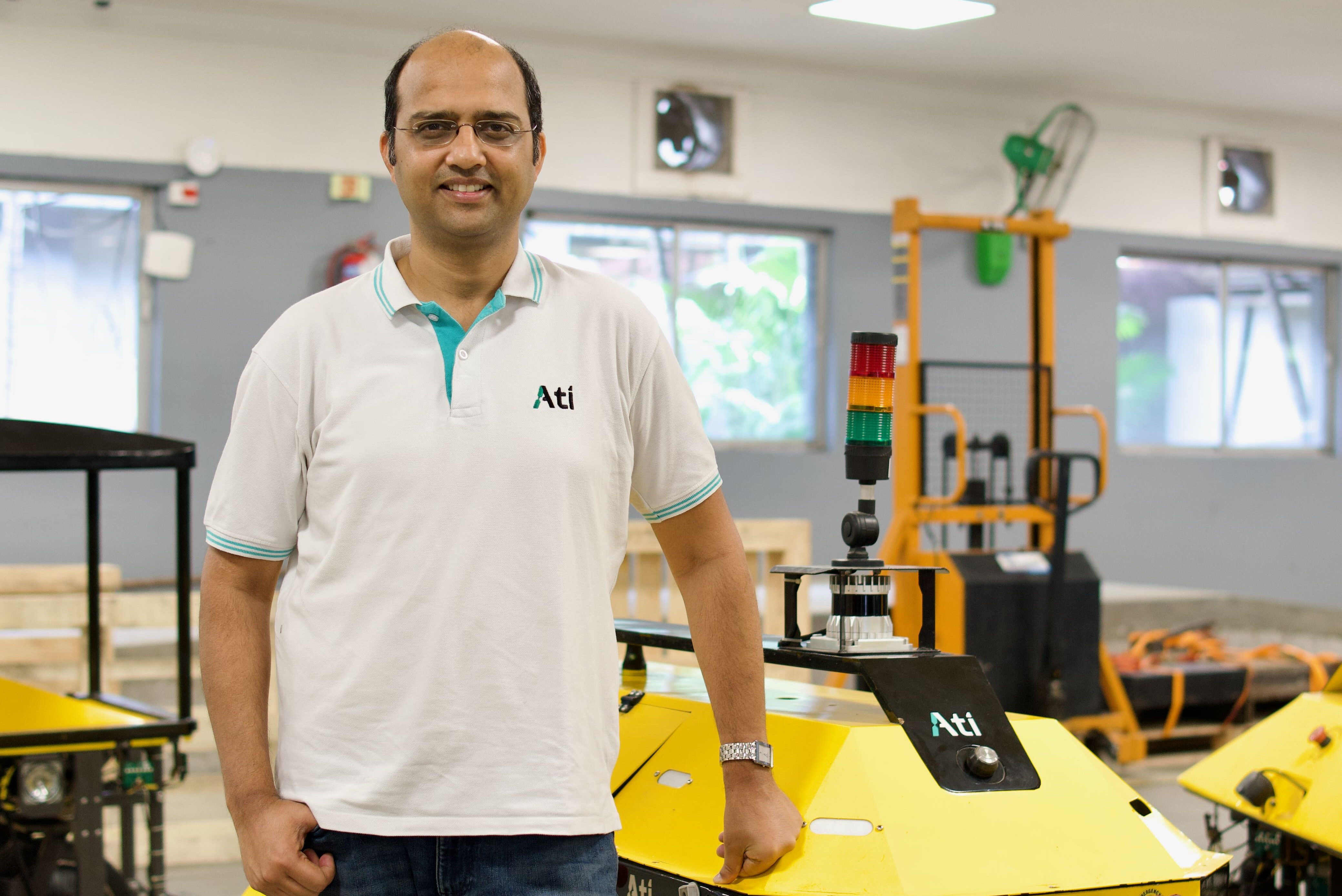
In this episode, Saurabh Chandra, co-founder and CEO of Ati Motors in Bengaluru, talks about how autonomous mobile robots (AMRs) are set to completely change factories, warehouses and an increasing number of other environments.
Backed by investors including MFV Partners, Exfinity Ventures, NGP Capital and Blume Ventures, Ati is shipping its AMRs to some of the biggest manufacturing names in India, Southeast Asia and the US.
Chandra talks about Ati’s own family of robots, named Sherpa, some early engineering decisions that have stood the company in good stead, and how Ati can go from shipping hundreds of robots to thousands, and more. We also briefly touched upon lessons from building a deep tech robotics company out of India.
Here are my five top takeaways from the conversation.
Early engineering decision to avoid teleoperation from the start
Ati Motors made a deliberate early engineering choice to design its robots for full autonomy without any dependency on a teleoperator — a person remotely controlling or assisting the robot during exceptions or tough situations. While it was initially tempting to include teleoperation as a safety net for handling edge cases, the engineering team argued that this would become a crutch, making it harder to ever achieve true, robust autonomy.
This decision led to a longer initial development phase, as the team had to ensure the robots could handle all real-world scenarios independently. However, this approach ultimately paid off by forcing the team to build a more reliable and resilient system, setting Ati Motors apart.
“Don’t take even a screw for granted. This is really one of the places where for want of a nail, the kingdom can be lost.”
Saurabh Chandra, Co-Fouder and CEO, Ati Motors
Ati’s full-stack approach: comprehensive in-house development and integration
Ati’s full-stack approach means the company develops every critical aspect of its AMRs in-house — from navigation and localization algorithms to vehicle design, perception modules, and fleet management software, although some individual specialized components such as sensors aren’t made in India and have to be imported.
By owning the tech stack, Ati ensures its robots are purpose-built for challenging factory conditions, can be quickly adapted to new customer needs, and deliver robust, reliable performance with little dependence on external infrastructure or third-party systems.
Lessons from building Ati out of Bengaluru and India
A key lesson from building Ati Motors out of Bangalore and India is the tremendous advantage of tapping the city’s multidisciplinary talent pool and its robust, under-appreciated manufacturing ecosystem – well before the city came to be known for its IT services prowess.
Chandra highlights that Bengaluru offers access to both technical expertise and a strong base of manufacturing customers, enabling rapid product iteration and real-world feedback that even locations like California cannot match.
The rich local supply chains from India’s electric vehicle (EV) industry provide unique cost and innovation benefits, as Ati can co-develop and customize key components with local partners — an advantage rare outside of a few global markets.
Top priority: scale from shipping hundreds of robots to thousands
One of Ati’s top priorities today is to scale its operations so it can meet the growing demand for its robots and move from shipping hundreds of units to thousands.
This means accelerating deployment, expanding manufacturing capacity, and streamlining processes to handle much higher volumes efficiently. The company is also focused on improving tooling and support for its partners, enabling them to deploy and manage robots more independently, which is essential for rapid global expansion and for reaching new customers across North America, Southeast Asia, and potentially Europe and Japan.
By prioritizing scalable operations and robust partner enablement, Ati aims to solidify its leadership in industrial automation and make its robotic solutions accessible to a far broader range of businesses worldwide.
Chandra’s advice to aspiring deep tech entrepreneurs in India
Aspiring deep tech entrepreneurs, especially in the hardware space in India, should be prepared for the immense complexity and challenges involved, Chandra says. For example, how does one crack the issue of quality and efficiency at the same time at low production volumes.
He notes that hardware ventures require a wide range of expertise and that, at early stages, both founders and vendors may lack experience, making it harder to achieve desired outcomes.
Chandra cautions against underestimating any detail — even the smallest component can be critical to success. He suggests that, while it is important to be ambitious, entrepreneurs should also recognize the value of getting specific parts right.
“Don’t take even a screw for granted,” he says. “This is really one of the places where for want of a nail, the kingdom can be lost.”