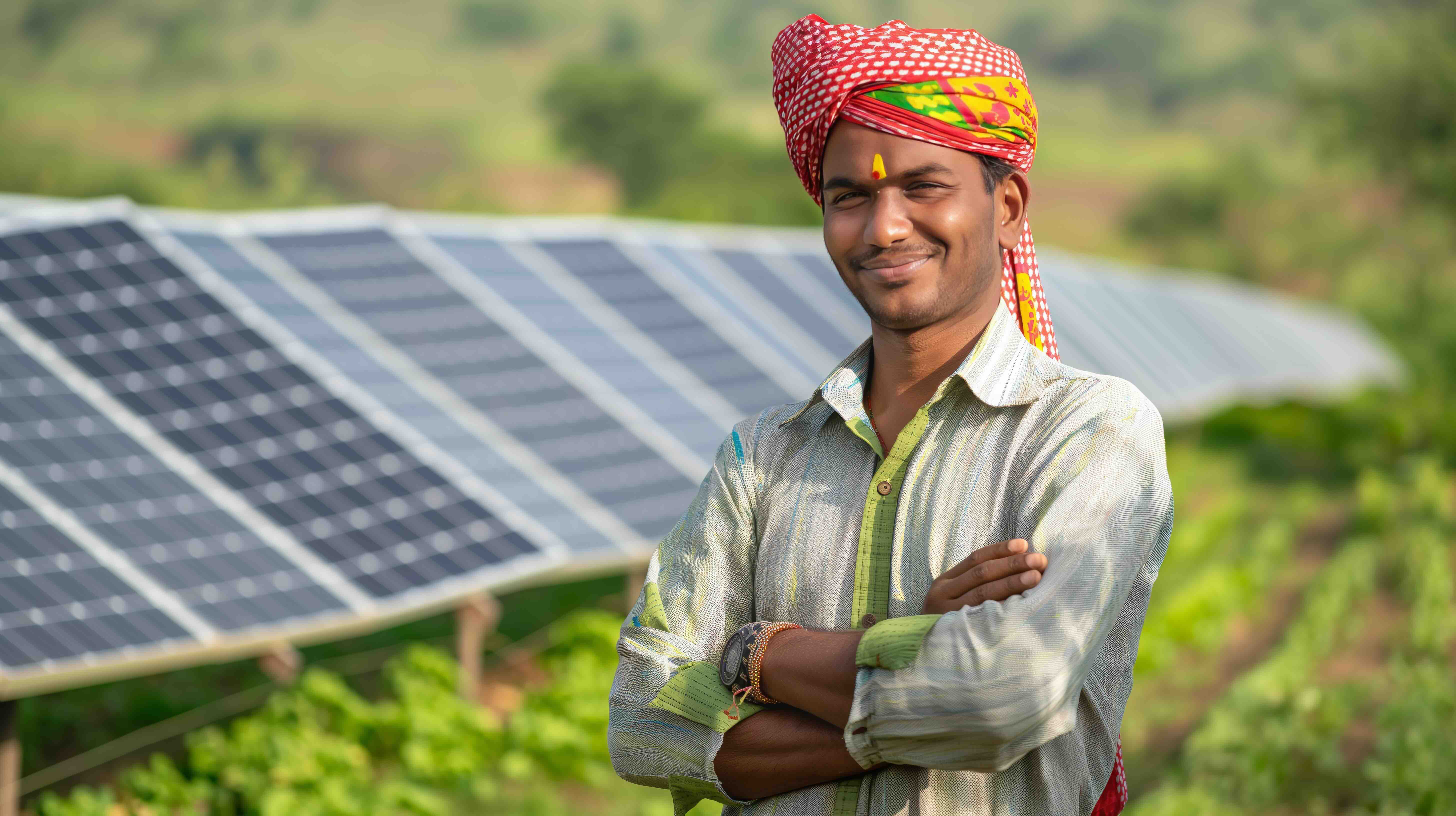
In this episode, I’m joined by Pardeep Garg, co-founder and CEO of CRID India — Centre for Research and Implementation for Decarbonization.
With a background spanning IISc in Bengaluru, MIT in the US, and multiple climate-tech startups, Pardeep is uniquely positioned at the intersection of technical research and real-world execution.
CRID India identifies itself as a think tank and implementation agency, focusing on “hard-to-abate” sectors in industry, and agriculture, where Pardeep points out that even though there exist well-understood technologies that are more energy efficient and therefore emission reducing, their adoption has not taken off, because of the initial costs involved, lack of awareness and so on.
In this episode, he discusses examples, such as heat pumps, which he says could be India’s next big success story, comparable to solar energy, and details his team’s work in building the nation’s first industrial heat map.
More efficient motors of IE 4 or IE 5 (international energy efficiency) rating are another example, as is drip irrigation.
We also discuss CRID India’s aim of becoming a “systems integrator” for energy transition in the country, where solving for climate change requires aligning policy, finance, and stakeholder interests beyond just engineering.
Daily brief on deep tech and climate tech news from India and around the world.
AI generated illustrative image of a micro farm in space. Production of medicines and nutrients in space is an example of frontier technologies that global venture capital is backing.
Nobel laureate urges open sharing of climate technologies
Joseph Stiglitz, a Nobel Prize winning economist, has called for climate technologies to be shared freely to accelerate global decarbonization and ensure equitable access to solutions worldwide, Research Professional News reports. The appeal highlights concerns that restricting climate tech through patents or proprietary deals could slow progress on emissions reduction and sustainability goals, especially for developing nations, and urges collective action to overcome barriers to technology transfer.
Listen to the podcast
UN climate chief urges nations to submit climate goals before deadline
UN climate chief Simon Stiell has called on governments to urgently present new national climate action plans, warning that fewer than 30 countries have submitted their NDCs ahead of the looming deadline, Climate Change News reports. Countries including China, India, and the EU are yet to announce targets. Stiell stressed robust climate plans are vital for tackling global warming and capturing economic benefits from the clean energy transition.
WMO warns air pollution and climate change create a vicious cycle
The World Meteorological Organization has published its latest annual air quality bulletin, which underscores how air quality and climate change are tightly linked, impacting health, economies and ecosystems, according to a press release from the organisation. It highlights risks from wildfires, winter fog, shipping, and urban pollution, and calls for integrated action and improved monitoring. International coordination is crucial to address aerosol hazards and enhance forecasts for effective risk management.
Dutch pension giant drops US asset managers in green revamp
PFZW, the world’s 11th largest pension fund, has pulled €33.5bn from BlackRock, Legal & General, and AQR Capital Management to focus on sustainability and market-level returns, Green Central Banking reports. The move comes as climate risk pressures mount and activists push for greener investments. PFZW will now lean on Robeco, UBS, PGGM and others for its €50bn equity portfolio, signaling a wider EU pivot away from US climate policies.
Commonwealth Fusion Systems raises $863m for fusion push
MIT spinoff Commonwealth Fusion Systems closed an $863 million Series B2 round, bringing its total funding near $3 billion, Latitude Media reports. The capital will accelerate progress on its SPARC fusion demonstrator and commercial ARC plant in Virginia, backed by investors including Nvidia, Bill Gates, and Jeff Bezos. The company aims for continuous fusion and $50/MWh energy costs, but economic viability depends on breakthroughs in technology and manufacturing.
Breakthrough Energy, Khosla and DCVC launch $300m climate tech coalition
Breakthrough Energy, Khosla Ventures, and DCVC have launched the All Aboard Coalition, a $300 million fund to support climate tech startups amid declining US funding, PE Insights reports. Backed by over $40 billion in investor assets, the group will target emissions reduction technologies like carbon removal, green hydrogen, and long-duration storage. The fund aims to address the capital gap leaving many early-stage companies struggling to scale.
RMI’s Third Derivative adds 18 global startups to climate tech accelerator
Third Derivative, the RMI climate tech accelerator, has welcomed 18 new startups from six countries to its portfolio, which now totals over 280 companies, RMI said in a press release. Selected firms span innovations from bamboo building systems and green hydrogen to recyclable wind turbines and zero-emission cooling. Third Derivative aims to bridge finance and resource gaps for market-ready decarbonization tech, with portfolio startups raising $3.7 billion and creating 4,400 jobs since inception.
Singapore’s TLC 2026 opens with S$4m climate tech funding boost
The Liveability Challenge 2026 has launched in Singapore with a record S$4 million (US$3.1m) funding for climate tech startups, Eco Business reports. This 9th edition has a new partner A*Star, which has pledged S$2 million annually to support pilot decarbonisation projects, while Temasek Foundation anchors the initiative. Finalists will access testbeds and pitch at Ecosperity Week 2026. Catalytic funding and policy reforms are highlighted as key to scaling climate solutions amid global venture funding challenges.
Sinbon invests in Swobbee to accelerate green urban mobility
Taiwanese electronics firm Sinbon has made a minority investment in Berlin-based Swobbee, giving the climate tech company access to Sinbon’s global manufacturing and engineering expertise, the companies said in a press release. The partnership aims to advance battery swapping infrastructure for sustainable last-mile urban transport and will support broader adoption of swappable batteries. The deal underscores rising collaboration in e-mobility and green tech between Europe and Asia.
Climafix Summit 2025 to spotlight 400+ climate startups in Chennai
CLIMAFIX Summit 2025, among India’s largest climate startup events, will gather over 400 startups, 150 investors, and 250 corporates at IIT Madras Research Park on Sep 11-12. The agenda spans bio-solutions, energy efficiency, deep tech, and translational research, featuring expert talks, startup journeys, curated pitches, and AI for climate sessions to accelerate climate innovation and cross-sector partnerships. Key speakers include Ashok Jhunjhunwala (IITMRP), Suhas Baxi (Biofuel Circle), and Janani Mittal (Technip).
Daily brief on deep tech and climate tech news from India and around the world.
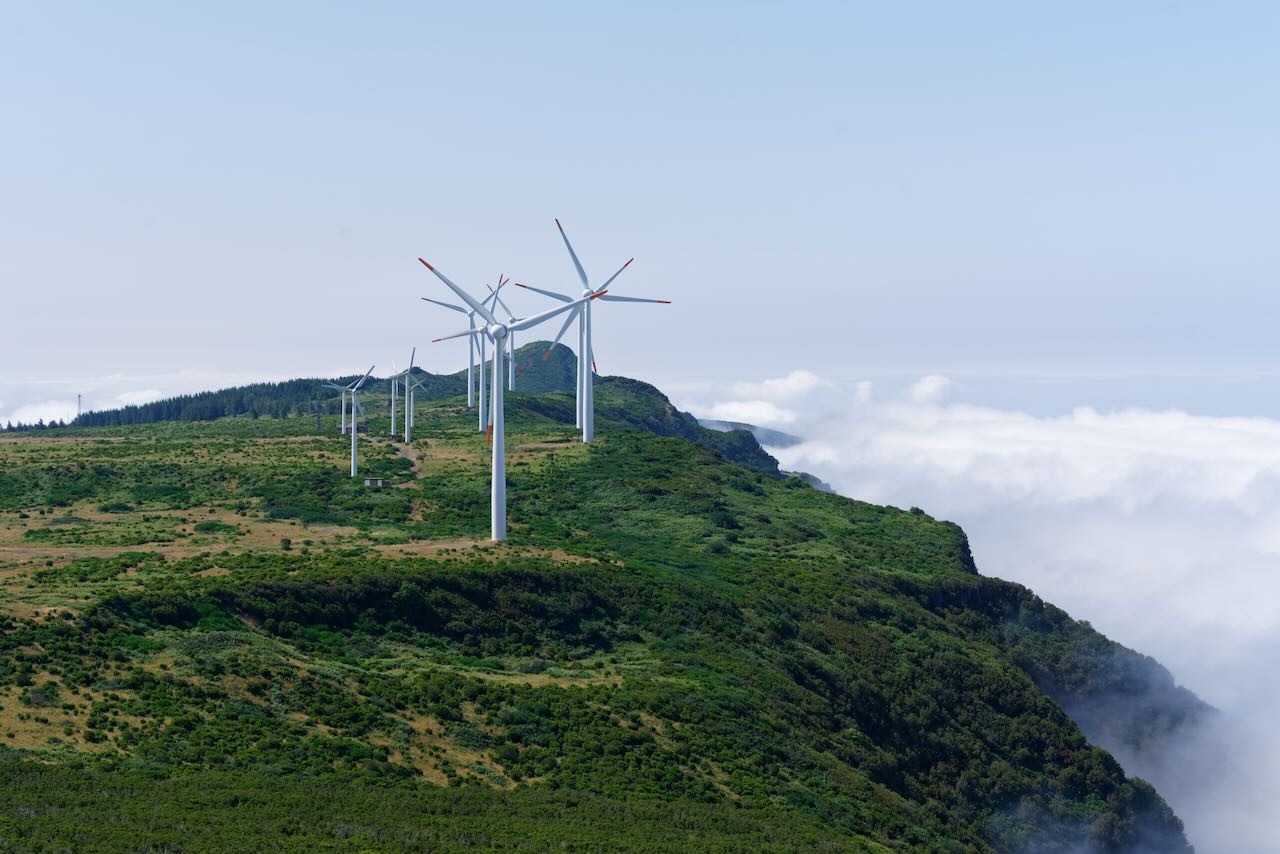
Illustrative image: wind turbines on moutains. The Green Climate Fund has approved a record amount for new projects.
Green Climate Fund approves record $1.2 billion for climate projects in developing nations
The Green Climate Fund has approved a record $1.2 billion for 17 new climate projects, mainly in Asia and Africa, to help vulnerable nations adapt to and mitigate climate change, Reuters reports. The investments include $227 million for green bond markets and $200 million for green finance in India. Reforms will speed up partnerships and project approvals, aiming to reduce accreditation time for local partners from 30 months to nine months.
Listen to the podcast
UN development summit endorses innovative taxes and finance tools to boost global climate funding
At a UN conference in Spain last week, 192 countries adopted the “Sevilla Commitment,” backing new climate finance tools such as taxes on the super-rich, levies on polluting transport, and debt swaps, Climate Home News reports.
Leaders urged carbon and airline ticket taxes, pre-arranged disaster aid, and easier access to international funds for developing nations. The summit stressed urgent action as climate impacts worsen, with richer countries called to lead on finance and support fair energy transitions worldwide.
UK launches first onshore wind strategy to double capacity and create 45,000 jobs by 2030
The UK government has unveiled its first-ever onshore wind strategy, aiming to nearly double capacity to 27–29 GW by 2030 and create up to 45,000 skilled jobs, according to a statement from the UK’s department of energy security and net zero.
Over 40 measures will accelerate project development, streamline planning, repower aging turbines, and offer community benefits. The plan reverses nearly a decade of stagnation, boosts energy security, and seeks billions in private investment, positioning onshore wind as a cornerstone of Britain’s clean energy future.
Global EV and battery investment surges, but China’s overcapacity and policy shifts challenge industry
Global investment in electric vehicles (EVs) and batteries is booming, with China leading in manufacturing and sales due to strong state support and a vast domestic market, according to a recent report from the Rhodium Group.
Europe is rapidly adopting EVs, relying heavily on imports, especially from China, while the US faces uncertainty as potential policy rollbacks threaten its growing domestic industry. Emerging markets are seeing fast EV adoption, often driven by affordable Chinese models, as the sector reaches a pivotal global transition point.
Crosstown raises $3.8 million to retrofit Europe’s gas turbines for hydrogen
Swiss startup Crosstown has secured CHF 3 million ($3.8 million) in seed funding to scale its patented H2R Burner technology, which enables existing gas turbines to run on 100 percent hydrogen or mixed renewable fuels. This innovation allows operators to cut CO₂ emissions by over 300,000 tons per 100MW turbine annually and reduce NOx by up to 80 percent, offering a cost-effective path to decarbonization without replacing current infrastructure.
New Climate Tech Readiness Index ranks industries on real-world climate technology adoption
Climate Insider has launched the Climate Technology Readiness Index, assessing how prepared emissions-intensive industries — like oil & gas, chemicals, and power — are to actually adopt and scale climate technologies, the climate tech industry media and market intelligence provider said in a recent post.
Unlike traditional indices that track climate pledges, this tool measures organizational capabilities, R&D investment, partnerships, and operational deployment. The index aims to bridge the gap between climate tech innovation and real-world implementation, providing critical intelligence for companies navigating urgent regulatory and decarbonization pressures.
Aigen, a US startup, has developed a solar-powered, AI-driven robot that autonomously removes weeds from fields, addressing labour shortages and herbicide resistance, according to an AFP report that was picked up by the Economic Times.
The robot, called Element, uses on-board cameras and AI to navigate crops – mimicking how human labourers would perform weeding – and eliminates the need for chemical weed killers. Priced at $50,000, Element aims to save farmers money, protect health, and promote climate-friendly agriculture, with robots already operating in cotton, tomato, and sugar beet fields.
In Conversation
In-depth conversations with entrepreneurs, investors, industry leaders and other stakeholders building India’s deep tech and climate tech ecosystems.
Takeaways from conversations with entrepreneurs, investors, industry leaders and other stakeholders building India’s deep tech and climate tech ecosystems.
Daily brief on deep tech and climate tech news from India and around the world
Illustrative image. India needs high-altitude drones to support its troops across the Himalayas, or for rescue operations and several other civilian applications as well.
JuliaHub unveils Dyad to accelerate hardware development with AI-powered modeling
JuliaHub has launched Dyad, a new system that integrates Scientific Machine Learning, Generative AI, and traditional physics modeling to revolutionize hardware system design, according to a post from the eponymous company. Dyad offers both textual and graphical interfaces, agentic AI workflows, and seamless simulation tools, supporting the entire product lifecycle for industries like aerospace and energy.
Under a source-available license, Dyad aims to bring modern software agility and collaboration to engineering, making advanced modeling accessible, safe, and efficient for critical applications.
Listen to the podcast
APac ex-Japan IoT spending to reach $355 billion by 2029, driven by manufacturing and smart technologies
Internet of Things (IoT) spending in the Asia Pacific region (ex-Japan) will grow from $241 billion in 2025 to $355 billion by 2029, with a 12.6 percent CAGR, technology market researcher IDC said in a recent post.
Manufacturing, government, retail, and utilities will drive over half of 2025’s spending, while healthcare and transportation will see the fastest growth. Hardware, especially sensors and modules, will dominate spending, with China, India, and Indonesia leading growth. Key trends include smart factories, supply chain resilience, and real-time analytics adoption.
John Cockerill Hydrogen raises €116 million to boost global green hydrogen expansion
John Cockerill Hydrogen has secured a €116 million capital increase to advance its strategic development and international growth, the hydrogen electrolyser and industrial equipment maker said in a press release.
Supported by Belgian investors SFPIM and Wallonie Entreprendre, and new partner Fluxys, the funding strengthens the company’s Belgian roots and global reach.
The capital will support large-scale electrolyser production in Europe and India, including India’s largest green ammonia project. The group’s Indian unit is listed in Mumbai.
This investment advances John Cockerill’s leadership in pressurized alkaline electrolyser technology, reinforcing its commitment to sustainable, cost-effective green hydrogen solutions worldwide, according to the press release.
Toyota Kirloskar Motor and Ohmium partner to pilot green hydrogen microgrids for India’s clean energy future
Meanwhile, Toyota Kirloskar Motor and Ohmium International have signed an MoU to co-develop green hydrogen-based microgrid solutions in India. The collaboration combines Toyota’s fuel cell expertise with Ohmium’s modular PEM electrolyzer technology to design scalable, efficient, and cost-effective hydrogen power systems for diverse applications, including data centers and remote areas.
The partnership aims to prototype and test integrated electrolyzer-fuel cell microgrids, supporting India’s National Green Hydrogen Mission and advancing the country’s carbon neutrality and energy independence goals.
Cummins India launches Battery Energy Storage Systems to accelerate clean energy transition
Cummins India Limited has launched its Battery Energy Storage Systems, expanding its sustainable solutions portfolio to support India’s clean energy goals, the industrial company said in a press release.
The modular, scalable units — available in 10ft and 20ft containers with capacities from 200kWh to 2MWh — use advanced lithium ferrophosphate batteries and integrated liquid cooling for safety and long life, according to the release.
Designed for industries such as manufacturing, data centers, and mining, these systems enable seamless integration of renewables, grid stability, and optimized energy costs, the company said.
Ericsson expands Bengaluru R&D to boost 5G chip design and India’s semiconductor ecosystem
Ericsson is expanding its Bengaluru R&D operations with a dedicated Application-Specific Integrated Circuit (ASIC) development unit, adding over 150 engineering roles. This move strengthens Ericsson’s global semiconductor design capabilities and supports India’s growing tech ecosystem.
The new unit will focus on developing custom Ericsson Silicon System on a Chip (SoC) solutions, essential for high-performance, energy-efficient 5G network equipment. The expansion aligns with Ericsson’s $5 billion annual R&D investment and India’s ambitions to become a semiconductor innovation hub.
Antler Bio raises $4.3 million to expand gene expression tech for smarter, more resilient dairy farming
Antler Bio has secured $4.3 million in funding, led by The First Thirty Ventures, to scale its EpiHerd gene expression platform across Europe, Tech Funding News reports. EpiHerd analyzes how cows’ genes respond to environmental and nutritional stressors, delivering data-driven insights that boost milk yields, quality, and herd health. Already used on over 100 farms, the system has achieved up to 22 percent higher milk yields and a 7:1 ROI. The funding will accelerate expansion and further technology development.
Raphe mPhibr raises $100M to scale indigenous drone manufacturing and global defense ambitions
Raphe mPhibr has secured $100 million in Series B funding led by General Catalyst, marking the largest private capital raise by an Indian aerospace manufacturer, according to a press release by the Noida based startup.
Founded in 2016, Raphe designs and manufactures end-to-end unmanned aerial systems (UAS), including drone swarms and high-altitude UAVs, entirely in India.
Serving more than 10 government agencies, the company has achieved 4x revenue growth for four years, remains profitable, and plans to expand globally, emphasizing sovereign technology and local manufacturing.
In Conversation
In-depth conversations with entrepreneurs, investors, industry leaders, and other stakeholders building India’s deep tech and climate tech ecosystems.
Takeaways from conversations with entrepreneurs, investors, industry leaders, and other stakeholders building India’s deep tech and climate tech ecosystems.
Daily brief on deep tech and climate tech from India and around the world.
Global clean tech investments to hit 2X versus fossil fuels in 2025
Investment in clean technologies – renewables, nuclear, grids, storage, low-emissions fuels, efficiency and electrification – is on course to hit a record $2.2 trillion this year, attracting twice as much capital as fossil fuels, according to the 2025 edition of the International Energy Agency’s annual World Energy Investment report, which was released earlier this month.
This reflects not only efforts to reduce emissions but also the growing influence of industrial policy, energy security concerns and the cost competitiveness of electricity-based solutions, the IEA said in a press release on June 5. Investment in oil, natural gas and coal is set to reach $1.1 trillion.
Overall, global energy investment is set to increase in 2025 to a record $3.3 trillion despite headwinds from elevated geopolitical tensions and economic uncertainty, according to the release.
Listen to the podcast
Deadline nears for comments on India’s draft climate finance taxonomy
There are just 10 days left to submit feedback to the Ministry of Finance on India’s draft Climate Finance Taxonomy, released last month. The taxonomy aims to define clear criteria for climate-aligned investments, boost green finance flows, and help India meet its net zero targets.
Stakeholders — including financial institutions, industry, and civil society — are encouraged to provide input to ensure the taxonomy supports credible, transparent, and effective climate action across the economy.
India’s solar boom curbs coal use as renewables hit record highs
Meanwhile, India’s solar power generation surged by 32.4 percent in the first four months of 2025, reaching a record 57.8TWh and boosting solar’s share of the electricity mix to 10 percent, Reuters reports.
This growth, alongside higher hydro output, helped keep coal-fired generation flat and cut natural gas-fired output by 27 percent. In May, coal power output fell 9.5 percent year-on-year, the steepest drop in five years, as renewables hit record highs and overall power demand declined. While coal remains India’s dominant energy source, clean power’s share continues to grow.
Trump to scrap Biden-era rule on pension funds considering ESG
In the US, the Department of Labor, under President Donald Trump’s administration, has announced plans to overturn a Biden-era rule that allowed pension funds to consider environmental, social, and governance (ESG) factors in investment decisions and shareholder voting, Green Central Banking reported, citing ESG Dive.
SkyNRG raises €300 million to accelerate sustainable aviation fuel production
In Europe, Dutch company SkyNRG has secured €300 million — led by asset managers APG and Macquarie — to build three large-scale sustainable aviation fuel (SAF) plants in Europe and North America, Tech Funding News reports. The flagship facility in the Netherlands will use green hydrogen and captured CO₂ to cut emissions by over 80 percent compared with regular jet fuel.
SkyNRG’s integrated approach, strict sustainability standards, and partnerships with airlines and corporations aim to make SAF mainstream and help aviation reach net-zero emissions by 2050.
ScaleFund III raises €12M to back tech scale-ups in Benelux and France
Also in Europe, Belgian venture capital firm ScaleFund has launched its third fund, ScaleFund III, with an initial close of €12 million, targeting €30 million to support tech-driven companies in digital transformation, cleantech, and deeptech across Benelux and France.
Led by Managing Partner Claire Munck, the fund focuses on hands-on support for companies beyond the startup phase, emphasizing diversity — 40 percent of prior investments were in women-led ventures — and aims to fill the funding gap for early-stage scale-ups with strong growth potential.
Synthetic graphite production can be decarbonized with renewables and green hydrogen, study finds
A new study finds that synthetic graphite production, crucial for electric vehicle batteries, can cut its high carbon emissions by adopting renewable energy and green hydrogen, Climate Insider reports.
By switching 20–80 percent of energy sources, factories could reduce emissions by up to 70 percent. While decarbonization may increase production costs, surging demand and regulatory pressure make these measures increasingly necessary, according to the report.
Shipping industry faces hurdles as it navigates new net zero rules
The shipping industry, responsible for about 3 percent of global emissions, faces a pivotal period as it seeks scalable zero-emission solutions and adapts to stricter climate policies, Reuters reported last week.
The sector must cut the greenhouse gas intensity of its fuel by 30 percent by 2035 and 65 percent by 2040 under new global regulations, with the International Maritime Organization introducing emissions thresholds and a pricing mechanism starting in 2028. While innovations like wind-assisted propulsion and biofuels are emerging, concerns remain over the sustainability of some fuels and market uncertainty, according to Reuters.
Listen to the episode
Microsoft’s deal for low-carbon cement from MIT-spinout Sublime
Microsoft recently agreed to buy up to 622,500 metric tonnes of low-carbon cement from Sublime Systems, a US startup, over the next six to nine years, aiming to reduce emissions from its data center and infrastructure construction. The deal uses new environmental certificates to claim emissions reductions, even when the cement isn’t used directly by Microsoft.
Sublime’s electrochemical process avoids the carbon emissions of traditional cement production. The agreement will help scale Sublime’s technology and accelerate the adoption of cleaner construction materials in an industry responsible for about 8 percent of global CO₂ emissions.
Sublime was founded at MIT by Dr. Leah Ellis and Prof. Yet-Ming Chiang, both respected experts in materials science, electrochemical systems, and sustainability research. The company has raised over $200M in funding from leading climate tech investors, global cement incumbents, and cooperative agreements with the U.S. Department of Energy.
Gridcare uses AI to unlock hidden grid capacity for data centers
Gridcare, a US startup founded by entrepreneur Amit Narayan, uses generative AI to map and analyze the US electrical grid, according to a TechCrunch report. The startup, which has raised $13.5 million in seed funding recently, could potentially identify more than 100 gigawatts of untapped capacity for data centers, Narayan tells TechCrunch.
By matching data center developers with utilities and factoring in variables such as fiber connectivity, weather, and regulations, Gridcare aims to help hyperscalers bypass long waits for grid connection. It charges developers based on the megawatts it unlocks, offering a cost-effective alternative to building private power plants.
So far, North American startups have secured over $22.37 billion in funding for carbon capture, utilization, and storage (CCUS) technologies, altenergymag.com reports. Some $130 million of that was raised in 2025 to date.
Investors grow cautious on direct air capture despite climate tech boom
Once a darling of climate tech, direct air capture (DAC) startups in the US have seen a 60 percent drop in venture investment this year amid political uncertainty and wavering corporate commitments, Bloomberg reported early last month.
With government incentives at risk and high costs per tonne, the DAC sector faces a challenging path to scale, even as overall climate tech investment rises. This shift raises concerns about the sector’s ability to deliver on long-term carbon removal goals, Bloomberg Reporter Coco Liu writes in that insightful piece.
Stride Green raises $3.5 million to boost tech-enabled clean energy asset financing
Stride Green, in New Delhi, has secured $3.5 million in seed funding to expand its innovative financing and leasing solutions for renewable energy, electric mobility, and battery storage. The company’s green finance portfolio now exceeds $120 million, supporting more than 3,000 cleantech assets and reflecting India’s surging climate tech investment.
Stride Green was started last year by the well-known venture debt focused VC, Ishpreet Singh Gandhi, founder and managing partner at Stride Ventures, along with Vivek Jain, co-founder and chief business officer.