Tag: ev

  • India takes a green leap with its first hydrogen train

    India takes a green leap with its first hydrogen train

    Hi, wherever you’re reading this, I hope you’re doing well.

    First, a few headlines that caught my attention, from the government’s Press Information Bureau.

    Ultrafast organic anodes designed for next-generation rechargeable batteries

    Union Minister Dr. Jitendra Singh Announces India’s First Engineering Biology Graduation Course to Build Future Biotechnology Workforce

    Cabinet approves Semicon 2.0 – Government delivers on its commitment for a long-term policy support to Semiconductors in India

    The Lede

    Indian Railways gets its first hydrogen fuel cell powered train

    The modernization of Indian Railways has hitherto relied on continual expansion of overhead electrification of its vast broad-gauge network. The state-run network is now charting a more autonomous path toward decarbonization.

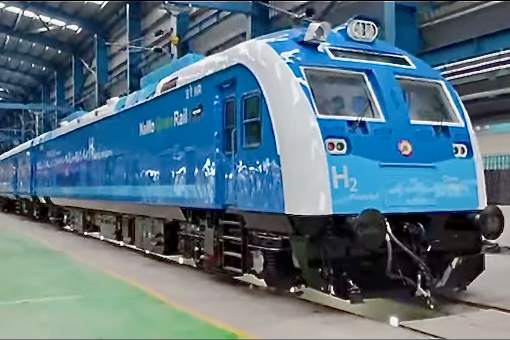
    Prime Minister Narendra Modi flagged off the country’s first hydrogen fuel cell powered trainset, at Jind from where the train will make a 90 km journey to Sonipat, both towns in the northern Indian state of Haryana.

    The fuel cell technology, using a proton-exchange electrolyser, generates electricity through an electrochemical reaction between hydrogen and atmospheric oxygen. The electricity is stored in lithium-ion batteries, which will power the train’s electric engine.

    The project seeks to demonstrate that clean rail mobility can be achieved without relying entirely on an external power grid.

    This new trainset (locomotives + trailer cars) revives the historical operational independence of steam and diesel locomotives — albeit with water vapour as its only by-product. Built using indigenous technology integrated by Medha Servo Drives and the Integral Coach Factory, the configuration features two driving power cars delivering 1,200 kW of power, pulling eight trailer coaches.

    Capable of carrying roughly 2,600 passengers at design speeds of up to 110 kilometres per hour, the initiative marks a significant structural scaling up of a propulsion system that has hitherto been confined to much smaller regional deployments.

    The deployment comes as rail operators worldwide face intensifying pressure to eliminate fossil fuels and meet strict national net-zero targets. While early adoption of hydrogen passenger trains has been concentrated in Europe—most notably in Germany — and via pilot programmes in China and Japan, these initiatives have generally been confined to modest two- or three-coach configurations.

    India’s venture represents a bolder bet on the scale and commercial viability of high-capacity hydrogen transit, backed by the establishment of the country’s largest dedicated railway hydrogen refuelling facility at Jind to support continuous, regular operations.

    “Most hydrogen passenger trains currently operating globally comprise only two or three coaches and are primarily deployed on short regional routes,” the Ministry of Railways noted in a press release yesterday. “In contrast, the Indian Railways trainset has been configured as a 10-coach passenger train with a capacity of around 2,600 passengers, demonstrating the scalability of hydrogen-powered rail transport for high-capacity passenger operations.”

    Safety concerns, because of the highly combustible nature of hydrogen gas, and the steep infrastructure costs required to grow and sustain these trains are two important challenges.

    To manage the safety risks inherent to handling a highly flammable, odourless gas, the network has implemented a multi-layered “defence in depth” safety system, certified by Germany’s TÜV SÜD. The ecosystem includes continuous leak detection, automatic fuel shut-offs, and specialized ventilation systems.

    If the Jind–Sonipat trials prove commercially reliable, the railway ministry plans to expand the rollout to heritage lines such as the Kalka–Shimla route, marking a calculated transition from a novelty pilot to a core pillar of India’s broader National Green Hydrogen Mission.

    If you missed the latest Conversations episode

    Founder Spotlight

    A weekly recommendation of a founder conversation. Changes every Friday.

  • High voltage harvest: Anoop Srikantaswamy’s electric vision for the future of Indian agriculture

    High voltage harvest: Anoop Srikantaswamy’s electric vision for the future of Indian agriculture

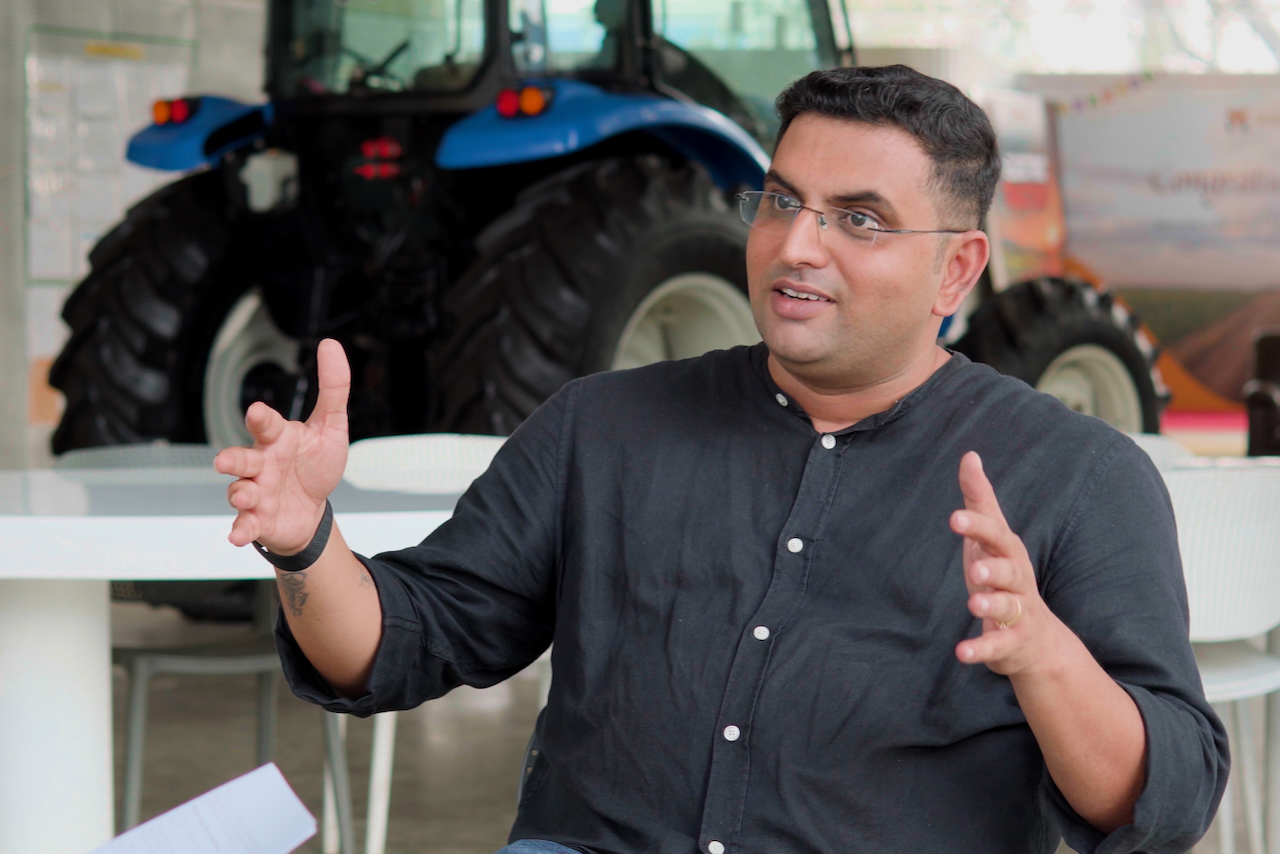
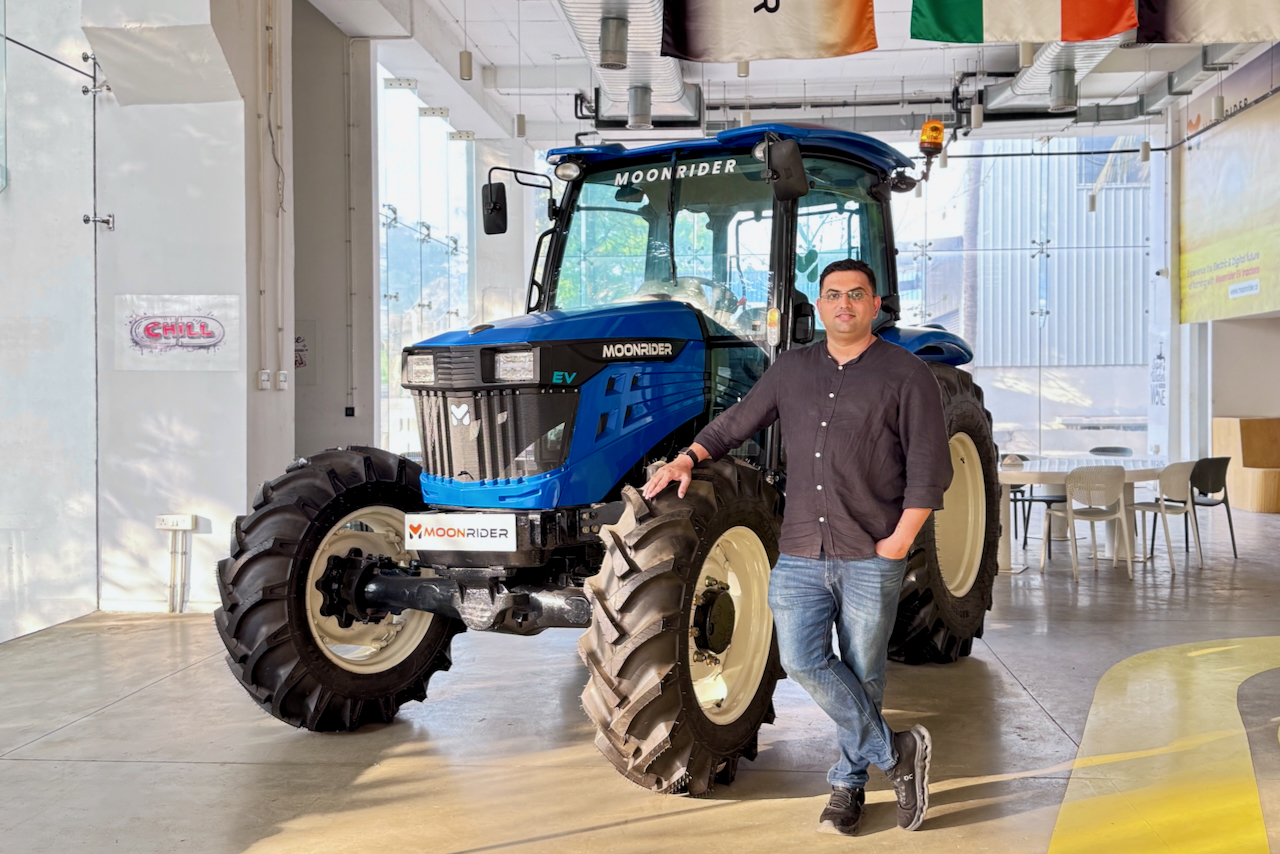
    In this episode, I bring you a conversation with Anoop Srikantaswamy, founder and CEO of Moonrider, an electric tractor startup in Bengaluru. Anoop and his fellow founder Ravi Kulkarni bring deep background in the industry, having previously worked at automotive giants such as Toyota and Volvo Group.

    Mechanical engineers by training, the two are entrepreneurs at heart, with Anoop having previously attempted a hyper-local medicine delivery venture while Ravi co-founded another electric mobility venture that he exited.

    Anoop recalled that the idea for Moonrider was sparked by a conversation with a progressive farmer, who noted that while diesel is expensive, farm electricity is often free. Today, Moonrider is a vertically integrated leader, developing proprietary battery technology and power electronics in-house to achieve price parity with diesel.

    In this conversation, we explore their moonshot journey — named in honour of the Chandrayaan launch — and discuss the future of connected and autonomous farming. Join us for an inside look at how Moonrider aims to drive the global shift toward sustainable, electric mechanization.

  • Autonomous tractors: Anoop Srikantaswamy at Moonrider on the bigger picture — full interview coming soon

    Autonomous tractors: Anoop Srikantaswamy at Moonrider on the bigger picture — full interview coming soon

    Coming up, a conversation with Anoop Srikantaswamy, founder and CEO of Moonrider, an electric tractor maker in Bengaluru. Catch the full interview on Tuesday, May 19th right here, or wherever you get your podcasts.
    Here’s a short preview, in which Anoop talks about the state of commercialisation of autonomous tractors and what they might be like in the future. He also talks about the bigger picture in agriculture in which autonomous gear will be important, but one of multiple factors.

  • Coming up: Anoop Srikantaswamy on e-tractor innovations at Moonrider

    Coming up: Anoop Srikantaswamy on e-tractor innovations at Moonrider

    Coming up on Tuesday, 19th May, Anoop Srikantaswamy, founder and CEO of Moonrider, a electric tractor startup on Bengaluru, talks about a range of topics — from product innovation to reducing dependence on China to what tractors will be like in the future as they go autonomous.

    Catch the full conversation right here or wherever you get your podcasts. Here’s a short preview.

  • EVs and beyond: Apoorv Shaligram on barriers to adoption

    EVs and beyond: Apoorv Shaligram on barriers to adoption

    Barriers to not just EV adoption, but beyond, in terms of widespread use of larger electric batteries the same way we’ve adopted smartphones, for example. What factors are holding adoption back?
    Apoorv Shaligram, founder and CEO at e-TRNL Energy in Bengaluru, offers a quick point here. He identifies convenience and safety as the primary limiters for electric battery tech adoption in India.
    Check out the related post for the full conversation with Apoorv, who with his fellow founder Uttam Sen and their team, is innovating new cell architectures to make cells, batteries and their applications safer, more reliable and better alternatives to fossil fuel.

  • Coming up: Apoorv Shaligram on how the government is catalysing a deep tech discourse in India

    Coming up: Apoorv Shaligram on how the government is catalysing a deep tech discourse in India

    Coming up, tomorrow, a conversation with Apoorv Shaligram, founder and CEO at e-TRNL Energy in Bengaluru, where he and fellow founder Uttam Sen are innovating the next generation battery cell architectures and advanced manufacturing processes.

    Apoorv and Uttam recently announced raising Rs. 27.4 crore (About $3 million) in seed funding, led by IAN Group (Indian Angel Network), with Navam Capital, and existing investors Speciale Invest, Micelio and others also joining in.
    You can catch the full conversation right here, or wherever you get your podcasts. Here’s a 60-second preview with Apoorv talking about how the deep tech landscape in India is undergoing a government-led transformation.