
Tag: Quantum Computing

  • Karnataka’s Quantum City and space policy, CRISPR-based sickle cell therapy, and more

    Karnataka’s Quantum City and space policy, CRISPR-based sickle cell therapy, and more

    AI generated image of Chandrayaan on the Lunar surface for illustration. India’s Karnataka state has unveiled its space tech policy 2025-30.


    (00:21) Karnataka unveils India’s first Quantum City plan, space policy

    Karnataka launched India’s first Quantum City blueprint at the Bengaluru Tech Summit this week, with a plan to create a Rs. 1,000 crore integrated quantum cluster in Hesaraghatta. The project targets global leadership in quantum research, chip manufacturing, and talent export, with dedicated parks, startup zones, and international collaborations to boost Bengaluru’s quantum ecosystem.

    (00:51) Separately, the state government also unveiled its Space Technology Policy 2025–2030 at the Summit, seeking to make the state a global leader in space innovation, manufacturing, and research. The policy emphasizes building skilled talent, fostering deep-tech startups, and integrating space technology in governance, aiming to capture 50 percent of India’s space market by 2030.

    Listen to the episode


    (01:18) Skycore Semi bags €5M to boost AI datacenter chips

    Danish fabless design startup Skycore Semiconductors has raised €5 million in seed funding led by Amadeus APEX, with participation from First Momentum, Mätch VC, and Balnord. The funds will accelerate the commercial rollout of high-density Power ICs tailored for 800V HVDC data centers, targeting the power bottleneck in next-gen AI infrastructure.

    (01:47) Steele Group opens Boston’s deep tech hub BASE-X

    Steele Group has launched BASE-X, a 25,000-square-foot headquarters in downtown Boston dedicated to deep tech innovation, the US real estate developer said in a press release. Serving as a hub for venture capital, operators, and partners, BASE-X aims to catalyze investment, operational excellence, and collaboration in fields including AI, energy, defence, and advanced manufacturing.

    (02:18) Breakthrough in rare-earth magnetism promises quantum tech leap

    Scientists in India have discovered a new type of magnetism in neodymium nitride (NdN) thin films driven by orbital angular momentum, not just electron spin. This finding, led by JNCASR, enables the tuning of materials for faster, more efficient quantum and spintronic devices, enhancing India’s role in rare-earth and advanced materials research.

    (02:51) India launches first indigenous CRISPR gene therapy for sickle cell

    Union Minister Dr. Jitendra Singh launched ‘BIRSA 101’, India’s first indigenous CRISPR-based gene therapy for sickle cell disease, developed at CSIR-IGIB and transferred to the Serum Institute. The therapy aims to make advanced gene-editing cures affordable for Indian patients, particularly tribal populations, supporting the ambition for a Sickle Cell–free India by 2047.
  • Princeton’s qubit breakthrough, Sentinel-6B launched, Cornerstone’s funding and more

    Princeton’s qubit breakthrough, Sentinel-6B launched, Cornerstone’s funding and more

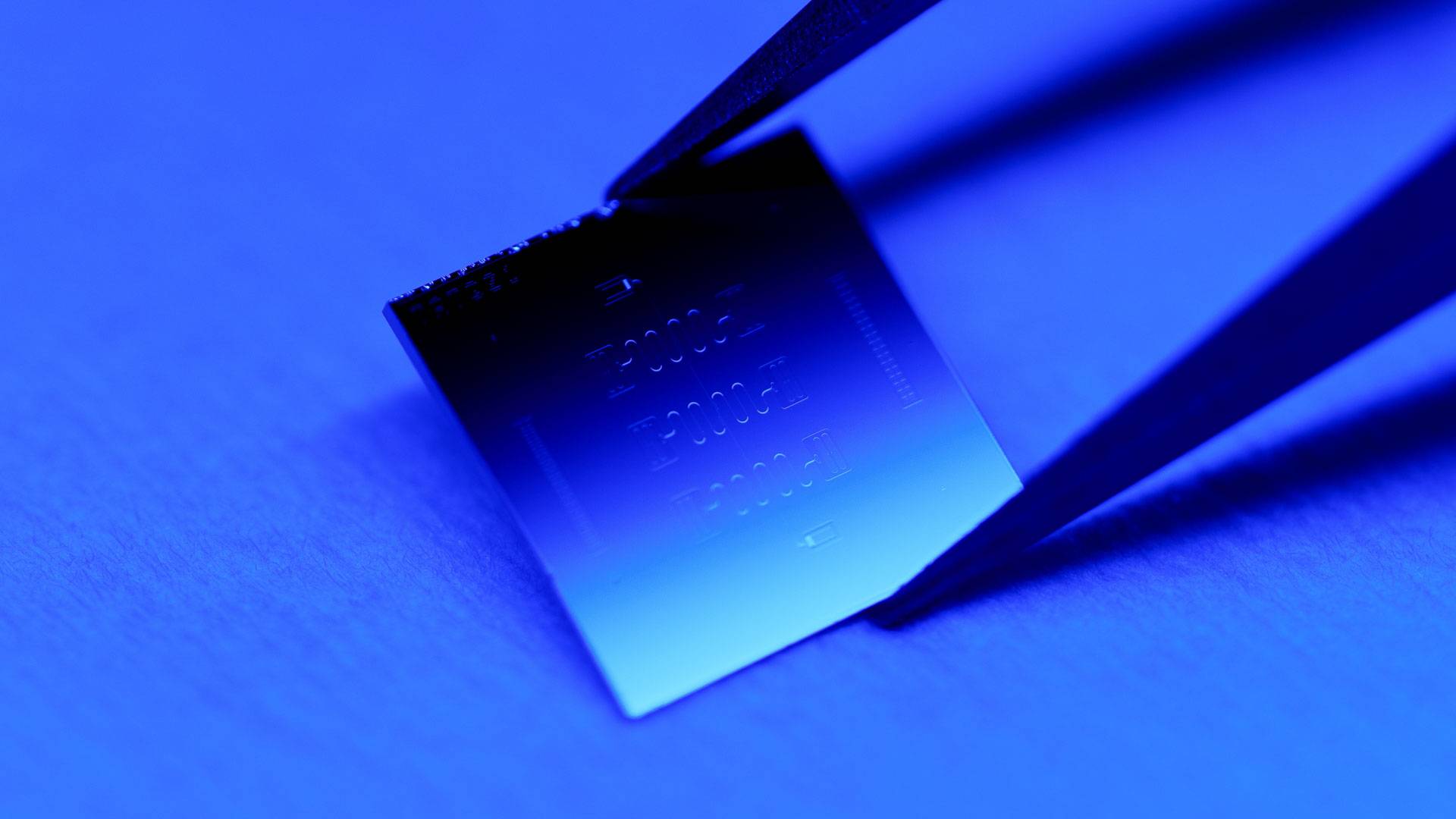
    A chip built by Princeton’s Nathalie de Leon, Andrew Houck, Robert Cava and their research teams supports qubits with coherence times longer than 1 millisecond — three times longer than the best ever reported in a lab setting, and nearly 15 times longer than the industry standard.
    Image by Matthew Raspanti, Office of Communications, Princeton University.


    (00:21) Princeton’s qubit breakthrough extends coherence threefold
    Princeton University researchers have demonstrated a quantum qubit with coherence times exceeding one millisecond — triple the laboratory record and fifteen times the industry standard, Science Daily reports. The team built a functioning quantum chip proving the design supports error correction at scale, addressing the fundamental challenge limiting quantum processors.

    Their architecture is compatible with systems used by Google and IBM. According to analysis, replacing key components in Google’s Willow processor with Princeton’s approach could yield a thousandfold performance increase, signalling meaningful progress toward fault-tolerant quantum systems essential for practical applications.

    Listen to the episode


    (01:10) Google quantum AI achieves 13,000× speedup on physics
    Separately, some of you may recall that last month Google announced that its Willow quantum processor executed a physics simulation 13,000 times faster than classical supercomputers using a novel “Quantum Echoes” algorithm published in Nature. The breakthrough demonstrates the first verifiable quantum advantage running a physically meaningful algorithm — measuring quantum interference effects called out-of-time-order correlators.

    Beyond raw speed, the work establishes quantum computing’s practical relevance to experimental science, particularly nuclear magnetic resonance spectroscopy, validating a path toward real-world quantum applications within five years.

    (01:54) Sentinel-6B launches to continue climate monitoring mission

    The European Space Agency and NASA successfully launched Copernicus Sentinel-6B aboard a SpaceX Falcon 9 rocket on Nov. 17, continuing a decades-long mission tracking sea-level rise — a critical indicator of climate change, Spaceflight Now reports.

    The satellite carries advanced altimetry instruments measuring ocean surface heights with centimetre precision, directly supporting climate science and international efforts to understand planetary warming. This mission exemplifies the growing convergence of space infrastructure and environmental monitoring, with satellite data becoming indispensable for climate policy and adaptation planning worldwide.

    (02:43) Emulate launches organ-on-chip platform for drug development

    Emulate, a leader in organ-on-chip technology, unveiled its Brain-Chip R1 in partnership with FUJIFILM Cellular Dynamics to accelerate neurological drug discovery, the company said in a press release. The platform uses living human brain cells to model central nervous system responses, addressing a critical gap in preclinical testing where traditional methods fail to predict clinical outcomes.

    This technology promises faster, more reliable validation of neurological therapeutics while reducing dependence on animal testing—positioning Emulate at the intersection of biotechnology and advanced manufacturing innovation.

    (03:27) Cornerstone Robotics raises $200 million for surgical robot platform

    Hong Kong’s Cornerstone Robotics secured $200 million in fresh funding to accelerate global commercialization of its multi arm Sentire Endoscopic Surgical System, Fierce Biotech reports.

    Recently approved in China and now in UK clinical trials, the platform targets colorectal and urologic surgeries. The round, backed by major global funds, affirms demand for accessible next-gen surgical robotics as the company deepens its global footprint.

  • India launches its largest space-tech investment vehicle

    India launches its largest space-tech investment vehicle

    An ISRO SSLV with an Earth Obervation Satellite. Image source ISRO website.
    An ISRO SSLV with an Earth Obervation Satellite. Govt backing for space tech startups is soaring. Image source ISRO website.

    (00:21) SIDBI hits first close of Antariksh, India’s largest space fund

    SIDBI Venture Capital announced the first close of its Antariksh fund at Rs 1,005 crore, anchored by a Rs 1,000 crore commitment from IN-SPACe, Times of India reports. Registered as a Category II alternative investment fund with a decade-long tenure, it represents India’s largest dedicated space-tech vehicle and among the biggest globally.

    The Rs. 1,600 crore fund will back early and growth-stage companies across launch systems, satellites, ground infrastructure, earth observation and downstream applications. The initiative advances India’s ambition to build a $44 billion space economy by 2033.

    Listen to the episode

    (01:03) IIT Delhi spin-off delivers quantum-grade laser breakthrough

    Prenishq unveiled India’s first indigenous high-precision compact diode laser, marking a significant step forward in the nation’s quantum technology efforts. Supported by the National Quantum Mission, Prenishq’s laser delivers high beam quality, superior stability and long-term reliability across wavelengths from ultraviolet to near infrared, according to a statement from the ministry of science and technology.

    The plug-and-play system will enable quantum-safe transactions for financial institutions, protecting sensitive data against future quantum computing threats. It also supports photonic quantum computers tackling drug discovery and chemical process analysis.


    (01:49) Government backs Rs 7,172 crore electronics manufacturing push

    The Ministry of Electronics and IT has approved seventeen proposals under the Electronics Components Manufacturing Scheme, spanning nine states with cumulative investment of Rs 7,172 crore. The projects will generate Rs 65,111 crore in production and create 11,808 direct jobs.


    Key approvals include India’s first optical transceiver manufacturing facilities by Jabil Circuit India and Zetchem Supply Chain Services, alongside oscillators for communication devices and industrial electronics. The scheme targets components for smartphones, IT hardware, electric vehicles, defence and renewable energy sectors.


    (02:40) Hyderabad biotech startup forges Japan regenerative med tie-up

    BioVaram, incubated at the University of Hyderabad’s ASPIRE-BioNEST, entered a strategic partnership with Japan’s Teijin Limited to expand regenerative medicine between the two nations, UNI reports. The collaboration will bring Teijin’s cardiovascular repair patch SYNFOLIUM and Japan Tissue Engineering’s regenerative products to India, whilst Teijin supports commercialisation of BioVaram’s exosome-based diagnostics, therapeutics and bio-derived materials in Japan.


    Founded in 2020 and recognised among the top five startups at BioAsia 2024, BioVaram develops artificial intelligence-driven peptides, exosomes and biomaterials for regenerative medicine. The alliance strengthens India’s capabilities in advanced tissue engineering and scalable manufacturing.


    (03:36) Varaha raises $30M for India’s regenerative agriculture programme

    Climate tech startup Varaha has raised $30 million from French sustainable investor Mirova to expand its Kheti soil-carbon project across Haryana and Punjab, TechCrunch reports. The transaction, structured as project-level investment against future carbon credits, represents Mirova’s largest single carbon deal and its first in India.


    The funds will support over 337,000 smallholder farmers implementing regenerative practices across 675,000 hectares. Varaha operates four removal pathways: regenerative agriculture, biochar, agroforestry on degraded lands and enhanced rock weathering. The company runs experiments with institutions including IARI Pusa and IIT Kharagpur to quantify net carbon change. Earlier this year, Varaha signed a multi-year biochar offtake agreement with Google.