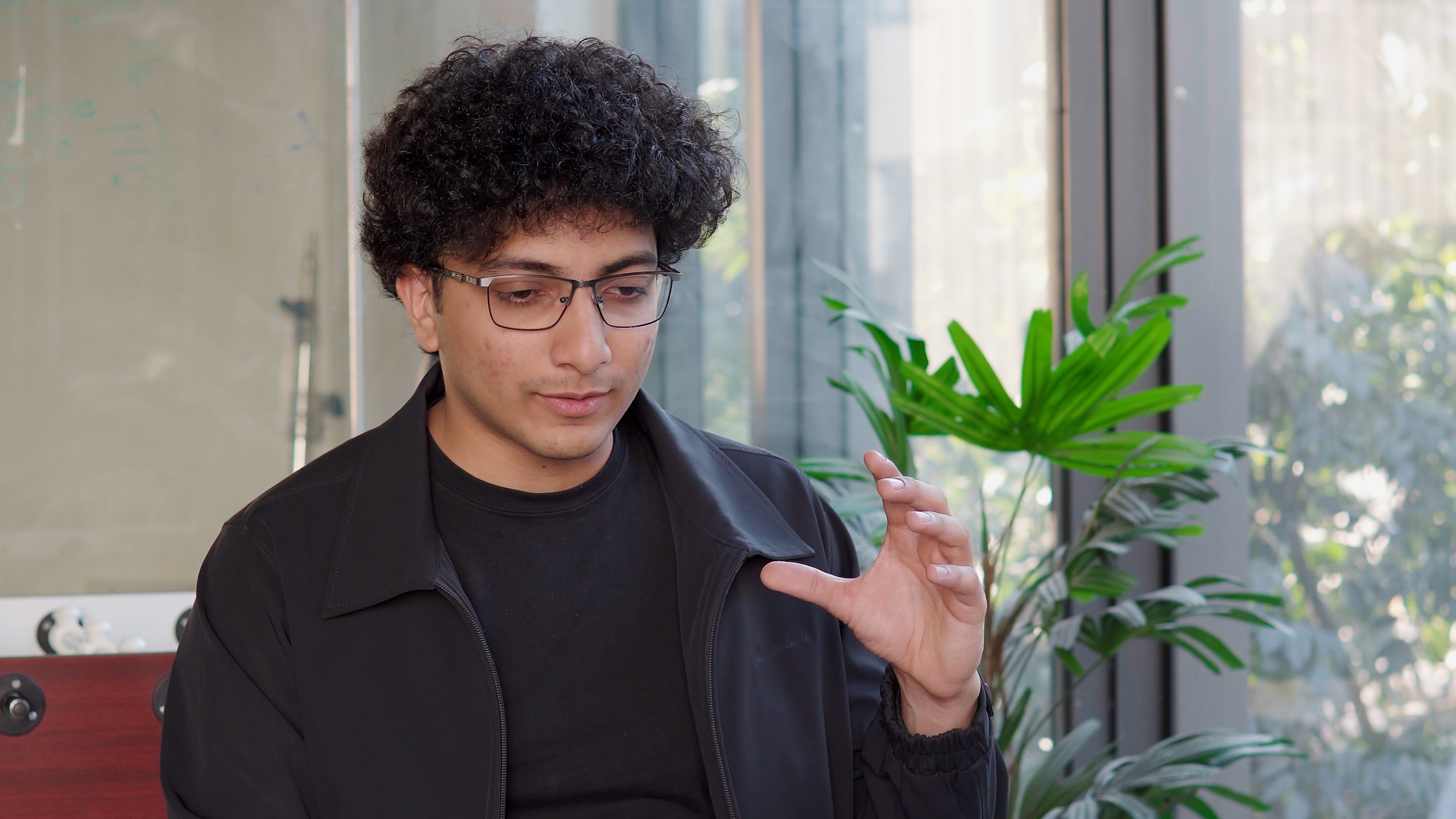
In a recent episode of Conversations at India Tech Report, Jay Panchal, founder and CEO at Aule Space spoke about his young space-tech startup’s vision to help build India’s robot workforce in space.
Aule is starting on that journey with the aim of launching a fleet of “jetpacks” that will work as mission extension vehicles for geostationary satellites and offer other applications in the defense sector as well. You can find the full conversation at indiatechreport.in or wherever you get your podcasts.
Here’s a quick point, with Jay talking about how he and his co-founders bring complementary skills to the table, their current team and immediate hiring needs – focused on core engineering.
In a recent episode of Conversations at India Tech Report, Jay Panchal, founder and CEO at Aule Space spoke about his young space-tech startup’s vision to help build India’s robot workforce in space.
Aule is starting on that journey with the aim of launching a fleet of “jetpacks” that will work as mission extension vehicles for geostationary satellites and offer other applications in the defense sector as well.
You can find the full conversation at indiatechreport.in or wherever you get your podcasts.
Here’s a quick chapter on some of Jay’s important formative experiences that set him on the path to entrepreneurship in the space economy.
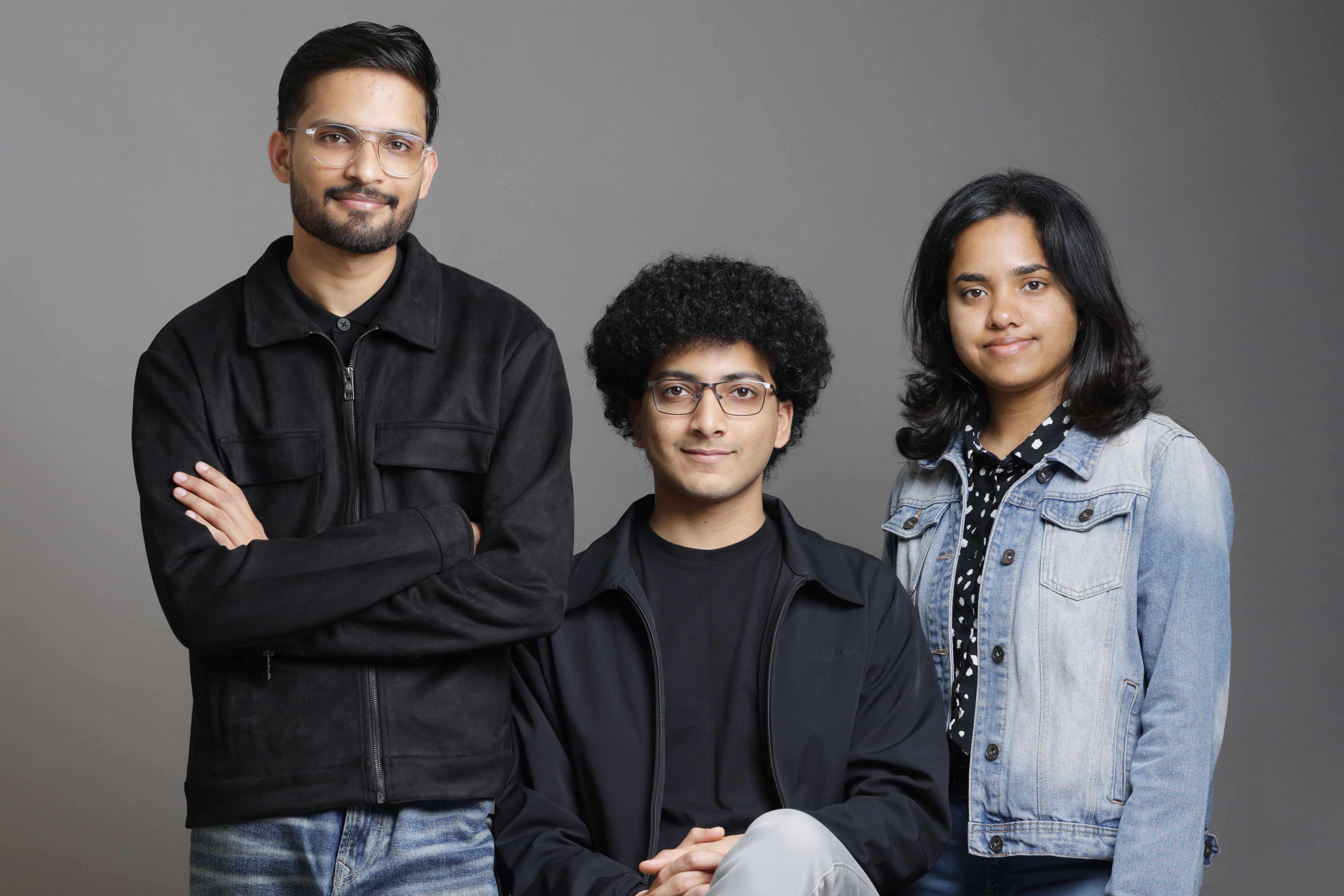
Hrishit Tambi, Jay Panchal and Nithyaa Giri, founders of Aule Space Technologies, aim to put India in the club of nations offering ISAM technologies. Image source: Aule. Edited by Hari Arakali.Listen to the episode
Two space-tech startups kicked off 2026’s funding news for the sector in India, aiming to expand India’s presence in the global space economy in two challenging areas. And they’ve both found backing from top-notch investors.
Ethereal Exploration Guild (EtherealX) and Aule Space Technologies revealed a Series A and a pre-seed-stage investment respectively, in separate announcements, last week.
EtherealX was founded by Manu J. Nair, Shubhayu Sardar, and Prashanth Sharma, who bring experience from ISRO and the International Institute for Astronautical Sciences to their endeavour.
They have found backing from Japan’s TDK Ventures. The venture arm of TDK Corporation will invest up to $5 million in Bengaluru-based Ethereal Exploration’s series A round.
The partnership aims to accelerate development of Razor Crest Mk-1 — the world’s first medium-lift rocket designed for full reusability, according to a press release.
EtherealX’s vehicle, still under development, targets launch costs as low as $500 per kilogram, roughly 10X lower than current rates, although the rates vary based on the type of rocket and other factors such as whether the mission is a small dedicated one or something part of large payload and so on.
At its targeted $500-$1000 range, EtherealX hopes to unlock a wide range of commercial missions, including rocket cargo as a service. Its distinguishing feature is a reusable upper stage powered by a proprietary Full Flow Segregated Cooling Cycle engine, coupled with in-house simulation and test infrastructure to shorten development cycles and improve reusability.
The global space economy is entering a phase of billion-dollar bets and trillion-dollar visions. Valued at about $630 billion in 2023, it is expected to nearly triple to $1.8 trillion by 2035, according to a McKinsey estimate, fuelled by the proliferation of satellite constellations and expanding national space ambitions.
Demand for medium-lift systems — rockets capable of carrying 2 ,000 kg to 20,000 kg of payload (to low-Earth orbits)* — is projected to grow strongly, with one forecast, by Research and Markets, estimating it grow from more than $10 billion in 2025 to nearly $16 billion by 2030, at a CAGR of about 8.5 percent. Startups from Austin to Bengaluru are racing to supply governments and private operators squeezed by bottlenecked launch capacity.
Shubhayu Sardar, Prashanth Sharma and Manu J. Nair, founders of EtherealX, are developing a reusable medium-lift launch system. Image source: EtherealX. Edited by Hari Arakali.
“TDK Ventures is thrilled to back the Guild in its goal to reshape the medium-lift space-launch industry,” Nicolas Sauvage, President of TDK Ventures, said in the press release. “The company aligns seamlessly with our vision for transformative innovation, excelling in slashing launch costs, pioneering novel technologies, and harnessing India’s ISRO expertise and cost-efficient supply chain.”
EtherealX’s existing investors include YourNest VC, Bluehill Capital, BIG Capital, Campus Fund, and Golden Sparrow VC. The company has already manufactured its 80kN upper-stage reusable engine (Pegasus) and has signed collaboration agreements with the Indian National Space Promotion and Authorization Centre (IN-SPACe), ISRO, and other national space agencies, as well as commercial satellite operators, launch aggregators, and launch ports globally.
Aule’s orbital jetpacks
Separately, Aule Space, also in Bengaluru, has raised pre-seed funding to build autonomous “jetpack” satellites that can dock with spacecraft that are running out of fuel and keep them going in orbit. The round totals $2 million, led by pi Ventures with participation from several angel investors, including former Intelsat board member Eash Sundaram and Tonbo Imaging chief executive Arvind Lakshmikumar.
Founded in 2024 by Jay Panchal, Nithyaa Giri and Hrishit Tambi, Aule Space is developing satellites that can safely approach, latch on to and manoeuvre other spacecraft, a class of capability known in the trade as Rendezvous, Proximity Operations and Docking (RPOD). The company will use the new capital to expand its engineering team, build ground infrastructure for docking tests and ready its first demonstration satellites, slated to launch next year.
Aule’s design combines a satellite-agnostic docking mechanism with AI-driven guidance, navigation and control algorithms, aiming to field one of the world’s lightest and most cost-efficient RPOD satellite fleets. The company is targeting use-cases from life extension of high-value geostationary communications satellites and debris removal to defence applications such as close-in inspection for space-domain awareness.
Today most satellites are abandoned once their fuel runs out, even if their payloads remain largely functional, because there is no routine in-orbit servicing infrastructure. More than 95 percent of the $100 billion generated each year in commercial satellite revenues comes from satellites in geostationary orbit (GEO) and a single satellite can generate tens to hundreds of millions of dollars in annual revenue, according to Joseph Anderson, a vice president at Space Logistics, a Northrup Grumman company.
“However, every year, between 10 and 20 satellites in good operating condition, and with paying customers, are shut down by their operators and replaced with expensive new satellites. This is not by choice, but by necessity: these satellites have run out of fuel,” Anderson wrote in Room, a space economy journal, in 2019.
The following year, Northop Grumman became the first company to successfully demonstrate what they called mission extension, with its MEV-1 and MEV-2 mission extension vehicles. Since then, the field has advanced and technologies that are being developed include robotic arms for in-orbit repairs, AI-based autonomous navigation, and standardized docking interfaces.
“At Aule, we are building the foundational blocks to make autonomous servicing routine,” the Bengaluru startup’s founders say on their website. “We’re kickstarting the in-space economy, supporting ISAM (in-space servicing, assembly, and manufacturing), space superiority, and orbital sustainability,” they say.
Backed by the Entrepreneurs First accelerator and the Transpose Platform, they say their’s is the first company in India building a life-extension solution for existing GEO satellites using “non-cooperative docking” with legacy spacecraft. (Meaning docking with spacecraft, and even debris that have no specific docking mechanisms built in, and therefore requiring autonomous navigation, advanced sensors, grappling equipment and so on.)
Only a handful of private companies globally have demonstrated such capabilities, a rarity that helped convince pi Ventures of the startup’s mix of technical depth and commercial clarity. Founding partner Manish Singhal said Aule is building “critical infrastructure” for satellite servicing, orbital sustainability and space security as it works towards operating a robotic workforce for the in-space economy.
*Note: This episode, and the corresponding show notes here, were corrected to reflect that medium-lift rockets are widely considered to be those that can carry payloads in the range of 2,000 kg to 20,000 kg to low-Earth orbits, as per NASA’s definition. Not 2-50 tonnes, as previously mentioned.
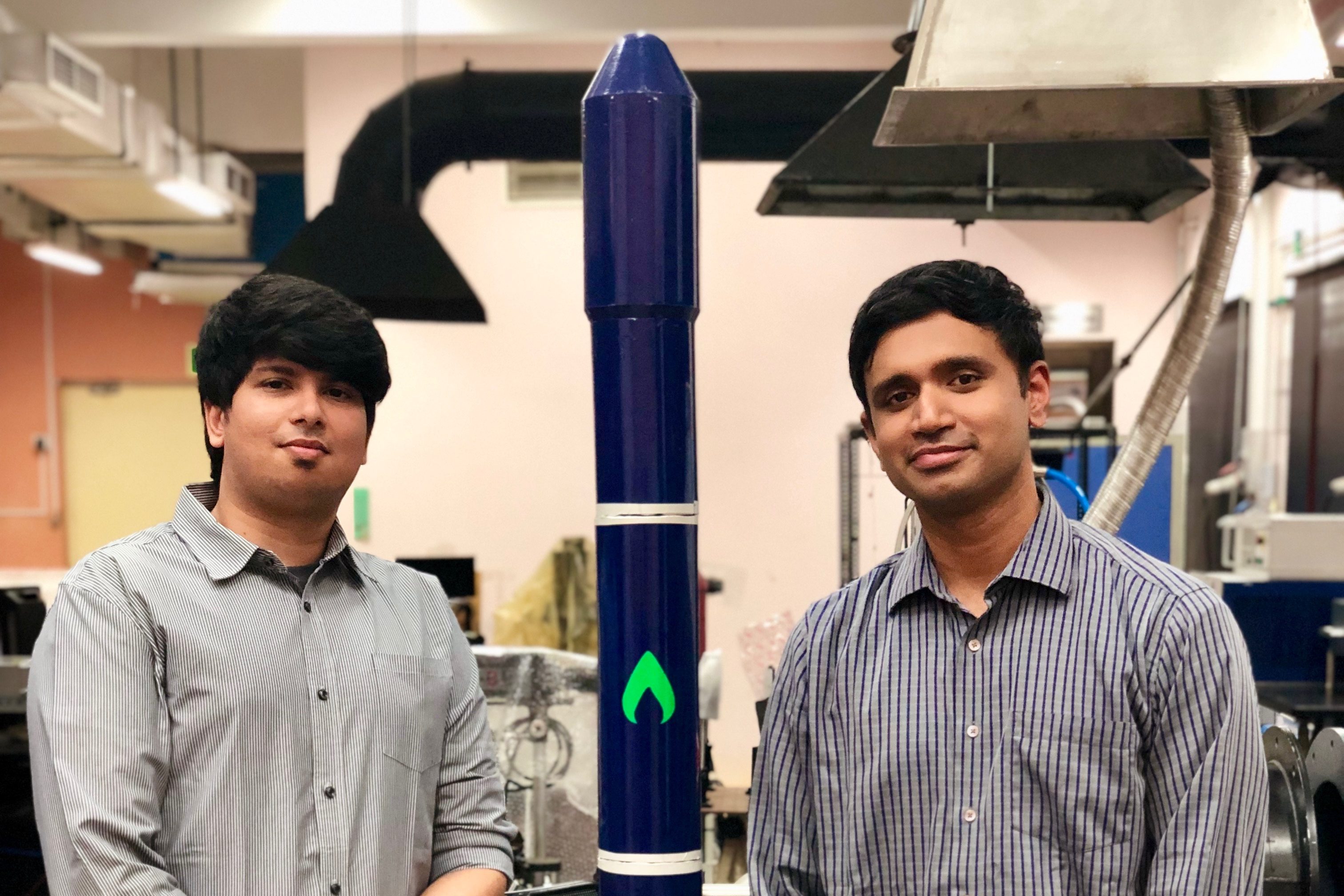
Moin SPM and Srinath Ravichandran, Co-founders of Agnikul Cosmos, are pioneering India’s private small satellite launch vehicles with 3D printed engines.
(00:20) Swiss quantum startup shrinks cooling systems for scalable processors
YQuantum has raised CHF 150,000 ($186,000) from Venture Kick to commercialize miniaturized cryogenic hardware for quantum computers. The startup’s compact components address a critical bottleneck: scaling superconducting qubits reliably. By replacing bulky cooling systems with high-performance alternatives, YQuantum brings quantum computing closer to practical deployment.
The engineering team, drawn from UC Berkeley and ETH Zurich, targets a rapidly expanding quantum hardware market projected to reach billions in the coming years. Its first commercial units are expected by mid-2026.
(01:10) AI genomics platform launches to scale safer gene therapies
Cassidy Bio has unveiled its AI-driven genomic foundation model with an $8 million seed round, backed by Ahren Innovation Capital. The platform combines proprietary lab data, population genetics, and machine learning to design gene-editing therapies at scale. By replacing trial-and-error with predictive engineering, Cassidy addresses persistent challenges: target selection, delivery, and off-target effects.
The founding team unites CRISPR pioneers and AI leaders with the aim of moving genome editing from isolated successes to reliable, scalable medical solutions for millions of patients worldwide.
(01:56) Swedish chipmaker secures €15 million for advanced etching tech
AlixLabs has closed a €15 million Series A investment led by Navigare Ventures to accelerate Atomic Layer Etching Pitch Splitting (APS) technology. The breakthrough enables cost-effective production of advanced chips without expensive multi-patterning or exclusive EUV reliance. By slashing process complexity and energy consumption per wafer, APS addresses a critical challenge in chip economics.
Beta testing with foundry partners begins in 2026, targeting full manufacturing deployment by 2027. The innovation could reshape semiconductor accessibility globally, lowering barriers for advanced chip production.
(02:47) Agnikul secures $17 million in fresh funding for its space rockets
Agnikul Cosmos, a Chennai-based space-tech startup, has secured Rs. 150 crore ($17 million) in fresh funding, bringing its valuation to $500 million. The capital will support its next orbital launch mission featuring barge-based booster recovery — a global first for small launch vehicles.
Agnikul, which is pioneering India’s private small launch vehicles with 3D printed engines, will expand manufacturing, launch frequency, and establish a 350-acre campus in Tamil Nadu, targeting customers in Europe, Asia, and the US.
(03:30) Cambridge team enables LEDs from ‘un-powerable’ nanoparticles
Researchers at the University of Cambridge in Britain have achieved a breakthrough by powering electrically insulating lanthanide-doped nanoparticles using organic molecular antennas. The new approach, discovered by a Cavendish Laboratory-led team, enables highly pure near-infrared LEDs, promising advances in biomedical imaging and optical communications. and published the findings in Nature.
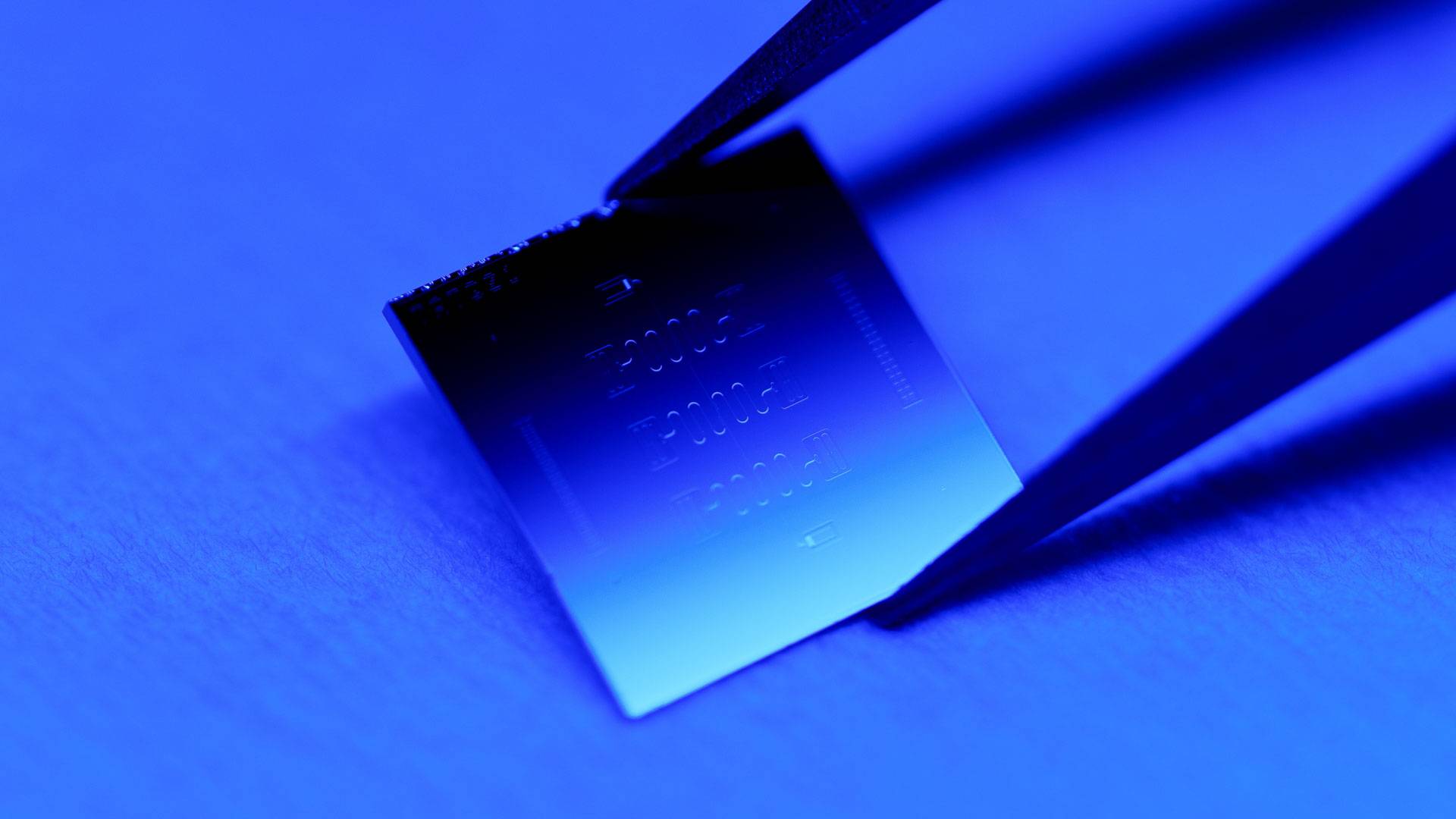
A chip built by Princeton’s Nathalie de Leon, Andrew Houck, Robert Cava and their research teams supports qubits with coherence times longer than 1 millisecond — three times longer than the best ever reported in a lab setting, and nearly 15 times longer than the industry standard. Image by Matthew Raspanti, Office of Communications, Princeton University.
(00:21) Princeton’s qubit breakthrough extends coherence threefold Princeton University researchers have demonstrated a quantum qubit with coherence times exceeding one millisecond — triple the laboratory record and fifteen times the industry standard, Science Daily reports. The team built a functioning quantum chip proving the design supports error correction at scale, addressing the fundamental challenge limiting quantum processors.
Their architecture is compatible with systems used by Google and IBM. According to analysis, replacing key components in Google’s Willow processor with Princeton’s approach could yield a thousandfold performance increase, signalling meaningful progress toward fault-tolerant quantum systems essential for practical applications.
Listen to the episode
(01:10) Google quantum AI achieves 13,000× speedup on physics Separately, some of you may recall that last month Google announced that its Willow quantum processor executed a physics simulation 13,000 times faster than classical supercomputers using a novel “Quantum Echoes” algorithm published in Nature. The breakthrough demonstrates the first verifiable quantum advantage running a physically meaningful algorithm — measuring quantum interference effects called out-of-time-order correlators.
Beyond raw speed, the work establishes quantum computing’s practical relevance to experimental science, particularly nuclear magnetic resonance spectroscopy, validating a path toward real-world quantum applications within five years.
(01:54) Sentinel-6B launches to continue climate monitoring mission
The European Space Agency and NASA successfully launched Copernicus Sentinel-6B aboard a SpaceX Falcon 9 rocket on Nov. 17, continuing a decades-long mission tracking sea-level rise — a critical indicator of climate change, Spaceflight Now reports.
The satellite carries advanced altimetry instruments measuring ocean surface heights with centimetre precision, directly supporting climate science and international efforts to understand planetary warming. This mission exemplifies the growing convergence of space infrastructure and environmental monitoring, with satellite data becoming indispensable for climate policy and adaptation planning worldwide.
(02:43) Emulate launches organ-on-chip platform for drug development
Emulate, a leader in organ-on-chip technology, unveiled its Brain-Chip R1 in partnership with FUJIFILM Cellular Dynamics to accelerate neurological drug discovery, the company said in a press release. The platform uses living human brain cells to model central nervous system responses, addressing a critical gap in preclinical testing where traditional methods fail to predict clinical outcomes.
This technology promises faster, more reliable validation of neurological therapeutics while reducing dependence on animal testing—positioning Emulate at the intersection of biotechnology and advanced manufacturing innovation.
(03:27) Cornerstone Robotics raises $200 million for surgical robot platform
Hong Kong’s Cornerstone Robotics secured $200 million in fresh funding to accelerate global commercialization of its multi arm Sentire Endoscopic Surgical System, Fierce Biotech reports.
Recently approved in China and now in UK clinical trials, the platform targets colorectal and urologic surgeries. The round, backed by major global funds, affirms demand for accessible next-gen surgical robotics as the company deepens its global footprint.
Why are SpaceTech startups working to build various microgravity platforms and solutions catching the attention of investors? In this exciting field of science and engineering, experts see many possibilities: from drug discovery and better medicines to 3D-printed life-saving organ replacements to ultra-efficient semiconductors.
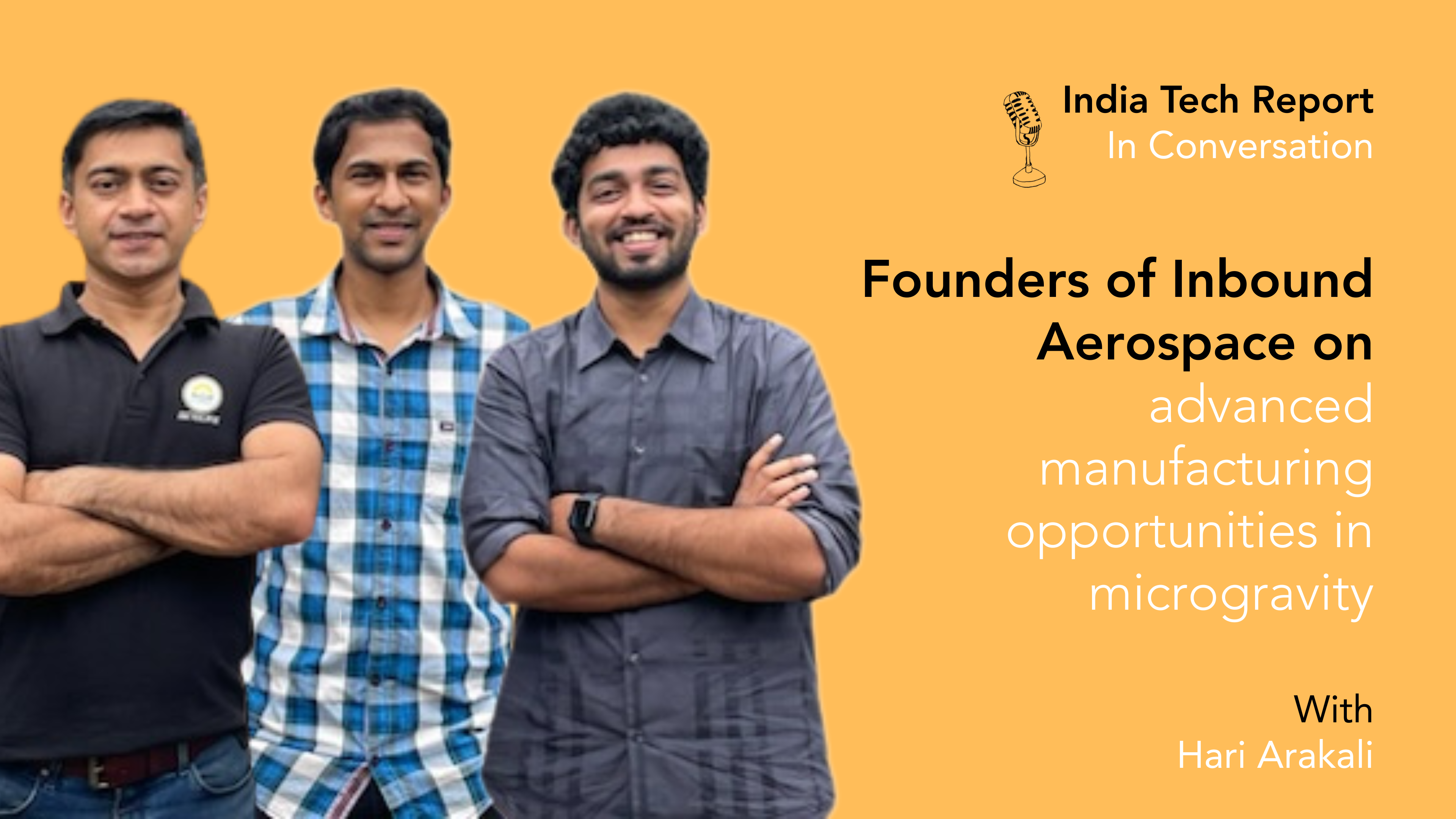
Backed by investors including Speciale Invest, and incubated at Indian Institute of Technology, Madras, this trio is developing an unmanned automated reusable platform for microgravity experiments in advanced manufacturing.
Another fine example of an attempt to contribute to Aatmanirbhar Bharat in a strategic tech domain, and I’m happy to bring you this conversation ahead of Independence Day. here’s a 2-minute preview.