One could think of ‘Mitti’ — the Hindi word for soil — as representing the grounded foundation of a cooler future. And for us in India while rice that grows in our soil is a daily staple, its traditional cultivation is a hidden climate hazard. Rice cultivation worldwide is responsible for 10-12 percent of human-caused methane emissions. It also consumes staggering amounts of water.
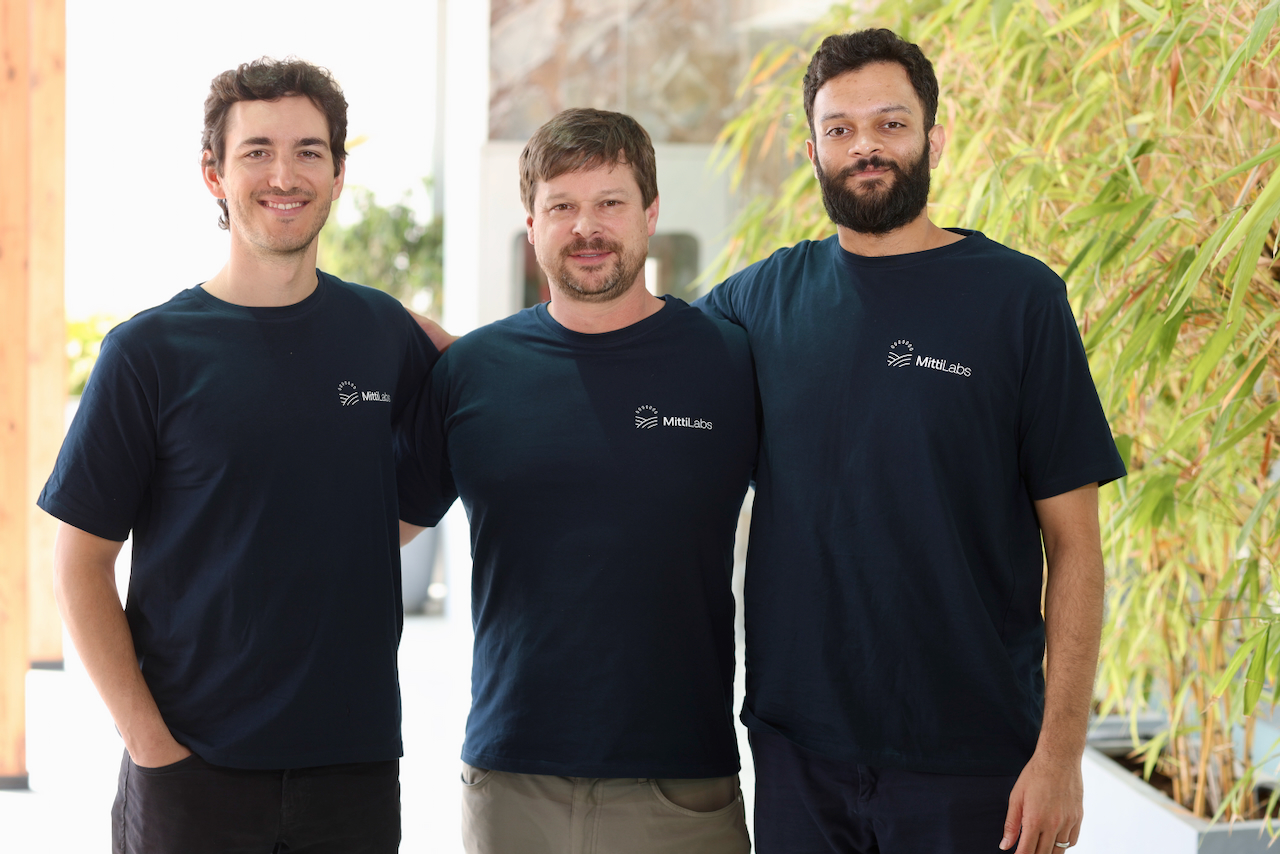
Coming up next on Conversations at India Tech Report, Devdut Dalal (Dev), Xavier Laguarta Soler (Xavi), and Nathan Torbick (Nate), co-founders of Mitti Labs talk about how they are turning rice farming into a powerful vehicle for climate action – specifically targeting methane emissions from rice fields.
Since launching in late 2023, this “full stack” climate-tech startup has scaled from an idea that Harvard alumni Dev and Xavi had to a VC-funded startup (investors include Lightspeed) touching some 70,000 small-holder farmers in India today. Mitti Labs is helping the farmers change how they water their rice crops in a manner that reduces methane emissions, cuts water use and even makes the crops hardier, the entrepreneurs say.
Nate, a distinguished scientist, adds the science and tech experience, helping Mitti Labs tap satellite remote sensing and data analytics to build a digital Monitoring, Reporting, and Verification (dMRV) system, to track methane reductions at the field level. By converting these environmental wins into high-quality carbon credits, Mitti Labs aims to provide direct financial incentives and free advisory services to the farmers.
Catch the episode on June 5, World Environment Day, right here, or wherever you get your podcasts. Here’s a preview with Xavi and Dev laying out their basic thesis.
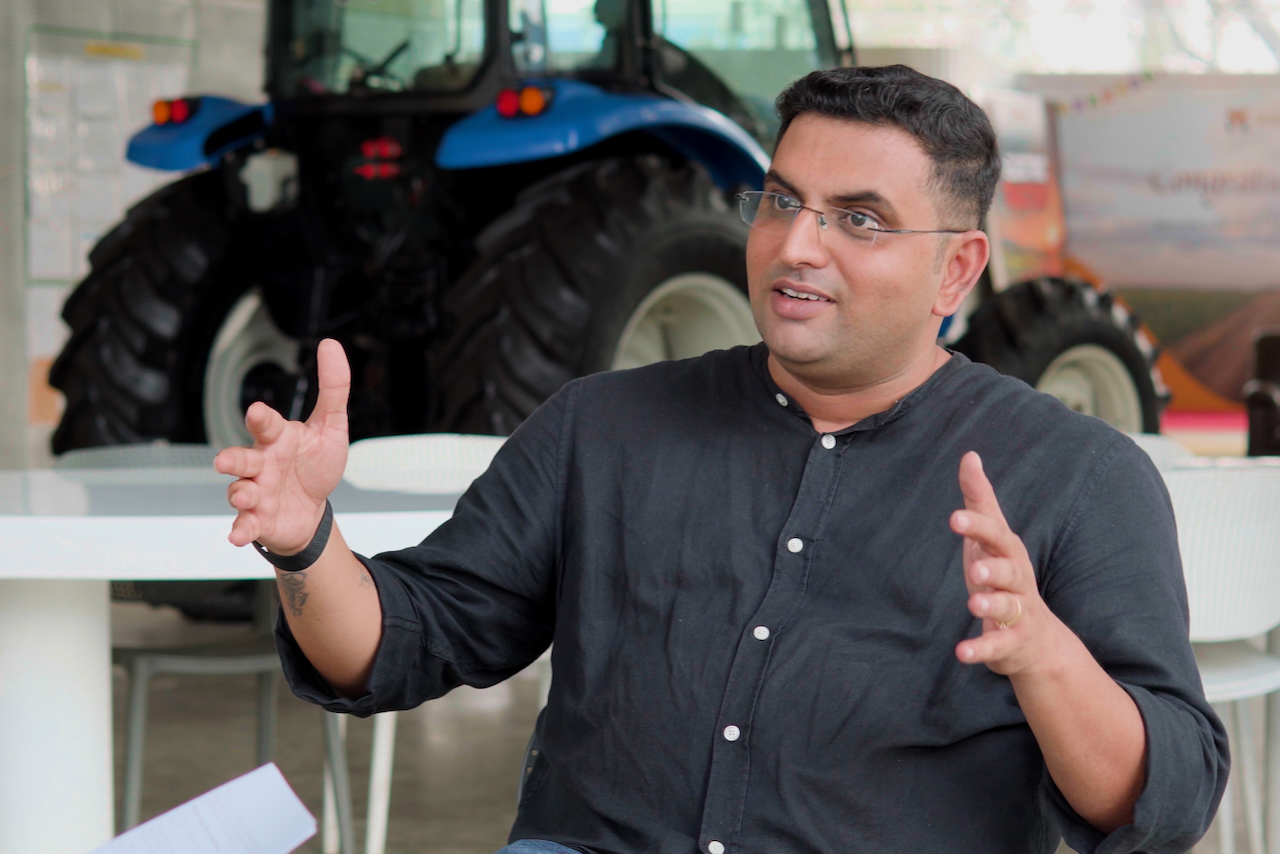
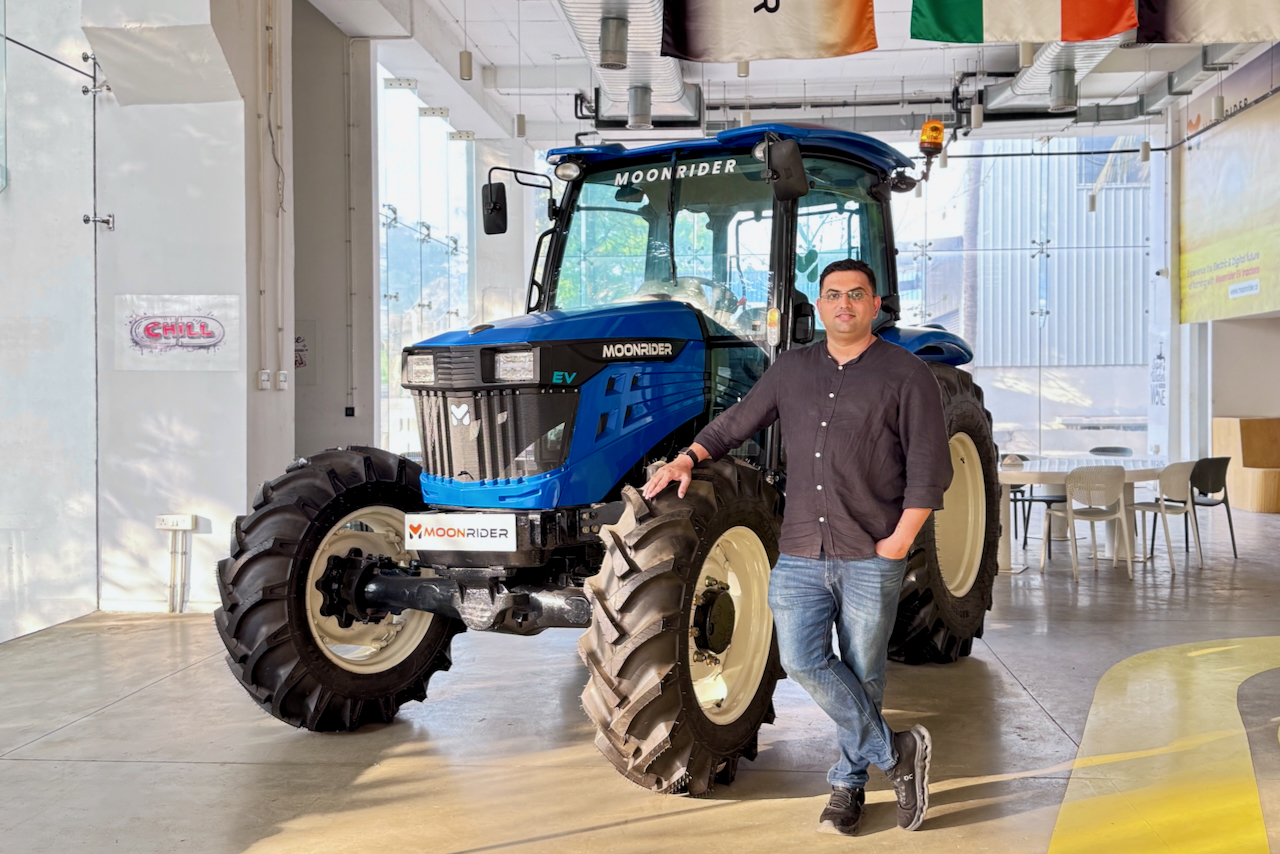
In this episode, I bring you a conversation with Anoop Srikantaswamy, founder and CEO of Moonrider, an electric tractor startup in Bengaluru. Anoop and his fellow founder Ravi Kulkarni bring deep background in the industry, having previously worked at automotive giants such as Toyota and Volvo Group.
Mechanical engineers by training, the two are entrepreneurs at heart, with Anoop having previously attempted a hyper-local medicine delivery venture while Ravi co-founded another electric mobility venture that he exited.
Anoop recalled that the idea for Moonrider was sparked by a conversation with a progressive farmer, who noted that while diesel is expensive, farm electricity is often free. Today, Moonrider is a vertically integrated leader, developing proprietary battery technology and power electronics in-house to achieve price parity with diesel.
In this conversation, we explore their moonshot journey — named in honour of the Chandrayaan launch — and discuss the future of connected and autonomous farming. Join us for an inside look at how Moonrider aims to drive the global shift toward sustainable, electric mechanization.
Coming up, a conversation with Anoop Srikantaswamy, founder and CEO of Moonrider, an electric tractor maker in Bengaluru. Catch the full interview on Tuesday, May 19th right here, or wherever you get your podcasts. Here’s a short preview, in which Anoop talks about the state of commercialisation of autonomous tractors and what they might be like in the future. He also talks about the bigger picture in agriculture in which autonomous gear will be important, but one of multiple factors.
Coming up on Tuesday, 19th May, Anoop Srikantaswamy, founder and CEO of Moonrider, a electric tractor startup on Bengaluru, talks about a range of topics — from product innovation to reducing dependence on China to what tractors will be like in the future as they go autonomous.
Catch the full conversation right here or wherever you get your podcasts. Here’s a short preview.
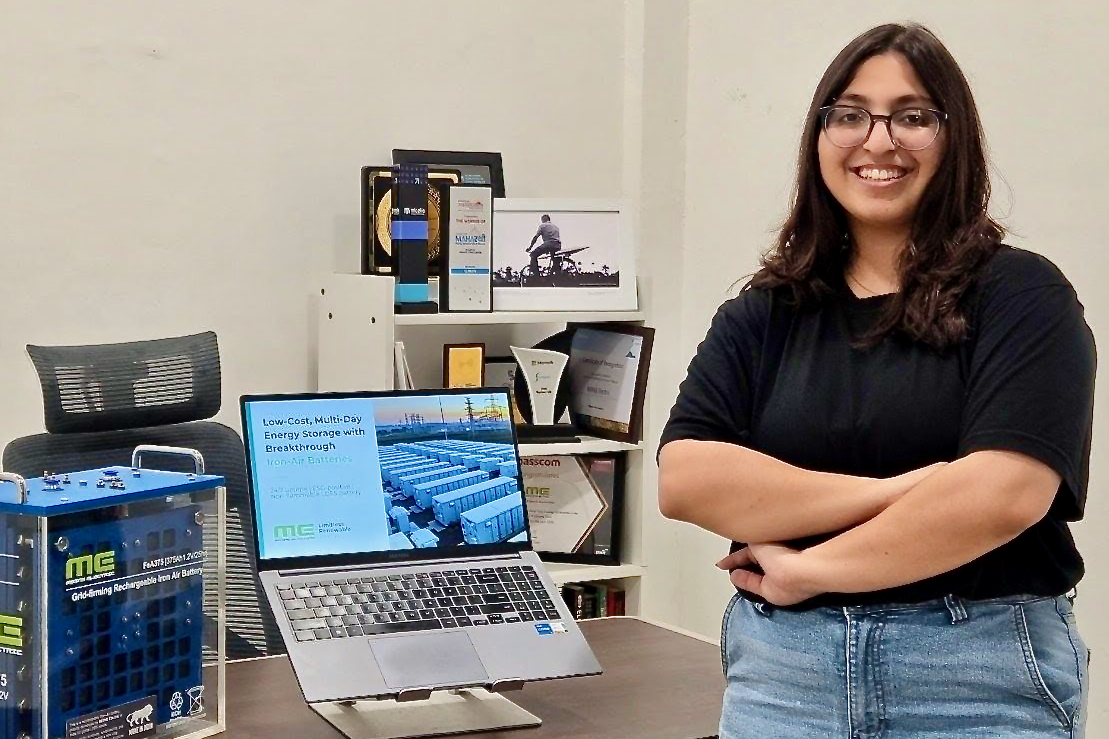
In this episode, Stuti Kakkar, co-founder of MEINE Electric, a battery energy storage tech startup, unpacks the government’s proposed Approved List of Battery Manufacturers (ALBM) that is reportedly in the works as part of its ambitious $38 billion push to deploy 47 gigawatts of battery storage.
Similar to the solar industry’s ALMM framework, this list aims to mandate localised supply chains for government projects, reducing a heavy reliance on imports, particularly from China, which currently controls over 90 percent of the supply chain. Stuti explains why this move is a game-changer for hardware startups.
While traditional lithium-ion batteries face domestic mineral shortages, alternative chemistries like Iron-Air can be up to 95 percent indigenous from day zero, she says.
Stuti also touches upon how these policy shifts provide the demand visibility for hardware-centric startups, which is needed to scale India’s deep-tech ecosystem.
The transition to a low-carbon economy is often framed as a struggle resulting from a combination of engineering challenges and lack of political willpower. A new vision paper argues that the true bottleneck is an information deficit. The Climate and Sustainability Data Exchange (CSDX), a proposed universal digital infrastructure, seeks to move beyond “siloed, project-level fixes” to provide the “shared rails” necessary for a planetary-scale coordination system.
The CSDX vision paper is the result of a collaboration between StepChange and Beckn. StepChange, a climate-tech venture in Bengaluru founded by MIT alumni Ankit Jain and Sidhant Pai, provides a strategic framework for managing ESG, carbon accounting, and climate risk.
Beckn, now called Network for Humanities (NFH, previously the Beckn Foundation), is an international network of labs focused on building open, interoperable digital infrastructure for population-scale systems. It offers the eponymous Beckn protocol, a foundational open protocol that enables interoperable, decentralized digital interactions without reliance on central platforms.
It was co-founded in 2019 by Nandan Nilekani, founding chairman of Aadhaar, India’s Unique ID Authority, Pramod Varma, Aadhaar’s former chief architect, and Sujith Nair, who also serves as its Steward, according to his LinkedIn profile.
The current landscape of sustainability data is a thicket of fragmented portals and manual entries, particularly in the Global South, where information is “limited in quality, expensive to access, and fragile in trust,” the authors of the paper say. Without a common language, capital is frequently mispriced, and the progress of supply chains remains invisible to the regulators and financiers who might otherwise reward decarbonization, they add.
StepChange and Beckn envision a neutral alliance of core members who will act as stewards for the infrastructure, maintaining common schemas and onboarding policies to keep the digital rails accessible and transparent. By combining their technological and environmental expertise, the collaboration seeks to create a federated network where producers, financiers, and regulators can exchange trusted sustainability data at near-zero marginal cost.
The proposal arrives as global climate-driven disaster costs surpass $400 billion annually and energy-related CO₂ emissions have climbed to an all-time high of 37.8 gigatonnes. With atmospheric concentrations now 50 percent higher than pre-industrial levels, the CSDX initiative aims to standardize the reporting of ESG, carbon accounting, and climate risk to bridge the “data-poor” gap that currently prevents global markets from pricing resilience accurately.
“Like railways, container shipping, or the internet, CSDX provides a minimal, interoperable digital rail that allows any actor to publish and pull records in a common language, at near-zero marginal cost,” StepChange and NFH say.
ESG Management captures the broad set of non-financial outcomes enterprises create across environment, society, and governance.
Carbon Accounting provides a rigorous, quantifiable subset of environmental impacts with unique salience for decarbonization.
Climate Risk ensures that external climate dynamics are translated into financial terms, enabling efficient capital allocation and resilience planning.
Using the Beckn protocol, CSDX envisions a federated architecture where data is “governed at source while becoming globally discoverable.” By aligning with global frameworks like the ISSB and CSRD, the platform ensures that “water-withdrawal intensity,” for example, or “Scope 3” emissions mean the same thing to a textile factory in Nairobi as they do to a bank in Frankfurt.
This is not merely an exercise in corporate disclosure; it is an attempt to create a “functioning control system for the real economy,” where sustainability is embedded into every purchase order and loan decision.