Tag: sustainability

  • India withdraws bid to host COP33, US restores some carbon funds, Microsoft clarifies on purchases

    India withdraws bid to host COP33, US restores some carbon funds, Microsoft clarifies on purchases

    (00:22) Microsoft clarifies stance on carbon credits purchases

    Microsoft issued a clarification after reports earlier this month that it had informed carbon credit developers of a temporary halt in new purchases. That news, reported first by Heatmap News, had caused immediate ripples in the carbon removal sector, as Microsoft has been the market’s dominant force, representing roughly 90 percent of global durable carbon removal purchases in 2025.

    Microsoft Chief Sustainability Officer Melanie Nakagawa clarified that the “carbon removal program has not ended,” according to reports including those from ESG Dive and ESG Today. The company remains committed to its goal of becoming carbon negative by 2030.

    (01:20) Fission startup X-energy files for $800 million IPO

    Nuclear energy startup X-energy has officially launched its investor roadshow, filing for an initial public offering to raise up to $800 million, TechCrunch reports. The Maryland-based company is targeting a valuation of approximately $7.5 billion, with shares priced between $16 and $19.

    (02:13) Inertia partners US national lab to commercialise fusion science

    Inertia Enterprises has signed a landmark strategic partnership with Lawrence Livermore National Laboratory (LLNL) to transition experimental fusion science into a commercial energy source. The collaboration includes a licensing agreement for nearly 200 patents and joint research focused on scaling the laser-driven technology used to achieve “ignition” at the National Ignition Facility.

    (03:30) Battery recycler Ascend Elements files for bankruptcy

    Ascend Elements, a leading U.S. battery recycling startup, has officially filed for Chapter 11 bankruptcy protection to address a critical liquidity crisis, MLQ.ai reports. Despite raising over $500 million from high-profile investors like Honda and SK On, the company faced insurmountable financial pressure from plummeting lithium-ion material prices and significant construction delays at its primary facilities.

    (04:47) US Department of Energy restores $1.2 billion for carbon removal

    The US Department of Energy (DOE) has reversed its decision to cancel funding for major climate initiatives, restoring support for carbon direct air capture (DAC) projects previously awarded under the Biden administration, World Energy News reports. The move, confirmed in a report to Congress, ensures that nearly 2,000 projects will retain their funding after a period of intense review by the current administration.

    (05:37) India officially withdraws bid to host UN climate summit in 2028

    The Indian government has formally rescinded its offer to host the 33rd United Nations Climate Change Conference (COP33) in 2028, Reuters reports. Ministry of External Affairs spokesperson Randhir Jaiswal confirmed the withdrawal after a press briefing on Friday last, stating that “several issues” were considered following a review of the country’s commitments for that year.

    (06:26) Steel emissions reduction target

    India’s own efforts continue, towards meeting its target of hitting net zero by 2070. The Indian government has drafted a comprehensive National Steel Policy roadmap aiming to double the nation’s crude steel capacity to 400 million tonnes by 2035-36. According to internal documents and recent ministry briefings at the Bharat Steel 2026 summit, this expansion will be paired with a mandatory 25% reduction in carbon emissions intensity, Reuters reported earlier this month.

    (07:37) World Bank shareholders seek solution to preserve climate strategy

    International shareholders of the World Bank, led by France, are urgently seeking ways to maintain the lender’s climate change financing strategy after its official expiration in June, Reuters reports. French development minister Éléonore Caroit stated during the IMF-World Bank spring meetings in Washington that letting the current action plan lapse is “unacceptable.”
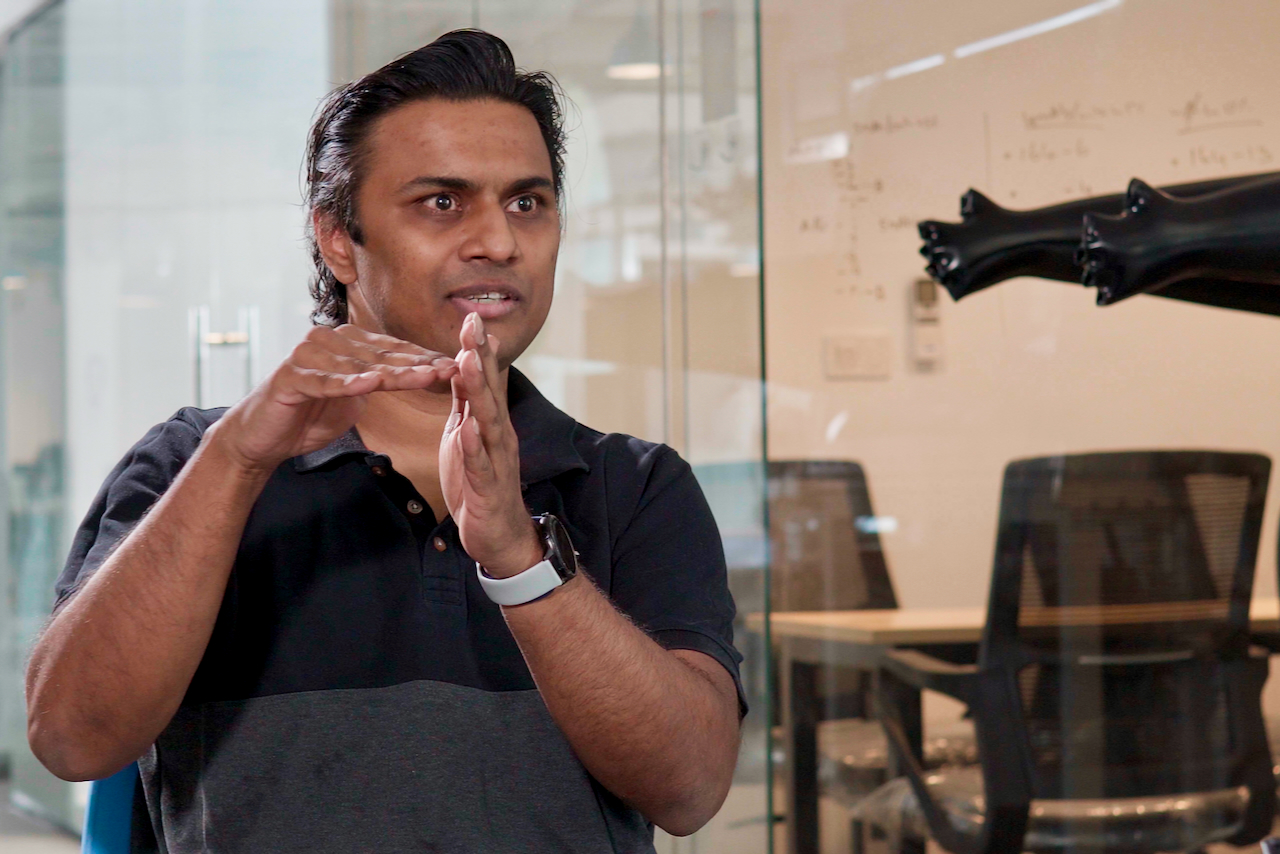
  • The ‘knowhow challenge’ — Apoorv Shaligram, founder of e-TRNL

    The ‘knowhow challenge’ — Apoorv Shaligram, founder of e-TRNL

    There are challenges beyond importing sophisticated components that India’s deep tech startups can’t yet source locally. Some of these challenges are equally or more fundamental.

    I had a chance to get some insights on this from Apoorv Shaligram, founder and CEO at e-TRNL Energy, recently.
    Apoorv, his fellow founder Uttam Sen, and their team are innovating new cell architectures to make cells, batteries and their applications safer, more reliable and better alternatives to fossil fuel.

    They are backed by well-known investors including Speciale Invest, Micelio, Navam Capital, Indian Angel Network, and Anicut.
    Check out the related video for the full conversation with Apoorv. Here’s a one-minute view on how the real science and engineering knowhow underlying the products that many Indian deep tech startups are developing has to be acquired ground up.

  • EVs and beyond: Apoorv Shaligram on barriers to adoption

    EVs and beyond: Apoorv Shaligram on barriers to adoption

    Barriers to not just EV adoption, but beyond, in terms of widespread use of larger electric batteries the same way we’ve adopted smartphones, for example. What factors are holding adoption back?
    Apoorv Shaligram, founder and CEO at e-TRNL Energy in Bengaluru, offers a quick point here. He identifies convenience and safety as the primary limiters for electric battery tech adoption in India.
    Check out the related post for the full conversation with Apoorv, who with his fellow founder Uttam Sen and their team, is innovating new cell architectures to make cells, batteries and their applications safer, more reliable and better alternatives to fossil fuel.

  • Apoorv Shaligram on e-TRNL Energy’s efforts to innovate better cell architectures

    Apoorv Shaligram on e-TRNL Energy’s efforts to innovate better cell architectures

    In this episode I’m joined by Apoorv Shaligram, founder and CEO of e-TRNL Energy. Apoorv, and his fellow founder Uttam Sen, IIT Bombay alumni both, and their team are tackling the electric vehicle industry’s most critical “wants”: high levels of safety and fast charging.

    While battery chemistry has attracted a lot of innovation effort, e-TRNL is focusing on the cell architecture instead. Their core innovation, 3D Electrode Architecture (3DEA), moves away from the traditional 2D thin-layered designs found in everything from smartphones to current EVs.

    By fundamentally changing how current flows inside the cell, 3DEA reduces resistance and heat at the source, Apoorv explains. This makes batteries “super resilient” to thermal waste – the excess heat generated within a battery cell during its operation, primarily caused by internal resistance – preventing the catastrophic “cascading” fires in some EV batteries.

    Beyond safety, this architecture unlocks the capability for 15-minute fast charging and longer-lasting, lighter battery packs, he says.

    Apoorv also explains how they have verticalized their technology stack, putting together manufacturing processes from the ground up: They have also condensed the conventional 24-step manufacturing process into a precise 8-step operation. And the entrepreneurs envision modular, container-sized factories that reduce energy consumption and that are better suited to markets that lack large-scale adoption.

    In this episode, Apoorv also talks about how India’s deep tech landscape is changing, with the government catalysing the discourse in the country. And we takeaway some lessons from e-TRNL’s recent Rs. 27.4 crore seed round, and the roadmap to hit full-scale manufacturing.

  • Coming up: Apoorv Shaligram on how the government is catalysing a deep tech discourse in India

    Coming up: Apoorv Shaligram on how the government is catalysing a deep tech discourse in India

    Coming up, tomorrow, a conversation with Apoorv Shaligram, founder and CEO at e-TRNL Energy in Bengaluru, where he and fellow founder Uttam Sen are innovating the next generation battery cell architectures and advanced manufacturing processes.

    Apoorv and Uttam recently announced raising Rs. 27.4 crore (About $3 million) in seed funding, led by IAN Group (Indian Angel Network), with Navam Capital, and existing investors Speciale Invest, Micelio and others also joining in.
    You can catch the full conversation right here, or wherever you get your podcasts. Here’s a 60-second preview with Apoorv talking about how the deep tech landscape in India is undergoing a government-led transformation.

  • Coming up: Apoorv Shaligram on battery cell innovations at e-TRNL Energy, and a funding update

    Coming up: Apoorv Shaligram on battery cell innovations at e-TRNL Energy, and a funding update

    So, this morning, I drove up to the new office that Apoorv Shaligram and Uttam Kumar Sen and their team at e-TRNL Energy have set up – still being given some final touches before a formal inauguration soon.

    Sat down with Apoorv to record the next episode of Conversations. And it’s always an awesome experience to do this in-person, in whatever conditions present themselves onsite, in terms of light and sound. (I did carry two Neever panels and my DJI wireless mics, and more on that in a separate note.)

    I’ve had the privilege of being acquainted with this deep-tech entrepreneur duo – IIT Bombay alumni – almost from the time they set up e-TRNL and, in one early conversation a few years ago, they’d tried to help me understand the tech innovations they had in mind.

    Today, we caught up in the context of their recent announcement of having raised Rs. 27.4 crore (About $3 million) in seed funding, led by IAN Group (Indian Angel Network), with Navam Capital, and existing investors Speciale Invest, Micelio and others also joining in.

    We also spoke about the funding experience — what’s changed, what worked, best practices and so on. Catch all of that in the full conversation right here, or wherever you get your podcast, on Friday, Feb. 20.

    Here’s a 90-second preview, with Apoorv explaining 3DEA, their 3D electrodes architecture.

    By the way, I also just started a WhatsApp channel for anyone who prefers to keep track of their deep tech news and views that way.