

Subscribe to continue reading
Subscribe to get access to the rest of this post and other subscriber-only content.
Subscribe to get access to the rest of this post and other subscriber-only content.
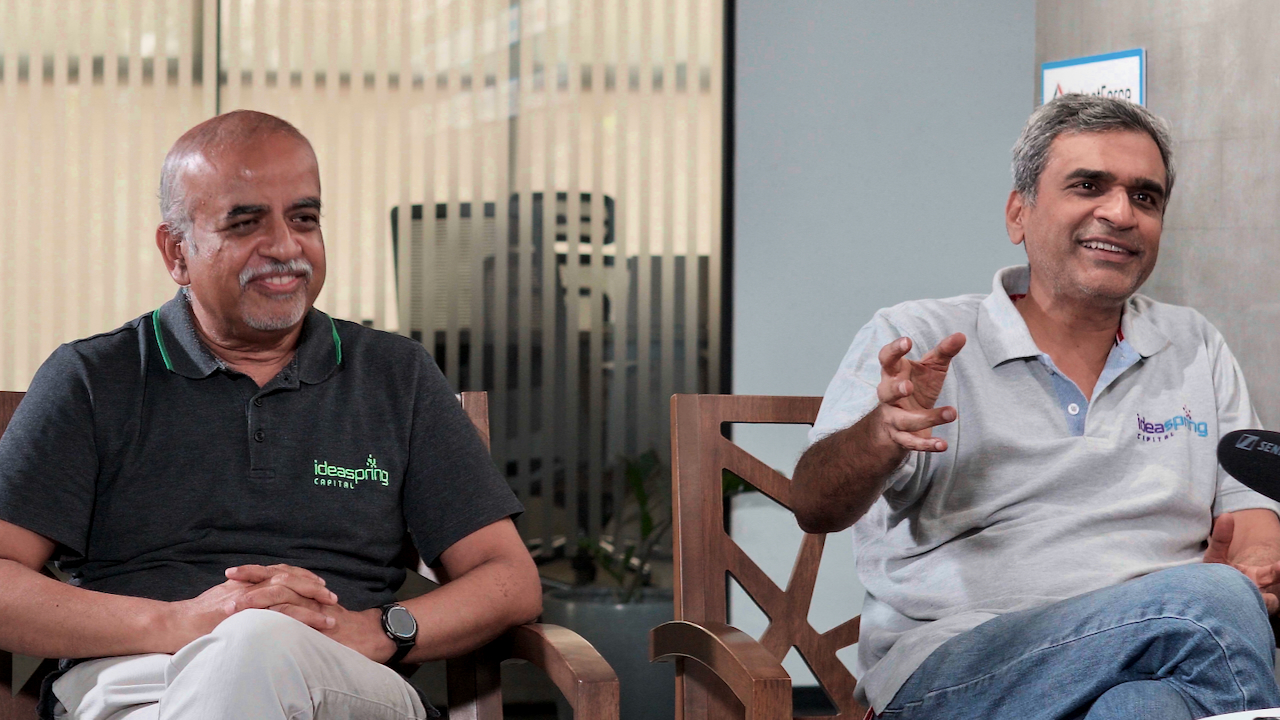
Naganand Doraswamy, managing partner, and Suryaprakash Konanuru, CTO at Ideaspring Capital, a well known deep tech VC firm in Bengaluru, sat down with me recently for an interview, which I’m publishing in two parts.
Catch Part 2, the concluding part, tomorrow, in which they talk about the raise-invest-grow-exit imperative of venture investing, and what that means for investing in deep tech startups in India.
What’s happening in India’s top science and engineering schools when it comes to the lab-to-market journey? How is AI changing VC in deep tech and the ‘Flipkart moment’ of deep tech in India.
Subscribe to get access to the rest of this post and other subscriber-only content.

Tracxn, a global market intelligence platform for private company data, released its India Climate Tech 2026 Report, a comprehensive analysis of an ecosystem where climate action is increasingly tied to India’s energy-security and industrial priorities.
The report examines how funding activity, company formation, investor participation, and policy are developing across India’s climate-tech ecosystem, drawing on Tracxn’s coverage of the sector. It identifies where capital is concentrating, which segments are drawing the widest participation, and how a maturing policy framework is shaping the opportunities available to founders and investors.
Highlights
Policy, Capital and Energy Security Are Aligning
With roughly 85% of India’s crude oil imported, the same technologies — renewable energy, electric mobility, batteries and critical minerals — increasingly address energy security alongside climate goals, giving the investment case two reinforcing drivers. India’s climate-policy framework has moved from supporting technology adoption to building the conditions for large-scale deployment. PM E-DRIVE, a ₹10,900 crore programme extended to 2028, supports electric-vehicle adoption and charging infrastructure; the Carbon Credit Trading Scheme, effective October 2026, establishes a compliance carbon market covering around 490 industrial units across nine sectors; and the Rare Earth Permanent Magnets scheme, a ₹7,280 crore programme, strengthens domestic clean-energy supply chains.
Funding Has Scaled and Is Concentrating in Larger Rounds
Annual funding rose from about $315M in 2020 to $2.6B in 2025, with capital increasingly directed toward larger, conviction-led transactions in electric mobility, renewable energy and energy-transition infrastructure. Landmark rounds include Inox Clean Energy’s $344M Series D in 2026 and Erisha E Mobility’s $1B Series D in 2025. British International Investment participated in three rounds (Euler Motors, GreenCell Mobility and Ecofy), alongside IFC, FMO and Finnfund – reflecting sustained institutional confidence in India’s energy transition.
Renewable Energy Leads, With the Opportunity Broadening
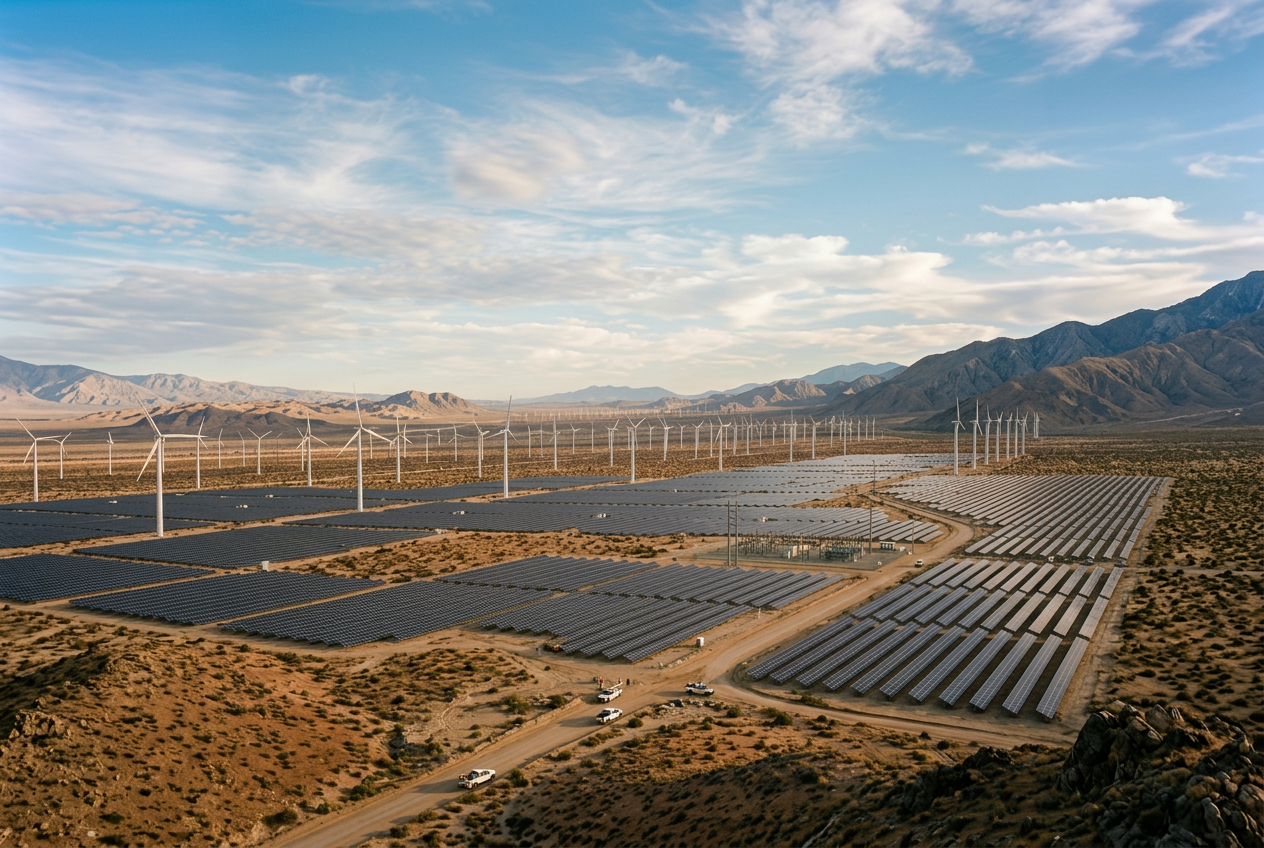
Renewable Energy Tech leads cumulative funding at $1.5B, supported by the capital-intensive nature of renewable-energy and grid infrastructure, with Inox Clean Energy’s $344M Series D and $70M Series C among its notable rounds. Beyond generation, Solid Waste Management Tech ($477M), Energy Efficiency Tech ($352M), Air Pollution Management Tech ($237M) and Water & Wastewater Management Tech ($208M) have together attracted more than $1.2B, pointing to a widening opportunity across resource efficiency, environmental management and industrial sustainability.
As policy support, private capital and energy-security priorities increasingly point to the same set of technologies, India’s climate-tech market is positioned to deepen as well as grow.
2026 YTD: Fewer, Larger, More Conviction-Led Rounds
The first five months of 2026 reflect a market consolidating around scale and conviction, with $791M deployed across 74 rounds. Late-stage activity dominates at $524M across 5 deals, while seed funding stands at $61M across 44 rounds. Noida has emerged as the top funding city. Early-cycle signals remain selective, with 15 first-time funded companies, 6 new Soonicorns, 2 IPOs and 1 acquisition in YTD.

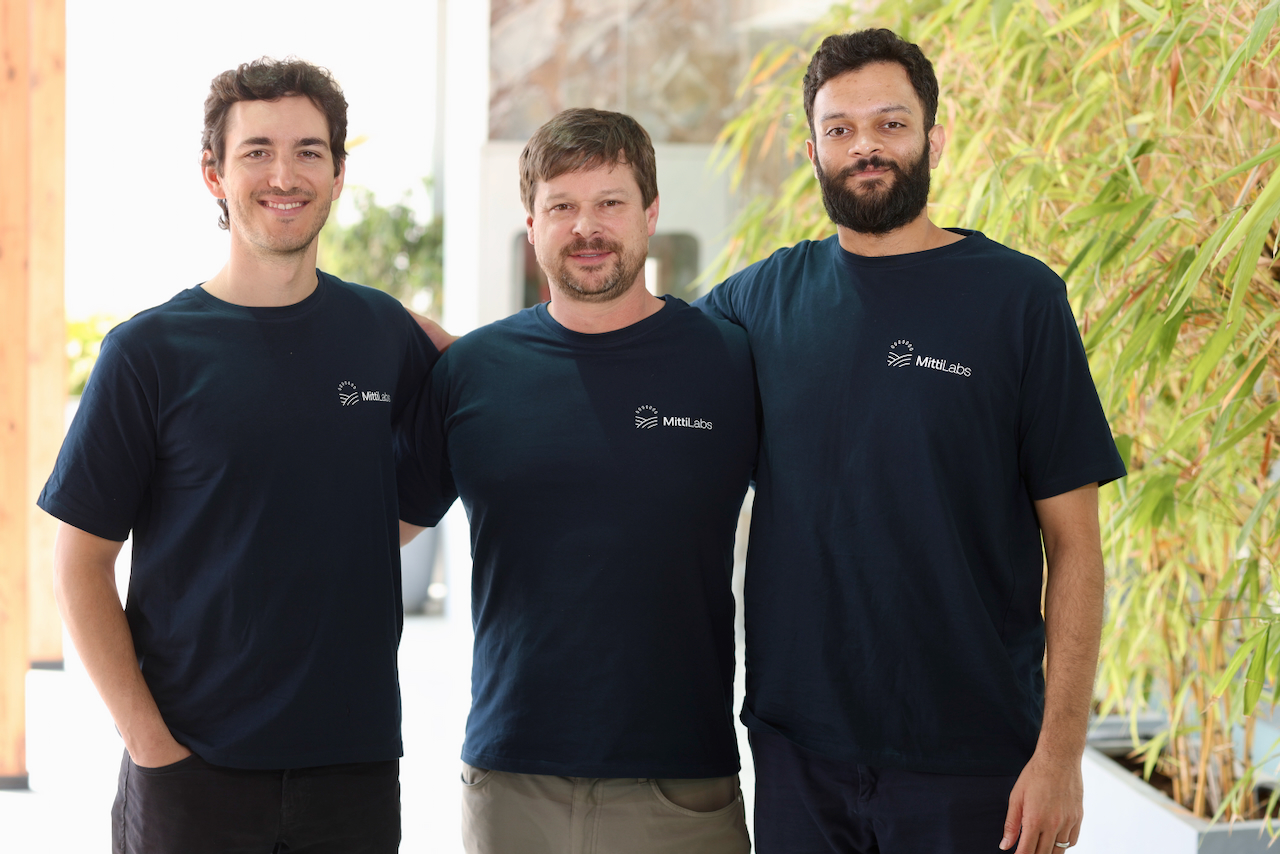
In today’s episode, on the occasion of World Environment Day, I bring you a conversation with Devdut Dalal (Dev), Xavier Laguarta Soler (Xavi) and Nathan Torbick (Nate), founders of Mitti Labs.
Rice is a nutritional staple for nearly half the human population. Its cultivation is also a formidable contributor to global warming, accounting for 10-12 percent of all methane emissions from human activity. And Methane is 80-86 times more potent than CO2 in warming the planet over a 20-year timeframe, and about 28 times over a century.
Growing rice also takes up 40 percent of the world’s freshwater resources. By drowning their fields to suppress weeds, farmers have inadvertently cultivated methanogenic microbes that release this ‘super pollutant.’ At Mitti Labs, Harvard Business School alumni Dev and Xavi have teamed up with Nate, a distinguished scientist who’s worked NASA and JaXA, to build a “full-stack” remedy.
They started work in India first some three years ago, persuading farmers to try out a technique known as Alternate Wetting and Drying (AWD) that entails periodically drain their fields, interrupting the anaerobic feast of methane-producing bacteria.
This is a known practice developed at the International Rice Research Institute. What the entrepreneurs at Mitti Labs are doing, however, is to plug in an innovative digital Monitoring, Reporting, and Verification (dMRV) platform. Using tools including satellite data and digital twins of the farms they aim to convert the methane reductions from AWD to equivalent carbon credits.
The plan at this venture, which is backed by the VC investor Lightspeed, is to become a vertically integrated carbon project developer providing farmers with free tools and a share of the revenue from the sale of the carbon credits.
Dev, Xavi and Nate, and their 100-plus team are already working with some 70,000 farmers in India, through partnerships with various NGOs and other such grassroots organisations that work closely with the farmers.
Their long-term success hinges on mobilising a substantial share of some 150 million smallholder rice growers who have farmed the same way for generations.
Today is the first day of the second year of this podcast. And in today’s episode of Conversations, I’m really happy to bring you Part 1 of an interview with Naganand Doreswamy, managing partner, and Suryaprakash Konanuru, CTO, at Ideaspring Capital.
They are among those few VC investors in India who were backing deep tech startups long before the government’s massive research and development and innovation fund prompted everyone to want to grab a share of the pie.
This was a rich conversation for me to record, with plenty of plain speak without jargon that’s characteristic of these two VCs. We jumped right in, with Ideaspring’s latest investment, the $13 million Series A round that they led at the semiconductor company HrdWyr, how that reflects their views on deep tech investing today in India, what the RDIF has done and challenges that remain.
I hope you enjoy listening to this as much as I did recording it.
Catch the second half of this conversation on Tuesday next week, where we talk about what might represent the ‘Flipkart moment’ of India’s deep tech sector, and Ideaspring’s next fund.


