Author: Life, while I wait

  • India’s climate tech hits $12.8 billion in cumulative funding (Tracxn press release text)

    India’s climate tech hits $12.8 billion in cumulative funding (Tracxn press release text)

    Infographic from Tracxn’s India Climate Tech 2026 Report. Courtesy Tracxn.

    Tracxn, a global market intelligence platform for private company data, released its India Climate Tech 2026 Report, a comprehensive analysis of an ecosystem where climate action is increasingly tied to India’s energy-security and industrial priorities. 

    The report examines how funding activity, company formation, investor participation, and policy are developing across India’s climate-tech ecosystem, drawing on Tracxn’s coverage of the sector. It identifies where capital is concentrating, which segments are drawing the widest participation, and how a maturing policy framework is shaping the opportunities available to founders and investors.

    Highlights

    • India’s climate-tech companies have attracted approximately $12.8B and 1,583 funded companies, with annual funding rising from about $315M in 2020 to $2.6B in 2025.
    • Policy, private capital and energy security are converging on the same sectors. With roughly 85% of India’s crude oil imported, renewable energy, electric mobility, batteries and critical minerals now serve both decarbonisation and energy-independence goals.
    • Capital is consolidating into larger, conviction-led rounds, led by Inox Clean Energy’s $344M Series D (2026) and Erisha E Mobility’s $1B Series D (2025), with development finance institutions such as British International Investment, IFC and FMO actively participating.
    • Renewable Energy Tech leads cumulative funding at $1.5B, while Solid Waste Management ($477M), Energy Efficiency ($352M), Air Pollution Management ($237M) and Water & Wastewater Management ($208M) show the opportunity broadening across the ecosystem.
    • 2026 YTD funding stands at $791M across 74 rounds, with 66% of funding concentrated in just 5 late-stage rounds, signalling a flight to conviction-led plays.

    Policy, Capital and Energy Security Are Aligning


    With roughly 85% of India’s crude oil imported, the same technologies — renewable energy, electric mobility, batteries and critical minerals — increasingly address energy security alongside climate goals, giving the investment case two reinforcing drivers. India’s climate-policy framework has moved from supporting technology adoption to building the conditions for large-scale deployment. PM E-DRIVE, a ₹10,900 crore programme extended to 2028, supports electric-vehicle adoption and charging infrastructure; the Carbon Credit Trading Scheme, effective October 2026, establishes a compliance carbon market covering around 490 industrial units across nine sectors; and the Rare Earth Permanent Magnets scheme, a ₹7,280 crore programme, strengthens domestic clean-energy supply chains. 

    Funding Has Scaled and Is Concentrating in Larger Rounds


    Annual funding rose from about $315M in 2020 to $2.6B in 2025, with capital increasingly directed toward larger, conviction-led transactions in electric mobility, renewable energy and energy-transition infrastructure. Landmark rounds include Inox Clean Energy’s $344M Series D in 2026 and Erisha E Mobility’s $1B Series D in 2025. British International Investment participated in three rounds (Euler Motors, GreenCell Mobility and Ecofy), alongside IFC, FMO and Finnfund – reflecting sustained institutional confidence in India’s energy transition.

    Renewable Energy Leads, With the Opportunity Broadening


    Renewable Energy Tech leads cumulative funding at $1.5B, supported by the capital-intensive nature of renewable-energy and grid infrastructure, with Inox Clean Energy’s $344M Series D and $70M Series C among its notable rounds. Beyond generation, Solid Waste Management Tech ($477M), Energy Efficiency Tech ($352M), Air Pollution Management Tech ($237M) and Water & Wastewater Management Tech ($208M) have together attracted more than $1.2B, pointing to a widening opportunity across resource efficiency, environmental management and industrial sustainability.

    As policy support, private capital and energy-security priorities increasingly point to the same set of technologies, India’s climate-tech market is positioned to deepen as well as grow.

    2026 YTD: Fewer, Larger, More Conviction-Led Rounds


    The first five months of 2026 reflect a market consolidating around scale and conviction, with $791M deployed across 74 rounds. Late-stage activity dominates at $524M across 5 deals, while seed funding stands at $61M across 44 rounds. Noida has emerged as the top funding city. Early-cycle signals remain selective, with 15 first-time funded companies, 6 new Soonicorns, 2 IPOs and 1 acquisition in YTD.

    Related Post

  • Decarbonising rice: Mitti Labs founders on their plan for future of sustainable farming

    Decarbonising rice: Mitti Labs founders on their plan for future of sustainable farming

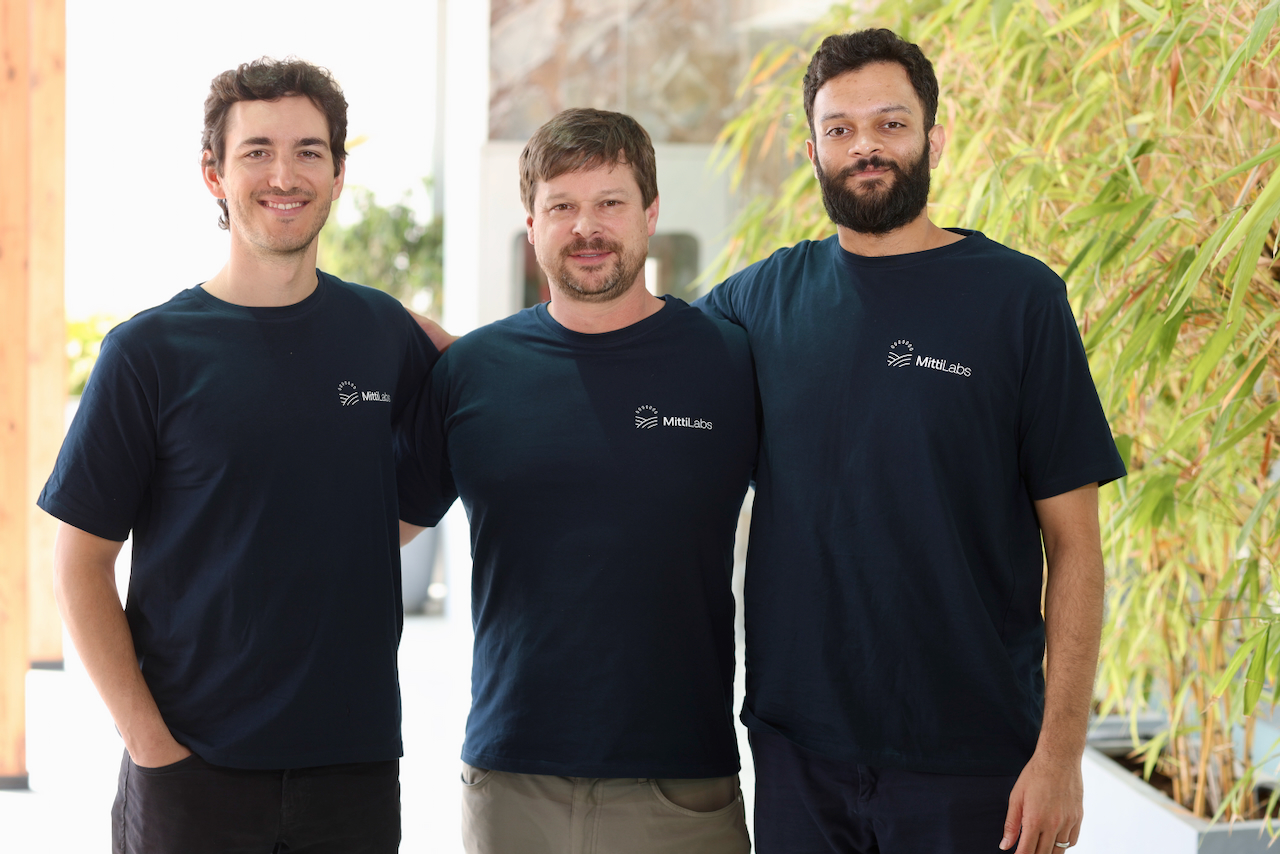
    In today’s episode, on the occasion of World Environment Day, I bring you a conversation with Devdut Dalal (Dev), Xavier Laguarta Soler (Xavi) and Nathan Torbick (Nate), founders of Mitti Labs.

    Rice is a nutritional staple for nearly half the human population. Its cultivation is also a formidable contributor to global warming, accounting for 10-12 percent of all methane emissions from human activity. And Methane is 80-86 times more potent than CO2 in warming the planet over a 20-year timeframe, and about 28 times over a century.

    Growing rice also takes up 40 percent of the world’s freshwater resources. By drowning their fields to suppress weeds, farmers have inadvertently cultivated methanogenic microbes that release this ‘super pollutant.’ At Mitti Labs, Harvard Business School alumni Dev and Xavi have teamed up with Nate, a distinguished scientist who’s worked NASA and JaXA, to build a “full-stack” remedy.

    They started work in India first some three years ago, persuading farmers to try out a technique known as Alternate Wetting and Drying (AWD) that entails periodically drain their fields, interrupting the anaerobic feast of methane-producing bacteria.

    This is a known practice developed at the International Rice Research Institute. What the entrepreneurs at Mitti Labs are doing, however, is to plug in an innovative digital Monitoring, Reporting, and Verification (dMRV) platform. Using tools including satellite data and digital twins of the farms they aim to convert the methane reductions from AWD to equivalent carbon credits.

    The plan at this venture, which is backed by the VC investor Lightspeed, is to become a vertically integrated carbon project developer providing farmers with free tools and a share of the revenue from the sale of the carbon credits.

    Dev, Xavi and Nate, and their 100-plus team are already working with some 70,000 farmers in India, through partnerships with various NGOs and other such grassroots organisations that work closely with the farmers.

    Their long-term success hinges on mobilising a substantial share of some 150 million smallholder rice growers who have farmed the same way for generations.

  • A proper newsletter, and other thoughts

    A proper newsletter, and other thoughts

    Hi,

    Wherever you’re reading this, I hope you’re doing well.

    My news today is that I’m attempting to bring you a proper newsletter, instead of just the basic alerts as and when I publish a post. I guess this is part of the ‘what next’ as I step into the second year of my podcast.

    The featured image above is an AI generated one, as you would have guessed. My prompt to generate it was something like this: “A new newsletter on deep tech in India gently floating into a mailbox on a reader’s smartphone.”

    And then it it took a couple more tweaks to get the colours of the newsletter to reflect my logo’s colours. Probably not very original, but It’ll do. Let me know what you think, if you feel like commenting below. So let’s go.

    Two headlines that caught my attention

    Govt plan to replace old commercial vehicles in Delhi-NCR

    The Union Cabinet approved a ₹9,585 crore, two-year scheme to replace approximately 2.07 lakh old trucks and buses (BS-IV or earlier) in the Delhi-NCR region. The initiative offers financial incentives, tax concessions, and discounts to encourage transitioning to cleaner BS-VI or electric vehicles, aiming to curb air pollution.

    Why this matters: This could move the needle on accelerating the electrification of the transport sector in the national capital.

    India remains engaged with the US over proposed tariff hikes

    India is actively negotiating with the United States regarding proposed Section 301 tariff hikes on 60 economies. While the USTR seeks public feedback on these measures ahead of July hearings, India is concurrently finalizing a bilateral framework agreement to address the issue and protect trade interests.

    Why this matters: The final outcome of these negotiations will have a bearing on India’s deep tech startups too — from what they still need to import to how overseas investors view India-domiciled deep tech ventures, potentially affecting their funding.

    Coming up: World Environment Day

    Tomorrow is World Environment Day, and coming up on India Tech Report is an interview with Devdut Dalal (Dev), Xavier Laguarta Soler (Xavi) and Nathan Torbick (Nate), founders of Mitti Labs, on their plan to help rice farmers cut methane emissions from their fields, save water and eventually make money by selling the methane reductions as carbon credits.

    Mitti Labs, while headquartered in the US with a team in India, is a truly multinational startup, with Dev in Bengaluru, India, his Harvard mate Xavi in Barcelona, Spain and Nate, a noted scientist who’s worked at NASA, in Durham, New Hampshire in the US.

    It’s a longish interview and in fact would have gone on longer if Nate hadn’t had to jump off, after joining the call first and being patient with all my questions for about 75 minutes. But do listen to even a few minutes randomly — I’ll be sure to add chapter markers.

    Meanwhile, here’re a couple of previews that are already out to give you taste of what they had to say.

    And if you’re interested in more on World Environment Day, like for example, it has a theme and a host (the Republic of Azerbaijan, this year), here’s just a suggestion on where to start:
    https://www.worldenvironmentday.global/2026/about/theme-and-host

    Next week

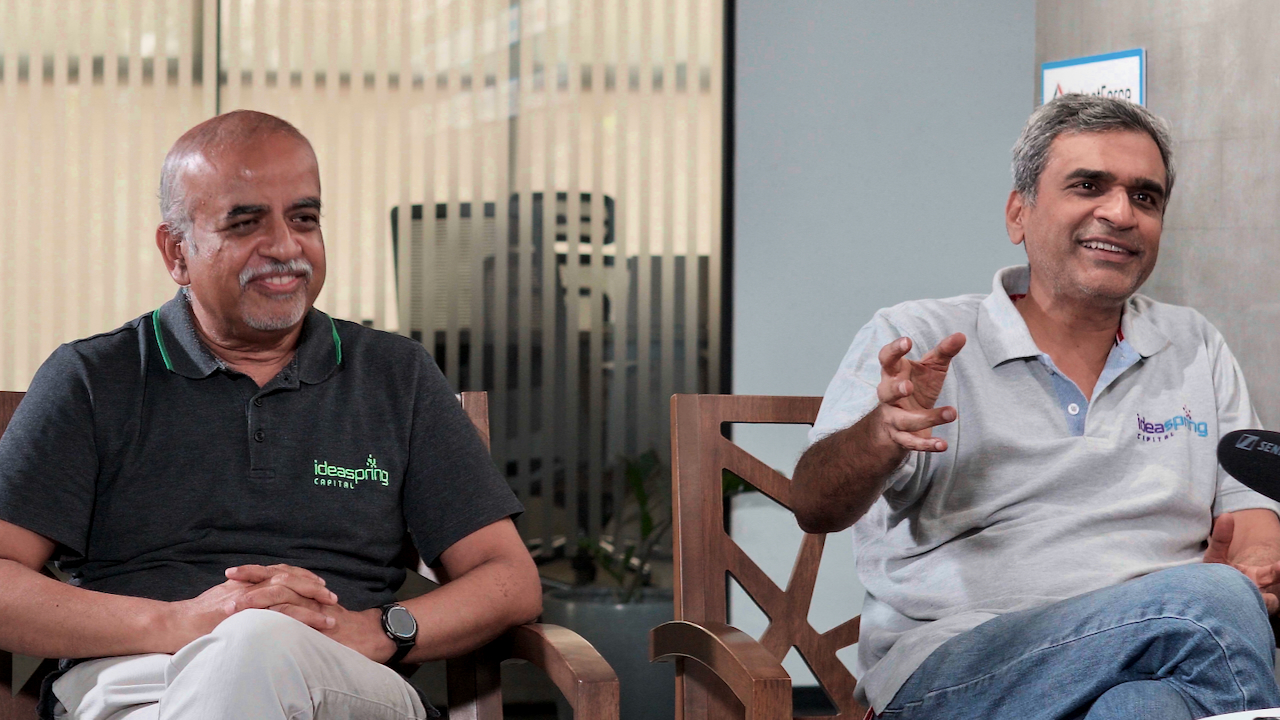
    On Tueday, I’ll publish Part 2 of a conversation with Naganand Doraswamy and Suryaprakash Konanuru, founders of Ideaspring Capital, a leading early-stage deep tech venture capital firm in India, based in Bengaluru.

    Ideaspring celebrated their 10th year anniversary earlier this year, and we covered a lot of ground in the interview. Part 1 starts with a discussion of their latest investment, the $13 million Series A fuding at HrdWyr, a chip design startup that the vc firm led. Check out the episode below.

    That’s it for today. A couple of other things I did in recent weeks are, I tried to clean up and declutter the website. Think it looks decent now, but work in progress, as always. And I went back to Transistor to host my podcast, so you the listener gets a clean and efficient podcast player on every page and post.

    Let me know what you think. I’ll try my best to be consistent. Please support my work by sharing this with your friends. I wish you a great rest of the day.

  • Coming up: Mitti Labs founders on vision for sustainable rice farming

    Coming up: Mitti Labs founders on vision for sustainable rice farming

    Rice is one of our biggest staples, here in India, but the way our farmers grow it is becoming increasingly unsustainable, as it contributes to depleting our water tables to dangerous levels.

    Rice cultivation is also responsible for 10-12 percent of all methane released into the atmosphere from human activity — a gas that is 80-86 more potent than CO2 in warming the planet over a 20-year period.

    Devdut Dalal, Xavier Laguarta Soler and Nathan Torbick, founders of Mitti Labs, have a plan to change this, at scale. And they’re already persuading some 70,000 rice farmers in India to try out their science-backed methods.

    In the process, they also want to translate the reduced methane emissions to equivalent carbon credits, so that the farmers benefit from a share of the money from the sale of those credits.

    Catch the full conversation on Friday, June 5, World Environment Day, right here or wherever you get your podcasts. Here’s a quick preview, with Nate giving us a sense of the potential for methane reduction and the water savings.

  • Deep tech: Ideaspring Capital’s founders on investing with conviction, eyes wide open (Part 1)

    Deep tech: Ideaspring Capital’s founders on investing with conviction, eyes wide open (Part 1)

    Today is the first day of the second year of this podcast. And in today’s episode of Conversations, I’m really happy to bring you Part 1 of an interview with Naganand Doreswamy, managing partner, and Suryaprakash Konanuru, CTO, at Ideaspring Capital.

    They are among those few VC investors in India who were backing deep tech startups long before the government’s massive research and development and innovation fund prompted everyone to want to grab a share of the pie.

    This was a rich conversation for me to record, with plenty of plain speak without jargon that’s characteristic of these two VCs. We jumped right in, with Ideaspring’s latest investment, the $13 million Series A round that they led at the semiconductor company HrdWyr, how that reflects their views on deep tech investing today in India, what the RDIF has done and challenges that remain.

    I hope you enjoy listening to this as much as I did recording it.

    Catch the second half of this conversation on Tuesday next week, where we talk about what might represent the ‘Flipkart moment’ of India’s deep tech sector, and Ideaspring’s next fund.

  • Mitti Labs founders on helping rice farmers cut methane, make money (Preview)

    Mitti Labs founders on helping rice farmers cut methane, make money (Preview)

    One could think of ‘Mitti’ — the Hindi word for soil — as representing the grounded foundation of a cooler future. And for us in India while rice that grows in our soil is a daily staple, its traditional cultivation is a hidden climate hazard. Rice cultivation worldwide is responsible for 10-12 percent of human-caused methane emissions. It also consumes staggering amounts of water.

    Coming up next on Conversations at India Tech Report, Devdut Dalal (Dev), Xavier Laguarta Soler (Xavi), and Nathan Torbick (Nate), co-founders of Mitti Labs talk about how they are turning rice farming into a powerful vehicle for climate action – specifically targeting methane emissions from rice fields.

    Since launching in late 2023, this “full stack” climate-tech startup has scaled from an idea that Harvard alumni Dev and Xavi had to a VC-funded startup (investors include Lightspeed) touching some 70,000 small-holder farmers in India today. Mitti Labs is helping the farmers change how they water their rice crops in a manner that reduces methane emissions, cuts water use and even makes the crops hardier, the entrepreneurs say.

    Nate, a distinguished scientist, adds the science and tech experience, helping Mitti Labs tap satellite remote sensing and data analytics to build a digital Monitoring, Reporting, and Verification (dMRV) system, to track methane reductions at the field level. By converting these environmental wins into high-quality carbon credits, Mitti Labs aims to provide direct financial incentives and free advisory services to the farmers.

    Catch the episode on June 5, World Environment Day, right here, or wherever you get your podcasts. Here’s a preview with Xavi and Dev laying out their basic thesis.