Tag: climate-change

  • StepChange, Nilekani-backed Beckn unveil CSDX vision to bridge global climate data gap

    StepChange, Nilekani-backed Beckn unveil CSDX vision to bridge global climate data gap

    The transition to a low-carbon economy is often framed as a struggle resulting from a combination of engineering challenges and lack of political willpower. A new vision paper argues that the true bottleneck is an information deficit. The Climate and Sustainability Data Exchange (CSDX), a proposed universal digital infrastructure, seeks to move beyond “siloed, project-level fixes” to provide the “shared rails” necessary for a planetary-scale coordination system.

    The CSDX vision paper is the result of a collaboration between StepChange and Beckn. StepChange, a climate-tech venture in Bengaluru founded by MIT alumni Ankit Jain and Sidhant Pai, provides a strategic framework for managing ESG, carbon accounting, and climate risk.

    Beckn, now called Network for Humanities (NFH, previously the Beckn Foundation), is an international network of labs focused on building open, interoperable digital infrastructure for population-scale systems. It offers the eponymous Beckn protocol, a foundational open protocol that enables interoperable, decentralized digital interactions without reliance on central platforms.

    It was co-founded in 2019 by Nandan Nilekani, founding chairman of Aadhaar, India’s Unique ID Authority, Pramod Varma, Aadhaar’s former chief architect, and Sujith Nair, who also serves as its Steward, according to his LinkedIn profile.

    The current landscape of sustainability data is a thicket of fragmented portals and manual entries, particularly in the Global South, where information is “limited in quality, expensive to access, and fragile in trust,” the authors of the paper say. Without a common language, capital is frequently mispriced, and the progress of supply chains remains invisible to the regulators and financiers who might otherwise reward decarbonization, they add.

    StepChange and Beckn envision a neutral alliance of core members who will act as stewards for the infrastructure, maintaining common schemas and onboarding policies to keep the digital rails accessible and transparent. By combining their technological and environmental expertise, the collaboration seeks to create a federated network where producers, financiers, and regulators can exchange trusted sustainability data at near-zero marginal cost.

    The proposal arrives as global climate-driven disaster costs surpass $400 billion annually and energy-related CO₂ emissions have climbed to an all-time high of 37.8 gigatonnes. With atmospheric concentrations now 50 percent higher than pre-industrial levels, the CSDX initiative aims to standardize the reporting of ESG, carbon accounting, and climate risk to bridge the “data-poor” gap that currently prevents global markets from pricing resilience accurately.

    “Like railways, container shipping, or the internet, CSDX provides a minimal, interoperable digital rail that allows any actor to publish and pull records in a common language, at near-zero marginal cost,” StepChange and NFH say.


    • ESG Management captures the broad set of non-financial outcomes enterprises create across environment, society, and governance.
    • Carbon Accounting provides a rigorous, quantifiable subset of environmental impacts with unique salience for decarbonization.
    • Climate Risk ensures that external climate dynamics are translated into financial terms, enabling efficient capital allocation and resilience planning.

    Using the Beckn protocol, CSDX envisions a federated architecture where data is “governed at source while becoming globally discoverable.” By aligning with global frameworks like the ISSB and CSRD, the platform ensures that “water-withdrawal intensity,” for example, or “Scope 3” emissions mean the same thing to a textile factory in Nairobi as they do to a bank in Frankfurt.

    This is not merely an exercise in corporate disclosure; it is an attempt to create a “functioning control system for the real economy,” where sustainability is embedded into every purchase order and loan decision.

  • India withdraws bid to host COP33, US restores some carbon funds, Microsoft clarifies on purchases

    India withdraws bid to host COP33, US restores some carbon funds, Microsoft clarifies on purchases

    (00:22) Microsoft clarifies stance on carbon credits purchases

    Microsoft issued a clarification after reports earlier this month that it had informed carbon credit developers of a temporary halt in new purchases. That news, reported first by Heatmap News, had caused immediate ripples in the carbon removal sector, as Microsoft has been the market’s dominant force, representing roughly 90 percent of global durable carbon removal purchases in 2025.

    Microsoft Chief Sustainability Officer Melanie Nakagawa clarified that the “carbon removal program has not ended,” according to reports including those from ESG Dive and ESG Today. The company remains committed to its goal of becoming carbon negative by 2030.

    (01:20) Fission startup X-energy files for $800 million IPO

    Nuclear energy startup X-energy has officially launched its investor roadshow, filing for an initial public offering to raise up to $800 million, TechCrunch reports. The Maryland-based company is targeting a valuation of approximately $7.5 billion, with shares priced between $16 and $19.

    (02:13) Inertia partners US national lab to commercialise fusion science

    Inertia Enterprises has signed a landmark strategic partnership with Lawrence Livermore National Laboratory (LLNL) to transition experimental fusion science into a commercial energy source. The collaboration includes a licensing agreement for nearly 200 patents and joint research focused on scaling the laser-driven technology used to achieve “ignition” at the National Ignition Facility.

    (03:30) Battery recycler Ascend Elements files for bankruptcy

    Ascend Elements, a leading U.S. battery recycling startup, has officially filed for Chapter 11 bankruptcy protection to address a critical liquidity crisis, MLQ.ai reports. Despite raising over $500 million from high-profile investors like Honda and SK On, the company faced insurmountable financial pressure from plummeting lithium-ion material prices and significant construction delays at its primary facilities.

    (04:47) US Department of Energy restores $1.2 billion for carbon removal

    The US Department of Energy (DOE) has reversed its decision to cancel funding for major climate initiatives, restoring support for carbon direct air capture (DAC) projects previously awarded under the Biden administration, World Energy News reports. The move, confirmed in a report to Congress, ensures that nearly 2,000 projects will retain their funding after a period of intense review by the current administration.

    (05:37) India officially withdraws bid to host UN climate summit in 2028

    The Indian government has formally rescinded its offer to host the 33rd United Nations Climate Change Conference (COP33) in 2028, Reuters reports. Ministry of External Affairs spokesperson Randhir Jaiswal confirmed the withdrawal after a press briefing on Friday last, stating that “several issues” were considered following a review of the country’s commitments for that year.

    (06:26) Steel emissions reduction target

    India’s own efforts continue, towards meeting its target of hitting net zero by 2070. The Indian government has drafted a comprehensive National Steel Policy roadmap aiming to double the nation’s crude steel capacity to 400 million tonnes by 2035-36. According to internal documents and recent ministry briefings at the Bharat Steel 2026 summit, this expansion will be paired with a mandatory 25% reduction in carbon emissions intensity, Reuters reported earlier this month.

    (07:37) World Bank shareholders seek solution to preserve climate strategy

    International shareholders of the World Bank, led by France, are urgently seeking ways to maintain the lender’s climate change financing strategy after its official expiration in June, Reuters reports. French development minister Éléonore Caroit stated during the IMF-World Bank spring meetings in Washington that letting the current action plan lapse is “unacceptable.”

  • Why ‘Factories will be the new products’: Gokul NA on the bigger picture behind CynLr’s Object Intelligence Stack

    Why ‘Factories will be the new products’: Gokul NA on the bigger picture behind CynLr’s Object Intelligence Stack

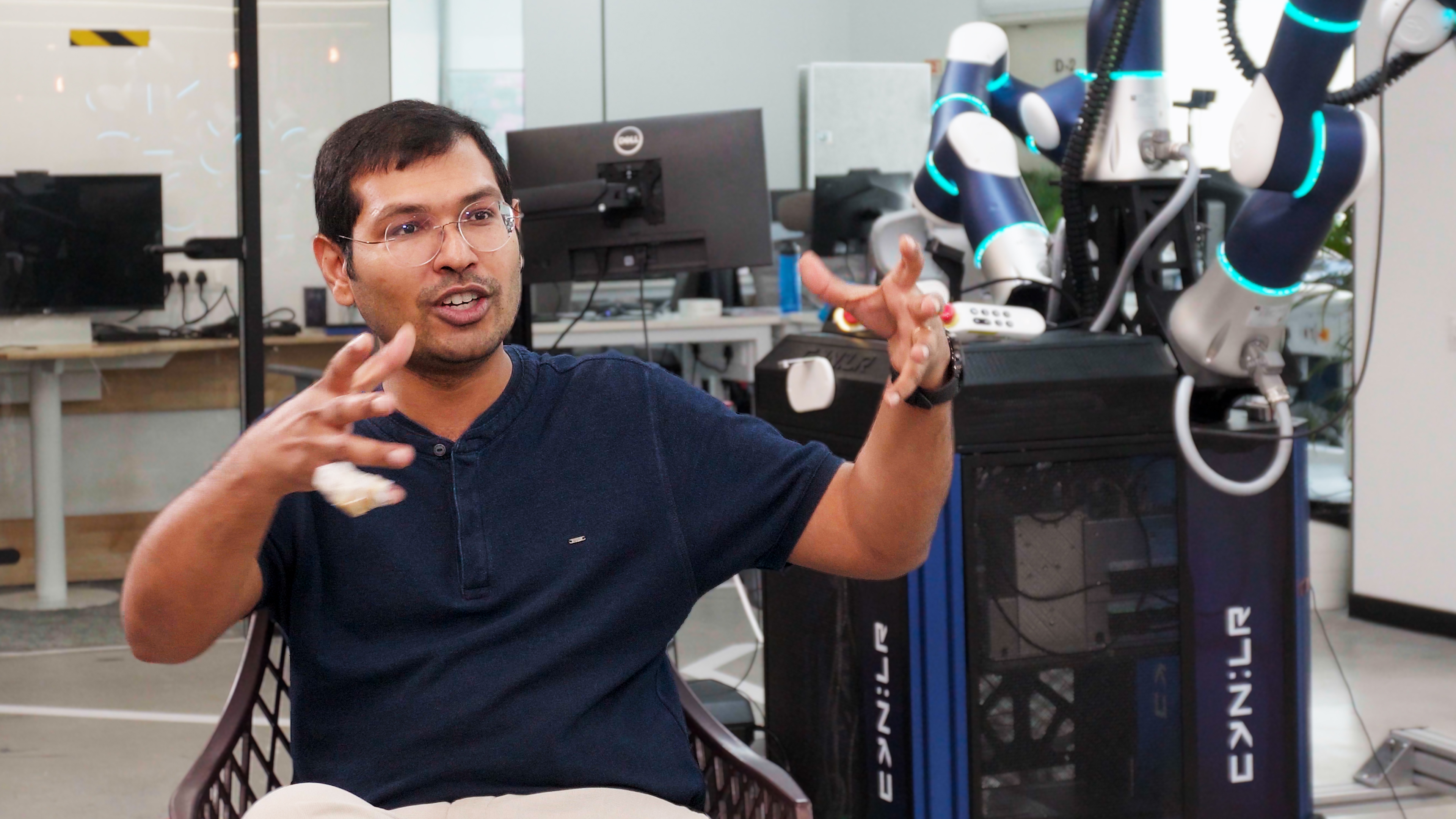
    In this excerpt from a recent conversation with India Tech Report, Gokul NA, founder of CynLr, explains his view of the bigger picture in developing the company’s “Object Intelligence Stack” for robots.

    Gokul, his fellow-founder Nikhil Ramaswamy and their 85-member team have put in some five years of R&D into this stack, which they see as a precursor to a general purpose “manipulation OS” for robots.

    In this view point, Gokul talks about today’s challenges that large manufacturers face, with the example of the auto sector, in an age of rapidly shifting consumer tastes. Robots that could quickly switch from one type of task to another could hold the key to genuine personalised product customisation in cars and the gadgets that go into them and therefore serve as a source of market expansion for the OEMs Gokul argues.

    Such robots could also help make factories and manufacturing significantly more sustainable by advancing material recycling —what if your new car could come from your old car or your new phone from your old phone, he asks.

    Today that recycling is very costly and therefore not attractive, but a robot that automates the effort could change the landscape, he says. In this scenario, it would also be possible to go from centralised, gargantuan Giga-factories to hyper-local “micro-factories” that offer personalisation plus sustainability.

  • The ‘knowhow challenge’ — Apoorv Shaligram, founder of e-TRNL

    The ‘knowhow challenge’ — Apoorv Shaligram, founder of e-TRNL

    There are challenges beyond importing sophisticated components that India’s deep tech startups can’t yet source locally. Some of these challenges are equally or more fundamental.

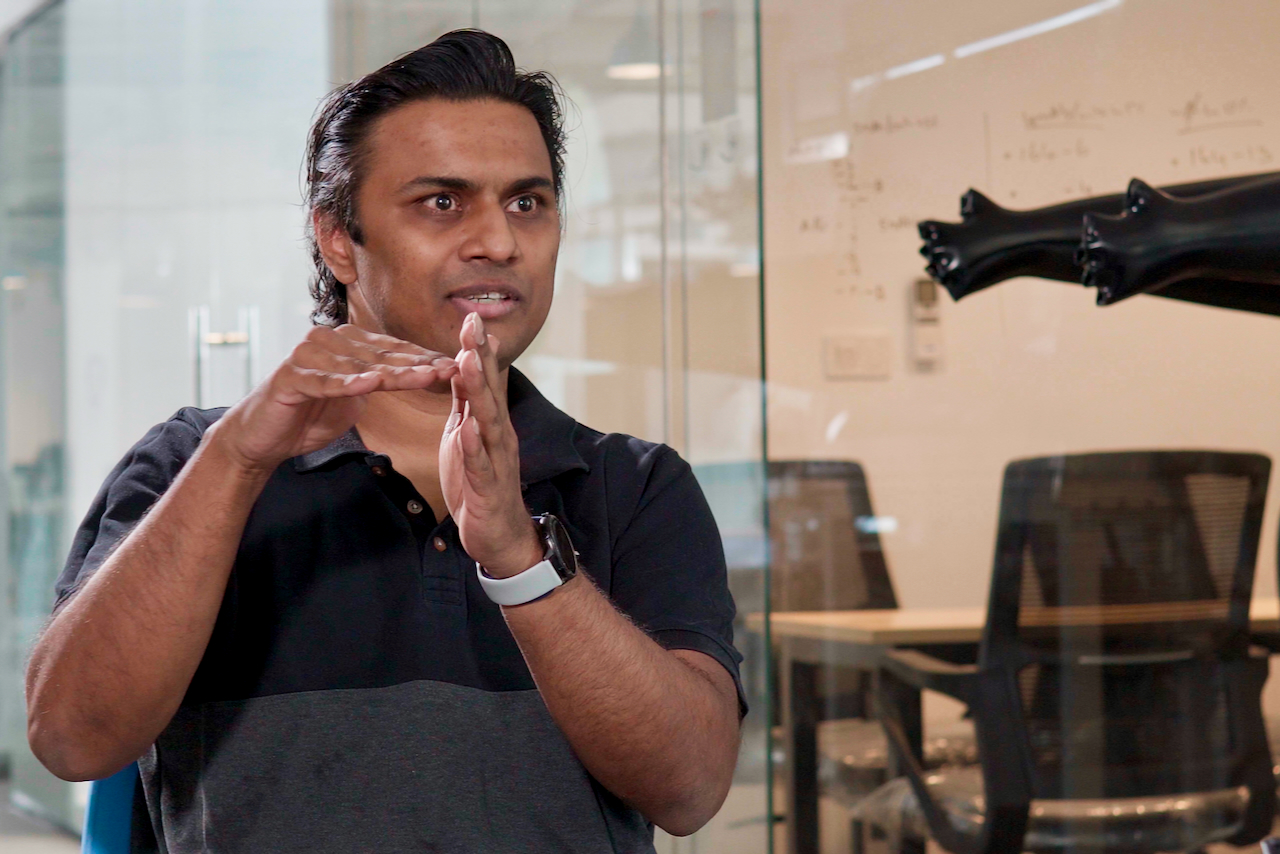
    I had a chance to get some insights on this from Apoorv Shaligram, founder and CEO at e-TRNL Energy, recently.
    Apoorv, his fellow founder Uttam Sen, and their team are innovating new cell architectures to make cells, batteries and their applications safer, more reliable and better alternatives to fossil fuel.

    They are backed by well-known investors including Speciale Invest, Micelio, Navam Capital, Indian Angel Network, and Anicut.
    Check out the related video for the full conversation with Apoorv. Here’s a one-minute view on how the real science and engineering knowhow underlying the products that many Indian deep tech startups are developing has to be acquired ground up.

  • EVs and beyond: Apoorv Shaligram on barriers to adoption

    EVs and beyond: Apoorv Shaligram on barriers to adoption

    Barriers to not just EV adoption, but beyond, in terms of widespread use of larger electric batteries the same way we’ve adopted smartphones, for example. What factors are holding adoption back?
    Apoorv Shaligram, founder and CEO at e-TRNL Energy in Bengaluru, offers a quick point here. He identifies convenience and safety as the primary limiters for electric battery tech adoption in India.
    Check out the related post for the full conversation with Apoorv, who with his fellow founder Uttam Sen and their team, is innovating new cell architectures to make cells, batteries and their applications safer, more reliable and better alternatives to fossil fuel.

  • Apoorv Shaligram on e-TRNL Energy’s efforts to innovate better cell architectures

    Apoorv Shaligram on e-TRNL Energy’s efforts to innovate better cell architectures

    In this episode I’m joined by Apoorv Shaligram, founder and CEO of e-TRNL Energy. Apoorv, and his fellow founder Uttam Sen, IIT Bombay alumni both, and their team are tackling the electric vehicle industry’s most critical “wants”: high levels of safety and fast charging.

    While battery chemistry has attracted a lot of innovation effort, e-TRNL is focusing on the cell architecture instead. Their core innovation, 3D Electrode Architecture (3DEA), moves away from the traditional 2D thin-layered designs found in everything from smartphones to current EVs.

    By fundamentally changing how current flows inside the cell, 3DEA reduces resistance and heat at the source, Apoorv explains. This makes batteries “super resilient” to thermal waste – the excess heat generated within a battery cell during its operation, primarily caused by internal resistance – preventing the catastrophic “cascading” fires in some EV batteries.

    Beyond safety, this architecture unlocks the capability for 15-minute fast charging and longer-lasting, lighter battery packs, he says.

    Apoorv also explains how they have verticalized their technology stack, putting together manufacturing processes from the ground up: They have also condensed the conventional 24-step manufacturing process into a precise 8-step operation. And the entrepreneurs envision modular, container-sized factories that reduce energy consumption and that are better suited to markets that lack large-scale adoption.

    In this episode, Apoorv also talks about how India’s deep tech landscape is changing, with the government catalysing the discourse in the country. And we takeaway some lessons from e-TRNL’s recent Rs. 27.4 crore seed round, and the roadmap to hit full-scale manufacturing.