In this episode, I’m joined by Pardeep Garg, co-founder and CEO of CRID India — Centre for Research and Implementation for Decarbonization.
With a background spanning IISc in Bengaluru, MIT in the US, and multiple climate-tech startups, Pardeep is uniquely positioned at the intersection of technical research and real-world execution.
CRID India identifies itself as a think tank and implementation agency, focusing on “hard-to-abate” sectors in industry, and agriculture, where Pardeep points out that even though there exist well-understood technologies that are more energy efficient and therefore emission reducing, their adoption has not taken off, because of the initial costs involved, lack of awareness and so on.
In this episode, he discusses examples, such as heat pumps, which he says could be India’s next big success story, comparable to solar energy, and details his team’s work in building the nation’s first industrial heat map.
More efficient motors of IE 4 or IE 5 (international energy efficiency) rating are another example, as is drip irrigation.
We also discuss CRID India’s aim of becoming a “systems integrator” for energy transition in the country, where solving for climate change requires aligning policy, finance, and stakeholder interests beyond just engineering.
Indian Railways gets its first hydrogen fuel cell powered train
The modernization of Indian Railways has hitherto relied on continual expansion of overhead electrification of its vast broad-gauge network. The state-run network is now charting a more autonomous path toward decarbonization.
Prime Minister Narendra Modi flagged off the country’s first hydrogen fuel cell powered trainset, at Jind from where the train will make a 90 km journey to Sonipat, both towns in the northern Indian state of Haryana.
The fuel cell technology, using a proton-exchange electrolyser, generates electricity through an electrochemical reaction between hydrogen and atmospheric oxygen. The electricity is stored in lithium-ion batteries, which will power the train’s electric engine.
The project seeks to demonstrate that clean rail mobility can be achieved without relying entirely on an external power grid.
This new trainset (locomotives + trailer cars) revives the historical operational independence of steam and diesel locomotives — albeit with water vapour as its only by-product. Built using indigenous technology integrated by Medha Servo Drives and the Integral Coach Factory, the configuration features two driving power cars delivering 1,200 kW of power, pulling eight trailer coaches.
Capable of carrying roughly 2,600 passengers at design speeds of up to 110 kilometres per hour, the initiative marks a significant structural scaling up of a propulsion system that has hitherto been confined to much smaller regional deployments.
The deployment comes as rail operators worldwide face intensifying pressure to eliminate fossil fuels and meet strict national net-zero targets. While early adoption of hydrogen passenger trains has been concentrated in Europe—most notably in Germany — and via pilot programmes in China and Japan, these initiatives have generally been confined to modest two- or three-coach configurations.
India’s venture represents a bolder bet on the scale and commercial viability of high-capacity hydrogen transit, backed by the establishment of the country’s largest dedicated railway hydrogen refuelling facility at Jind to support continuous, regular operations.
“Most hydrogen passenger trains currently operating globally comprise only two or three coaches and are primarily deployed on short regional routes,” the Ministry of Railways noted in a press release yesterday. “In contrast, the Indian Railways trainset has been configured as a 10-coach passenger train with a capacity of around 2,600 passengers, demonstrating the scalability of hydrogen-powered rail transport for high-capacity passenger operations.”
Safety concerns, because of the highly combustible nature of hydrogen gas, and the steep infrastructure costs required to grow and sustain these trains are two important challenges.
To manage the safety risks inherent to handling a highly flammable, odourless gas, the network has implemented a multi-layered “defence in depth” safety system, certified by Germany’s TÜV SÜD. The ecosystem includes continuous leak detection, automatic fuel shut-offs, and specialized ventilation systems.
If the Jind–Sonipat trials prove commercially reliable, the railway ministry plans to expand the rollout to heritage lines such as the Kalka–Shimla route, marking a calculated transition from a novelty pilot to a core pillar of India’s broader National Green Hydrogen Mission.
In this episode, I’m joined by Mredul Sarda, an operator-investor in early-stage deep tech and now a cybersecurity entrepreneur. Mredul’s experience-packed journey began at IIT Bombay, where he earned a BTech in electrical engineering, and an MTech in deep learning. While at the institute, he was also a member of the team that designed and…
Founder Spotlight
A weekly recommendation of a founder conversation. Changes every Friday.
Hi, wherever you’re reading this, I hope you’re doing well. Thank you for supporting my work by being a subscriber. It means a lot.
A new episode on the podcast: a conversation with the founders of Mitti Labs
It’s World Environment Day today, and the latest episode on my podcast features a conversation with the founders of Mitti Labs on their carbon project to help rice farmers cut methane emissions from their fields, save water and make money from the sale of the carbon credits generated from the green house gas reduction.
$12.8 billion: Cumulative climate tech funding in India according to a new report
Tracxn, a global private markets data provider, has just released its India Climate Tech Report 2026, saying that the sector is becoming increasingly investible.
On Tuesday, I’ll publish Part 2 of a wonderful conversation with Naganand Doraswamy (managing partner) and Suryaprakash Konanuru (CTO), founders of Ideaspring Capital. We talk about what might represent the ‘Flipkart moment’ of deep tech in India, and plans for the VC firm ahead.
That’s it for today. When you have a minute, please would you share this with friends who might be interested in India’s deep tech and climate tech startups. Here’s wishing you a great rest of the day.
Infographic from Tracxn’s India Climate Tech 2026 Report. Courtesy Tracxn.
Tracxn, a global market intelligence platform for private company data, released its India Climate Tech 2026 Report, a comprehensive analysis of an ecosystem where climate action is increasingly tied to India’s energy-security and industrial priorities.
The report examines how funding activity, company formation, investor participation, and policy are developing across India’s climate-tech ecosystem, drawing on Tracxn’s coverage of the sector. It identifies where capital is concentrating, which segments are drawing the widest participation, and how a maturing policy framework is shaping the opportunities available to founders and investors.
Highlights
India’s climate-tech companies have attracted approximately $12.8B and 1,583 funded companies, with annual funding rising from about $315M in 2020 to $2.6B in 2025.
Policy, private capital and energy security are converging on the same sectors. With roughly 85% of India’s crude oil imported, renewable energy, electric mobility, batteries and critical minerals now serve both decarbonisation and energy-independence goals.
Capital is consolidating into larger, conviction-led rounds, led by Inox Clean Energy’s $344M Series D (2026) and Erisha E Mobility’s $1B Series D (2025), with development finance institutions such as British International Investment, IFC and FMO actively participating.
Renewable Energy Tech leads cumulative funding at $1.5B, while Solid Waste Management ($477M), Energy Efficiency ($352M), Air Pollution Management ($237M) and Water & Wastewater Management ($208M) show the opportunity broadening across the ecosystem.
2026 YTD funding stands at $791M across 74 rounds, with 66% of funding concentrated in just 5 late-stage rounds, signalling a flight to conviction-led plays.
Policy, Capital and Energy Security Are Aligning
With roughly 85% of India’s crude oil imported, the same technologies — renewable energy, electric mobility, batteries and critical minerals — increasingly address energy security alongside climate goals, giving the investment case two reinforcing drivers. India’s climate-policy framework has moved from supporting technology adoption to building the conditions for large-scale deployment. PM E-DRIVE, a ₹10,900 crore programme extended to 2028, supports electric-vehicle adoption and charging infrastructure; the Carbon Credit Trading Scheme, effective October 2026, establishes a compliance carbon market covering around 490 industrial units across nine sectors; and the Rare Earth Permanent Magnets scheme, a ₹7,280 crore programme, strengthens domestic clean-energy supply chains.
Funding Has Scaled and Is Concentrating in Larger Rounds
Annual funding rose from about $315M in 2020 to $2.6B in 2025, with capital increasingly directed toward larger, conviction-led transactions in electric mobility, renewable energy and energy-transition infrastructure. Landmark rounds include Inox Clean Energy’s $344M Series D in 2026 and Erisha E Mobility’s $1B Series D in 2025. British International Investment participated in three rounds (Euler Motors, GreenCell Mobility and Ecofy), alongside IFC, FMO and Finnfund – reflecting sustained institutional confidence in India’s energy transition.
Renewable Energy Leads, With the Opportunity Broadening
Renewable Energy Tech leads cumulative funding at $1.5B, supported by the capital-intensive nature of renewable-energy and grid infrastructure, with Inox Clean Energy’s $344M Series D and $70M Series C among its notable rounds. Beyond generation, Solid Waste Management Tech ($477M), Energy Efficiency Tech ($352M), Air Pollution Management Tech ($237M) and Water & Wastewater Management Tech ($208M) have together attracted more than $1.2B, pointing to a widening opportunity across resource efficiency, environmental management and industrial sustainability.
As policy support, private capital and energy-security priorities increasingly point to the same set of technologies, India’s climate-tech market is positioned to deepen as well as grow.
2026 YTD: Fewer, Larger, More Conviction-Led Rounds
The first five months of 2026 reflect a market consolidating around scale and conviction, with $791M deployed across 74 rounds. Late-stage activity dominates at $524M across 5 deals, while seed funding stands at $61M across 44 rounds. Noida has emerged as the top funding city. Early-cycle signals remain selective, with 15 first-time funded companies, 6 new Soonicorns, 2 IPOs and 1 acquisition in YTD.
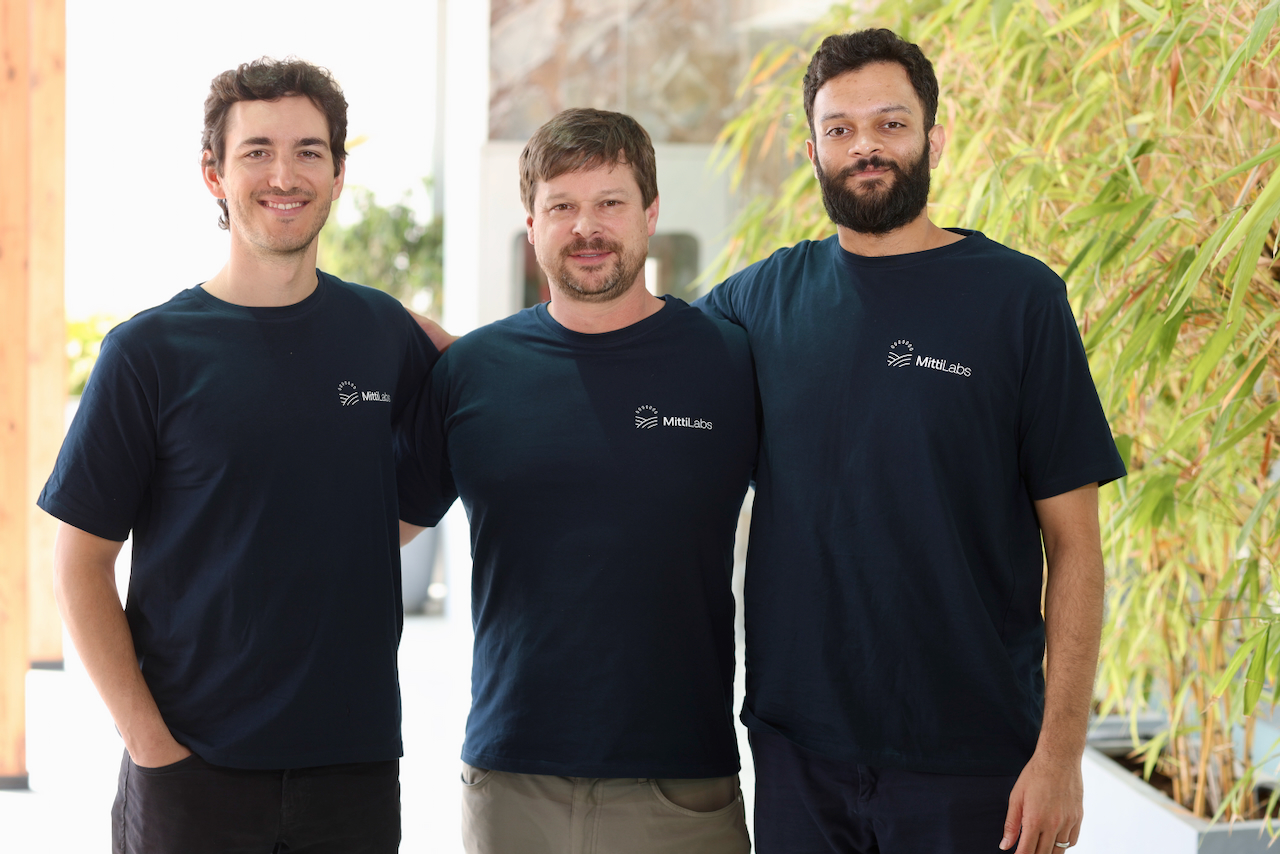
In today’s episode, on the occasion of World Environment Day, I bring you a conversation with Devdut Dalal (Dev), Xavier Laguarta Soler (Xavi) and Nathan Torbick (Nate), founders of Mitti Labs.
Rice is a nutritional staple for nearly half the human population. Its cultivation is also a formidable contributor to global warming, accounting for 10-12 percent of all methane emissions from human activity. And Methane is 80-86 times more potent than CO2 in warming the planet over a 20-year timeframe, and about 28 times over a century.
Growing rice also takes up 40 percent of the world’s freshwater resources. By drowning their fields to suppress weeds, farmers have inadvertently cultivated methanogenic microbes that release this ‘super pollutant.’ At Mitti Labs, Harvard Business School alumni Dev and Xavi have teamed up with Nate, a distinguished scientist who’s worked NASA and JaXA, to build a “full-stack” remedy.
They started work in India first some three years ago, persuading farmers to try out a technique known as Alternate Wetting and Drying (AWD) that entails periodically drain their fields, interrupting the anaerobic feast of methane-producing bacteria.
This is a known practice developed at the International Rice Research Institute. What the entrepreneurs at Mitti Labs are doing, however, is to plug in an innovative digital Monitoring, Reporting, and Verification (dMRV) platform. Using tools including satellite data and digital twins of the farms they aim to convert the methane reductions from AWD to equivalent carbon credits.
The plan at this venture, which is backed by the VC investor Lightspeed, is to become a vertically integrated carbon project developer providing farmers with free tools and a share of the revenue from the sale of the carbon credits.
Dev, Xavi and Nate, and their 100-plus team are already working with some 70,000 farmers in India, through partnerships with various NGOs and other such grassroots organisations that work closely with the farmers.
Their long-term success hinges on mobilising a substantial share of some 150 million smallholder rice growers who have farmed the same way for generations.
One could think of ‘Mitti’ — the Hindi word for soil — as representing the grounded foundation of a cooler future. And for us in India while rice that grows in our soil is a daily staple, its traditional cultivation is a hidden climate hazard. Rice cultivation worldwide is responsible for 10-12 percent of human-caused methane emissions. It also consumes staggering amounts of water.
Coming up next on Conversations at India Tech Report, Devdut Dalal (Dev), Xavier Laguarta Soler (Xavi), and Nathan Torbick (Nate), co-founders of Mitti Labs talk about how they are turning rice farming into a powerful vehicle for climate action – specifically targeting methane emissions from rice fields.
Since launching in late 2023, this “full stack” climate-tech startup has scaled from an idea that Harvard alumni Dev and Xavi had to a VC-funded startup (investors include Lightspeed) touching some 70,000 small-holder farmers in India today. Mitti Labs is helping the farmers change how they water their rice crops in a manner that reduces methane emissions, cuts water use and even makes the crops hardier, the entrepreneurs say.
Nate, a distinguished scientist, adds the science and tech experience, helping Mitti Labs tap satellite remote sensing and data analytics to build a digital Monitoring, Reporting, and Verification (dMRV) system, to track methane reductions at the field level. By converting these environmental wins into high-quality carbon credits, Mitti Labs aims to provide direct financial incentives and free advisory services to the farmers.
Catch the episode on June 5, World Environment Day, right here, or wherever you get your podcasts. Here’s a preview with Xavi and Dev laying out their basic thesis.