Tag: deep-tech

  • Agnikul raises fresh funding, smaller coolers for quantum chips, and more

    Agnikul raises fresh funding, smaller coolers for quantum chips, and more

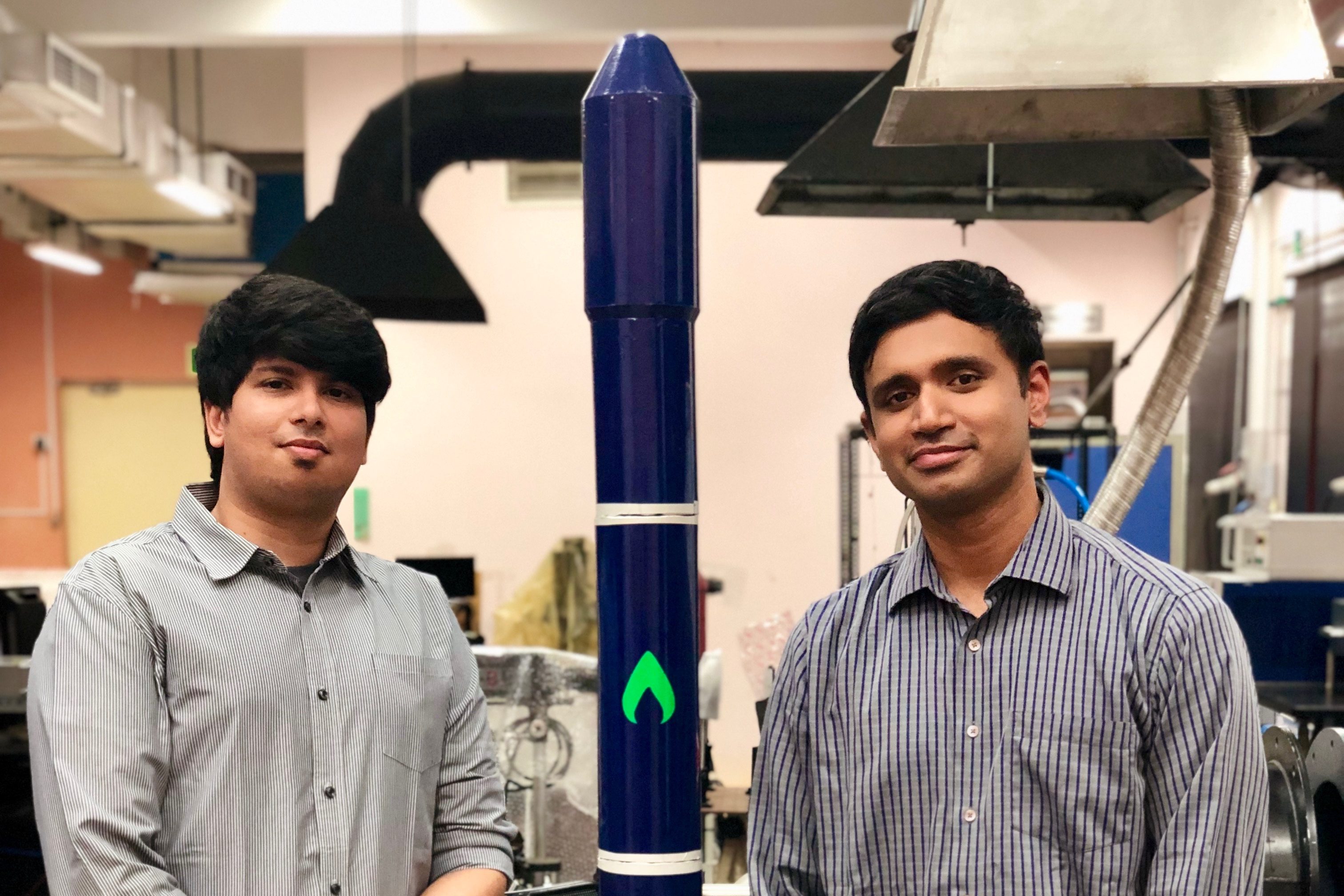
    Moin SPM and Srinath Ravichandran, Co-founders of Agnikul Cosmos, are pioneering India's private small satellite launch vehicles with 3D printed engines.
    Moin SPM and Srinath Ravichandran, Co-founders of Agnikul Cosmos, are pioneering India’s private small satellite launch vehicles with 3D printed engines.

    (00:20) Swiss quantum startup shrinks cooling systems for scalable processors

    YQuantum has raised CHF 150,000 ($186,000) from Venture Kick to commercialize miniaturized cryogenic hardware for quantum computers. The startup’s compact components address a critical bottleneck: scaling superconducting qubits reliably. By replacing bulky cooling systems with high-performance alternatives, YQuantum brings quantum computing closer to practical deployment.

    The engineering team, drawn from UC Berkeley and ETH Zurich, targets a rapidly expanding quantum hardware market projected to reach billions in the coming years. Its first commercial units are expected by mid-2026.

    Listen to the episode


    (01:10) AI genomics platform launches to scale safer gene therapies

    Cassidy Bio has unveiled its AI-driven genomic foundation model with an $8 million seed round, backed by Ahren Innovation Capital. The platform combines proprietary lab data, population genetics, and machine learning to design gene-editing therapies at scale. By replacing trial-and-error with predictive engineering, Cassidy addresses persistent challenges: target selection, delivery, and off-target effects.

    The founding team unites CRISPR pioneers and AI leaders with the aim of moving genome editing from isolated successes to reliable, scalable medical solutions for millions of patients worldwide.


    (01:56) Swedish chipmaker secures €15 million for advanced etching tech

    AlixLabs has closed a €15 million Series A investment led by Navigare Ventures to accelerate Atomic Layer Etching Pitch Splitting (APS) technology. The breakthrough enables cost-effective production of advanced chips without expensive multi-patterning or exclusive EUV reliance. By slashing process complexity and energy consumption per wafer, APS addresses a critical challenge in chip economics.

    Beta testing with foundry partners begins in 2026, targeting full manufacturing deployment by 2027. The innovation could reshape semiconductor accessibility globally, lowering barriers for advanced chip production.


    (02:47) Agnikul secures $17 million in fresh funding for its space rockets

    Agnikul Cosmos, a Chennai-based space-tech startup, has secured Rs. 150 crore ($17 million) in fresh funding, bringing its valuation to $500 million. The capital will support its next orbital launch mission featuring barge-based booster recovery — a global first for small launch vehicles.

    Agnikul, which is pioneering India’s private small launch vehicles with 3D printed engines, will expand manufacturing, launch frequency, and establish a 350-acre campus in Tamil Nadu, targeting customers in Europe, Asia, and the US.

    (03:30) Cambridge team enables LEDs from ‘un-powerable’ nanoparticles

    Researchers at the University of Cambridge in Britain have achieved a breakthrough by powering electrically insulating lanthanide-doped nanoparticles using organic molecular antennas. The new approach, discovered by a Cavendish Laboratory-led team, enables highly pure near-infrared LEDs, promising advances in biomedical imaging and optical communications. and published the findings in Nature.

  • India backs JCM, seeks global action on energy for small islands at COP30, and more

    India backs JCM, seeks global action on energy for small islands at COP30, and more

    AI generated image for illustration. India is backing the international solar alliance with a call for global action on energy for small island developing nations, at the COP30 meet.


    (00:20) India calls joint crediting mechanism a model for equitable climate action

    At UNFCCC COP30 in Brazil, India’s Environment Minister Bhupender Yadav said the Joint Crediting Mechanism (JCM) is crucial for scalable, technology-driven climate solutions. India-Japan cooperation under JCM will mobilise investments, deploy low-carbon technologies, and build capacity, supporting national climate goals and Article 6 implementation. India’s Carbon Market portal will aid JCM transparency and impact.

    Listen to the episode


    (00:50) India urges global solar push for energy security in small island states

    Separately, Minister Yadav highlighted support for Small Island Developing States through the International Solar Alliance. India showcased rooftop solar, solar pumps, and battery projects, calling for global action to boost clean energy, cut diesel imports, and build climate resilience. Over 124 nations now participate in ISA’s initiatives.

    (01:18) Mehta Family Foundation announces two conferences with IITs 

    The Mehta Family Foundation will host two conferences under its collaboration for academic and research excellence or CARE initiative in partnership with IIT Madras and IIT Guwahati. The events focus on bioengineering and AI, convening global and Indian researchers to advance interdisciplinary collaboration and showcase innovations, marking the Foundation’s growing role in India’s academic ecosystem.


    (01:48) Glow-in-the-gut pill offers non-invasive colonoscopy alternative 

    Researchers in China have developed a pill embedded with heme-sensing bacteria that glow in response to gastrointestinal bleeding, enabling early colitis detection without invasive colonoscopies. Tested safely in mice, the pill’s magnetic microspheres are retrieved from feces and produce light proportional to disease severity, potentially revolutionizing gut health diagnostics.


    (02:17) JuliaHub and Synopsys partner to power AI-driven digital twins 

    JuliaHub will integrate its Dyad simulation platform with Synopsys’ Ansys TwinAI™, blending physics-based modelling and adaptive AI for more accurate, cloud-based digital twins. The collaboration aims to accelerate innovation in hardware design and system optimization, merging JuliaHub’s SciML tech with Synopsys’ robust simulation ecosystem.

    (02:45) Rift raises €4.6M to launch Europe’s first on-demand aerial network 

    French startup Rift has raised €4.6 million to deploy autonomous drone stations across Europe, creating a real-time aerial intelligence network for public safety and critical infrastructure monitoring. The “Surveillance-as-a-Service” platform aims to mitigate wildfires, border breaches, and infrastructure threats with plans to deploy 20 stations by 2027.


    (03:14) Teradar exits stealth with $150M series B for terahertz vision sensors 

    Teradar, a Boston startup, has unveiled its terahertz vision sensor technology for automotive safety after raising $150 million in Series B funding. The modular terahertz sensor offers all-weather perception to enhance autonomous driving and commercial vehicle safety, with production targeted by 2028. Investors include Lockheed Martin Ventures and VXI Capital.

  • Karnataka’s Quantum City and space policy, CRISPR-based sickle cell therapy, and more

    Karnataka’s Quantum City and space policy, CRISPR-based sickle cell therapy, and more

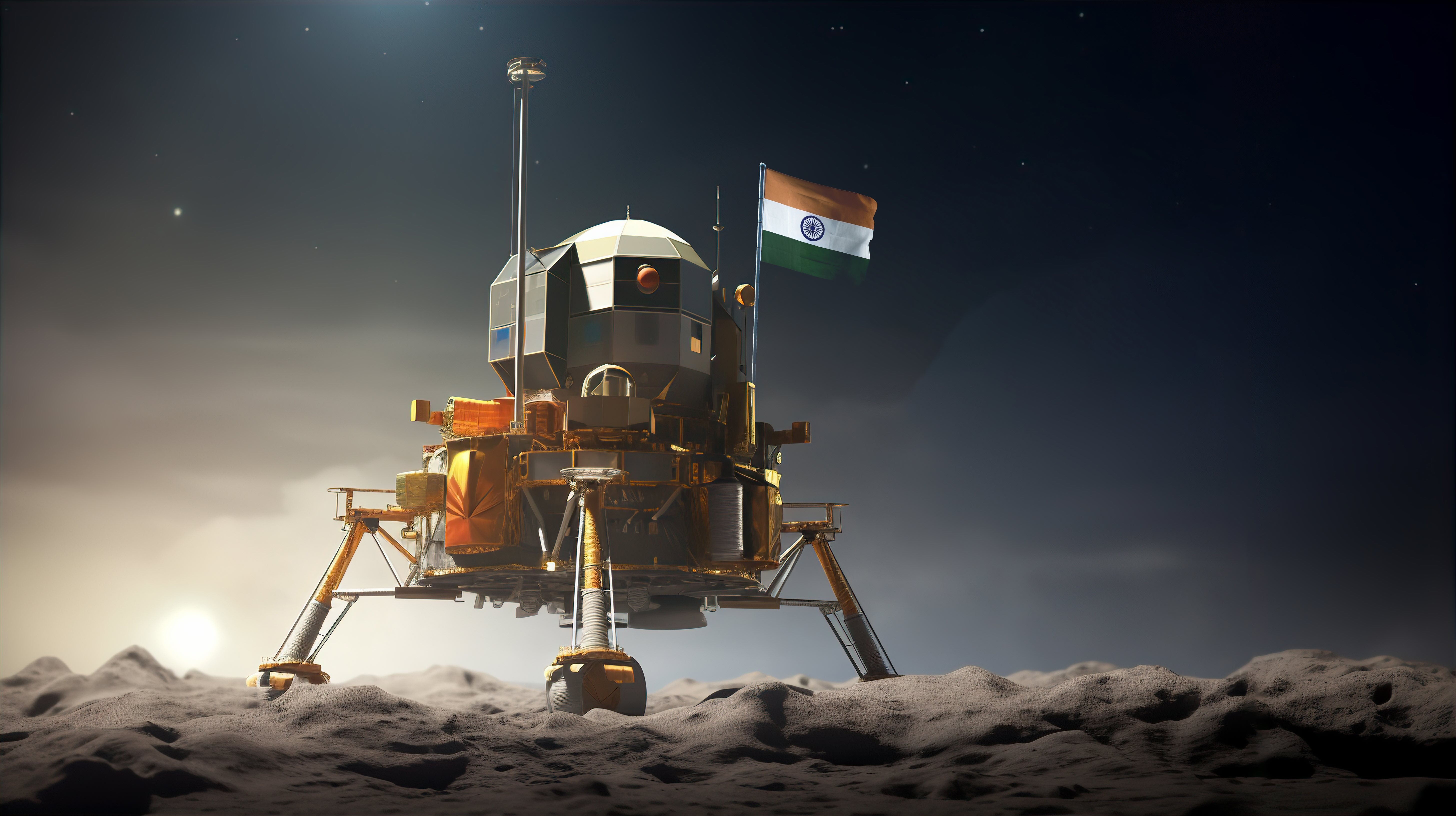
    AI generated image of Chandrayaan on the Lunar surface for illustration. India’s Karnataka state has unveiled its space tech policy 2025-30.


    (00:21) Karnataka unveils India’s first Quantum City plan, space policy

    Karnataka launched India’s first Quantum City blueprint at the Bengaluru Tech Summit this week, with a plan to create a Rs. 1,000 crore integrated quantum cluster in Hesaraghatta. The project targets global leadership in quantum research, chip manufacturing, and talent export, with dedicated parks, startup zones, and international collaborations to boost Bengaluru’s quantum ecosystem.

    (00:51) Separately, the state government also unveiled its Space Technology Policy 2025–2030 at the Summit, seeking to make the state a global leader in space innovation, manufacturing, and research. The policy emphasizes building skilled talent, fostering deep-tech startups, and integrating space technology in governance, aiming to capture 50 percent of India’s space market by 2030.

    Listen to the episode


    (01:18) Skycore Semi bags €5M to boost AI datacenter chips

    Danish fabless design startup Skycore Semiconductors has raised €5 million in seed funding led by Amadeus APEX, with participation from First Momentum, Mätch VC, and Balnord. The funds will accelerate the commercial rollout of high-density Power ICs tailored for 800V HVDC data centers, targeting the power bottleneck in next-gen AI infrastructure.

    (01:47) Steele Group opens Boston’s deep tech hub BASE-X

    Steele Group has launched BASE-X, a 25,000-square-foot headquarters in downtown Boston dedicated to deep tech innovation, the US real estate developer said in a press release. Serving as a hub for venture capital, operators, and partners, BASE-X aims to catalyze investment, operational excellence, and collaboration in fields including AI, energy, defence, and advanced manufacturing.

    (02:18) Breakthrough in rare-earth magnetism promises quantum tech leap

    Scientists in India have discovered a new type of magnetism in neodymium nitride (NdN) thin films driven by orbital angular momentum, not just electron spin. This finding, led by JNCASR, enables the tuning of materials for faster, more efficient quantum and spintronic devices, enhancing India’s role in rare-earth and advanced materials research.

    (02:51) India launches first indigenous CRISPR gene therapy for sickle cell

    Union Minister Dr. Jitendra Singh launched ‘BIRSA 101’, India’s first indigenous CRISPR-based gene therapy for sickle cell disease, developed at CSIR-IGIB and transferred to the Serum Institute. The therapy aims to make advanced gene-editing cures affordable for Indian patients, particularly tribal populations, supporting the ambition for a Sickle Cell–free India by 2047.

  • Princeton’s qubit breakthrough, Sentinel-6B launched, Cornerstone’s funding and more

    Princeton’s qubit breakthrough, Sentinel-6B launched, Cornerstone’s funding and more

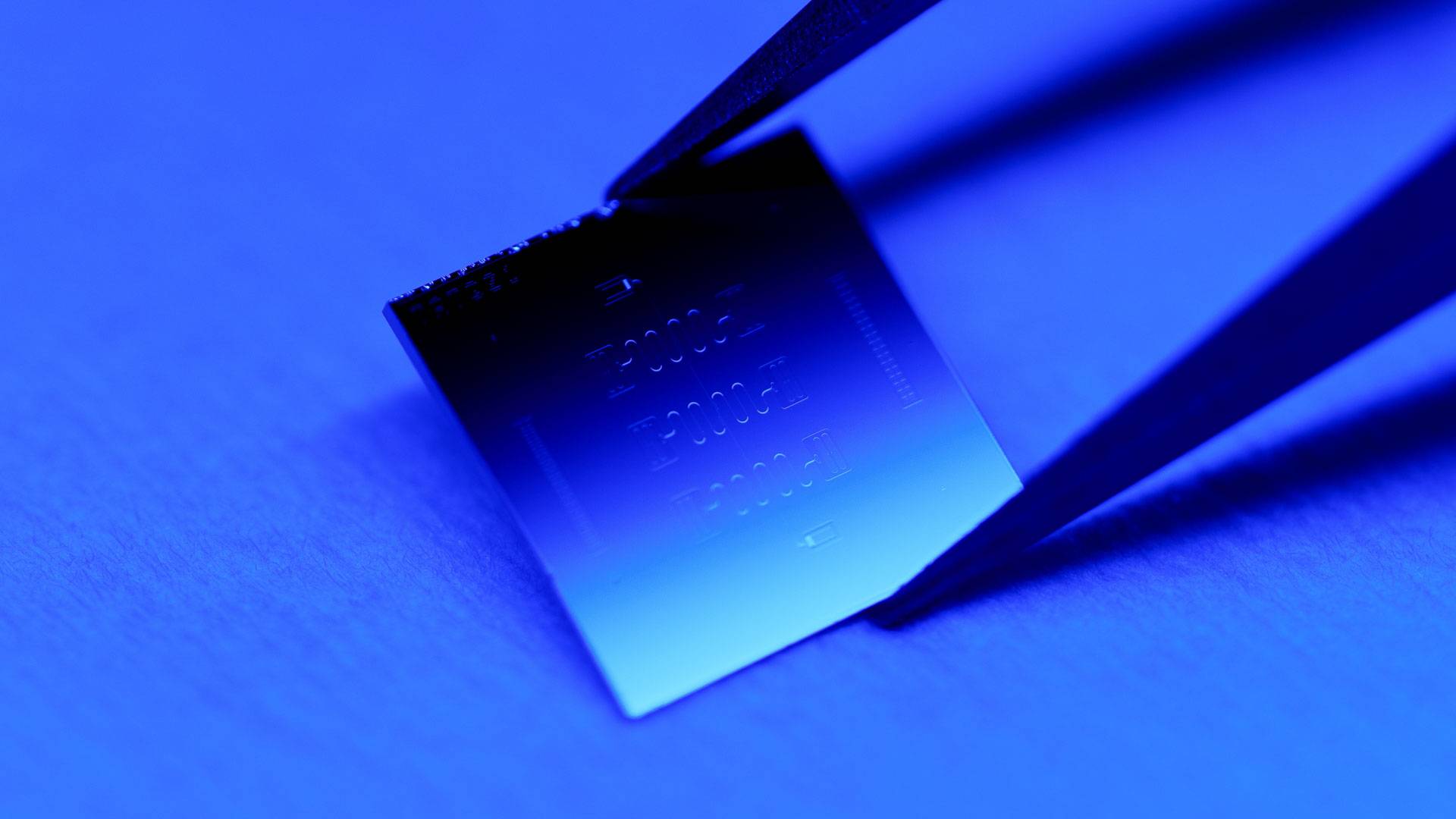
    A chip built by Princeton’s Nathalie de Leon, Andrew Houck, Robert Cava and their research teams supports qubits with coherence times longer than 1 millisecond — three times longer than the best ever reported in a lab setting, and nearly 15 times longer than the industry standard.
    Image by Matthew Raspanti, Office of Communications, Princeton University.


    (00:21) Princeton’s qubit breakthrough extends coherence threefold
    Princeton University researchers have demonstrated a quantum qubit with coherence times exceeding one millisecond — triple the laboratory record and fifteen times the industry standard, Science Daily reports. The team built a functioning quantum chip proving the design supports error correction at scale, addressing the fundamental challenge limiting quantum processors.

    Their architecture is compatible with systems used by Google and IBM. According to analysis, replacing key components in Google’s Willow processor with Princeton’s approach could yield a thousandfold performance increase, signalling meaningful progress toward fault-tolerant quantum systems essential for practical applications.

    Listen to the episode


    (01:10) Google quantum AI achieves 13,000× speedup on physics
    Separately, some of you may recall that last month Google announced that its Willow quantum processor executed a physics simulation 13,000 times faster than classical supercomputers using a novel “Quantum Echoes” algorithm published in Nature. The breakthrough demonstrates the first verifiable quantum advantage running a physically meaningful algorithm — measuring quantum interference effects called out-of-time-order correlators.

    Beyond raw speed, the work establishes quantum computing’s practical relevance to experimental science, particularly nuclear magnetic resonance spectroscopy, validating a path toward real-world quantum applications within five years.

    (01:54) Sentinel-6B launches to continue climate monitoring mission

    The European Space Agency and NASA successfully launched Copernicus Sentinel-6B aboard a SpaceX Falcon 9 rocket on Nov. 17, continuing a decades-long mission tracking sea-level rise — a critical indicator of climate change, Spaceflight Now reports.

    The satellite carries advanced altimetry instruments measuring ocean surface heights with centimetre precision, directly supporting climate science and international efforts to understand planetary warming. This mission exemplifies the growing convergence of space infrastructure and environmental monitoring, with satellite data becoming indispensable for climate policy and adaptation planning worldwide.

    (02:43) Emulate launches organ-on-chip platform for drug development

    Emulate, a leader in organ-on-chip technology, unveiled its Brain-Chip R1 in partnership with FUJIFILM Cellular Dynamics to accelerate neurological drug discovery, the company said in a press release. The platform uses living human brain cells to model central nervous system responses, addressing a critical gap in preclinical testing where traditional methods fail to predict clinical outcomes.

    This technology promises faster, more reliable validation of neurological therapeutics while reducing dependence on animal testing—positioning Emulate at the intersection of biotechnology and advanced manufacturing innovation.

    (03:27) Cornerstone Robotics raises $200 million for surgical robot platform

    Hong Kong’s Cornerstone Robotics secured $200 million in fresh funding to accelerate global commercialization of its multi arm Sentire Endoscopic Surgical System, Fierce Biotech reports.

    Recently approved in China and now in UK clinical trials, the platform targets colorectal and urologic surgeries. The round, backed by major global funds, affirms demand for accessible next-gen surgical robotics as the company deepens its global footprint.

  • Neil Shah at Counterpoint on Panther Lake and Intel’s robotics play

    Neil Shah at Counterpoint on Panther Lake and Intel’s robotics play

    In today’s episode, Neil Shah, co-founder and vice president at Counterpoint Technology Market Research, gives us a quick take on Intel’s new Panther Lake processor and its potential use cases in robotics and physical AI.

    Intel’s new Panther Lake SoC marks a defining turn in the company’s roadmap toward robotics-ready edge computing. In this quick-take episode, Neil explains how the chip’s modular ‘chiplet’ design, delivering up to 180 trillion operations per second (TOPS), could make Intel a contender below Nvidia’s high-end robotics tier.

    He also weighs in on the ‘physical AI’ applications for robots that sense, analyze, and act locally. And is there an opportunity here for India’s fabless chip design startups? Stay on to hear Neil’s views on this.

    Neil Shah
    https://counterpointresearch.com/default.htm/opinion-leader/Shah?id=10

    Intel’s Panther Lake press release
    https://newsroom.intel.com/client-computing/intel-unveils-panther-lake-architecture-first-ai-pc-platform-built-on-18a

    More on Intel’s Physical AI software suite
    https://community.intel.com/t5/Blogs/Tech-Innovation/Artificial-Intelligence-AI/Simplify-Physical-AI-Deployment-with-Intel-Robotics-AI-Suite/post/1719666

  • Ganapathy Subramaniam on Yali’s deep tech startup bets in India — Part 2

    Ganapathy Subramaniam on Yali’s deep tech startup bets in India — Part 2

    In today’s episode, Ganapathy ‘Gani’ Subramaniam, founding managing partner of Yali Capital, a deep-tech VC firm in Bengaluru, joins me for Part 2 of our discussion on the firm’s debut deep-tech fund.

    In this conversation, we picked up with Yali’s investment in Perceptyne, a company developing humanoid robotics for manufacturing and eventually physical AI applications. Gani then speaks about the semiconductor industry in India, identifying opportunities for both globally competitive and domestically focused fabless chip design companies, with the C2i Semiconductors in the first category.

    And if you stay on, you’ll get Gani’s insights into the importance of diverse co-founding teams, global thinking, and why storytelling holds the key to funding – something that India’s deep tech founders need to master.