Tag: environment

  • The Climate on Monday: Nobel laureate urges rich nations to share green tech freely

    The Climate on Monday: Nobel laureate urges rich nations to share green tech freely

    Daily brief on deep tech and climate tech news from India and around the world.

    AI generated illustrative image of a micro farm in space. Production of medicines and nutrients in space is an example of frontier technologies that global venture capital is backing.

    Nobel laureate urges open sharing of climate technologies

    Joseph Stiglitz, a Nobel Prize winning economist, has called for climate technologies to be shared freely to accelerate global decarbonization and ensure equitable access to solutions worldwide, Research Professional News reports. The appeal highlights concerns that restricting climate tech through patents or proprietary deals could slow progress on emissions reduction and sustainability goals, especially for developing nations, and urges collective action to overcome barriers to technology transfer.

    Listen to the podcast

    UN climate chief urges nations to submit climate goals before deadline

    UN climate chief Simon Stiell has called on governments to urgently present new national climate action plans, warning that fewer than 30 countries have submitted their NDCs ahead of the looming deadline, Climate Change News reports. Countries including China, India, and the EU are yet to announce targets. Stiell stressed robust climate plans are vital for tackling global warming and capturing economic benefits from the clean energy transition.

    WMO warns air pollution and climate change create a vicious cycle

    The World Meteorological Organization has published its latest annual air quality bulletin, which underscores how air quality and climate change are tightly linked, impacting health, economies and ecosystems, according to a press release from the organisation. It highlights risks from wildfires, winter fog, shipping, and urban pollution, and calls for integrated action and improved monitoring. International coordination is crucial to address aerosol hazards and enhance forecasts for effective risk management.

    Dutch pension giant drops US asset managers in green revamp

    PFZW, the world’s 11th largest pension fund, has pulled €33.5bn from BlackRock, Legal & General, and AQR Capital Management to focus on sustainability and market-level returns, Green Central Banking reports. The move comes as climate risk pressures mount and activists push for greener investments. PFZW will now lean on Robeco, UBS, PGGM and others for its €50bn equity portfolio, signaling a wider EU pivot away from US climate policies.

    Commonwealth Fusion Systems raises $863m for fusion push

    MIT spinoff Commonwealth Fusion Systems closed an $863 million Series B2 round, bringing its total funding near $3 billion, Latitude Media reports. The capital will accelerate progress on its SPARC fusion demonstrator and commercial ARC plant in Virginia, backed by investors including Nvidia, Bill Gates, and Jeff Bezos. The company aims for continuous fusion and $50/MWh energy costs, but economic viability depends on breakthroughs in technology and manufacturing.

    Breakthrough Energy, Khosla and DCVC launch $300m climate tech coalition

    Breakthrough Energy, Khosla Ventures, and DCVC have launched the All Aboard Coalition, a $300 million fund to support climate tech startups amid declining US funding, PE Insights reports. Backed by over $40 billion in investor assets, the group will target emissions reduction technologies like carbon removal, green hydrogen, and long-duration storage. The fund aims to address the capital gap leaving many early-stage companies struggling to scale.

    RMI’s Third Derivative adds 18 global startups to climate tech accelerator

    Third Derivative, the RMI climate tech accelerator, has welcomed 18 new startups from six countries to its portfolio, which now totals over 280 companies, RMI said in a press release. Selected firms span innovations from bamboo building systems and green hydrogen to recyclable wind turbines and zero-emission cooling. Third Derivative aims to bridge finance and resource gaps for market-ready decarbonization tech, with portfolio startups raising $3.7 billion and creating 4,400 jobs since inception.

    Singapore’s TLC 2026 opens with S$4m climate tech funding boost

    The Liveability Challenge 2026 has launched in Singapore with a record S$4 million (US$3.1m) funding for climate tech startups, Eco Business reports. This 9th edition has a new partner A*Star, which has pledged S$2 million annually to support pilot decarbonisation projects, while Temasek Foundation anchors the initiative. Finalists will access testbeds and pitch at Ecosperity Week 2026. Catalytic funding and policy reforms are highlighted as key to scaling climate solutions amid global venture funding challenges.

    Sinbon invests in Swobbee to accelerate green urban mobility

    Taiwanese electronics firm Sinbon has made a minority investment in Berlin-based Swobbee, giving the climate tech company access to Sinbon’s global manufacturing and engineering expertise, the companies said in a press release. The partnership aims to advance battery swapping infrastructure for sustainable last-mile urban transport and will support broader adoption of swappable batteries. The deal underscores rising collaboration in e-mobility and green tech between Europe and Asia.

    Climafix Summit 2025 to spotlight 400+ climate startups in Chennai

    CLIMAFIX Summit 2025, among India’s largest climate startup events, will gather over 400 startups, 150 investors, and 250 corporates at IIT Madras Research Park on Sep 11-12. The agenda spans bio-solutions, energy efficiency, deep tech, and translational research, featuring expert talks, startup journeys, curated pitches, and AI for climate sessions to accelerate climate innovation and cross-sector partnerships. Key speakers include Ashok Jhunjhunwala (IITMRP), Suhas Baxi (Biofuel Circle), and Janani Mittal (Technip).


    In Conversation

    Insight

  • Building Vimano: 10 takeaways from a conversation with Murari Ramkumar and Nagesh Kini

    Building Vimano: 10 takeaways from a conversation with Murari Ramkumar and Nagesh Kini

    In a recent episode, I spoke with Murari Ramkumar and Dr. Nagesh Kini, founders of Vimano, a deep-tech startup specializing in advanced nanotechnology and materials science. The company focuses on developing ion-conductive membranes that are critical components for energy transition applications, including redox flow batteries, electrolysers for green hydrogen production and proton exchange membrane (PEM) fuel cells.

    In our conversation, Murari and Dr. Nagesh touched upon everything from how a chance meeting led to Vimano years later, the story behind the name of their startup and the various lessons from building a deep tech hardware company out of India. Here are my top 10 takeaways.

    1. Founders’ journey: From Thermax to deep-tech entrepreneurship

    Murari and Dr. Nagesh first met at Thermax, where Murari interned and Nagesh led R&D in emerging energy technologies. Their shared expertise in material science and exposure to energy conversion technologies inspired them to launch Vimano.

    After years in academia and industry, they combined their experiences to address critical challenges in the energy transition, ultimately founding Vimano to develop advanced membrane technologies for clean energy applications.

    2. The genesis and meaning behind the name Vimano

    The name ‘Vimano’ is a blend of three words: ‘Virya’ (energy or intensity in Sanskrit), ‘ma’ from materials, and ‘no’ from nano. This reflects the company’s mission to create sustainable, efficient, and cost-effective materials through nanoscience for energy applications. The founders sought a name that reflected their focus on energy, materials, and nanotechnology.

    3. Proprietary membrane technology at the core

    Vimano’s innovation lies in its proprietary ion-conductive membranes, which are engineered for high performance in electrochemical devices like flow batteries, electrolysers, and fuel cells.

    Their technology taps nanoscale features and custom material formulations. The team has developed specialized methods to scale up production while retaining nanoscale properties, enabling tailored solutions for specific industrial applications.

    4. Real-world applications: Batteries, hydrogen, and satellites

    Vimano’s membranes are targeted at uses including stationary power via flow batteries, hydrogen production and fuel cells, and satellite thermal management that India’s space agency ISRO is testing out as a potential import substitute product.

    Flow batteries enable long-duration energy storage for grids, while hydrogen applications support green fuel generation and cleaner power from hydrocarbons. In satellites, these membranes provide passive thermal management, acting as efficient heat shields to protect sensitive electronics from extreme temperature variations in space.

    5. Overcoming manufacturing challenges through ingenuity

    Operating with limited funding, and bootstrapped for its first five years, Vimano built most of its manufacturing tools in-house, using local vendors and partners.

    The founders’ backgrounds in both academia and industry enabled them to innovate frugally, scaling up from small lab samples to half-meter membranes. This hands-on approach allowed them to control costs, iterate quickly, and develop expertise in scaling nanomaterial-based products for industrial use.

    6. Achieving product-market fit and commercialization milestones

    Vimano is progressing through key commercialization stages, measuring success by technology readiness, manufacturing readiness, and adoption readiness levels. Their membranes are already in pilots at ISRO and are being evaluated by device manufacturers. While some applications are closer to full market adoption, others require further validation. The company’s focus is on demonstrating consistent quality and performance at scale to secure broader industry buy-in and achieve lasting product-market fit.

    7. VC funding and growth trajectory

    The company recently closed a $2.9 million seed round led by Ankur Capital, with additional support from syndicate partners. This funding will enable Vimano to expand manufacturing capacity, support R&D, and pursue pilot projects with industry partners.

    Prior to this, Vimano operated with founder capital, grants, and early-stage investments. The current round provides a runway for 24 months, with the team remaining opportunistic about future fundraising as they scale.

    8. Building a globally relevant supply chain from Bengaluru

    Vimano’s headquarters and core team are based in Bengaluru, with plans to expand both domestically and in the US. While India offers cost advantages and a growing talent pool, the company also seeks to leverage advanced infrastructure and industry networks in the US and Europe.

    Their business model is B2B, supplying device manufacturers and system integrators worldwide, with a strong export orientation due to the concentration of device makers abroad.

    9. Focus on team and infrastructure for the next growth phase

    Currently, Vimano has about 10 full-time and six part-time employees, with a strong emphasis on R&D and application development. The next phase involves building out manufacturing infrastructure, creating controlled environments for consistent production, and strengthening the team with both technical and commercial talent.

    Achieving repeatable, high-quality manufacturing at scale is a top priority for enabling global supply and long-term competitiveness.

    10. Vision: Turning a good product into a great, sticky solution

    The founders are committed to transforming their promising technology into a “great product” that is indispensable to customers, even in legacy sectors with entrenched incumbents. Their goal is to build a globally relevant, resilient supply chain and become a key enabler in the clean energy transition.

    Over the next two years, Vimano aims to consolidate its technological advances, scale production, and deepen customer relationships to secure a lasting foothold in the global energy market.

  • The Climate on Monday: Green Climate Fund’s record mandate, Crosstown’s innovative hydrogen retrofit, and more

    The Climate on Monday: Green Climate Fund’s record mandate, Crosstown’s innovative hydrogen retrofit, and more

    Daily brief on deep tech and climate tech news from India and around the world.

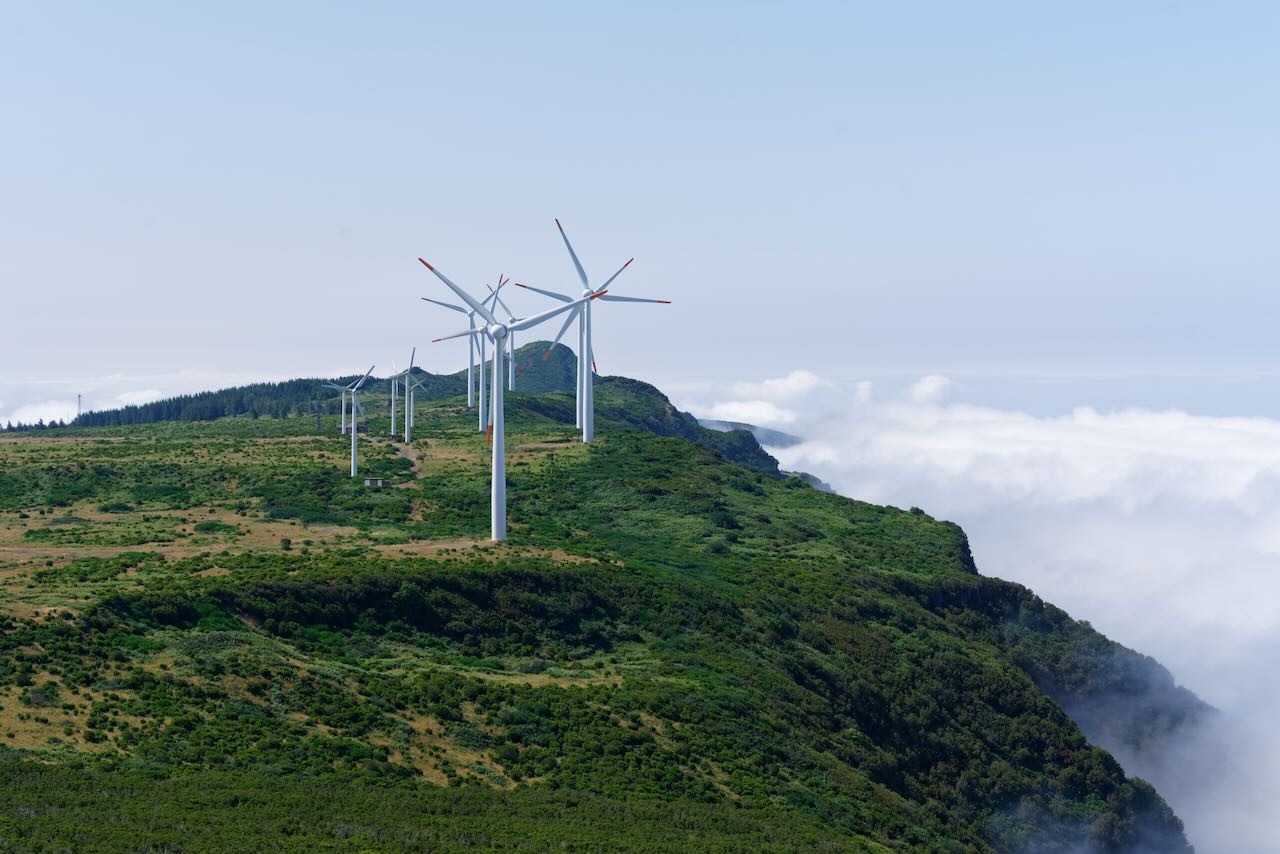
    Illustrative image: wind turbines on moutains. The Green Climate Fund has approved a record amount for new projects.

    Green Climate Fund approves record $1.2 billion for climate projects in developing nations

    The Green Climate Fund has approved a record $1.2 billion for 17 new climate projects, mainly in Asia and Africa, to help vulnerable nations adapt to and mitigate climate change, Reuters reports. The investments include $227 million for green bond markets and $200 million for green finance in India. Reforms will speed up partnerships and project approvals, aiming to reduce accreditation time for local partners from 30 months to nine months.

    Listen to the podcast

    UN development summit endorses innovative taxes and finance tools to boost global climate funding

    At a UN conference in Spain last week, 192 countries adopted the “Sevilla Commitment,” backing new climate finance tools such as taxes on the super-rich, levies on polluting transport, and debt swaps, Climate Home News reports.

    Leaders urged carbon and airline ticket taxes, pre-arranged disaster aid, and easier access to international funds for developing nations. The summit stressed urgent action as climate impacts worsen, with richer countries called to lead on finance and support fair energy transitions worldwide.

    UK launches first onshore wind strategy to double capacity and create 45,000 jobs by 2030

    The UK government has unveiled its first-ever onshore wind strategy, aiming to nearly double capacity to 27–29 GW by 2030 and create up to 45,000 skilled jobs, according to a statement from the UK’s department of energy security and net zero.

    Over 40 measures will accelerate project development, streamline planning, repower aging turbines, and offer community benefits. The plan reverses nearly a decade of stagnation, boosts energy security, and seeks billions in private investment, positioning onshore wind as a cornerstone of Britain’s clean energy future.

    Global EV and battery investment surges, but China’s overcapacity and policy shifts challenge industry

    Global investment in electric vehicles (EVs) and batteries is booming, with China leading in manufacturing and sales due to strong state support and a vast domestic market, according to a recent report from the Rhodium Group.

    Europe is rapidly adopting EVs, relying heavily on imports, especially from China, while the US faces uncertainty as potential policy rollbacks threaten its growing domestic industry. Emerging markets are seeing fast EV adoption, often driven by affordable Chinese models, as the sector reaches a pivotal global transition point.

    Crosstown raises $3.8 million to retrofit Europe’s gas turbines for hydrogen

    Swiss startup Crosstown has secured CHF 3 million ($3.8 million) in seed funding to scale its patented H2R Burner technology, which enables existing gas turbines to run on 100 percent hydrogen or mixed renewable fuels. This innovation allows operators to cut CO₂ emissions by over 300,000 tons per 100MW turbine annually and reduce NOx by up to 80 percent, offering a cost-effective path to decarbonization without replacing current infrastructure.

    New Climate Tech Readiness Index ranks industries on real-world climate technology adoption

    Climate Insider has launched the Climate Technology Readiness Index, assessing how prepared emissions-intensive industries — like oil & gas, chemicals, and power — are to actually adopt and scale climate technologies, the climate tech industry media and market intelligence provider said in a recent post.

    Unlike traditional indices that track climate pledges, this tool measures organizational capabilities, R&D investment, partnerships, and operational deployment. The index aims to bridge the gap between climate tech innovation and real-world implementation, providing critical intelligence for companies navigating urgent regulatory and decarbonization pressures.

    AI-powered robots replace farm hands and herbicides, offering sustainable weeding solutions

    Aigen, a US startup, has developed a solar-powered, AI-driven robot that autonomously removes weeds from fields, addressing labour shortages and herbicide resistance, according to an AFP report that was picked up by the Economic Times.

    The robot, called Element, uses on-board cameras and AI to navigate crops – mimicking how human labourers would perform weeding – and eliminates the need for chemical weed killers. Priced at $50,000, Element aims to save farmers money, protect health, and promote climate-friendly agriculture, with robots already operating in cotton, tomato, and sugar beet fields.


    In Conversation

    In-depth conversations with entrepreneurs, investors, industry leaders and other stakeholders building India’s deep tech and climate tech ecosystems.

    Insight

    Takeaways from conversations with entrepreneurs, investors, industry leaders and other stakeholders building India’s deep tech and climate tech ecosystems.

  • The Climate on Monday: Big Tech’s net zero goals unrealistic, researchers say, India in SDG 100 for the first time, and more

    The Climate on Monday: Big Tech’s net zero goals unrealistic, researchers say, India in SDG 100 for the first time, and more

    Daily news on deep tech and climate tech from India and around the world

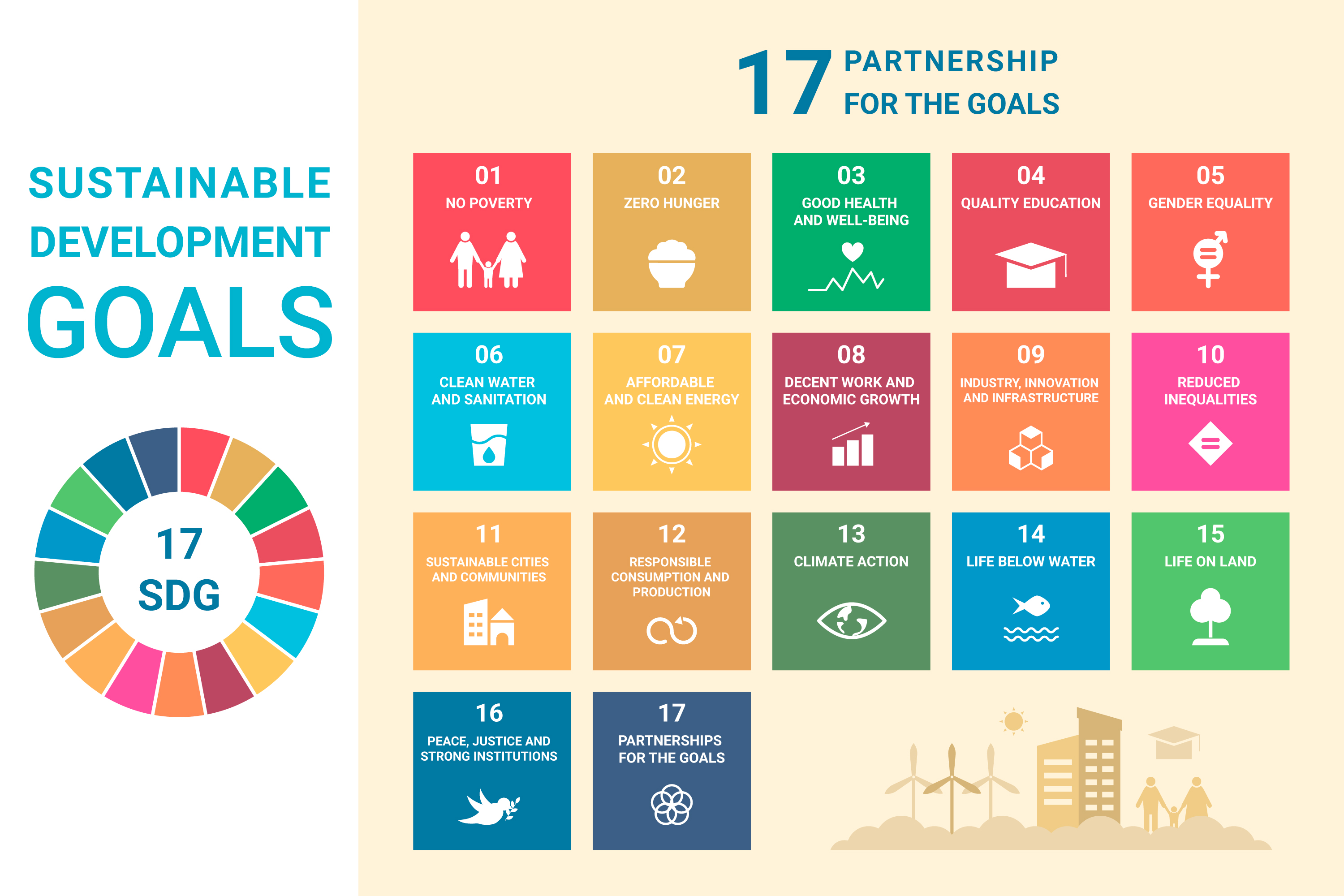
    An infographic show the 17 Sustainable Development Goals that were articulated at the United Nations in 2015 as an urgent call to action for all countries.

    Tech Giants’ Net Zero Goals May Be Unachievable Amid AI Data Center Boom

    Researchers warn that the net zero pledges of big tech companies such as Microsoft, Apple, Google, Meta, and Amazon are increasingly unrealistic as they expand AI and data centers, driving up energy use, according to a report by AFP that was widely syndicated last week.

    For example, Microsoft disclosed a 23 percent increase in greenhouse gas emissions since 2020, driven by rapid expansion of AI and cloud infrastructure, despite significant investments in carbon removals and clean energy, Carbon Pulse reported on May 30.

    Listen to the podcast

    Independent analysis rates the credibility of the big tech companies’ climate strategies as poor, with emissions targets likely unattainable if unchecked energy consumption continues without stronger oversight and regulation, according to the report.

    “The greenhouse gas emissions targets of tech companies appear to have lost their meaning,” Thomas Hay, lead author of a report by think tanks Carbon Market Watch and NewClimate Institute, told AFP.

    Meta finalizes deals for green power for AI data centres

    Meanwhile, Meta has finalized deals that will take it closer to net-zero emissions across its global data centers, according to a Bloomberg report on June 26. Meta signed new clean energy agreements with developer Invenergy to power its operations with renewable energy.

    Clean hydrogen investment at risk in US after tax bill proposal

    A proposed US tax bill threatens to drive clean hydrogen investors out of the country by cutting key incentives, Reuters reports. The move could slow the growth of the clean hydrogen sector, undermining efforts to decarbonize heavy industry and transportation.

    BizClik announces global sustainability awards finalists

    BizClik, a B2B digital media and events company, named the finalists for its Global Sustainability Awards 2025, recognizing measurable progress in ESG, climate tech, and sustainable innovation. The awards ceremony, set for September in London, spotlights global enterprises leading in sustainability, encouraging best practices and transparency in corporate environmental responsibility.

    Global Energy Prize shortlist features 15 scientists from eight countries

    The Global Energy Prize announced its 2025 shortlist, highlighting 15 scientists from eight countries working on sustainable energy solutions. The award promotes innovations addressing global energy challenges, supporting research that drives the transition to a cleaner, more sustainable energy future.

    Germany’s Climatiq bags €10 million to turn emissions into business metric

    Climatiq, a German climate tech startup, has raised €10 million in funding to develop technology that quantifies and tracks carbon emissions as a core business KPI, Tech Funding News reported. The company’s platform helps businesses to monitor their carbon footprint in real time and integrates emissions metrics into financial and operational decision-making. The investment will fuel further tech development and market expansion.

    Resilience AI assesses climate risk for Indian cities

    Resilience AI, a startup in Bengaluru, is developing a software platform that assesses how risk-prone our buildings and other infrastructure in our cities are to climate hazards like floods and landslides, Your Story reports. The startup’s risk modeling is helping urban planners and policymakers prepare for and mitigate the impact of increasingly frequent extreme weather events.

    India breaks into sustainable development goals index top 100 for the first time

    India has reached a significant milestone in the latest Sustainable Development Goals (SDG) Index, ranking within the top 100 countries for the first time, The Indian Express reports. This marks a notable improvement from its previous positions of 112th in 2022 and 120th in 2021, reflecting substantial progress in health, education, and environmental sustainability.

    The SDG Index evaluates countries on their commitment and performance toward global development targets. While India’s inclusion is a milestone, it also highlights ongoing challenges in areas like poverty reduction and climate resilience, requiring continued policy focus and innovation to sustain momentum.


    In Conversation

    In-depth conversations with entrepreneurs, investors, industry leaders, and other stakeholders building India’s deep tech and climate tech ecosystems

    Insight

    Takeaways from conversations with entrepreneurs, investors, industry leaders, and other stakeholders building India’s deep tech and climate tech ecosystems

  • The Climate on Monday: clean tech 2X, climate finance in India, a boost for SAF, synthetic graphite, and more

    The Climate on Monday: clean tech 2X, climate finance in India, a boost for SAF, synthetic graphite, and more

    Daily brief on deep tech and climate tech from India and around the world.

    Global clean tech investments to hit 2X versus fossil fuels in 2025

    Investment in clean technologies – renewables, nuclear, grids, storage, low-emissions fuels, efficiency and electrification – is on course to hit a record $2.2 trillion this year, attracting twice as much capital as fossil fuels, according to the 2025 edition of the International Energy Agency’s annual World Energy Investment report, which was released earlier this month.

    This reflects not only efforts to reduce emissions but also the growing influence of industrial policy, energy security concerns and the cost competitiveness of electricity-based solutions, the IEA said in a press release on June 5. Investment in oil, natural gas and coal is set to reach $1.1 trillion.

    Overall, global energy investment is set to increase in 2025 to a record $3.3 trillion despite headwinds from elevated geopolitical tensions and economic uncertainty, according to the release.

    Listen to the podcast

    Deadline nears for comments on India’s draft climate finance taxonomy

    There are just 10 days left to submit feedback to the Ministry of Finance on India’s draft Climate Finance Taxonomy, released last month. The taxonomy aims to define clear criteria for climate-aligned investments, boost green finance flows, and help India meet its net zero targets.

    Stakeholders — including financial institutions, industry, and civil society — are encouraged to provide input to ensure the taxonomy supports credible, transparent, and effective climate action across the economy.

    India’s solar boom curbs coal use as renewables hit record highs

    Meanwhile, India’s solar power generation surged by 32.4 percent in the first four months of 2025, reaching a record 57.8TWh and boosting solar’s share of the electricity mix to 10 percent, Reuters reports.

    This growth, alongside higher hydro output, helped keep coal-fired generation flat and cut natural gas-fired output by 27 percent. In May, coal power output fell 9.5 percent year-on-year, the steepest drop in five years, as renewables hit record highs and overall power demand declined. While coal remains India’s dominant energy source, clean power’s share continues to grow.

    Trump to scrap Biden-era rule on pension funds considering ESG

    In the US, the Department of Labor, under President Donald Trump’s administration, has announced plans to overturn a Biden-era rule that allowed pension funds to consider environmental, social, and governance (ESG) factors in investment decisions and shareholder voting, Green Central Banking reported, citing ESG Dive.

    SkyNRG raises €300 million to accelerate sustainable aviation fuel production

    In Europe, Dutch company SkyNRG has secured €300 million — led by asset managers APG and Macquarie — to build three large-scale sustainable aviation fuel (SAF) plants in Europe and North America, Tech Funding News reports. The flagship facility in the Netherlands will use green hydrogen and captured CO₂ to cut emissions by over 80 percent compared with regular jet fuel.

    SkyNRG’s integrated approach, strict sustainability standards, and partnerships with airlines and corporations aim to make SAF mainstream and help aviation reach net-zero emissions by 2050.

    ScaleFund III raises €12M to back tech scale-ups in Benelux and France

    Also in Europe, Belgian venture capital firm ScaleFund has launched its third fund, ScaleFund III, with an initial close of €12 million, targeting €30 million to support tech-driven companies in digital transformation, cleantech, and deeptech across Benelux and France.

    Led by Managing Partner Claire Munck, the fund focuses on hands-on support for companies beyond the startup phase, emphasizing diversity — 40 percent of prior investments were in women-led ventures — and aims to fill the funding gap for early-stage scale-ups with strong growth potential.

    Synthetic graphite production can be decarbonized with renewables and green hydrogen, study finds

    A new study finds that synthetic graphite production, crucial for electric vehicle batteries, can cut its high carbon emissions by adopting renewable energy and green hydrogen, Climate Insider reports.

    By switching 20–80 percent of energy sources, factories could reduce emissions by up to 70 percent. While decarbonization may increase production costs, surging demand and regulatory pressure make these measures increasingly necessary, according to the report.

  • In Conversation with Vishal Kataria at Ankur Capital: My Top 10 Takeaways

    In Conversation with Vishal Kataria at Ankur Capital: My Top 10 Takeaways

    On World Environment Day, my guest on India Tech Report: In Conversation was Vishal Kataria, a member of the investment team at Ankur Capital, and co-author of the Mumbai-based early-stage VC firm’s recent climate tech report titled Transforming India’s Core Sectors.

    Here are my top 10 takeaways from that conversation.

    1. Climate tech investment remains robust in India

    Despite a broader slowdown in venture capital, climate tech investments in India have consistently exceeded $1 billion annually over the past three or four years. This resilience highlights the sector’s growing maturity and the increasing recognition that climate solutions are not just about emissions reduction but also about long-term economic competitiveness.

    2. Disproportionate investment across sectors

    There is a notable mismatch between sectors’ emissions contributions and the investments they attract. For instance, transportation receives nearly half of all climate tech venture funding, despite contributing only 10–15 percent of emissions. This is largely because electric mobility offers immediate economic benefits, such as lower total cost of ownership, making it attractive for investors.

    3. Industrial decarbonization severely lags emissions

    Only about 4 percent of climate investments in India have gone into industrial decarbonization, even though industry accounts for roughly a quarter of emissions. High abatement costs (typically, $ cost per metric tonne of CO2 equivalent reduced or eliminated) and the need for deep technological innovation — especially in sectors like cement and steel — have limited investor interest. Significant R&D breakthroughs are required to make these solutions cost-effective and scalable.

    4. Deep tech and climate tech are intertwined

    Many impactful climate interventions require deep science and hardware innovation, not just software. However, scaling such solutions is capital-intensive, and India’s funding ecosystem is still developing the depth needed to support late-stage growth for these ventures. The landscape is changing, with more researchers focusing on commercialization and entrepreneurship.

    5. India’s unique strength in carbon removal

    India is emerging as a global leader in natural carbon removal technologies such as enhanced rock weathering and biochar. These solutions leverage India’s abundant volcanic rock and agricultural waste, offering scalable, scientifically validated methods for permanent carbon sequestration. Startups in this space are gaining international recognition and funding.

    6. Renewable energy deployment is accelerating

    India’s rapid adoption of solar and wind energy has been a standout success, with ambitious targets set for 2030. However, as renewables become a larger share of the grid, challenges around storage and grid management will require next-generation technologies, such as long-duration batteries and decentralized energy resources.

    7. Platform technologies drive energy transition

    Startups such as Vimano, an Ankur portfolio venture, are developing core technology platforms — such as advanced ion-conductive membranes — that can serve multiple applications across energy storage, hydrogen production, and industrial processes. These platforms are critical for enabling the next wave of energy transition solutions and are attractive for their scalability and versatility.

    8. Diversity and maturity in climate tech investments

    Investment is becoming less concentrated, with significant funding now flowing into a range of sectors, including food and agriculture, energy, and carbon management. This diversification signals a maturing ecosystem where both early-stage and growth-stage companies are scaling up across various climate verticals.

    9. Context-specific solutions for food and agriculture

    India’s climate tech innovation in food and agriculture must be tailored to local conditions, such as smallholder farms and unique supply chain challenges. While global trends like autonomous farming are promising, Indian solutions will likely differ in approach, focusing on cost-effectiveness and adaptability to fragmented landholdings.

    10. Future priorities: advanced materials and earth intelligence

    Looking ahead, areas that Ankur Capital sees as promising include advanced materials (e.g., graphene, ceramics, new construction materials) and Earth and climate intelligence (including satellite-based data and AI-driven analytics). These areas are expected to underpin breakthroughs in energy, industry, and sustainable agriculture over the next few years.