Tag: news

  • India to modernise Semiconductor Laboratory spending Rs. 4,500 crore

    India to modernise Semiconductor Laboratory spending Rs. 4,500 crore

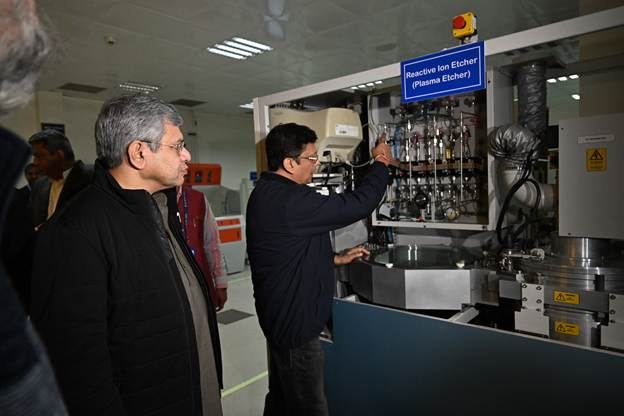
    India’s Electronics and IT Minister Ashwini Vaishnav recently visited SCL, and outlined a plan to modernise the chip facility.

    (00:20) India to invest Rs. 4,500 crore to modernise SCL Mohali

    India will invest Rs. 4,500 crore to modernise and expand the government-run Semiconductor Laboratory (SCL) in Mohali, targeting a 100-fold increase in wafer production while ruling out privatisation, Electronics and IT minister Ashwini Vaishnaw said during a site visit. SCL will support chip fabrication for students, startups and defence-linked agencies as part of a broader push for indigenous semiconductor capability, according to a statement from the ministry.

    Listen to the episode


    (00:55) Mixx Technologies raises $33 million series A funding

    Mixx Technologies, a US-based deep-tech startup founded by specialists from Intel and Broadcom, has raised $33 million in Series A funding led by ICM HPQC Fund alongside TDK Ventures, Systemiq Capital, and others. The capital will accelerate development of its HBxIO silicon-integrated optical engine, boost global R&D (including in India), and drive adoption of high-efficiency AI infrastructure platforms.

    (01:29) Lightspeed Photonics raises $6.5 million for optical AI chips

    Lightspeed Photonics has raised $6.5 million in a pre-Series A round led by Pi Ventures to scale its solderable optical interconnects for AI and high-performance computing data centres.  The Bengaluru-based startup claims 4x faster data transfer and roughly 2x lower power use than existing links, and plans to split the funds between R&D and commercial pilots through 2026.

    (02:01) Reditus Space plans reusable reentry vehicle for microgravity R&D 

    US startup Reditus Space has raised $7.1 million in seed funding to build ENOS, a reusable reentry spacecraft aimed at fast-turnaround missions for microgravity research and in-space manufacturing, Payload Space reports. The first ENOS flight, targeting a SpaceX rideshare next summer, will carry a pharma payload, reenter at over Mach 24, and test hardware designed for 20-plus missions and 40 kg payloads.

    (02:38) IonQ, CCRM to apply quantum tech to advanced therapies 

    IonQ has struck an investment and technology partnership with Canada’s Centre for Commercialization of Regenerative Medicine to apply hybrid quantum and quantum-AI tools to bioprocess optimization, disease modelling and advanced therapy manufacturing. IonQ becomes core tech partner across CCRM’s global network, with initial quantum-biotech projects in Canada and Sweden slated for 2026 as part of IonQ’s expanding European strategy.

    (03:10) Sparrow Quantum raises €27.5 million for photonic quantum chips 

    Denmark’s Sparrow Quantum has raised €27.5 million in Series A funding, in what it calls Scandinavia’s largest quantum-tech investment, to scale production of its Sparrow Core single-photon chip for room-temperature photonic quantum systems. The company plans to expand manufacturing and develop next-generation devices based on Niels Bohr Institute research, aiming to become a leading quantum chip supplier for European and global markets.

    (03:44) Vayavya Labs, SimDaaS tie up on autonomous mobility tools 

    Software engineering firm Vayavya Labs has signed an MoU with IIT Kanpur–incubated SimDaaS Autonomy to co-develop simulation-led tools for autonomous driving, ADAS and AI-based virtual validation. The partners will combine digital twin, virtual electronic control units and traffic-scenario simulation capabilities to accelerate virtual testing for complex Indian conditions and export solutions to global mobility markets.

    (04:17) AI-detected ‘hidden’ lion roar may boost conservation

    Scientists have identified a previously unknown “intermediary” lion roar that occurs alongside the classic full-throated call, using AI to sort thousands of recordings with about 95 percent accuracy. The added vocal signature can improve passive acoustic monitoring, helping estimate lion numbers and track individuals more reliably as wild populations fall to roughly 20,000–25,000 across Africa.

  • Sunil Cavale and Vishal Katariya on the evolving chip startup landscape in India

    Sunil Cavale and Vishal Katariya on the evolving chip startup landscape in India

    In today’s episode, I bring you a conversation with Sunil Cavale at Speciale Invest and Vishal Katariya at Ankur Capital, both VC firms well known as early-stage backers of deep tech startups in India.

    Vishal and Sunil discuss their recent report on the Semiconductor Startup Landscape in India.

    India’s chip industry has made significant strides from being only a location for the development centres of global companies, designing to foreign specifications.

    Today, a new cohort of founders — professors spinning out decades of research, veterans of Qualcomm and Texas Instruments, and second‑time chip entrepreneurs — is trying to build products, not just provide services. Their targets range from high‑volume microcontrollers for cameras and smart meters to AI accelerators for data centres and the edge.

    Venture capital is following. Seed rounds are giving way to briskly timed Series-A investments, some closing within 18 months of the seed funding and at two to ten times the earlier cheque sizes. Capital is also broadening beyond specialist funds: family offices, strategic corporates like Zoho and the venture arms of global chipmakers now want a role in the India semicon story.

    Meanwhile, entrepreneurs are pushing beyond fabless design into manufacturing‑adjacent niches such as metrology tools, lithography subsystems and low‑volume prototyping — hedging against the geopolitical fragility of a supply chain still concentrated in Taiwan and the Netherlands.

    Link to the report at Speciale Invest:
    https://www.specialeinvest.com/community?pgid=mdx2tvo7-e24d7063-961f-4de4-b405-ce9282527498
    Link to the report at Ankur Capital:
    https://www.ankurcapital.com/post/semiconductor-startup-landscape-in-india-2025-perspective

    This week’s conversation brings together two investors who have had a ringside view of these shifts. Sunil and Vishal have spent the past few years swapping notes on deals, founders, failures and successes. Out of those conversations that started during one fateful meeting at a McDonald’s in Ghatkopar, in Mumbai, came their Semiconductor Startup Landscape in India report, first presented at IIT Bombay’s SemiX conference.

    Rather than rehearse well-known talking points, they have tried to document what is actually happening on the ground: who the founders are, where the money originates, which verticals are getting crowded and where the genuine white spaces lie. In this episode, they explain why India’s chip moment may finally be real — and what it will take to sustain it.

  • CrisprBits raises $3 million to scale CRISPR diagnostics, biofuel strain engineering

    CrisprBits raises $3 million to scale CRISPR diagnostics, biofuel strain engineering

    Team CrisprBits. CrisprBits, a Bengaluru biotech startup, has raised $3 million in a pre-Series A round to scale its CRISPR-based diagnostics and gene-editing platforms, lifting its valuation to $12 million.
    Team CrisprBits. Image source: company.

    CrisprBits, a Bengaluru biotech startup, has raised $3 million in a pre-Series A round to scale its CRISPR-based diagnostics and gene-editing platforms, lifting its valuation to $12 million. The company plans to use the money to commercialize its PathCrisp molecular diagnostics line and build an AI-augmented strain engineering platform for industrial biofuels.

    Listen to the episode


    The round was led by Spectrum Impact, the family office of Aarti Industries Ltd.’s Chairman and Managing Director Rajendra Gogri, with participation from existing backers including the Vijay Alreja Family Office (VJ Technologies Group) and new investors such as the promoter family of HBL Engineering Ltd. Earlier funding from the founders, VJ Technologies Group and C-CAMP is being deployed to expand manufacturing capacity across human health, food safety and animal health applications.

    CrisprBits’ investment is happening at a time when CRISPR moves from lab tool to commercial platform in diagnostics, gene therapies and industrial biotech, drawing sustained interest from strategics and financial investors worldwide. Global CRISPR technology revenues are projected to grow at around 11–16 percent annually this decade, with estimates putting the broader CRISPR market in the $5–23 billion range by 2030–2035 as applications in healthcare, agriculture and biomanufacturing scale up.

    “Our focus has always been on attracting patient capital that shares our goal to ‘rewrite biology and reimagine the planet,’ CrisprBits co-founder and CEO Vijay Chandru, said in a press release. “This round gives us the fuel to launch in India and immediately scale to global markets with high-quality, affordable solutions,” he said.

    CrisprBits’ PathCrisp platform targets rapid, point-of-need molecular diagnostics, promising sample-to-result times of under 2.5 hours with minimal infrastructure. The product line spans tests for typhoid, antimicrobial resistance, sickle cell disease, foodborne pathogens and on-farm animal disease surveillance, aimed at hospitals, food processors and livestock producers.

    Beyond diagnostics, the company’s EdiCrisp platform offers end-to-end gene-editing services using the indigenous enFnCas9 system from the Institute of Genomics and Integrative Biology, positioned as more precise than legacy SpCas9 systems.

    A third platform, CurieCrisp, combines patient-derived iPSC lines, CRISPR-corrected controls and AI analytics to support preclinical research and rare disease drug discovery, with an emphasis on improving access in the Global South.

    CRISPR stands for clustered regularly interspaced short palindromic repeats, referring to a pattern of repeated DNA sequences found in bacteria and archaea – a major group of single-celled microorganisms.

    CRISPR-Cas9 is a gene-editing technology that acts like molecular scissors, allowing scientists to cut and modify DNA at specific locations in the genome. The tool was adapted for genome editing in 2012 by researchers including Jennifer Doudna and Emmanuelle Charpentier, whose work on CRISPR-Cas9 earned them the 2020 Nobel Prize in Chemistry and set off a wave of applications in medicine, agriculture and basic research.

    Consultancy and market-research estimates suggest that CRISPR-related markets are entering a scale-up phase, particularly in health care. One global forecast pegs the CRISPR technology market at about $3.2 billion in 2025, rising to roughly $5.5 billion by 2030 at an annual growth rate of just over 11 percent, driven by demand for genetic disease therapies, functional genomics tools and next-generation diagnostics.

    Within diagnostics, CRISPR-based tests are expected to grow faster than the broader market as they move into point-of-care infectious disease testing and oncology. The CRISPR-based diagnostics segment alone is projected to climb from around $3.8 billion in 2025 to more than $15 billion by 2034, implying a CAGR of about 16–17 percent as new products win regulatory approvals and reimbursement.

    India has emerged as an early adopter of CRISPR diagnostics, starting with the FELUDA assay developed by CSIR-IGIB and Tata Group in 2020, which demonstrated the feasibility of low-cost CRISPR-based testing for infectious diseases.

    Last week, Union Minister Jitendra Singh launched ‘BIRSA 101’, India’s first indigenous CRISPR-based gene therapy for sickle cell disease, developed at CSIR-IGIB and transferred to the Serum Institute. The therapy aims to make advanced gene-editing cures affordable for Indian patients, particularly tribal populations, supporting the ambition for a Sickle Cell–free India by 2047.

    Domestic market forecasts indicate that India’s CRISPR gene detection and diagnostic segment could grow from around $50 million in the mid-2020s to more than $240 million by 2032, with biomedical diagnostics as the largest and fastest-growing application.

    Recent initiatives include new CRISPR laboratories in Bengaluru for gene editing and diagnostics, and a pipeline of rare-disease and oncology programmes exploring CRISPR-based interventions. Against this backdrop, CrisprBits — founded by BITS Pilani alumni and operating a 7,300-square-foot CRISPR R&D facility in Bengaluru — aims to extend India’s footprint from diagnostic kits to platforms spanning gene editing and sustainable industrial biotechnology.

    With the fresh capital, CrisprBits plans to ramp up manufacturing at its diagnostics facility and expand distribution into Africa and Latin America over the next six months. In parallel, it intends to build an AI-augmented strain engineering platform focused initially on biofuel production, targeting cost and sustainability gains for industrial partners in chemicals and energy.

  • Google, Accel team up to back Indian AI startups, SBI Ventures’ next climate tech fund

    Google, Accel team up to back Indian AI startups, SBI Ventures’ next climate tech fund

    An AI generated image for illustrating an Indian startups co-working space.

    (00:20) Google, Accel to co-invest in Indian AI startups

    Google and Accel will co-invest in at least 10 early-stage Indian AI startups through a new partnership between Google’s AI Futures Fund and Accel’s Atoms programme, with up to 2 million dollars available per company.

    The tie-up, based in Bengaluru, is Google’s first such funding collaboration and follows its $15 billion India data-centre commitment and broader push to tap the country’s nearly one billion internet users.

    Listen to the episode


    (00:54) India’s largest bank to launch next climate startup fund

    SBI Ventures, promoted by State Bank of India and headquartered in Mumbai, intends to raise Rs. 2,000 crore for its third climate-focused investment fund launching in January-March 2026. The fund will invest in early and growth-stage climate startups, particularly frontier climate technologies and AI-enabled innovations.

    SBI Ventures identified critical funding deficits in water security, climate-smart agriculture, and disaster-proof infrastructure, targeting an estimated $170 billion annual requirement.

    (01:34) Bio-based coastal concrete material nurtures marine life

    Researchers at the Royal Netherlands Institute for Sea Research in Yerseke tested Xiriton, a bio-based concrete alternative made from grass, shells, sand, lime, pozzolan, and seawater, for tidal restoration.

    After a year, blocks deployed on mudflats were densely colonised by oysters, mussels, and algae while withstanding strong currents, suggesting a durable, degradable, low-alkaline material for greener coastal protection.

    (02:10) German defence drone startup nears €200m raise 

    Munich-based Quantum Systems is close to securing about €200 million in new funding at a roughly $3 billion valuation, just months after becoming a unicorn. 

    The dual-use surveillance drone maker, founded in 2015, is riding Europe’s defence spending boom as governments seek homegrown aerial intelligence, with annual revenue reportedly growing triple digits on the back of contracts in Ukraine and other NATO markets.

    (02:42) Europe backs optical vortex photonics network

    Tampere University in Finland will lead HiPOVor, a €4.4 million EU-funded doctoral network to advance high‑power optical vortex beams and train 15 researchers in photonics.

    The Europe‑wide consortium of eight universities, the ELI‑NP laser facility in Romania, and nine industry partners aims to turn twisting light beams into core tools for precision manufacturing, particle acceleration, and high‑capacity communications from 2026.

  • India backs JCM, seeks global action on energy for small islands at COP30, and more

    India backs JCM, seeks global action on energy for small islands at COP30, and more

    AI generated image for illustration. India is backing the international solar alliance with a call for global action on energy for small island developing nations, at the COP30 meet.


    (00:20) India calls joint crediting mechanism a model for equitable climate action

    At UNFCCC COP30 in Brazil, India’s Environment Minister Bhupender Yadav said the Joint Crediting Mechanism (JCM) is crucial for scalable, technology-driven climate solutions. India-Japan cooperation under JCM will mobilise investments, deploy low-carbon technologies, and build capacity, supporting national climate goals and Article 6 implementation. India’s Carbon Market portal will aid JCM transparency and impact.

    Listen to the episode


    (00:50) India urges global solar push for energy security in small island states

    Separately, Minister Yadav highlighted support for Small Island Developing States through the International Solar Alliance. India showcased rooftop solar, solar pumps, and battery projects, calling for global action to boost clean energy, cut diesel imports, and build climate resilience. Over 124 nations now participate in ISA’s initiatives.

    (01:18) Mehta Family Foundation announces two conferences with IITs 

    The Mehta Family Foundation will host two conferences under its collaboration for academic and research excellence or CARE initiative in partnership with IIT Madras and IIT Guwahati. The events focus on bioengineering and AI, convening global and Indian researchers to advance interdisciplinary collaboration and showcase innovations, marking the Foundation’s growing role in India’s academic ecosystem.


    (01:48) Glow-in-the-gut pill offers non-invasive colonoscopy alternative 

    Researchers in China have developed a pill embedded with heme-sensing bacteria that glow in response to gastrointestinal bleeding, enabling early colitis detection without invasive colonoscopies. Tested safely in mice, the pill’s magnetic microspheres are retrieved from feces and produce light proportional to disease severity, potentially revolutionizing gut health diagnostics.


    (02:17) JuliaHub and Synopsys partner to power AI-driven digital twins 

    JuliaHub will integrate its Dyad simulation platform with Synopsys’ Ansys TwinAI™, blending physics-based modelling and adaptive AI for more accurate, cloud-based digital twins. The collaboration aims to accelerate innovation in hardware design and system optimization, merging JuliaHub’s SciML tech with Synopsys’ robust simulation ecosystem.

    (02:45) Rift raises €4.6M to launch Europe’s first on-demand aerial network 

    French startup Rift has raised €4.6 million to deploy autonomous drone stations across Europe, creating a real-time aerial intelligence network for public safety and critical infrastructure monitoring. The “Surveillance-as-a-Service” platform aims to mitigate wildfires, border breaches, and infrastructure threats with plans to deploy 20 stations by 2027.


    (03:14) Teradar exits stealth with $150M series B for terahertz vision sensors 

    Teradar, a Boston startup, has unveiled its terahertz vision sensor technology for automotive safety after raising $150 million in Series B funding. The modular terahertz sensor offers all-weather perception to enhance autonomous driving and commercial vehicle safety, with production targeted by 2028. Investors include Lockheed Martin Ventures and VXI Capital.

  • Karnataka’s Quantum City and space policy, CRISPR-based sickle cell therapy, and more

    Karnataka’s Quantum City and space policy, CRISPR-based sickle cell therapy, and more

    AI generated image of Chandrayaan on the Lunar surface for illustration. India’s Karnataka state has unveiled its space tech policy 2025-30.


    (00:21) Karnataka unveils India’s first Quantum City plan, space policy

    Karnataka launched India’s first Quantum City blueprint at the Bengaluru Tech Summit this week, with a plan to create a Rs. 1,000 crore integrated quantum cluster in Hesaraghatta. The project targets global leadership in quantum research, chip manufacturing, and talent export, with dedicated parks, startup zones, and international collaborations to boost Bengaluru’s quantum ecosystem.

    (00:51) Separately, the state government also unveiled its Space Technology Policy 2025–2030 at the Summit, seeking to make the state a global leader in space innovation, manufacturing, and research. The policy emphasizes building skilled talent, fostering deep-tech startups, and integrating space technology in governance, aiming to capture 50 percent of India’s space market by 2030.

    Listen to the episode


    (01:18) Skycore Semi bags €5M to boost AI datacenter chips

    Danish fabless design startup Skycore Semiconductors has raised €5 million in seed funding led by Amadeus APEX, with participation from First Momentum, Mätch VC, and Balnord. The funds will accelerate the commercial rollout of high-density Power ICs tailored for 800V HVDC data centers, targeting the power bottleneck in next-gen AI infrastructure.

    (01:47) Steele Group opens Boston’s deep tech hub BASE-X

    Steele Group has launched BASE-X, a 25,000-square-foot headquarters in downtown Boston dedicated to deep tech innovation, the US real estate developer said in a press release. Serving as a hub for venture capital, operators, and partners, BASE-X aims to catalyze investment, operational excellence, and collaboration in fields including AI, energy, defence, and advanced manufacturing.

    (02:18) Breakthrough in rare-earth magnetism promises quantum tech leap

    Scientists in India have discovered a new type of magnetism in neodymium nitride (NdN) thin films driven by orbital angular momentum, not just electron spin. This finding, led by JNCASR, enables the tuning of materials for faster, more efficient quantum and spintronic devices, enhancing India’s role in rare-earth and advanced materials research.

    (02:51) India launches first indigenous CRISPR gene therapy for sickle cell

    Union Minister Dr. Jitendra Singh launched ‘BIRSA 101’, India’s first indigenous CRISPR-based gene therapy for sickle cell disease, developed at CSIR-IGIB and transferred to the Serum Institute. The therapy aims to make advanced gene-editing cures affordable for Indian patients, particularly tribal populations, supporting the ambition for a Sickle Cell–free India by 2047.