Tag: renewable-energy

  • The Climate on Monday: Green Climate Fund’s record mandate, Crosstown’s innovative hydrogen retrofit, and more

    The Climate on Monday: Green Climate Fund’s record mandate, Crosstown’s innovative hydrogen retrofit, and more

    Daily brief on deep tech and climate tech news from India and around the world.

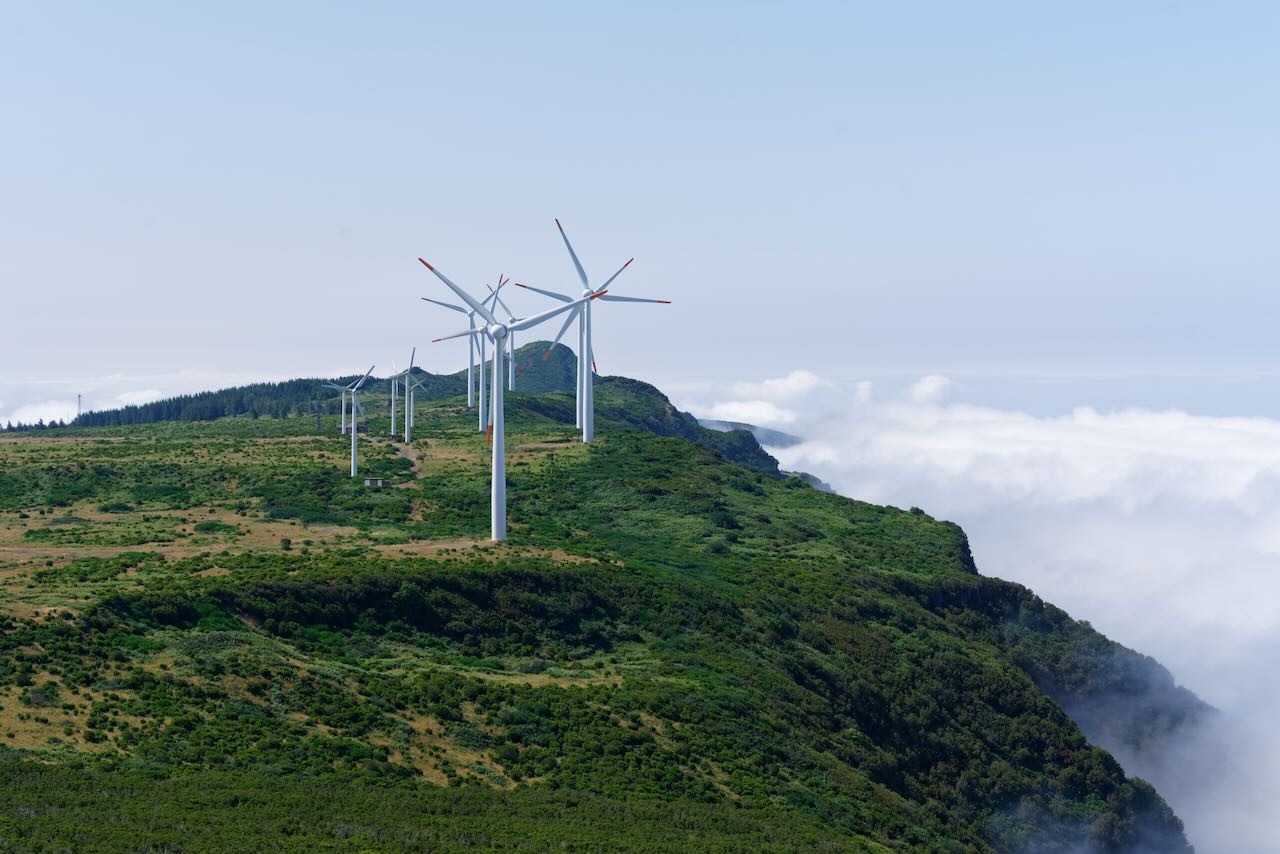
    Illustrative image: wind turbines on moutains. The Green Climate Fund has approved a record amount for new projects.

    Green Climate Fund approves record $1.2 billion for climate projects in developing nations

    The Green Climate Fund has approved a record $1.2 billion for 17 new climate projects, mainly in Asia and Africa, to help vulnerable nations adapt to and mitigate climate change, Reuters reports. The investments include $227 million for green bond markets and $200 million for green finance in India. Reforms will speed up partnerships and project approvals, aiming to reduce accreditation time for local partners from 30 months to nine months.

    Listen to the podcast

    UN development summit endorses innovative taxes and finance tools to boost global climate funding

    At a UN conference in Spain last week, 192 countries adopted the “Sevilla Commitment,” backing new climate finance tools such as taxes on the super-rich, levies on polluting transport, and debt swaps, Climate Home News reports.

    Leaders urged carbon and airline ticket taxes, pre-arranged disaster aid, and easier access to international funds for developing nations. The summit stressed urgent action as climate impacts worsen, with richer countries called to lead on finance and support fair energy transitions worldwide.

    UK launches first onshore wind strategy to double capacity and create 45,000 jobs by 2030

    The UK government has unveiled its first-ever onshore wind strategy, aiming to nearly double capacity to 27–29 GW by 2030 and create up to 45,000 skilled jobs, according to a statement from the UK’s department of energy security and net zero.

    Over 40 measures will accelerate project development, streamline planning, repower aging turbines, and offer community benefits. The plan reverses nearly a decade of stagnation, boosts energy security, and seeks billions in private investment, positioning onshore wind as a cornerstone of Britain’s clean energy future.

    Global EV and battery investment surges, but China’s overcapacity and policy shifts challenge industry

    Global investment in electric vehicles (EVs) and batteries is booming, with China leading in manufacturing and sales due to strong state support and a vast domestic market, according to a recent report from the Rhodium Group.

    Europe is rapidly adopting EVs, relying heavily on imports, especially from China, while the US faces uncertainty as potential policy rollbacks threaten its growing domestic industry. Emerging markets are seeing fast EV adoption, often driven by affordable Chinese models, as the sector reaches a pivotal global transition point.

    Crosstown raises $3.8 million to retrofit Europe’s gas turbines for hydrogen

    Swiss startup Crosstown has secured CHF 3 million ($3.8 million) in seed funding to scale its patented H2R Burner technology, which enables existing gas turbines to run on 100 percent hydrogen or mixed renewable fuels. This innovation allows operators to cut CO₂ emissions by over 300,000 tons per 100MW turbine annually and reduce NOx by up to 80 percent, offering a cost-effective path to decarbonization without replacing current infrastructure.

    New Climate Tech Readiness Index ranks industries on real-world climate technology adoption

    Climate Insider has launched the Climate Technology Readiness Index, assessing how prepared emissions-intensive industries — like oil & gas, chemicals, and power — are to actually adopt and scale climate technologies, the climate tech industry media and market intelligence provider said in a recent post.

    Unlike traditional indices that track climate pledges, this tool measures organizational capabilities, R&D investment, partnerships, and operational deployment. The index aims to bridge the gap between climate tech innovation and real-world implementation, providing critical intelligence for companies navigating urgent regulatory and decarbonization pressures.

    AI-powered robots replace farm hands and herbicides, offering sustainable weeding solutions

    Aigen, a US startup, has developed a solar-powered, AI-driven robot that autonomously removes weeds from fields, addressing labour shortages and herbicide resistance, according to an AFP report that was picked up by the Economic Times.

    The robot, called Element, uses on-board cameras and AI to navigate crops – mimicking how human labourers would perform weeding – and eliminates the need for chemical weed killers. Priced at $50,000, Element aims to save farmers money, protect health, and promote climate-friendly agriculture, with robots already operating in cotton, tomato, and sugar beet fields.


    In Conversation

    In-depth conversations with entrepreneurs, investors, industry leaders and other stakeholders building India’s deep tech and climate tech ecosystems.

    Insight

    Takeaways from conversations with entrepreneurs, investors, industry leaders and other stakeholders building India’s deep tech and climate tech ecosystems.

  • The Climate on Monday: Big Tech’s net zero goals unrealistic, researchers say, India in SDG 100 for the first time, and more

    The Climate on Monday: Big Tech’s net zero goals unrealistic, researchers say, India in SDG 100 for the first time, and more

    Daily news on deep tech and climate tech from India and around the world

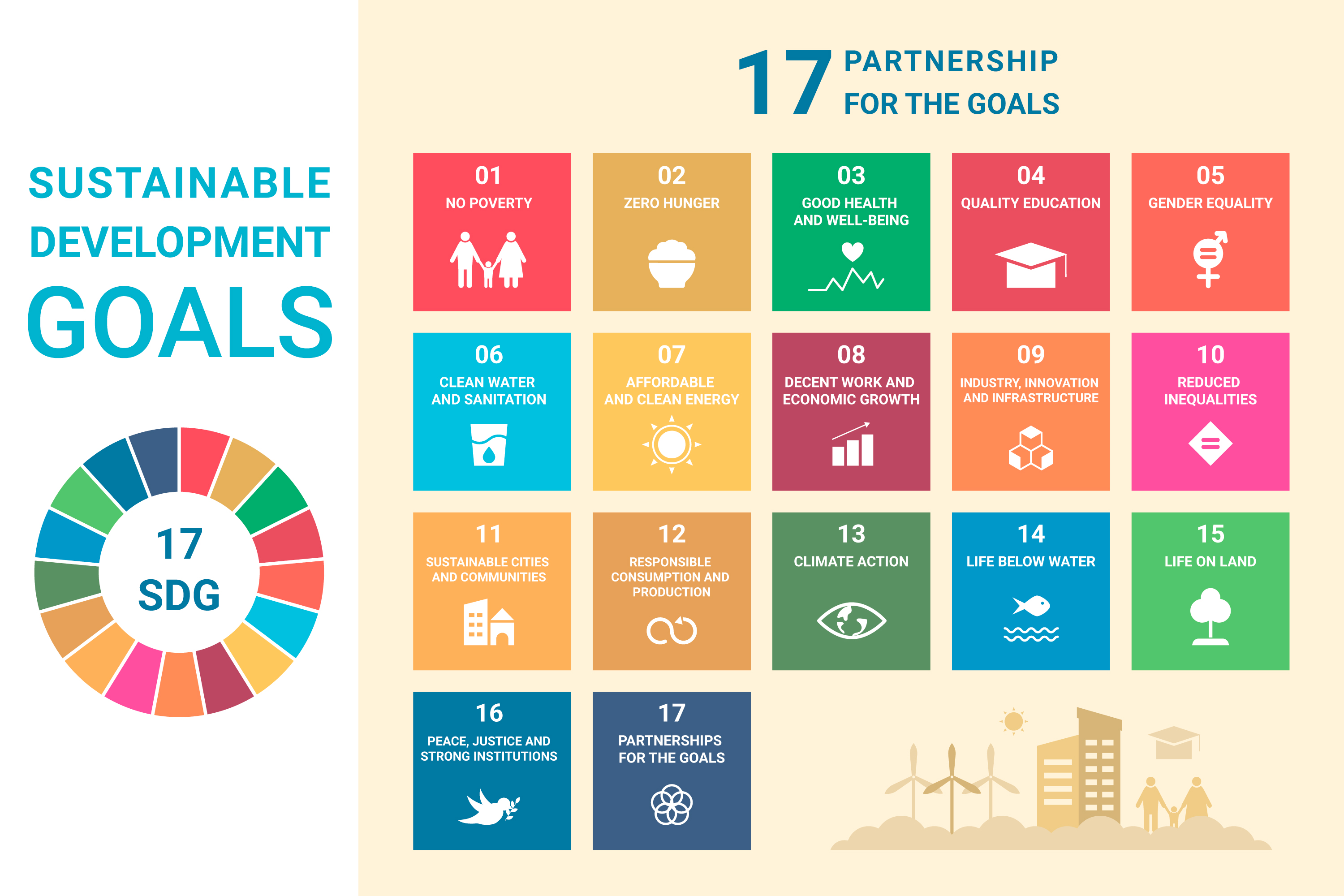
    An infographic show the 17 Sustainable Development Goals that were articulated at the United Nations in 2015 as an urgent call to action for all countries.

    Tech Giants’ Net Zero Goals May Be Unachievable Amid AI Data Center Boom

    Researchers warn that the net zero pledges of big tech companies such as Microsoft, Apple, Google, Meta, and Amazon are increasingly unrealistic as they expand AI and data centers, driving up energy use, according to a report by AFP that was widely syndicated last week.

    For example, Microsoft disclosed a 23 percent increase in greenhouse gas emissions since 2020, driven by rapid expansion of AI and cloud infrastructure, despite significant investments in carbon removals and clean energy, Carbon Pulse reported on May 30.

    Listen to the podcast

    Independent analysis rates the credibility of the big tech companies’ climate strategies as poor, with emissions targets likely unattainable if unchecked energy consumption continues without stronger oversight and regulation, according to the report.

    “The greenhouse gas emissions targets of tech companies appear to have lost their meaning,” Thomas Hay, lead author of a report by think tanks Carbon Market Watch and NewClimate Institute, told AFP.

    Meta finalizes deals for green power for AI data centres

    Meanwhile, Meta has finalized deals that will take it closer to net-zero emissions across its global data centers, according to a Bloomberg report on June 26. Meta signed new clean energy agreements with developer Invenergy to power its operations with renewable energy.

    Clean hydrogen investment at risk in US after tax bill proposal

    A proposed US tax bill threatens to drive clean hydrogen investors out of the country by cutting key incentives, Reuters reports. The move could slow the growth of the clean hydrogen sector, undermining efforts to decarbonize heavy industry and transportation.

    BizClik announces global sustainability awards finalists

    BizClik, a B2B digital media and events company, named the finalists for its Global Sustainability Awards 2025, recognizing measurable progress in ESG, climate tech, and sustainable innovation. The awards ceremony, set for September in London, spotlights global enterprises leading in sustainability, encouraging best practices and transparency in corporate environmental responsibility.

    Global Energy Prize shortlist features 15 scientists from eight countries

    The Global Energy Prize announced its 2025 shortlist, highlighting 15 scientists from eight countries working on sustainable energy solutions. The award promotes innovations addressing global energy challenges, supporting research that drives the transition to a cleaner, more sustainable energy future.

    Germany’s Climatiq bags €10 million to turn emissions into business metric

    Climatiq, a German climate tech startup, has raised €10 million in funding to develop technology that quantifies and tracks carbon emissions as a core business KPI, Tech Funding News reported. The company’s platform helps businesses to monitor their carbon footprint in real time and integrates emissions metrics into financial and operational decision-making. The investment will fuel further tech development and market expansion.

    Resilience AI assesses climate risk for Indian cities

    Resilience AI, a startup in Bengaluru, is developing a software platform that assesses how risk-prone our buildings and other infrastructure in our cities are to climate hazards like floods and landslides, Your Story reports. The startup’s risk modeling is helping urban planners and policymakers prepare for and mitigate the impact of increasingly frequent extreme weather events.

    India breaks into sustainable development goals index top 100 for the first time

    India has reached a significant milestone in the latest Sustainable Development Goals (SDG) Index, ranking within the top 100 countries for the first time, The Indian Express reports. This marks a notable improvement from its previous positions of 112th in 2022 and 120th in 2021, reflecting substantial progress in health, education, and environmental sustainability.

    The SDG Index evaluates countries on their commitment and performance toward global development targets. While India’s inclusion is a milestone, it also highlights ongoing challenges in areas like poverty reduction and climate resilience, requiring continued policy focus and innovation to sustain momentum.


    In Conversation

    In-depth conversations with entrepreneurs, investors, industry leaders, and other stakeholders building India’s deep tech and climate tech ecosystems

    Insight

    Takeaways from conversations with entrepreneurs, investors, industry leaders, and other stakeholders building India’s deep tech and climate tech ecosystems

  • The Climate on Monday: clean tech 2X, climate finance in India, a boost for SAF, synthetic graphite, and more

    The Climate on Monday: clean tech 2X, climate finance in India, a boost for SAF, synthetic graphite, and more

    Daily brief on deep tech and climate tech from India and around the world.

    Global clean tech investments to hit 2X versus fossil fuels in 2025

    Investment in clean technologies – renewables, nuclear, grids, storage, low-emissions fuels, efficiency and electrification – is on course to hit a record $2.2 trillion this year, attracting twice as much capital as fossil fuels, according to the 2025 edition of the International Energy Agency’s annual World Energy Investment report, which was released earlier this month.

    This reflects not only efforts to reduce emissions but also the growing influence of industrial policy, energy security concerns and the cost competitiveness of electricity-based solutions, the IEA said in a press release on June 5. Investment in oil, natural gas and coal is set to reach $1.1 trillion.

    Overall, global energy investment is set to increase in 2025 to a record $3.3 trillion despite headwinds from elevated geopolitical tensions and economic uncertainty, according to the release.

    Listen to the podcast

    Deadline nears for comments on India’s draft climate finance taxonomy

    There are just 10 days left to submit feedback to the Ministry of Finance on India’s draft Climate Finance Taxonomy, released last month. The taxonomy aims to define clear criteria for climate-aligned investments, boost green finance flows, and help India meet its net zero targets.

    Stakeholders — including financial institutions, industry, and civil society — are encouraged to provide input to ensure the taxonomy supports credible, transparent, and effective climate action across the economy.

    India’s solar boom curbs coal use as renewables hit record highs

    Meanwhile, India’s solar power generation surged by 32.4 percent in the first four months of 2025, reaching a record 57.8TWh and boosting solar’s share of the electricity mix to 10 percent, Reuters reports.

    This growth, alongside higher hydro output, helped keep coal-fired generation flat and cut natural gas-fired output by 27 percent. In May, coal power output fell 9.5 percent year-on-year, the steepest drop in five years, as renewables hit record highs and overall power demand declined. While coal remains India’s dominant energy source, clean power’s share continues to grow.

    Trump to scrap Biden-era rule on pension funds considering ESG

    In the US, the Department of Labor, under President Donald Trump’s administration, has announced plans to overturn a Biden-era rule that allowed pension funds to consider environmental, social, and governance (ESG) factors in investment decisions and shareholder voting, Green Central Banking reported, citing ESG Dive.

    SkyNRG raises €300 million to accelerate sustainable aviation fuel production

    In Europe, Dutch company SkyNRG has secured €300 million — led by asset managers APG and Macquarie — to build three large-scale sustainable aviation fuel (SAF) plants in Europe and North America, Tech Funding News reports. The flagship facility in the Netherlands will use green hydrogen and captured CO₂ to cut emissions by over 80 percent compared with regular jet fuel.

    SkyNRG’s integrated approach, strict sustainability standards, and partnerships with airlines and corporations aim to make SAF mainstream and help aviation reach net-zero emissions by 2050.

    ScaleFund III raises €12M to back tech scale-ups in Benelux and France

    Also in Europe, Belgian venture capital firm ScaleFund has launched its third fund, ScaleFund III, with an initial close of €12 million, targeting €30 million to support tech-driven companies in digital transformation, cleantech, and deeptech across Benelux and France.

    Led by Managing Partner Claire Munck, the fund focuses on hands-on support for companies beyond the startup phase, emphasizing diversity — 40 percent of prior investments were in women-led ventures — and aims to fill the funding gap for early-stage scale-ups with strong growth potential.

    Synthetic graphite production can be decarbonized with renewables and green hydrogen, study finds

    A new study finds that synthetic graphite production, crucial for electric vehicle batteries, can cut its high carbon emissions by adopting renewable energy and green hydrogen, Climate Insider reports.

    By switching 20–80 percent of energy sources, factories could reduce emissions by up to 70 percent. While decarbonization may increase production costs, surging demand and regulatory pressure make these measures increasingly necessary, according to the report.

  • The Climate on Monday: Shipping industry, Microsoft’s deal, Gridcare, DAC, and Stride Green

    The Climate on Monday: Shipping industry, Microsoft’s deal, Gridcare, DAC, and Stride Green

    Shipping industry faces hurdles as it navigates new net zero rules

    The shipping industry, responsible for about 3 percent of global emissions, faces a pivotal period as it seeks scalable zero-emission solutions and adapts to stricter climate policies, Reuters reported last week.

    The sector must cut the greenhouse gas intensity of its fuel by 30 percent by 2035 and 65 percent by 2040 under new global regulations, with the International Maritime Organization introducing emissions thresholds and a pricing mechanism starting in 2028. While innovations like wind-assisted propulsion and biofuels are emerging, concerns remain over the sustainability of some fuels and market uncertainty, according to Reuters.

    Listen to the episode

    Microsoft’s deal for low-carbon cement from MIT-spinout Sublime

    Microsoft recently agreed to buy up to 622,500 metric tonnes of low-carbon cement from Sublime Systems, a US startup, over the next six to nine years, aiming to reduce emissions from its data center and infrastructure construction. The deal uses new environmental certificates to claim emissions reductions, even when the cement isn’t used directly by Microsoft.

    Sublime’s electrochemical process avoids the carbon emissions of traditional cement production. The agreement will help scale Sublime’s technology and accelerate the adoption of cleaner construction materials in an industry responsible for about 8 percent of global CO₂ emissions.

    Sublime was founded at MIT by Dr. Leah Ellis and Prof. Yet-Ming Chiang, both respected experts in materials science, electrochemical systems, and sustainability research. The company has raised over $200M in funding from leading climate tech investors, global cement incumbents, and cooperative agreements with the U.S. Department of Energy.

    Gridcare uses AI to unlock hidden grid capacity for data centers

    Gridcare, a US startup founded by entrepreneur Amit Narayan, uses generative AI to map and analyze the US electrical grid, according to a TechCrunch report. The startup, which has raised $13.5 million in seed funding recently, could potentially identify more than 100 gigawatts of untapped capacity for data centers, Narayan tells TechCrunch.

    By matching data center developers with utilities and factoring in variables such as fiber connectivity, weather, and regulations, Gridcare aims to help hyperscalers bypass long waits for grid connection. It charges developers based on the megawatts it unlocks, offering a cost-effective alternative to building private power plants.

    So far, North American startups have secured over $22.37 billion in funding for carbon capture, utilization, and storage (CCUS) technologies, altenergymag.com reports. Some $130 million of that was raised in 2025 to date.

    Investors grow cautious on direct air capture despite climate tech boom

    Once a darling of climate tech, direct air capture (DAC) startups in the US have seen a 60 percent drop in venture investment this year amid political uncertainty and wavering corporate commitments, Bloomberg reported early last month.

    With government incentives at risk and high costs per tonne, the DAC sector faces a challenging path to scale, even as overall climate tech investment rises. This shift raises concerns about the sector’s ability to deliver on long-term carbon removal goals, Bloomberg Reporter Coco Liu writes in that insightful piece.

    Stride Green raises $3.5 million to boost tech-enabled clean energy asset financing

    Stride Green, in New Delhi, has secured $3.5 million in seed funding to expand its innovative financing and leasing solutions for renewable energy, electric mobility, and battery storage. The company’s green finance portfolio now exceeds $120 million, supporting more than 3,000 cleantech assets and reflecting India’s surging climate tech investment.

    Stride Green was started last year by the well-known venture debt focused VC, Ishpreet Singh Gandhi, founder and managing partner at Stride Ventures, along with Vivek Jain, co-founder and chief business officer.

  • In Conversation with Vishal Kataria at Ankur Capital: My Top 10 Takeaways

    In Conversation with Vishal Kataria at Ankur Capital: My Top 10 Takeaways

    On World Environment Day, my guest on India Tech Report: In Conversation was Vishal Kataria, a member of the investment team at Ankur Capital, and co-author of the Mumbai-based early-stage VC firm’s recent climate tech report titled Transforming India’s Core Sectors.

    Here are my top 10 takeaways from that conversation.

    1. Climate tech investment remains robust in India

    Despite a broader slowdown in venture capital, climate tech investments in India have consistently exceeded $1 billion annually over the past three or four years. This resilience highlights the sector’s growing maturity and the increasing recognition that climate solutions are not just about emissions reduction but also about long-term economic competitiveness.

    2. Disproportionate investment across sectors

    There is a notable mismatch between sectors’ emissions contributions and the investments they attract. For instance, transportation receives nearly half of all climate tech venture funding, despite contributing only 10–15 percent of emissions. This is largely because electric mobility offers immediate economic benefits, such as lower total cost of ownership, making it attractive for investors.

    3. Industrial decarbonization severely lags emissions

    Only about 4 percent of climate investments in India have gone into industrial decarbonization, even though industry accounts for roughly a quarter of emissions. High abatement costs (typically, $ cost per metric tonne of CO2 equivalent reduced or eliminated) and the need for deep technological innovation — especially in sectors like cement and steel — have limited investor interest. Significant R&D breakthroughs are required to make these solutions cost-effective and scalable.

    4. Deep tech and climate tech are intertwined

    Many impactful climate interventions require deep science and hardware innovation, not just software. However, scaling such solutions is capital-intensive, and India’s funding ecosystem is still developing the depth needed to support late-stage growth for these ventures. The landscape is changing, with more researchers focusing on commercialization and entrepreneurship.

    5. India’s unique strength in carbon removal

    India is emerging as a global leader in natural carbon removal technologies such as enhanced rock weathering and biochar. These solutions leverage India’s abundant volcanic rock and agricultural waste, offering scalable, scientifically validated methods for permanent carbon sequestration. Startups in this space are gaining international recognition and funding.

    6. Renewable energy deployment is accelerating

    India’s rapid adoption of solar and wind energy has been a standout success, with ambitious targets set for 2030. However, as renewables become a larger share of the grid, challenges around storage and grid management will require next-generation technologies, such as long-duration batteries and decentralized energy resources.

    7. Platform technologies drive energy transition

    Startups such as Vimano, an Ankur portfolio venture, are developing core technology platforms — such as advanced ion-conductive membranes — that can serve multiple applications across energy storage, hydrogen production, and industrial processes. These platforms are critical for enabling the next wave of energy transition solutions and are attractive for their scalability and versatility.

    8. Diversity and maturity in climate tech investments

    Investment is becoming less concentrated, with significant funding now flowing into a range of sectors, including food and agriculture, energy, and carbon management. This diversification signals a maturing ecosystem where both early-stage and growth-stage companies are scaling up across various climate verticals.

    9. Context-specific solutions for food and agriculture

    India’s climate tech innovation in food and agriculture must be tailored to local conditions, such as smallholder farms and unique supply chain challenges. While global trends like autonomous farming are promising, Indian solutions will likely differ in approach, focusing on cost-effectiveness and adaptability to fragmented landholdings.

    10. Future priorities: advanced materials and earth intelligence

    Looking ahead, areas that Ankur Capital sees as promising include advanced materials (e.g., graphene, ceramics, new construction materials) and Earth and climate intelligence (including satellite-based data and AI-driven analytics). These areas are expected to underpin breakthroughs in energy, industry, and sustainable agriculture over the next few years.