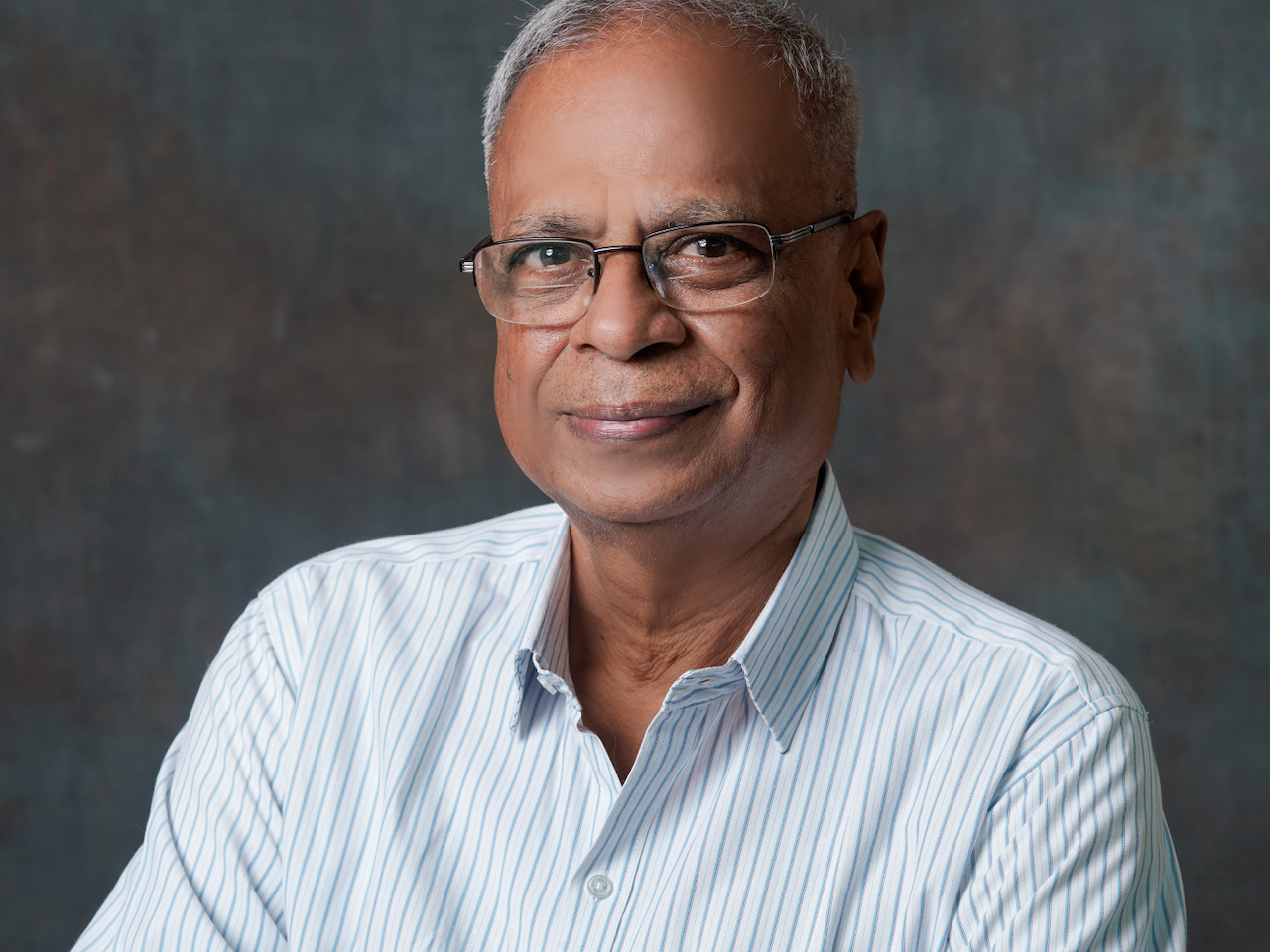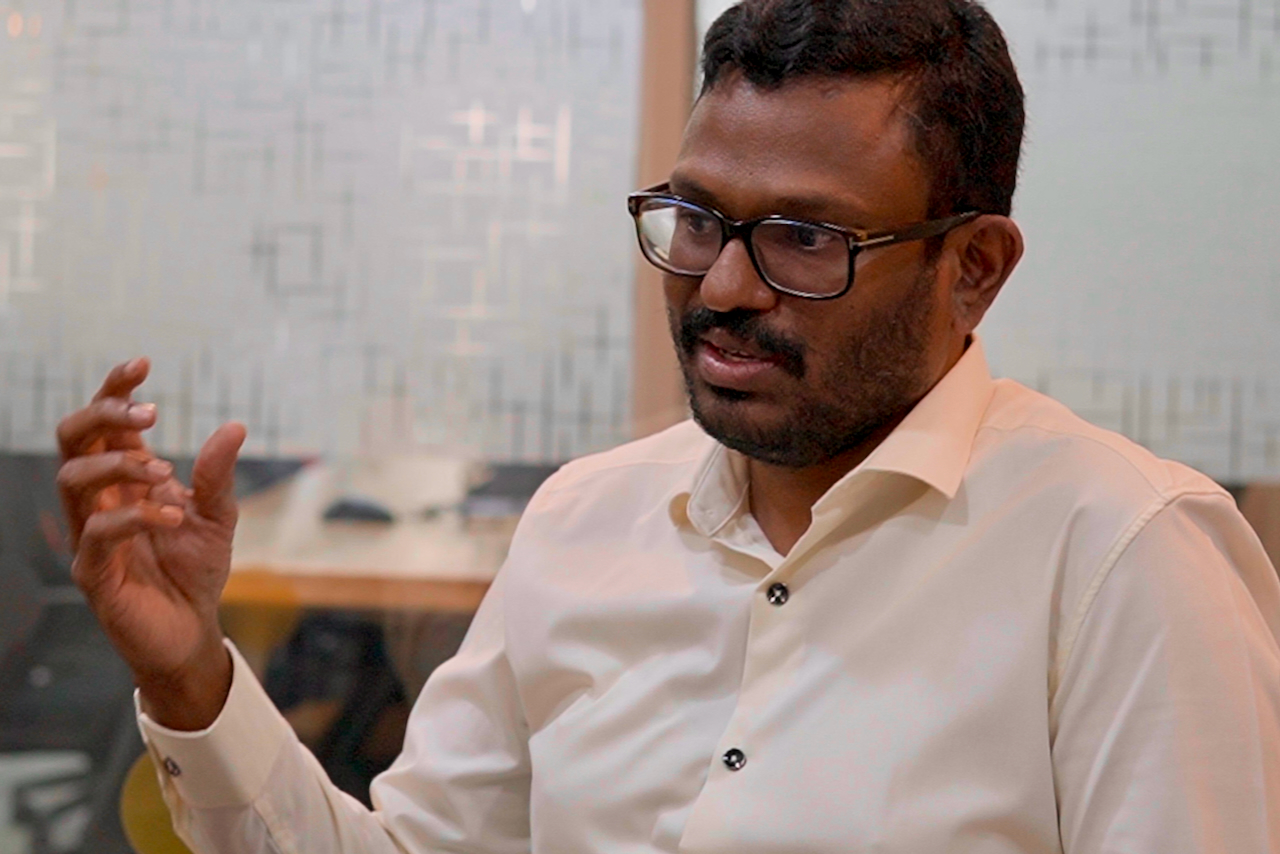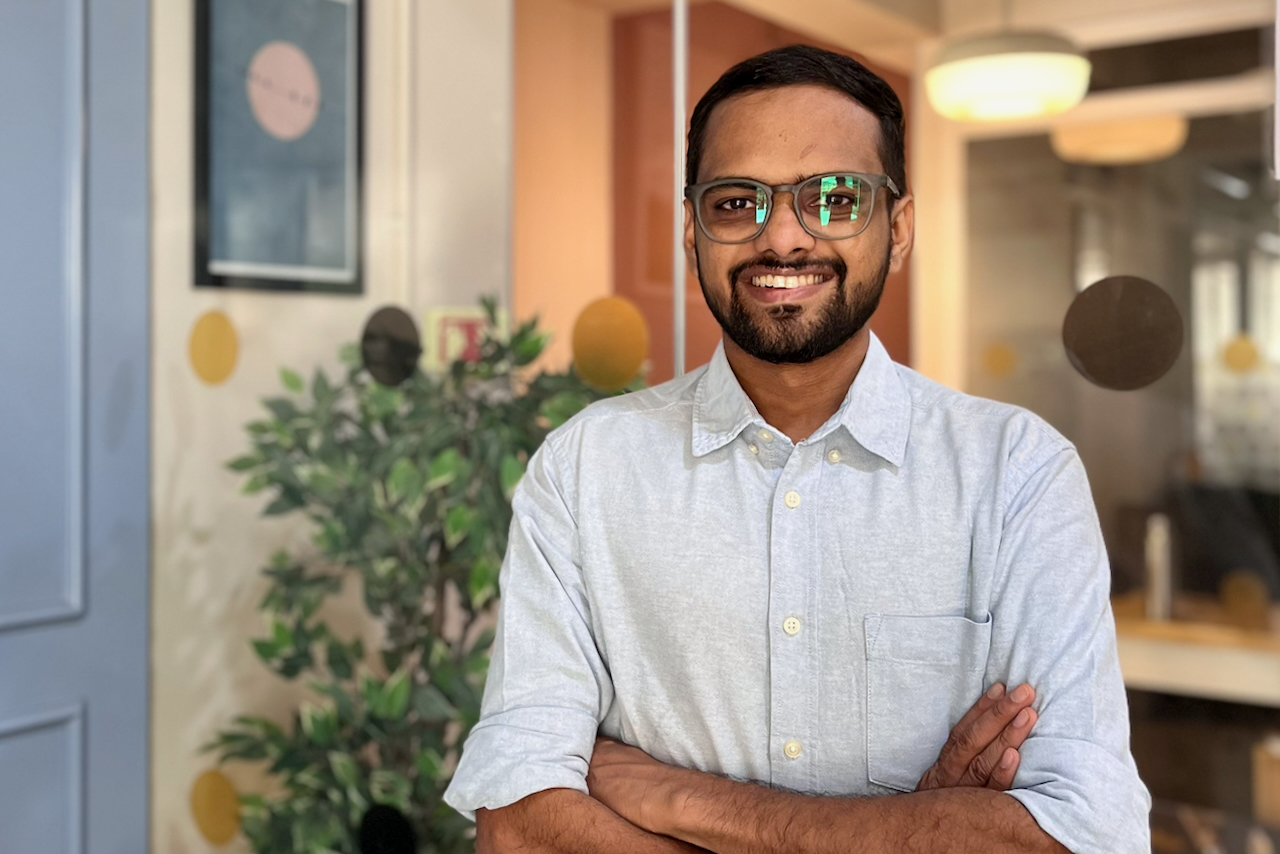
Naganand Doraswamy, managing partner, and Suryaprakash Konanuru, CTO at Ideaspring Capital, a well known deep tech VC firm in Bengaluru, sat down with me recently for an interview, which I’m publishing in two parts.
Catch Part 2, the concluding part, tomorrow, in which they talk about the raise-invest-grow-exit imperative of venture investing, and what that means for investing in deep tech startups in India. What’s happening in India’s top science and engineering schools when it comes to the lab-to-market journey? How is AI changing VC in deep tech and the ‘Flipkart moment’ of deep tech in India.
Today is the first day of the second year of this podcast. And in today’s episode of Conversations, I’m really happy to bring you Part 1 of an interview with Naganand Doreswamy, managing partner, and Suryaprakash Konanuru, CTO, at Ideaspring Capital.
They are among those few VC investors in India who were backing deep tech startups long before the government’s massive research and development and innovation fund prompted everyone to want to grab a share of the pie.
This was a rich conversation for me to record, with plenty of plain speak without jargon that’s characteristic of these two VCs. We jumped right in, with Ideaspring’s latest investment, the $13 million Series A round that they led at the semiconductor company HrdWyr, how that reflects their views on deep tech investing today in India, what the RDIF has done and challenges that remain.
I hope you enjoy listening to this as much as I did recording it.
Catch the second half of this conversation on Tuesday next week, where we talk about what might represent the ‘Flipkart moment’ of India’s deep tech sector, and Ideaspring’s next fund.
One could think of ‘Mitti’ — the Hindi word for soil — as representing the grounded foundation of a cooler future. And for us in India while rice that grows in our soil is a daily staple, its traditional cultivation is a hidden climate hazard. Rice cultivation worldwide is responsible for 10-12 percent of human-caused methane emissions. It also consumes staggering amounts of water.
Coming up next on Conversations at India Tech Report, Devdut Dalal (Dev), Xavier Laguarta Soler (Xavi), and Nathan Torbick (Nate), co-founders of Mitti Labs talk about how they are turning rice farming into a powerful vehicle for climate action – specifically targeting methane emissions from rice fields.
Since launching in late 2023, this “full stack” climate-tech startup has scaled from an idea that Harvard alumni Dev and Xavi had to a VC-funded startup (investors include Lightspeed) touching some 70,000 small-holder farmers in India today. Mitti Labs is helping the farmers change how they water their rice crops in a manner that reduces methane emissions, cuts water use and even makes the crops hardier, the entrepreneurs say.
Nate, a distinguished scientist, adds the science and tech experience, helping Mitti Labs tap satellite remote sensing and data analytics to build a digital Monitoring, Reporting, and Verification (dMRV) system, to track methane reductions at the field level. By converting these environmental wins into high-quality carbon credits, Mitti Labs aims to provide direct financial incentives and free advisory services to the farmers.
Catch the episode on June 5, World Environment Day, right here, or wherever you get your podcasts. Here’s a preview with Xavi and Dev laying out their basic thesis.
Happy new year, dear listeners and readers. I bet 2025 was an eventful year for you — it certainly was, for me. As we look ahead at 2026, here’s one more quick look back at how Indian tech startups fared in the year gone by.
This infographic is courtesy Tracxn, a leading data intelligence provider in India on private markets.
In this episode, Bhaktha Ram Keshavachar, founder and CEO of Chara Technologies, talks about a new funding round at his startup.
Chara, based in Bengaluru, specializes in building rare earth-free motors and matching controllers. That China, which has a near monopoly on the supply chain of rare earth minerals, has intensified its restrictions on their exports, is something of a tailwind for ventures like Chara.
In this briefing, Bhaktha covers the company’s Series A funding of Rs. 52 crore, or about $6 million, led by Arkam Ventures, with participation from Exfinity Venture Partners, Kalaari Capital, and IIMA Ventures, and how the money will help.
Plans include, ramping up sales, further investment in new technology and products, and a significant increase in motor production capacity.
Daily brief on deep tech and climate tech news from India and around the world.
Illustrative image. OpenAI and India’s Reliance are developing large AI data centres in the country.
India plans 20-year tax exemption, GST credits to boost data centres The Indian government may grant a 20-year tax exemption and GST credits to supercharge investment in domestic data centres, Moneycontrol reports. This policy aims to attract global hyperscale players, cut costs, and accelerate infrastructure for digital services, cloud computing, and AI. The move could transform India’s data centre landscape with incentives for long-term growth and sustainability.
Listen to the episode
Tata Technologies acquires Germany’s ESTEC for ₹750 crore to expand in Europe Tata Technologies has acquired German company ESTEC for ₹750 crore, enhancing its capabilities in advanced driver assistance systems (ADAS) and comfort electronics, Economic Times reports. The deal supports Tata Tech’s European growth strategy, strengthens its joint venture with BMW, and will immediately boost profitability. The acquisition comes without headcount cuts, with team expansions planned in Germany, Morocco, and India.
Indian scientists create foldable, eco-friendly aluminum battery for future devices Researchers at CeNS and IISc Bengaluru have developed a flexible, safe, and eco-friendly battery using aluminum and a water-based solution to replace lithium-ion batteries, according to a press release. Their innovation features a copper hexacyanoferrate cathode and molybdenum trioxide anode, delivering stable performance even while bent. The battery maintains over 96 percent power after 150 cycles and promises safer smartphones, EVs, and smart wearables.
QuiX Quantum raises €15m to build Europe’s first universal quantum computer QuiX Quantum, based in the Netherlands, secured €15 million in Series A funding to deliver its first-generation universal photonic quantum computer in 2026, Oost NL reports. Their system promises room-temperature scalability and enhanced capabilities for sectors like healthcare, IT, and advanced manufacturing. The funding strengthens Europe’s quantum tech ecosystem and aims for fault-tolerant quantum computing breakthroughs.
NUS Enterprise launches new VC partnerships and Stanford tie-up to boost startups NUS Enterprise has expanded its venture capital programme with two new co-investment partnerships totalling S$20 million, and began a S$2 million pilot collaboration with Stanford University, Business Times reports. The initiatives aim to connect NUS spin-off startups to global investment, reinvest profits in education, and strengthen deep-tech innovation. Students will gain hands-on experience tackling industry challenges with world-leading mentors.
Stargate Hydrogen, RDI sign MoU to boost Saudi green hydrogen innovation Stargate Hydrogen, in Estonia, has signed a Memorandum of Understanding with Saudi Arabia’s Research, Development, and Innovation Authority to accelerate green hydrogen innovation in the Kingdom, Hydrogen Central reports. The agreement includes setting up Stargate’s regional headquarters in Riyadh, collaborating with Saudi academic and manufacturing partners, and advancing local technology transfer, all supporting Saudi Vision 2030 and deep-tech sustainability goals.
CerraCap Ventures invests in Enginius.ai to advance secure AI for engineering CerraCap Ventures has backed Enginius.ai, an AI platform delivering bespoke solutions for regulated industries like aerospace and pharma, the firm said in a press release. Enginius integrates large language models with enterprise-grade security and specialized assistants for technical search, documentation, review, and simulation. The tools accelerate engineering workflow while ensuring compliance, accuracy and data security, supporting complex product development across sectors.
Cailabs secures €57m to scale photonics, ramp up ground station output French photonics startup Cailabs has raised €57 million in a funding round led by the European Investment Bank and top European investors to accelerate industrial scale-up, Silicon Canals reports. The investment will help produce up to 50 optical ground stations annually by 2027, expand international operations, and advance next-gen laser communications for space, defense, and commercial networks.
Byome Labs raises €3.6M for instant microbiome-based skincare solutions Byome Labs, a French deep-tech startup, has raised €3.6 million to industrialize production of its Byome Derma kits, enabling instant, point-of-sale skin microbiome testing for personalized recommendations, Silicon Canals reports. The technology offers AI-powered suggestions using antigenic strips and will be integrated as a white-label solution for brands, with international rollout planned for 2026 and expanded R&D hiring.
Supercritical names ex-BP executive Siobhan Clarke as chair to drive green hydrogen Supercritical, a UK-based innovator in high-pressure electrolyser technology for green hydrogen, has appointed Siobhan Clarke, former BP and Cisco executive, as Chair to lead its next growth phase, Fuel Cells Works reports. Clarke’s leadership comes as Supercritical prepares for a major pilot in 2027, targeting scalable, cost-effective hydrogen production for industry decarbonization.
Menlo Ventures promotes Deedy Das to partner after AI investing successes Menlo Ventures has promoted Deedy Das to Partner, recognizing his achievements in launching the $100M Anthology Fund with Anthropic and driving early-stage AI investments like Goodfire and OpenRouter, the VC firm, famous for its exits from Uber, Siri and Tumblr, said in a post on its website. Das, with prior roles at Facebook, Google, and Glean, is known for technical depth and influence in the AI community, co-authoring key LLM market analysis and gaining wide following among founders and engineers.
OpenAI chair Bret Taylor says AI is a bubble, but predicts lasting value
OpenAI board chair Bret Taylor, echoing CEO Sam Altman, believes the industry is in an AI bubble where many will lose money, similar to the dot-com era, TechCrunch reports. However, Taylor insists AI will transform the economy and generate massive future value, drawing parallels to how the internet drove progress after the bubble burst. He sees both risk and significant opportunity for innovation.