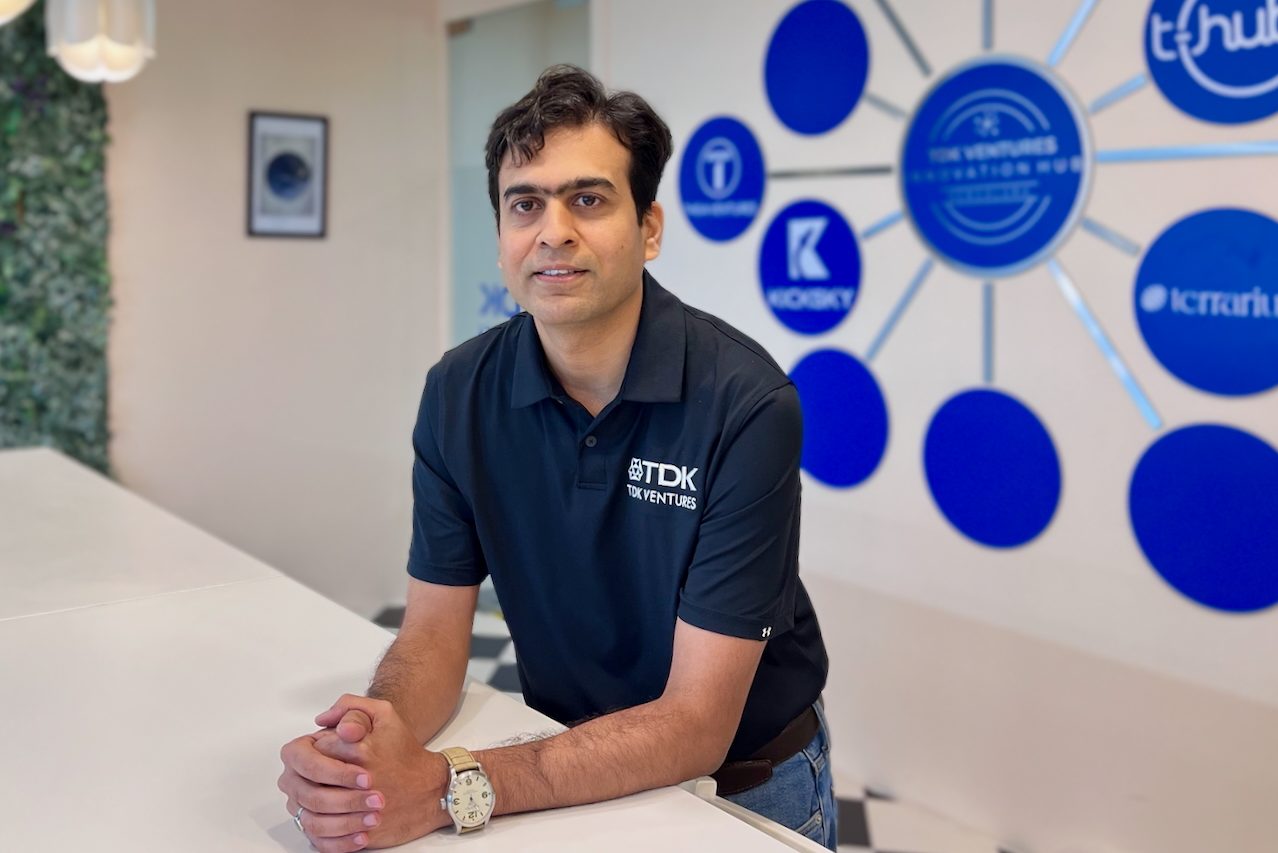
In this episode, Ravi Jain, an Investment Director at TDK Ventures, joins me for a wide-ranging discussion on the current state and trajectory of India’s deep tech ecosystem. Jain gives us a micro capsule on the history of TDK, developing technologies for sectors spanning automotive, energy storage, and power electronics, and the strategic rationale for launching its corporate venture arm in 2019.
He talks about TDK Ventures’ mandate to invest in startups poised to shape emerging markets and tomorrow’s standards, noting the recent expansion of the firm’s India operations, and a global portfolio that includes investments across sectors such as semiconductors, advanced materials, robotics, quantum technologies, AI, mobility, climate tech and clean energy and agri-tech.
Jain addresses macroeconomic drivers, including government policy, manufacturing incentives, and evolving founder ambitions, that position India for accelerated growth in deep tech. He explains the sector’s optimism despite talent and funding challenges, and highlights the increasing sophistication of Indian deep tech founders, their pragmatism, and the snowballing effect of policy and market maturation.
He also talks about TDK Ventures’ approach to hardware versus software startups, university-driven entrepreneurship, and the imperative for foundational work in AI. Jain also shares reflections from his own career, distilling practical advice for future deep tech entrepreneurs navigating India’s rapidly changing technology landscape.
In a recent conversation with Arpit Agarwal, a partner at Blume Ventures, one of India’s best known early-stage, sector-agnostic investors, we spoke about the firm backing what he describes as frontier technologies, and a range of related topics – from India’s under-appreciated strengths to challenges of scale to Blume’s own priorities in the coming years.
As Blume prepares to announce the first close of its fifth fund, Arpit is also happy to debate why sector-agnostic funds may be better placed to invest in deep tech. Here are five takeaways from the conversation.
What VCs are watching in deep tech in India The recent India-Pakistan tensions have significantly boosted government interest and emergency purchases in defence technology, especially drones. However, India currently lacks sufficient cutting-edge domestic drone tech, leading to ongoing imports as warfare shifts toward drones, electronics, and space.
Although India may catch up within five years, defence technology remains a major investment focus for VCs.
Beyond defence, green hydrogen is an emerging sector: there’s a surge in startup activity and projections point to increased investment in the next three years as the field matures. Quantum computing is also on the radar, with both the government and private sector directing attention and substantial funding toward making India a global leader.
The broader electric vehicle ecosystem, particularly software and marketplaces, also presents investment opportunities as established verticals saturate. Overall, defence tech, green hydrogen, quantum computing, and evolving drone and electric vehicle segments stand out as investment opportunities in deep tech in India.
The entire Green Hydrogen supply chain is shaping up in India Hydrogen has long been used in industries such as refineries and blast furnaces, where it is typically produced and consumed on-site rather than stored or transported. The current innovation lies in the development of ‘green hydrogen,’ produced with renewable energy sources, which can be transported via pipelines or containers and used in generators or fuel cells for clean power.
Green hydrogen offers a fully clean energy chain, and has the potential to become economically viable as technology advances and costs decrease.
India is witnessing rapid progress along the entire green hydrogen value chain: startups are developing more efficient and durable electrolysers for hydrogen production; others are focused on new methods for hydrogen storage, such as metal hydrides; and additional companies are enabling the conversion of hydrogen into energy through fuel cells, internal combustion engines, and even hydrogen-based jet turbines.
All these activities reflect significant momentum in India’s emerging hydrogen ecosystem, making it an increasingly promising sector for clean energy investment and innovation.
India’s as yet untapped strengths versus China’s scale There are several ways in which India can compete effectively with China in deep tech manufacturing, despite China’s clear advantages in scale and cost efficiency. While China remains the global leader in manufacturing due to its extensive capabilities and massive economy, Indian companies have advantages in specific use cases.
For example, Indian robotics ventures are able to create price-performance optimized products by using cost-effective components from large-volume industries like automotive, which sometimes allows them to manufacture certain bots more cheaply than those made in China — especially if ultra-high precision is not essential.
International clients, especially in the US and Europe, are often more comfortable sourcing technology from India, given current geopolitical dynamics and concerns over dependence on Chinese suppliers. This gives Indian companies a market access edge. India also excels in software integration, an increasingly critical element even in hardware products.
Indian companies are considered more capable in integrating with large enterprise IT systems, supported by strengths in language, sales, and software customization. Ultimately, even if Indian products are cheaper to produce, companies can price them at par with global competitors, allowing for better profit margins while maintaining a competitive position in international markets.
Should deep tech founders seriously consider sector agnostic funds? While sector-specific venture funds might seem to have an advantage due to their deeper access and selection within a single domain, a sector-agnostic fund with sufficient access can actually achieve better returns across sectors.
The investment selection filters at Blume’s sector-agnostic fund are stricter for deep tech deals, resulting in higher-quality picks. Examples like Ethereal Machines and Ati Motors, which passed through rigorous selection alongside other top companies, illustrate this approach.
Over 14 years and more than 150 investments, Blume Ventures has invested in about 25 deep tech or climate tech companies, but these have generated significantly higher gross returns compared to the overall fund performance. Although deep tech investments are fewer, their quality and outcomes outperform those from hot or crowded sectors, as long as the fund maintains access to top opportunities.
Blume’s top priorities over the next 2-3 years Blume Ventures’ fund strategy has evolved over time. The first two funds were small by today’s standards — around $18 million and $50 million — functioning much like micro VC funds, with small, opportunistic checks and a willingness to experiment in their approach.
Beginning with Fund III, Blume shifted toward taking lead positions, making more concentrated bets, and increasing fund size, growing to $100 million for Fund III and about $280 million for Fund IV. Fund V is expected to be similar in size, focusing on fewer investments but larger check sizes per company, and maintaining more capital in reserve.
Currently, the primary focus is on generating exits, with the aim that 8 to 10 portfolio companies will reach IPO in the next three years — a key priority at this stage. Exits in deep tech tend to take longer; although Blume has exited companies such as Carbon Clean and is working on exiting GreyOrange, most deep tech exits are still some way off.
In this week’s episode of In Conversation, I spoke with Kunal Khattar, founding managing partner at AdvantEdge Founders, a ‘sector-focused’ early-stage VC firm in New Delhi that’s well known for backing founders in the EV and mobility sectors in India.
AdvantEdge is into its 10th year now and known for backing startups like Rapido, Chalo, ZingBus, Park+, Baaz, Shuttl, and Exponent Energy, with close to 40 companies in its portfolio across its first two funds. The firm is close to announcing the first close of its third fund which has a targeted total of $75 million.
Kunal says his mission is to foster a 100 successful entrepreneurs in the mobility space. We discussed a range of connected topics, including why he expects the EV space to hit the J-curve growth stage over the next three to five years, how replacing the overall ICE economy in India is a trillion-dollar opportunity, and the rise of deep tech and new solutions like clean hydrogen in India’s mobility space.
Here are my top 10 takeaways.
1. AdvantEdge’s sector focus and founder-first philosophy
Khattar explains that AdvantEdge Founders was built with a clear mission: to create 100 successful founders, not just unicorns or high returns. The fund’s North Star metric is founder success, and this ethos shapes everything from team titles to investment decisions. AdvantEdge views itself as a startup, with an operator’s mindset, emphasizing hands-on support and deep partnership with entrepreneurs throughout their early journeys.
2. India’s $1 trillion EV opportunity and the Suzuki 2.0 moment
Khattar draws a parallel between India’s auto sector transformation after Suzuki’s entry and the current EV revolution. He believes the transition from internal combustion engines (ICE) to electric vehicles could create $1 trillion in market value across OEMs, component suppliers, dealerships, financing, insurance, and energy distribution — mirroring the ecosystem Suzuki built, but now cantered on electrification and new business models.
3. Prioritizing commercial vehicle electrification for maximum impact
The fund’s thesis is to focus on electrifying commercial vehicles —two-wheelers, three-wheelers, buses, and trucks — because they represent only 10 percent of vehicles but account for 70 percent of energy consumption and emissions. Khattar argues that targeting commercial fleets first delivers greater environmental, economic, and social returns, including reduced oil imports and improved livelihoods for millions dependent on these vehicles.
Unlike the US or China, India’s mobility market is dominated by two- and three-wheelers, buses, and commercial vehicles. AdvantEdge avoids direct comparisons with Western markets and instead focuses on form factors where India is already a global leader. This approach enables the fund to back solutions tailored to Indian needs and scalable across similar emerging markets.
5. The “picks and shovels” approach to building the EV ecosystem
AdvantEdge invests in the enabling infrastructure of the EV transition — what Khattar calls “picks and shovels” companies. These include EV component makers, charging networks, financing and leasing platforms, insurance providers, and energy distribution businesses. The goal is to support the foundational B2B solutions that will underpin the entire EV value chain, rather than just consumer-facing brands.
6. Timing investments for J-curve growth and sector cycles
Khattar emphasizes the importance of entering sectors at the right time — when J-curve growth is imminent but before valuations become overheated. AdvantEdge is willing to invest in pre-revenue, pre-product companies at the earliest stages, drawing on its operational expertise to help them reach product-market fit. This disciplined timing avoids the pitfalls of entering too early or too late in sector cycles.
7. Deep tech and problem-driven innovation are key differentiators
The fund seeks out deep technology startups that solve fundamental barriers to EV adoption, such as charging speed, range anxiety, and cost. For example, Exponent Energy, a portfolio company, developed proprietary tech to fully charge EVs in under 15 minutes—addressing multiple pain points for commercial operators and accelerating EV adoption in India’s unique market context.
8. Collaborative ecosystem building with other funds and founders
AdvantEdge actively collaborates with larger funds, global investors, and its own portfolio founders to build a thriving ecosystem. “It takes a village,” he says, and believes in sharing research, co-investing, and using complementary strengths is essential. The value of this network compounds with each new investment, creating a snowball effect of knowledge and opportunity.
9. Pragmatic view on hydrogen and next-gen battery tech
Khattar is sceptical about the near-term disruption potential of hydrogen and solid-state batteries in India. He argues that such technologies are at least a decade away from mainstream adoption and that India should focus on indigenous innovation suited to its market realities, rather than chasing the latest breakthroughs from advanced economies.
10. Building for India, not benchmarking against China or the West
Khattar urges Indian founders and investors to avoid direct comparisons with China or the US. Instead, he advocates for building solutions that address India’s unique challenges and opportunities, tapping local strengths in two and three-wheeler markets and focusing on incremental progress. The goal is to create a better India, not to replicate foreign models.
Daily brief on deep tech and climate tech news from India and around the world
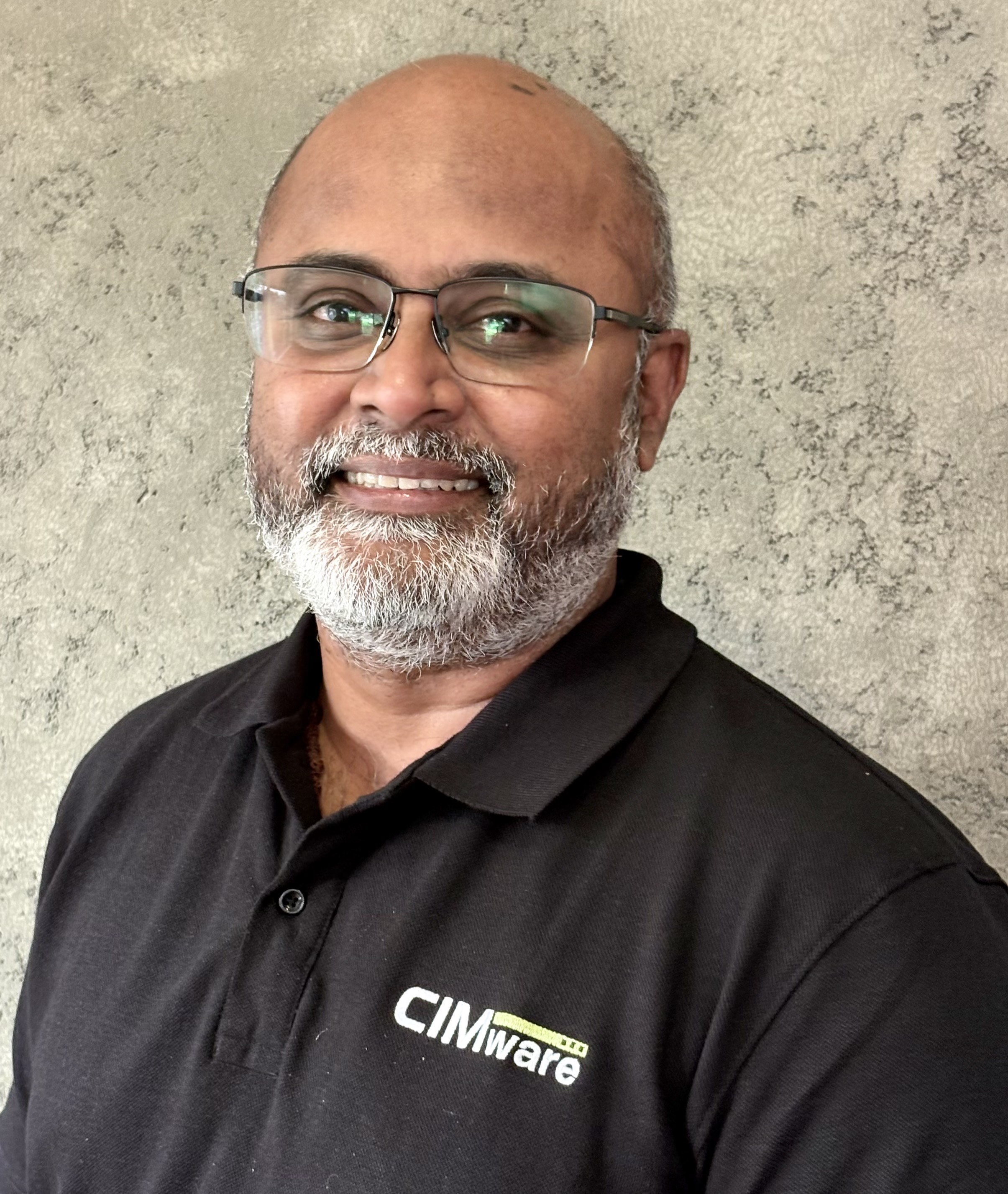
Rajiv Ganth, founder and CEO, CIMware, is leading innovation that can help make data centre power use more efficient and therefore boost sustainability.
Google signs landmark deal with Commonwealth Fusion Systems to commercialize fusion energy
Google has entered its first commercial fusion energy agreement, committing to purchase 200 megawatts of clean power from Commonwealth Fusion Systems’ (CFS) inaugural ARC (affordable, robust and compact) plant in Virginia, expected to go online in the early 2030s.
The partnership deepens Google’s investment in CFS, a Massachusetts-based MIT spinout, and includes an option to offtake power from future ARC facilities. The move signals growing confidence in fusion’s potential to deliver scalable, carbon-free electricity to meet surging energy demand from big tech data centres.
Listen to the podcast
Omnisent secures $3 million to pioneer acoustic AI for industrial intelligence
Omnisent, a sound technologies and AI startup in Munich, Germany, has raised $3 million in a pre-seed round led by Atlantic Labs, Tech Funding News reports.
The startup, founded in late 2024 by Robin Daiber, Ann-Kristin Balve, and Adrien Jathe, has developed a platform that uses proprietary ultra-low-power sonic sensors and a large acoustic AI model to convert industrial noise into real-time insights, targeting inefficiencies like compressed air leaks.
The fresh funds will support R&D, team growth, and a commercial launch in Q4 2025, as Omnisent aims to expand into energy, defence, and smart cities.
CIMware raises $2.3 million to tackle data center scalability with sustainable smart switch
CIMware, a data centre infrastructure venture in Bengaluru, has raised $2.3 million in Pre-Series-A funding led by Transition VC, the company said in a press release. CIMware was founded in 2019 by Rajiv Ganth, a veteran in distributed systems and data centre engineering.
Ganth, who has previously worked at companies including LSI and Dell EMC, leads CIMware’s push to address data centre scalability and efficiency with its patented Composable Infrastructure Module, a converged smart switch built in India. CIMware says its technology can reduce power consumption by up to 80 percent, offering a more sustainable alternative for AI-driven workloads, according to the release.
Loopworm raises $3.25 million to commercialize silkworm-based protein platform
Loopworm, a biomanufacturing startup in Bengaluru, has raised $3.25 million in a pre-Series-A round led by WaterBridge Ventures and Japan’s Enrission India Capital, Entrackr reports.
Founded by IIT-Roorkee alumni Ankit Alok Bagaria and Abhi Gawri in 2019, Loopworm has developed a reactor-free system using silkworms to produce recombinant proteins for diagnostics and animal vaccines, promising faster, cheaper, and more sustainable production. Backed by investors including Omnivore, the company operates a 6,000-tonne-per-year insect processing facility and exports to Europe, South America, and ASEAN markets.
Aukera raises $15 million led by Peak XV Partners to expand lab-grown diamond retail
Aureka, a lab-grown diamond jewellery startup, has raised $15 million in growth capital led by Peak XV Partners, with participation from Fireside Ventures, Sparrow Capital, Prath Ventures, and Alteria Capital.
The Bengaluru-based company will use the funds to expand its retail footprint, enhance product offerings, and strengthen its omnichannel presence. Founded two years ago by Lisa Mukhedkar and Kumar Saurabh, Aukera operates 13 stores nationwide and aims to lead India’s rapidly growing lab-grown diamond market amid rising demand for sustainable luxury.
India’s Cabinet approves $12 billion R&D and innovation fund to boost private R&D in strategic sectors
India’s Union Cabinet, chaired by Prime Minister Narendra Modi, has approved an R&D and Innovation (RDI) Scheme, establishing a Rs. 1 lakh crore ($12 billion) fund to catalyze private sector investment in research, development, and innovation across strategic and sunrise sectors.
The scheme offers long-term, low or zero-interest financing to overcome funding barriers and promote technology adoption, self-reliance, and competitiveness, according to a press release yesterday.
A two-tier funding structure will be managed by the Anusandhan National Research Foundation, with the Department of Science and Technology as the nodal agency. The RDI Scheme aims to finance transformative projects, support acquisition of critical technologies, and facilitate a Deep-Tech Fund of Funds, positioning India for global leadership in innovation as it targets developed nation status by 2047.
In Conversation
In-depth conversations with entrepreneurs, investors, industry leaders and other stakeholders building India’s deep tech and climate tech ecosystems.
My guest today is Kunal Khattar, founding managing partner at AdvantEdge Founders, an early-stage VC firm in New Delhi that’s well known for backing founders in the EV and mobility sectors in India. Kunal is well known for backing both consumer facing shared mobility ventures like Rapido and technology-led product innovation startups like Exponent Energy, which is a leader in fast-charging tech in India.
It’s now 10 years since AdvantEdge was founded, Kunal says, and the firm is very close to announcing the first close of its third fund, which will likely be in the ballpark of $75 million, to back the next generation of EV entrepreneurs in India.
In this conversation, Kunal talks about why he expects the EV space to hit the J-curve growth stage over the next three to five years and how replacing the overall ICE economy in India is a trillion-dollar opportunity.
Kunal also talks about how because technology-led industry shifts can take decades, some promising technologies, like green hydrogen, for example, will take time to become mainstream.
My guest today is Karthee Madasamy, founding managing partner at MFV Partners, a US-based early-stage deep-tech focused VC firm.
In this episode, Karthee gives us a quick overview of MFV’s $25 million Harper Court Ventures Fund 1 – a specialized vehicle bridging academic research and commercial viability for the deep tech startups coming out of University of Chicago.
He talks about how the fund addresses critical gaps in early-stage ecosystems through “smart funding,” meaning combining capital with hands-on operational support, to translate lab breakthroughs into viable companies.
The model focuses on high-impact sectors where UChicago holds world-class capabilities, including quantum computing, life sciences, energy, and artificial intelligence. Unlike traditional VC, the fund embeds itself in the university’s innovation pipeline – collaborating with accelerators, tapping extensive alumni networks, and guiding startups from IP validation to Series A readiness.
Early bets include Flow Medical, which is developing a next-generation catheter-based therapy to treat acute pulmonary embolism,
SimCare AI, which is developing a platform for clinical skills training and evaluation, and Beacon, which is developing technology that eliminates viruses, bacteria, and molds from air and surfaces.
Karthee also briefly discusses potential takeaways and best practices from partnerships such as the Harper Court fund, which are not new in the US, for India’s emerging deep tech ecosystem. MFV’s investments in India include Ati Motors, an autonomous mobile robots company in Bengaluru, and EV energy infrastructure company Sun Mobility.