Tag: ai

  • India to modernise Semiconductor Laboratory spending Rs. 4,500 crore

    India to modernise Semiconductor Laboratory spending Rs. 4,500 crore

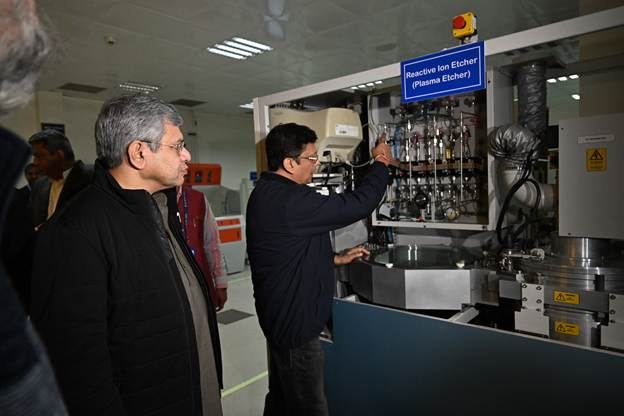
    India’s Electronics and IT Minister Ashwini Vaishnav recently visited SCL, and outlined a plan to modernise the chip facility.

    (00:20) India to invest Rs. 4,500 crore to modernise SCL Mohali

    India will invest Rs. 4,500 crore to modernise and expand the government-run Semiconductor Laboratory (SCL) in Mohali, targeting a 100-fold increase in wafer production while ruling out privatisation, Electronics and IT minister Ashwini Vaishnaw said during a site visit. SCL will support chip fabrication for students, startups and defence-linked agencies as part of a broader push for indigenous semiconductor capability, according to a statement from the ministry.

    Listen to the episode


    (00:55) Mixx Technologies raises $33 million series A funding

    Mixx Technologies, a US-based deep-tech startup founded by specialists from Intel and Broadcom, has raised $33 million in Series A funding led by ICM HPQC Fund alongside TDK Ventures, Systemiq Capital, and others. The capital will accelerate development of its HBxIO silicon-integrated optical engine, boost global R&D (including in India), and drive adoption of high-efficiency AI infrastructure platforms.

    (01:29) Lightspeed Photonics raises $6.5 million for optical AI chips

    Lightspeed Photonics has raised $6.5 million in a pre-Series A round led by Pi Ventures to scale its solderable optical interconnects for AI and high-performance computing data centres.  The Bengaluru-based startup claims 4x faster data transfer and roughly 2x lower power use than existing links, and plans to split the funds between R&D and commercial pilots through 2026.

    (02:01) Reditus Space plans reusable reentry vehicle for microgravity R&D 

    US startup Reditus Space has raised $7.1 million in seed funding to build ENOS, a reusable reentry spacecraft aimed at fast-turnaround missions for microgravity research and in-space manufacturing, Payload Space reports. The first ENOS flight, targeting a SpaceX rideshare next summer, will carry a pharma payload, reenter at over Mach 24, and test hardware designed for 20-plus missions and 40 kg payloads.

    (02:38) IonQ, CCRM to apply quantum tech to advanced therapies 

    IonQ has struck an investment and technology partnership with Canada’s Centre for Commercialization of Regenerative Medicine to apply hybrid quantum and quantum-AI tools to bioprocess optimization, disease modelling and advanced therapy manufacturing. IonQ becomes core tech partner across CCRM’s global network, with initial quantum-biotech projects in Canada and Sweden slated for 2026 as part of IonQ’s expanding European strategy.

    (03:10) Sparrow Quantum raises €27.5 million for photonic quantum chips 

    Denmark’s Sparrow Quantum has raised €27.5 million in Series A funding, in what it calls Scandinavia’s largest quantum-tech investment, to scale production of its Sparrow Core single-photon chip for room-temperature photonic quantum systems. The company plans to expand manufacturing and develop next-generation devices based on Niels Bohr Institute research, aiming to become a leading quantum chip supplier for European and global markets.

    (03:44) Vayavya Labs, SimDaaS tie up on autonomous mobility tools 

    Software engineering firm Vayavya Labs has signed an MoU with IIT Kanpur–incubated SimDaaS Autonomy to co-develop simulation-led tools for autonomous driving, ADAS and AI-based virtual validation. The partners will combine digital twin, virtual electronic control units and traffic-scenario simulation capabilities to accelerate virtual testing for complex Indian conditions and export solutions to global mobility markets.

    (04:17) AI-detected ‘hidden’ lion roar may boost conservation

    Scientists have identified a previously unknown “intermediary” lion roar that occurs alongside the classic full-throated call, using AI to sort thousands of recordings with about 95 percent accuracy. The added vocal signature can improve passive acoustic monitoring, helping estimate lion numbers and track individuals more reliably as wild populations fall to roughly 20,000–25,000 across Africa.

  • CrisprBits raises $3 million to scale CRISPR diagnostics, biofuel strain engineering

    CrisprBits raises $3 million to scale CRISPR diagnostics, biofuel strain engineering

    Team CrisprBits. CrisprBits, a Bengaluru biotech startup, has raised $3 million in a pre-Series A round to scale its CRISPR-based diagnostics and gene-editing platforms, lifting its valuation to $12 million.
    Team CrisprBits. Image source: company.

    CrisprBits, a Bengaluru biotech startup, has raised $3 million in a pre-Series A round to scale its CRISPR-based diagnostics and gene-editing platforms, lifting its valuation to $12 million. The company plans to use the money to commercialize its PathCrisp molecular diagnostics line and build an AI-augmented strain engineering platform for industrial biofuels.

    Listen to the episode


    The round was led by Spectrum Impact, the family office of Aarti Industries Ltd.’s Chairman and Managing Director Rajendra Gogri, with participation from existing backers including the Vijay Alreja Family Office (VJ Technologies Group) and new investors such as the promoter family of HBL Engineering Ltd. Earlier funding from the founders, VJ Technologies Group and C-CAMP is being deployed to expand manufacturing capacity across human health, food safety and animal health applications.

    CrisprBits’ investment is happening at a time when CRISPR moves from lab tool to commercial platform in diagnostics, gene therapies and industrial biotech, drawing sustained interest from strategics and financial investors worldwide. Global CRISPR technology revenues are projected to grow at around 11–16 percent annually this decade, with estimates putting the broader CRISPR market in the $5–23 billion range by 2030–2035 as applications in healthcare, agriculture and biomanufacturing scale up.

    “Our focus has always been on attracting patient capital that shares our goal to ‘rewrite biology and reimagine the planet,’ CrisprBits co-founder and CEO Vijay Chandru, said in a press release. “This round gives us the fuel to launch in India and immediately scale to global markets with high-quality, affordable solutions,” he said.

    CrisprBits’ PathCrisp platform targets rapid, point-of-need molecular diagnostics, promising sample-to-result times of under 2.5 hours with minimal infrastructure. The product line spans tests for typhoid, antimicrobial resistance, sickle cell disease, foodborne pathogens and on-farm animal disease surveillance, aimed at hospitals, food processors and livestock producers.

    Beyond diagnostics, the company’s EdiCrisp platform offers end-to-end gene-editing services using the indigenous enFnCas9 system from the Institute of Genomics and Integrative Biology, positioned as more precise than legacy SpCas9 systems.

    A third platform, CurieCrisp, combines patient-derived iPSC lines, CRISPR-corrected controls and AI analytics to support preclinical research and rare disease drug discovery, with an emphasis on improving access in the Global South.

    CRISPR stands for clustered regularly interspaced short palindromic repeats, referring to a pattern of repeated DNA sequences found in bacteria and archaea – a major group of single-celled microorganisms.

    CRISPR-Cas9 is a gene-editing technology that acts like molecular scissors, allowing scientists to cut and modify DNA at specific locations in the genome. The tool was adapted for genome editing in 2012 by researchers including Jennifer Doudna and Emmanuelle Charpentier, whose work on CRISPR-Cas9 earned them the 2020 Nobel Prize in Chemistry and set off a wave of applications in medicine, agriculture and basic research.

    Consultancy and market-research estimates suggest that CRISPR-related markets are entering a scale-up phase, particularly in health care. One global forecast pegs the CRISPR technology market at about $3.2 billion in 2025, rising to roughly $5.5 billion by 2030 at an annual growth rate of just over 11 percent, driven by demand for genetic disease therapies, functional genomics tools and next-generation diagnostics.

    Within diagnostics, CRISPR-based tests are expected to grow faster than the broader market as they move into point-of-care infectious disease testing and oncology. The CRISPR-based diagnostics segment alone is projected to climb from around $3.8 billion in 2025 to more than $15 billion by 2034, implying a CAGR of about 16–17 percent as new products win regulatory approvals and reimbursement.

    India has emerged as an early adopter of CRISPR diagnostics, starting with the FELUDA assay developed by CSIR-IGIB and Tata Group in 2020, which demonstrated the feasibility of low-cost CRISPR-based testing for infectious diseases.

    Last week, Union Minister Jitendra Singh launched ‘BIRSA 101’, India’s first indigenous CRISPR-based gene therapy for sickle cell disease, developed at CSIR-IGIB and transferred to the Serum Institute. The therapy aims to make advanced gene-editing cures affordable for Indian patients, particularly tribal populations, supporting the ambition for a Sickle Cell–free India by 2047.

    Domestic market forecasts indicate that India’s CRISPR gene detection and diagnostic segment could grow from around $50 million in the mid-2020s to more than $240 million by 2032, with biomedical diagnostics as the largest and fastest-growing application.

    Recent initiatives include new CRISPR laboratories in Bengaluru for gene editing and diagnostics, and a pipeline of rare-disease and oncology programmes exploring CRISPR-based interventions. Against this backdrop, CrisprBits — founded by BITS Pilani alumni and operating a 7,300-square-foot CRISPR R&D facility in Bengaluru — aims to extend India’s footprint from diagnostic kits to platforms spanning gene editing and sustainable industrial biotechnology.

    With the fresh capital, CrisprBits plans to ramp up manufacturing at its diagnostics facility and expand distribution into Africa and Latin America over the next six months. In parallel, it intends to build an AI-augmented strain engineering platform focused initially on biofuel production, targeting cost and sustainability gains for industrial partners in chemicals and energy.

  • Google, Accel team up to back Indian AI startups, SBI Ventures’ next climate tech fund

    Google, Accel team up to back Indian AI startups, SBI Ventures’ next climate tech fund

    An AI generated image for illustrating an Indian startups co-working space.

    (00:20) Google, Accel to co-invest in Indian AI startups

    Google and Accel will co-invest in at least 10 early-stage Indian AI startups through a new partnership between Google’s AI Futures Fund and Accel’s Atoms programme, with up to 2 million dollars available per company.

    The tie-up, based in Bengaluru, is Google’s first such funding collaboration and follows its $15 billion India data-centre commitment and broader push to tap the country’s nearly one billion internet users.

    Listen to the episode


    (00:54) India’s largest bank to launch next climate startup fund

    SBI Ventures, promoted by State Bank of India and headquartered in Mumbai, intends to raise Rs. 2,000 crore for its third climate-focused investment fund launching in January-March 2026. The fund will invest in early and growth-stage climate startups, particularly frontier climate technologies and AI-enabled innovations.

    SBI Ventures identified critical funding deficits in water security, climate-smart agriculture, and disaster-proof infrastructure, targeting an estimated $170 billion annual requirement.

    (01:34) Bio-based coastal concrete material nurtures marine life

    Researchers at the Royal Netherlands Institute for Sea Research in Yerseke tested Xiriton, a bio-based concrete alternative made from grass, shells, sand, lime, pozzolan, and seawater, for tidal restoration.

    After a year, blocks deployed on mudflats were densely colonised by oysters, mussels, and algae while withstanding strong currents, suggesting a durable, degradable, low-alkaline material for greener coastal protection.

    (02:10) German defence drone startup nears €200m raise 

    Munich-based Quantum Systems is close to securing about €200 million in new funding at a roughly $3 billion valuation, just months after becoming a unicorn. 

    The dual-use surveillance drone maker, founded in 2015, is riding Europe’s defence spending boom as governments seek homegrown aerial intelligence, with annual revenue reportedly growing triple digits on the back of contracts in Ukraine and other NATO markets.

    (02:42) Europe backs optical vortex photonics network

    Tampere University in Finland will lead HiPOVor, a €4.4 million EU-funded doctoral network to advance high‑power optical vortex beams and train 15 researchers in photonics.

    The Europe‑wide consortium of eight universities, the ELI‑NP laser facility in Romania, and nine industry partners aims to turn twisting light beams into core tools for precision manufacturing, particle acceleration, and high‑capacity communications from 2026.

  • India data centre tax breaks, a new Menlo partner, and rumblings of an AI bubble

    India data centre tax breaks, a new Menlo partner, and rumblings of an AI bubble

    Daily brief on deep tech and climate tech news from India and around the world.

    Illustrative image. OpenAI and India's Reliance are developing large AI data centres in the country.
    Illustrative image. OpenAI and India’s Reliance are developing large AI data centres in the country.

    India plans 20-year tax exemption, GST credits to boost data centres
    The Indian government may grant a 20-year tax exemption and GST credits to supercharge investment in domestic data centres, Moneycontrol reports. This policy aims to attract global hyperscale players, cut costs, and accelerate infrastructure for digital services, cloud computing, and AI. The move could transform India’s data centre landscape with incentives for long-term growth and sustainability.

    Listen to the episode

    Tata Technologies acquires Germany’s ESTEC for 750 crore to expand in Europe
    Tata Technologies has acquired German company ESTEC for ₹750 crore, enhancing its capabilities in advanced driver assistance systems (ADAS) and comfort electronics, Economic Times reports. The deal supports Tata Tech’s European growth strategy, strengthens its joint venture with BMW, and will immediately boost profitability. The acquisition comes without headcount cuts, with team expansions planned in Germany, Morocco, and India.

    Indian scientists create foldable, eco-friendly aluminum battery for future devices
    Researchers at CeNS and IISc Bengaluru have developed a flexible, safe, and eco-friendly battery using aluminum and a water-based solution to replace lithium-ion batteries, according to a press release. Their innovation features a copper hexacyanoferrate cathode and molybdenum trioxide anode, delivering stable performance even while bent. The battery maintains over 96 percent power after 150 cycles and promises safer smartphones, EVs, and smart wearables.

    QuiX Quantum raises €15m to build Europe’s first universal quantum computer
    QuiX Quantum, based in the Netherlands, secured €15 million in Series A funding to deliver its first-generation universal photonic quantum computer in 2026, Oost NL reports. Their system promises room-temperature scalability and enhanced capabilities for sectors like healthcare, IT, and advanced manufacturing. The funding strengthens Europe’s quantum tech ecosystem and aims for fault-tolerant quantum computing breakthroughs.

    NUS Enterprise launches new VC partnerships and Stanford tie-up to boost startups
    NUS Enterprise has expanded its venture capital programme with two new co-investment partnerships totalling S$20 million, and began a S$2 million pilot collaboration with Stanford University, Business Times reports. The initiatives aim to connect NUS spin-off startups to global investment, reinvest profits in education, and strengthen deep-tech innovation. Students will gain hands-on experience tackling industry challenges with world-leading mentors.

    Stargate Hydrogen, RDI sign MoU to boost Saudi green hydrogen innovation
    Stargate Hydrogen, in Estonia, has signed a Memorandum of Understanding with Saudi Arabia’s Research, Development, and Innovation Authority to accelerate green hydrogen innovation in the Kingdom, Hydrogen Central reports. The agreement includes setting up Stargate’s regional headquarters in Riyadh, collaborating with Saudi academic and manufacturing partners, and advancing local technology transfer, all supporting Saudi Vision 2030 and deep-tech sustainability goals.

    CerraCap Ventures invests in Enginius.ai to advance secure AI for engineering
    CerraCap Ventures has backed Enginius.ai, an AI platform delivering bespoke solutions for regulated industries like aerospace and pharma, the firm said in a press release. Enginius integrates large language models with enterprise-grade security and specialized assistants for technical search, documentation, review, and simulation. The tools accelerate engineering workflow while ensuring compliance, accuracy and data security, supporting complex product development across sectors.

    Cailabs secures €57m to scale photonics, ramp up ground station output
    French photonics startup Cailabs has raised €57 million in a funding round led by the European Investment Bank and top European investors to accelerate industrial scale-up, Silicon Canals reports. The investment will help produce up to 50 optical ground stations annually by 2027, expand international operations, and advance next-gen laser communications for space, defense, and commercial networks.

    Byome Labs raises €3.6M for instant microbiome-based skincare solutions
    Byome Labs, a French deep-tech startup, has raised €3.6 million to industrialize production of its Byome Derma kits, enabling instant, point-of-sale skin microbiome testing for personalized recommendations, Silicon Canals reports. The technology offers AI-powered suggestions using antigenic strips and will be integrated as a white-label solution for brands, with international rollout planned for 2026 and expanded R&D hiring.

    Supercritical names ex-BP executive Siobhan Clarke as chair to drive green hydrogen
    Supercritical, a UK-based innovator in high-pressure electrolyser technology for green hydrogen, has appointed Siobhan Clarke, former BP and Cisco executive, as Chair to lead its next growth phase, Fuel Cells Works reports. Clarke’s leadership comes as Supercritical prepares for a major pilot in 2027, targeting scalable, cost-effective hydrogen production for industry decarbonization.

    Menlo Ventures promotes Deedy Das to partner after AI investing successes
    Menlo Ventures has promoted Deedy Das to Partner, recognizing his achievements in launching the $100M Anthology Fund with Anthropic and driving early-stage AI investments like Goodfire and OpenRouter, the VC firm, famous for its exits from Uber, Siri and Tumblr, said in a post on its website. Das, with prior roles at Facebook, Google, and Glean, is known for technical depth and influence in the AI community, co-authoring key LLM market analysis and gaining wide following among founders and engineers.

    OpenAI chair Bret Taylor says AI is a bubble, but predicts lasting value

    OpenAI board chair Bret Taylor, echoing CEO Sam Altman, believes the industry is in an AI bubble where many will lose money, similar to the dot-com era, TechCrunch reports. However, Taylor insists AI will transform the economy and generate massive future value, drawing parallels to how the internet drove progress after the bubble burst. He sees both risk and significant opportunity for innovation.

  • The Climate on Monday: Meet the 11 startups in Amazon’s latest ClimateTech cohort

    The Climate on Monday: Meet the 11 startups in Amazon’s latest ClimateTech cohort

    Daily brief on deep tech and climate tech news from India and around the world.

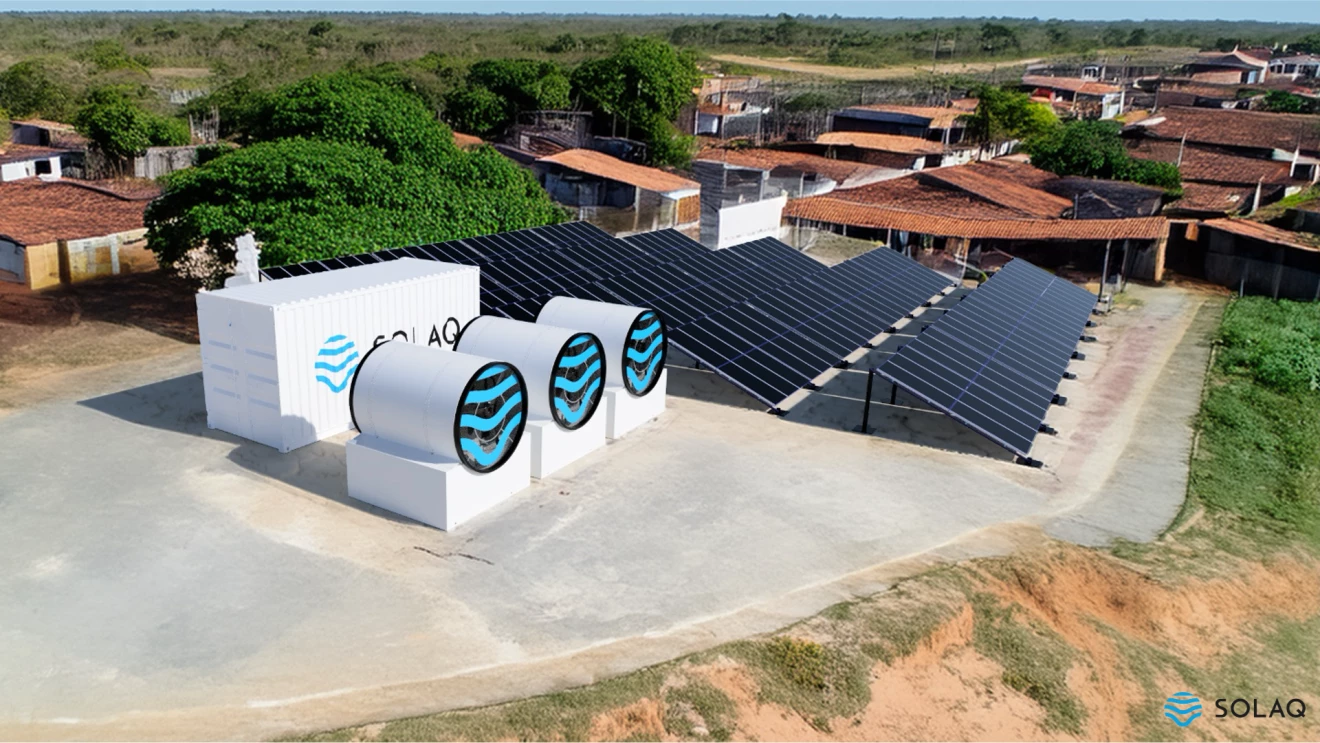
    Solaq’s water from atmosphere system, one of the innovations selected to Amazon’s ClimateTech cohort in its Sustainability Accelerator. Image source: Amazon sustainability stories.

    Union Minister Gadkari unveils roadmap for sustainable transport at SIAM meet

    Union Minister for Road Transport and Highways Nitin Gadkari set out India’s sustainable transport vision at the 65th annual convention of the Society of Indian Automobile Manufacturers, stressing global alignment on BS7 (Bharat Stage 7) and CAFE (corporate average fuel efficiency) norms to cut air pollution, according to a press release from the transport ministry. He highlighted biofuel adoption, the vehicle scrappage policy, and plans to lower logistics costs, while announcing rewards and insurance for road accident helpers to improve road safety and industry sustainability.

    Listen to the podcast

    Coal ministry spotlights gasification for India’s clean energy future

    The Ministry of Coal hosted a Mumbai roadshow on coal gasification, highlighting its role in India’s energy transition and industrial growth, according to a press release from the ministry. Officials stressed using coal gasification—including underground technologies—to create clean energy, chemicals, and hydrogen, while reducing imports and boosting economic self-reliance. The government is scaling R&D, innovation, and private partnerships to ensure safe, sustainable deployment of gasification projects nationwide.

    IIT Madras start-up deploys cleaner, cost-saving wastewater tech

    JSP Enviro, incubated at IIT Madras, has launched and field-proven its BEADS wastewater treatment system in industries in Tamil Nadu, according to a press release from the Press Information Bureau. The technology, which operates anaerobically without electricity or chemicals, reduces sludge and recovers energy. Each 100m³/day installation avoids 80 tons of CO₂ annually, promising ROI in 3–4 years. JSP Enviro aims to scale nationwide, unlocking climate and financial gains for manufacturers.

    Bartronics India enters climate tech with carbon credit push

    Bartronics India has partnered RenewCred, a climate-tech start-up, to launch blockchain-based carbon credit solutions for Indian farmers, according to a press release. The collaboration will enable over 40 million rural farmers to earn revenue by adopting sustainable practices, verified via drones and blockchain. The move marks Bartronics’ pivot from rural fintech to agri- and climate-tech, aiming to boost rural incomes and climate action.

    IFC boosts responsAbility Asia climate tech fund past $400M

    UK money manager M&G’s responsAbility Investments has raised more than $414 million for its Asia Climate Strategy, following a $50 million IFC investment, ESG Today reports. The fund targets renewable energy, battery storage, e-mobility, and circular economy, aiming to cut 16 million tons of CO₂. With completion near its $500 million goal, it mobilizes capital for Asia’s energy transition and offers diversification for institutional investors.

    Vireo Ventures closes €50M fund to back Europe’s clean electrification

    Berlin-based Vireo Ventures has closed its €50 million Electrification Fund I to support early-stage startups in Europe’s energy transition, Tech Funding News reports. The fund targets pre-seed to Series A companies advancing grid electrification, storage, and decarbonization. Investors range from pension funds to corporates, and the portfolio includes innovators in energy management, storage, and e-mobility—boosting the region’s path to net zero.

    Solenery raises $750K to scale AI-powered clean energy platform

    Toronto-based Solenery raised $750,000 in pre-seed funding to expand its AI platform, which streamlines clean energy adoption for Canadian homeowners and businesses, Clean Energy reports. Solenery delivers local feasibility, savings, and incentives by postal code, connecting users to vetted installers and rebates. The company aims to accelerate Canada’s net-zero transition by making solar and clean tech adoption more accessible and frictionless.

    UNICEF backs climate tech to protect world’s most vulnerable

    UNICEF is investing in frontier climate tech solutions, focusing on open-source and local innovations that protect children from climate change impacts like extreme heat and pollution, the UN children’s unit said in a recent post. Its Venture Fund supports early-stage startups using AI, data, and digital tools for health and resilience, aiming for scalable, equitable impact in emerging markets. The initiative also shapes global digital policy on child-centered climate action.

    Amazon picks 11 startups for its latest ClimateTech cohort

    Amazon has invited 11 new start-ups and scale-ups to join the second edition of the ClimateTech cohort of the Amazon Sustainability Accelerator, a programme designed to accelerate the development of climate breakthrough technologies, the company said in a post last week.

    The four-week programme combines expert-led workshops, mentoring sessions, and leadership panels. It also gives some participating companies the opportunity to run a pilot with Amazon’s European operations. Selected from more than 550 applications, these innovative companies address three crucial environmental challenges: energy efficiency, waste reduction, and water management.

    The selected startups are:

    Mhor Energy (UK): Flow batteries storing energy in liquid for long-term, high-temperature use.

    Cartesian (Norway): State-changing thermal batteries storing and releasing energy for grid management.

    Over Easy Solar (Norway): Lightweight, upright solar panels for buildings unable to use conventional panels.

    Active Surfaces (US): Ultra-thin, flexible perovskite solar sheets for quick, material-efficient installations.

    Omniflow (Portugal): Hybrid wind-solar streetlights saving 90% energy, supporting smart city features.

    Blue Frontier (US): Air conditioners using liquid desiccant to cut energy use by up to 90%.

    Shayp (Belgium): AI water monitoring solution to reduce leaks and cut consumption in buildings.

    Solaq (Netherlands): Shipping container-based systems converting atmospheric moisture into drinking water.

    NANDO (Italy): Smart waste monitoring for bins, using real-time sensors and cameras to spot contamination.

    Greyparrot (UK): AI vision for real-time waste conveyor analysis and material categorization.

    Vuala (UK): On-site “artificial stomach” for food waste, turning it into biogas and hydrogen energy.

    The Amazon Sustainability Accelerator, launched in 2022, is supported by Founders Intelligence, which is part of the consulting and tech services giant Accenture. Initially focusing on creating more sustainable consumer products, the accelerator has expanded to include climate tech solutions. Including this year’s cohort, the programme has supported more than 70 companies across six cohorts.

  • The power of eight: US and desi VCs team up for $1 billion India deep tech alliance

    The power of eight: US and desi VCs team up for $1 billion India deep tech alliance

    Daily brief on deep tech and climate tech news from India and around the world.

    India’s Prime Minister Narendra Modi and Electronics and IT Minister Ashwini Vaishnav with the first made-in-India semiconductor chips, at the Semicon India 2025 meet in New Delhi.

    First Made-in-India chips as semiconductor mission accelerates

    Prime Minister Narendra Modi received India’s first homegrown semiconductor chips at the opening of the Semicon India 2025 conference in New Delhi yesterday, marking rapid progress in the nation’s semiconductor mission, according to a government press release.

    Multiple MoUs were signed at the meet to boost manufacturing, skills, and innovation, according to the release. The government’s push includes talent development, global partnerships, and deep tech investment, positioning India as a future global leader in semiconductors.

    Listen to the podcast

    US and Indian VCs unite for $1 billion deep tech alliance in India

    Eight leading venture firms from the US and India have launched a $1 billion alliance to support India’s deep tech startups, pledging long-term capital and mentorship, according to multiple reports. The coalition will work with the Indian government to leverage new incentives, boost innovation, and strengthen cross-border tech ties despite ongoing geopolitical tensions.

    Called the India Deep Tech Investment Alliance, the group brings together Celesta Capital, Accel, Blume Ventures, Gaja Capital, Ideaspring Capital, Premji Invest, Tenacity Ventures, and Venture Catalysts, TechCrunch reports, citing a joint statement from the firms. Each member will commit private capital over a 5-10-year period to India-domiciled deep tech startups, according to TechCrunch.

    WisdomTree debuts quantum ETF as sector nears viability 

    WisdomTree, a New York based global asset manager, has launched a Quantum Computing UCITS ETF as quantum information processing approaches commercial viability. The ETF allows investors broad access to quantum hardware and software leaders, focusing on sectors like drug discovery, climate science, and AI.

    WisdomTree asserts that with exponential advances in quantum mechanics, the fund enables early participation in what may soon be one of the most transformative technological frontiers. A UCITS ETF is an Exchange-Traded Fund that complies with the EU’s Undertakings for Collective Investment in Transferable Securities regulatory framework.

    Quantum computer modules snap together like LEGOs for scalable, high-fidelity systems

    University of Illinois scientists have created a modular quantum processor—devices connect via superconducting cables and achieve ~99 percent operation fidelity, SciTech Daily reports. This architecture enables scalability, easier upgrades, and reconfigurability, overcoming limits of monolithic designs and paving the way for larger, fault-tolerant quantum computers and advanced quantum networks.

    AI-driven drug discovery accelerates as FDA aims to cut animal testing

    Pharmaceutical companies are rapidly adopting AI for drug discovery and safety testing, aligning with the US FDA’s initiative to reduce animal testing, Reuters reports. Experts say combining AI and reduced animal testing could halve both costs and timelines within three to five years, though animal studies will likely remain necessary for some drugs in the near term.

    MIT develops self-assembling material to enable easily recyclable EV batteries

    MIT researchers have created a battery electrolyte that self-assembles and quickly dissolves in common organic liquids, allowing entire batteries to be taken apart for recycling, according to a news post on the institute’s website. Tested in solid-state cells, the material simplifies sorting of battery components and could make recycling easier and cleaner, addressing future electronic waste from the rise of electric vehicles.

    Musk predicts Optimus humanoid will drive 80 percent of Tesla’s value

    Elon Musk recently stated that Tesla’s future value will depend far more on its Optimus humanoid robots than on its electric cars, predicting that up to 80 percent of Tesla’s worth will derive from Optimus, CNBC reports. The company’s new strategy focuses on robotics and AI, with plans to produce 5,000 Optimus units in 2025 and target a $20,000–$30,000 price point. Musk envisions Optimus becoming core to Tesla’s operations and the global robotics market, despite continuing technical and adoption challenges.

    Sixty percent of Earth’s land is now outside safe biosphere limits

    A new study finds that 60 percent of the world’s land is beyond safe biosphere boundaries due to expanding human use of biomass, SciTech Daily reports. The research tracks changes since 1600, showing Europe, Asia, and North America are most affected. Scientists urge global action as ecological disruption, land conversion, and declining photosynthetic activity raise risks for planetary stability.


    In Conversation

    Insight

    Spotlight