Tag: technology

  • The Climate on Monday: Meet the 11 startups in Amazon’s latest ClimateTech cohort

    The Climate on Monday: Meet the 11 startups in Amazon’s latest ClimateTech cohort

    Daily brief on deep tech and climate tech news from India and around the world.

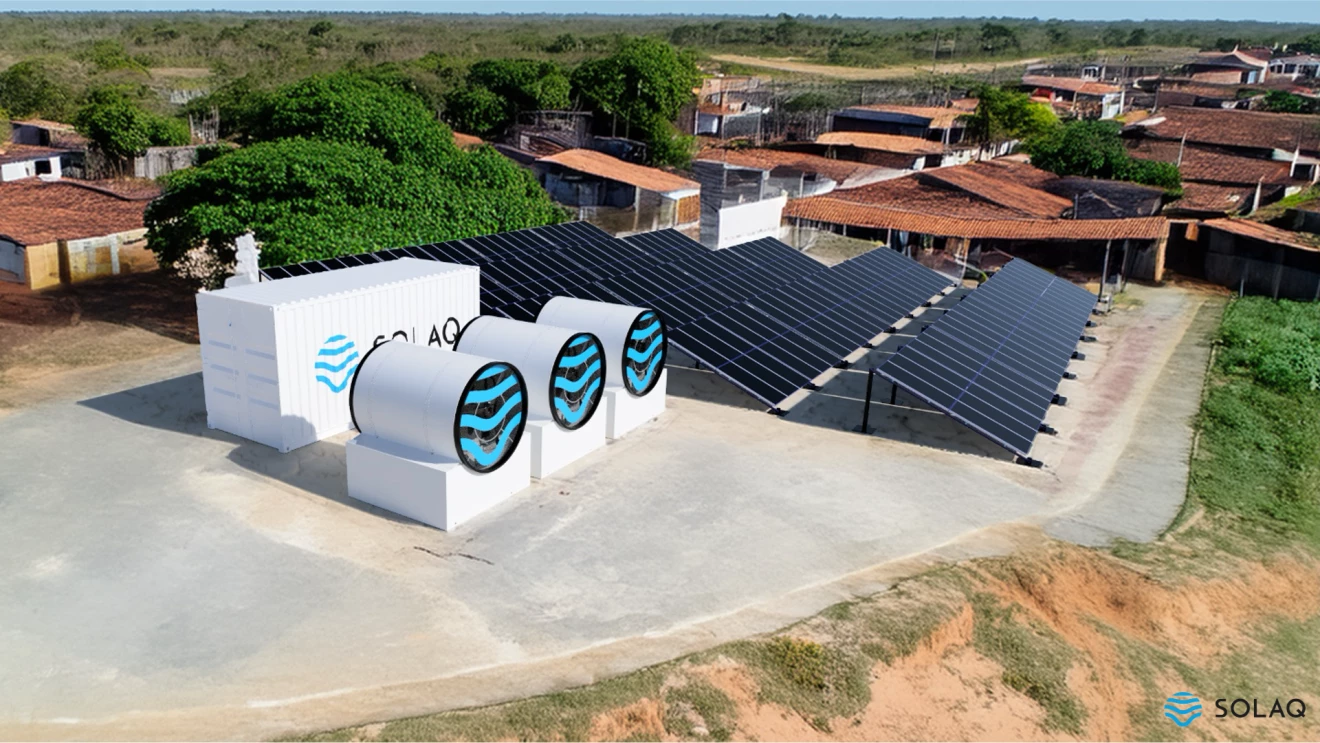
    Solaq’s water from atmosphere system, one of the innovations selected to Amazon’s ClimateTech cohort in its Sustainability Accelerator. Image source: Amazon sustainability stories.

    Union Minister Gadkari unveils roadmap for sustainable transport at SIAM meet

    Union Minister for Road Transport and Highways Nitin Gadkari set out India’s sustainable transport vision at the 65th annual convention of the Society of Indian Automobile Manufacturers, stressing global alignment on BS7 (Bharat Stage 7) and CAFE (corporate average fuel efficiency) norms to cut air pollution, according to a press release from the transport ministry. He highlighted biofuel adoption, the vehicle scrappage policy, and plans to lower logistics costs, while announcing rewards and insurance for road accident helpers to improve road safety and industry sustainability.

    Listen to the podcast

    Coal ministry spotlights gasification for India’s clean energy future

    The Ministry of Coal hosted a Mumbai roadshow on coal gasification, highlighting its role in India’s energy transition and industrial growth, according to a press release from the ministry. Officials stressed using coal gasification—including underground technologies—to create clean energy, chemicals, and hydrogen, while reducing imports and boosting economic self-reliance. The government is scaling R&D, innovation, and private partnerships to ensure safe, sustainable deployment of gasification projects nationwide.

    IIT Madras start-up deploys cleaner, cost-saving wastewater tech

    JSP Enviro, incubated at IIT Madras, has launched and field-proven its BEADS wastewater treatment system in industries in Tamil Nadu, according to a press release from the Press Information Bureau. The technology, which operates anaerobically without electricity or chemicals, reduces sludge and recovers energy. Each 100m³/day installation avoids 80 tons of CO₂ annually, promising ROI in 3–4 years. JSP Enviro aims to scale nationwide, unlocking climate and financial gains for manufacturers.

    Bartronics India enters climate tech with carbon credit push

    Bartronics India has partnered RenewCred, a climate-tech start-up, to launch blockchain-based carbon credit solutions for Indian farmers, according to a press release. The collaboration will enable over 40 million rural farmers to earn revenue by adopting sustainable practices, verified via drones and blockchain. The move marks Bartronics’ pivot from rural fintech to agri- and climate-tech, aiming to boost rural incomes and climate action.

    IFC boosts responsAbility Asia climate tech fund past $400M

    UK money manager M&G’s responsAbility Investments has raised more than $414 million for its Asia Climate Strategy, following a $50 million IFC investment, ESG Today reports. The fund targets renewable energy, battery storage, e-mobility, and circular economy, aiming to cut 16 million tons of CO₂. With completion near its $500 million goal, it mobilizes capital for Asia’s energy transition and offers diversification for institutional investors.

    Vireo Ventures closes €50M fund to back Europe’s clean electrification

    Berlin-based Vireo Ventures has closed its €50 million Electrification Fund I to support early-stage startups in Europe’s energy transition, Tech Funding News reports. The fund targets pre-seed to Series A companies advancing grid electrification, storage, and decarbonization. Investors range from pension funds to corporates, and the portfolio includes innovators in energy management, storage, and e-mobility—boosting the region’s path to net zero.

    Solenery raises $750K to scale AI-powered clean energy platform

    Toronto-based Solenery raised $750,000 in pre-seed funding to expand its AI platform, which streamlines clean energy adoption for Canadian homeowners and businesses, Clean Energy reports. Solenery delivers local feasibility, savings, and incentives by postal code, connecting users to vetted installers and rebates. The company aims to accelerate Canada’s net-zero transition by making solar and clean tech adoption more accessible and frictionless.

    UNICEF backs climate tech to protect world’s most vulnerable

    UNICEF is investing in frontier climate tech solutions, focusing on open-source and local innovations that protect children from climate change impacts like extreme heat and pollution, the UN children’s unit said in a recent post. Its Venture Fund supports early-stage startups using AI, data, and digital tools for health and resilience, aiming for scalable, equitable impact in emerging markets. The initiative also shapes global digital policy on child-centered climate action.

    Amazon picks 11 startups for its latest ClimateTech cohort

    Amazon has invited 11 new start-ups and scale-ups to join the second edition of the ClimateTech cohort of the Amazon Sustainability Accelerator, a programme designed to accelerate the development of climate breakthrough technologies, the company said in a post last week.

    The four-week programme combines expert-led workshops, mentoring sessions, and leadership panels. It also gives some participating companies the opportunity to run a pilot with Amazon’s European operations. Selected from more than 550 applications, these innovative companies address three crucial environmental challenges: energy efficiency, waste reduction, and water management.

    The selected startups are:

    Mhor Energy (UK): Flow batteries storing energy in liquid for long-term, high-temperature use.

    Cartesian (Norway): State-changing thermal batteries storing and releasing energy for grid management.

    Over Easy Solar (Norway): Lightweight, upright solar panels for buildings unable to use conventional panels.

    Active Surfaces (US): Ultra-thin, flexible perovskite solar sheets for quick, material-efficient installations.

    Omniflow (Portugal): Hybrid wind-solar streetlights saving 90% energy, supporting smart city features.

    Blue Frontier (US): Air conditioners using liquid desiccant to cut energy use by up to 90%.

    Shayp (Belgium): AI water monitoring solution to reduce leaks and cut consumption in buildings.

    Solaq (Netherlands): Shipping container-based systems converting atmospheric moisture into drinking water.

    NANDO (Italy): Smart waste monitoring for bins, using real-time sensors and cameras to spot contamination.

    Greyparrot (UK): AI vision for real-time waste conveyor analysis and material categorization.

    Vuala (UK): On-site “artificial stomach” for food waste, turning it into biogas and hydrogen energy.

    The Amazon Sustainability Accelerator, launched in 2022, is supported by Founders Intelligence, which is part of the consulting and tech services giant Accenture. Initially focusing on creating more sustainable consumer products, the accelerator has expanded to include climate tech solutions. Including this year’s cohort, the programme has supported more than 70 companies across six cohorts.

  • The Climate on Monday: Nobel laureate urges rich nations to share green tech freely

    The Climate on Monday: Nobel laureate urges rich nations to share green tech freely

    Daily brief on deep tech and climate tech news from India and around the world.

    AI generated illustrative image of a micro farm in space. Production of medicines and nutrients in space is an example of frontier technologies that global venture capital is backing.

    Nobel laureate urges open sharing of climate technologies

    Joseph Stiglitz, a Nobel Prize winning economist, has called for climate technologies to be shared freely to accelerate global decarbonization and ensure equitable access to solutions worldwide, Research Professional News reports. The appeal highlights concerns that restricting climate tech through patents or proprietary deals could slow progress on emissions reduction and sustainability goals, especially for developing nations, and urges collective action to overcome barriers to technology transfer.

    Listen to the podcast

    UN climate chief urges nations to submit climate goals before deadline

    UN climate chief Simon Stiell has called on governments to urgently present new national climate action plans, warning that fewer than 30 countries have submitted their NDCs ahead of the looming deadline, Climate Change News reports. Countries including China, India, and the EU are yet to announce targets. Stiell stressed robust climate plans are vital for tackling global warming and capturing economic benefits from the clean energy transition.

    WMO warns air pollution and climate change create a vicious cycle

    The World Meteorological Organization has published its latest annual air quality bulletin, which underscores how air quality and climate change are tightly linked, impacting health, economies and ecosystems, according to a press release from the organisation. It highlights risks from wildfires, winter fog, shipping, and urban pollution, and calls for integrated action and improved monitoring. International coordination is crucial to address aerosol hazards and enhance forecasts for effective risk management.

    Dutch pension giant drops US asset managers in green revamp

    PFZW, the world’s 11th largest pension fund, has pulled €33.5bn from BlackRock, Legal & General, and AQR Capital Management to focus on sustainability and market-level returns, Green Central Banking reports. The move comes as climate risk pressures mount and activists push for greener investments. PFZW will now lean on Robeco, UBS, PGGM and others for its €50bn equity portfolio, signaling a wider EU pivot away from US climate policies.

    Commonwealth Fusion Systems raises $863m for fusion push

    MIT spinoff Commonwealth Fusion Systems closed an $863 million Series B2 round, bringing its total funding near $3 billion, Latitude Media reports. The capital will accelerate progress on its SPARC fusion demonstrator and commercial ARC plant in Virginia, backed by investors including Nvidia, Bill Gates, and Jeff Bezos. The company aims for continuous fusion and $50/MWh energy costs, but economic viability depends on breakthroughs in technology and manufacturing.

    Breakthrough Energy, Khosla and DCVC launch $300m climate tech coalition

    Breakthrough Energy, Khosla Ventures, and DCVC have launched the All Aboard Coalition, a $300 million fund to support climate tech startups amid declining US funding, PE Insights reports. Backed by over $40 billion in investor assets, the group will target emissions reduction technologies like carbon removal, green hydrogen, and long-duration storage. The fund aims to address the capital gap leaving many early-stage companies struggling to scale.

    RMI’s Third Derivative adds 18 global startups to climate tech accelerator

    Third Derivative, the RMI climate tech accelerator, has welcomed 18 new startups from six countries to its portfolio, which now totals over 280 companies, RMI said in a press release. Selected firms span innovations from bamboo building systems and green hydrogen to recyclable wind turbines and zero-emission cooling. Third Derivative aims to bridge finance and resource gaps for market-ready decarbonization tech, with portfolio startups raising $3.7 billion and creating 4,400 jobs since inception.

    Singapore’s TLC 2026 opens with S$4m climate tech funding boost

    The Liveability Challenge 2026 has launched in Singapore with a record S$4 million (US$3.1m) funding for climate tech startups, Eco Business reports. This 9th edition has a new partner A*Star, which has pledged S$2 million annually to support pilot decarbonisation projects, while Temasek Foundation anchors the initiative. Finalists will access testbeds and pitch at Ecosperity Week 2026. Catalytic funding and policy reforms are highlighted as key to scaling climate solutions amid global venture funding challenges.

    Sinbon invests in Swobbee to accelerate green urban mobility

    Taiwanese electronics firm Sinbon has made a minority investment in Berlin-based Swobbee, giving the climate tech company access to Sinbon’s global manufacturing and engineering expertise, the companies said in a press release. The partnership aims to advance battery swapping infrastructure for sustainable last-mile urban transport and will support broader adoption of swappable batteries. The deal underscores rising collaboration in e-mobility and green tech between Europe and Asia.

    Climafix Summit 2025 to spotlight 400+ climate startups in Chennai

    CLIMAFIX Summit 2025, among India’s largest climate startup events, will gather over 400 startups, 150 investors, and 250 corporates at IIT Madras Research Park on Sep 11-12. The agenda spans bio-solutions, energy efficiency, deep tech, and translational research, featuring expert talks, startup journeys, curated pitches, and AI for climate sessions to accelerate climate innovation and cross-sector partnerships. Key speakers include Ashok Jhunjhunwala (IITMRP), Suhas Baxi (Biofuel Circle), and Janani Mittal (Technip).


    In Conversation

    Insight

  • The power of eight: US and desi VCs team up for $1 billion India deep tech alliance

    The power of eight: US and desi VCs team up for $1 billion India deep tech alliance

    Daily brief on deep tech and climate tech news from India and around the world.

    India’s Prime Minister Narendra Modi and Electronics and IT Minister Ashwini Vaishnav with the first made-in-India semiconductor chips, at the Semicon India 2025 meet in New Delhi.

    First Made-in-India chips as semiconductor mission accelerates

    Prime Minister Narendra Modi received India’s first homegrown semiconductor chips at the opening of the Semicon India 2025 conference in New Delhi yesterday, marking rapid progress in the nation’s semiconductor mission, according to a government press release.

    Multiple MoUs were signed at the meet to boost manufacturing, skills, and innovation, according to the release. The government’s push includes talent development, global partnerships, and deep tech investment, positioning India as a future global leader in semiconductors.

    Listen to the podcast

    US and Indian VCs unite for $1 billion deep tech alliance in India

    Eight leading venture firms from the US and India have launched a $1 billion alliance to support India’s deep tech startups, pledging long-term capital and mentorship, according to multiple reports. The coalition will work with the Indian government to leverage new incentives, boost innovation, and strengthen cross-border tech ties despite ongoing geopolitical tensions.

    Called the India Deep Tech Investment Alliance, the group brings together Celesta Capital, Accel, Blume Ventures, Gaja Capital, Ideaspring Capital, Premji Invest, Tenacity Ventures, and Venture Catalysts, TechCrunch reports, citing a joint statement from the firms. Each member will commit private capital over a 5-10-year period to India-domiciled deep tech startups, according to TechCrunch.

    WisdomTree debuts quantum ETF as sector nears viability 

    WisdomTree, a New York based global asset manager, has launched a Quantum Computing UCITS ETF as quantum information processing approaches commercial viability. The ETF allows investors broad access to quantum hardware and software leaders, focusing on sectors like drug discovery, climate science, and AI.

    WisdomTree asserts that with exponential advances in quantum mechanics, the fund enables early participation in what may soon be one of the most transformative technological frontiers. A UCITS ETF is an Exchange-Traded Fund that complies with the EU’s Undertakings for Collective Investment in Transferable Securities regulatory framework.

    Quantum computer modules snap together like LEGOs for scalable, high-fidelity systems

    University of Illinois scientists have created a modular quantum processor—devices connect via superconducting cables and achieve ~99 percent operation fidelity, SciTech Daily reports. This architecture enables scalability, easier upgrades, and reconfigurability, overcoming limits of monolithic designs and paving the way for larger, fault-tolerant quantum computers and advanced quantum networks.

    AI-driven drug discovery accelerates as FDA aims to cut animal testing

    Pharmaceutical companies are rapidly adopting AI for drug discovery and safety testing, aligning with the US FDA’s initiative to reduce animal testing, Reuters reports. Experts say combining AI and reduced animal testing could halve both costs and timelines within three to five years, though animal studies will likely remain necessary for some drugs in the near term.

    MIT develops self-assembling material to enable easily recyclable EV batteries

    MIT researchers have created a battery electrolyte that self-assembles and quickly dissolves in common organic liquids, allowing entire batteries to be taken apart for recycling, according to a news post on the institute’s website. Tested in solid-state cells, the material simplifies sorting of battery components and could make recycling easier and cleaner, addressing future electronic waste from the rise of electric vehicles.

    Musk predicts Optimus humanoid will drive 80 percent of Tesla’s value

    Elon Musk recently stated that Tesla’s future value will depend far more on its Optimus humanoid robots than on its electric cars, predicting that up to 80 percent of Tesla’s worth will derive from Optimus, CNBC reports. The company’s new strategy focuses on robotics and AI, with plans to produce 5,000 Optimus units in 2025 and target a $20,000–$30,000 price point. Musk envisions Optimus becoming core to Tesla’s operations and the global robotics market, despite continuing technical and adoption challenges.

    Sixty percent of Earth’s land is now outside safe biosphere limits

    A new study finds that 60 percent of the world’s land is beyond safe biosphere boundaries due to expanding human use of biomass, SciTech Daily reports. The research tracks changes since 1600, showing Europe, Asia, and North America are most affected. Scientists urge global action as ecological disruption, land conversion, and declining photosynthetic activity raise risks for planetary stability.


    In Conversation

    Insight

    Spotlight

  • India’s AI data centre landscape expands: OpenAI’s giga plant, RIL’s deep tech unit

    India’s AI data centre landscape expands: OpenAI’s giga plant, RIL’s deep tech unit

    Daily brief on deep tech and climate tech news from Indian and around the world.

    Illustrative image. OpenAI and Indian conglomerate Reliance are planning large AI data centres in the country – investments that could boost AI compute availability for many.

    OpenAI to build multi-gigawatt AI data center in India, expanding local footprint

    OpenAI is planning to set up a major data center in India with at least 1 gigawatt capacity, supported by local partnerships and backed by Microsoft, Reuters reports. The company has registered as a legal entity in India, established a local team, and will open its first office in New Delhi this year to strengthen its presence in its second-largest market. The project marks a significant move for OpenAI’s Stargate-branded AI infrastructure expansion in Asia, with further details likely during CEO Sam Altman’s September visit.

    Listen to the podcast

    Reliance launches AI subsidiary to power India’s deep tech future

    Reliance Industries has launched a wholly owned subsidiary, Reliance Intelligence, to advance India’s AI capabilities and make the country a global hub for deep tech, The Hindu reports. The new company will focus on gigawatt-scale, green energy-powered AI data centers, forge global tech partnerships, build wide-reaching AI services for major sectors, and nurture talent. Strategic alliances with Google and Meta will enable scalable, affordable AI solutions for Indian consumers and businesses.

    Lizy raises €75m to scale circular EV leasing for European firms

    Lizy, a Brussels-based car leasing company, raised €75 million to expand its circular electric vehicle leasing model across Europe, Tech Funding News reports. By championing used EV leasing, Lizy offers small businesses affordable, sustainable mobility solutions, unlike the traditional “one and done” car contracts. The investment, combining capital and debt, will allow Lizy to scale up and accelerate the transition to electric fleets for companies, enhancing both environmental impact and growth.

    Runway targets robotics sector with AI-powered training simulations

    Runway, known for its video-generating AI, is expanding into robotics by leveraging its world models for training simulations, making robot and self-driving car development faster and more cost-effective, TechCrunch reports. Companies can use its models to test specific scenarios and actions in a virtual environment, improving scalability and precision over real-world tests. Runway will fine-tune its existing models for industry needs, backed by over $500 million in funding.

    Gene variant pairs act as switches to unlock hidden disease pathways

    Researchers at IIT Madras and Denmark found that interactions between specific genetic variants can act as “switches” to unlock hidden metabolic pathways, increasing understanding of complex diseases, according to a post on the institute’s website. Their yeast study, using multi-omics and time-based analysis, showed certain variant pairs rewire cellular networks and activate previously silent functions. This approach could guide new personalized therapies, biomarkers, and drug targets for conditions such as cancer, diabetes, and neurodegeneration.

    Styrofoam upcycling enables safe, efficient hydrogen storage solution

    UNIST-led researchers developed a process to convert waste Styrofoam into a safe, reusable hydrogen storage medium using liquid organic hydrogen carriers (LOHCs), Tech Xplore reports. The method utilizes polystyrene’s aromatic structure for hydrogen storage and retrieval, with ruthenium and platinum catalysts enabling efficient absorption and release. Innovations include improved catalyst durability and the use of waste heat, solving both hydrogen storage and plastic recycling challenges for future industrial adoption.

    Norma validates quantum AI algorithms on NVIDIA GPUs for scalable use

    Norma has completed validation of its quantum AI algorithms on NVIDIA hardware, demonstrating robust performance and compatibility for high-impact applications, Quantum Insider reports. This achievement marks a significant milestone in bridging quantum computing with advanced AI, enabling scalable solutions in areas like optimization and materials science. The testing confirms that Norma’s quantum AI stack integrates smoothly with industry-standard GPUs, paving the way for commercial deployments and future research.

    6G wireless promises ultra-fast, AI-powered connectivity for advanced applications

    6G wireless technology will offer ultra-high data rates, near-zero latency, and large-scale connectivity, integrating sensing and AI-driven operations for advanced applications beyond traditional communication, IEEE Spectrum reports. It will support scenarios requiring precise positioning, critical low-latency vehicular communications, and highly adaptive resource management in dense, heterogeneous environments. Innovations like terahertz spectrum, smart antennas, full duplex, and meta-surfaces are key features, making 6G transformative for industries and society.


    In Conversation

    Insight

    Spotlight

  • India’s path to semiconductor leadership: 5 takeaways from a conversation with GS Madhusudan at Incore

    India’s path to semiconductor leadership: 5 takeaways from a conversation with GS Madhusudan at Incore

    In a recent conversation with India Tech Report, GS Madhusudan, co-founder and CEO of Incore Semiconductors, outlined some of the practical realities facing India’s semiconductor industry as it transitions from pure technical capability to commercial success.

    He spoke about specific product strategies, such as the company’s SoC Generator tool, as well as broader industry challenges like the gap between India’s established design talent and the business expertise required to compete globally.

    Here are 5 takeaways that capture his assessment of where Indian semiconductor companies can realistically compete and what obstacles they must overcome to achieve meaningful scale.

    1. Target specific chip segments opportunistically to gain market share

    Madhusudan argues that Indian semiconductor companies could focus on chips priced below $10, for instance, where Western competitors often struggle with margin pressures. He uses IP camera chips as an example, noting they sell for $2.50 to $3 for four-megapixel versions. While these markets offer lower margins, Indian companies can operate profitably at these levels due to lower operational costs. Western companies typically prefer higher-margin products and may exit these segments or resort to white-labelling arrangements. This creates opportunities for Indian ventures to fill market gaps.

    The strategy requires understanding volume economics. A $10 chip selling 10 million units annually generates $100 million in revenue from a single product. Ten such products could theoretically reach $1 billion, though he acknowledges this oversimplifies the challenges. Success in this segment demands excellent cash flow management and inventory planning, as companies must often manufacture before receiving orders to avoid losing customers to competitors. The approach represents a pragmatic entry point for Indian companies to establish market presence before moving upscale.

    2. Marketing and product management gaps present bigger challenges than technical barriers

    India’s semiconductor industry no longer faces significant technical barriers. The country possesses sufficient design talent, with multinational companies contributing a significant share of the trained workforce over the years. However, the industry lacks people who can conceive products and bring them to market effectively. Most professionals in Indian operations focus on technical execution rather than strategic product development.

    This problem stems from organizational structures where product conception typically occurs in the US, leaving Indian teams to execute predetermined strategies. Even sales professionals in multinational companies primarily work with given product portfolios rather than developing new market strategies. For startups, finding experienced marketing leaders who understand both product development and market dynamics proves extremely difficult. Madhusudan suggests business schools should address this gap by teaching semiconductor marketing as a core subject or strong elective. The challenge extends beyond hiring, as professionals from Western markets may not understand Indian pricing strategies and market conditions. This represents a fundamental structural issue that requires systematic addressing through education and experience development.

    3. SoC generators represent practical solutions for faster market entry

    Incore’s SoC Generator tool exemplifies the shift toward integrated solutions that address customer pain points. Rather than forcing customers to integrate multiple IP components from various vendors, the tool allows complete system-on-chip creation in a matter of minutes in some cases. Customers can combine Incore’s processors and fabrics with third-party intellectual property, generating test chips running on FPGAs within 30 minutes.

    The tool reflects broader industry trends prioritizing time-to-market in an era of thin margins, particularly in embedded segments. Madhusudan emphasizes the platform’s vendor-agnostic approach, supporting competitors’ RISC-V cores and fabrics alongside Incore’s offerings. This flexibility stems from customer-centric philosophy rather than technological dogma.

    Most current customers at Incore operate in industrial and automotive spaces, developing motor controllers, radar controllers, and IoT devices. While the architecture can handle more complex designs, Incore focuses enhancements on segments where they see customer traction. The tool addresses the reality that customers prefer spending minimal time on integration, instead focusing on their core product development and market entry. This represents a service-oriented approach to IP licensing that goes beyond traditional component supply.

    4. Chip businesses require cash flow expertise as much as technical innovation

    Madhusudan characterizes the chip business as about cash flow management as much as technology, particularly for companies selling fabrication-based products. Unlike design services or ODM companies that manufacture only after receiving orders, chip companies must often build inventory in advance to meet customer demand promptly. This creates complex cash flow challenges involving inventory management, demand prediction, and dealing with excess stock.

    The business model typically requires maintaining portfolios of six to 20 products for small companies, demanding careful resource allocation decisions from product heads. Companies cannot survive as one-chip wonders in competitive markets. The technical aspects, including getting chips to manufacturing, represent the easier portions of the process. Success depends on understanding market dynamics, pricing strategies, and volume economics.

    Startups entering commodity markets face particular risks, as competing purely on price leads to failure. Companies need defensible positions through specialized capabilities or market niches. This reality check contrasts sharply with typical technology startup thinking, where innovation often receives primary focus. For Indian companies considering chip manufacturing, understanding these business fundamentals becomes as critical as technical capabilities.

    5. Quality focus drives Incore’s near-term development priorities

    Incore’s immediate priorities centre on maturing and expanding SoC Generator adoption while strengthening customer support capabilities. The company has multiple pilot evaluations underway following the platform’s recent launch. Simultaneously, existing IP licensing customers require robust support through field application engineers, reflecting Madhusudan’s customer-centric philosophy.

    Product development emphasizes horizontal feature expansion rather than pure performance increases. Customer feedback indicates demand for processors that move data faster rather than compute faster, addressing memory bottlenecks common in AI/ML applications. This customer-driven approach influences engineering resource allocation toward solving specific market problems rather than pursuing abstract performance metrics.

    Quality takes precedence over feature quantity, particularly given Incore’s focus on industrial and automotive applications requiring reliable performance. Madhusudan prefers delivering fewer features with higher quality rather than compromising reliability for feature completeness.

    Incore is developing functional safety capabilities, security features, vector processing, multi-core options, and a high-performance processor, named Dolomite, in the works.

  • Rishabh Agarwal at PeerRobotics on breaking the adoption barriers for collaborative robots

    Rishabh Agarwal at PeerRobotics on breaking the adoption barriers for collaborative robots

    In today’s episode, Rishabh Agarwal, Co-founder and CEO of PeerRobotics, gives us a sense of how automation is changing for small and mid-sized manufacturers and outlines his vision for collaborative robotics. Rishabh shares his experience and perspective on the factory floor transition to advanced robotics.

    With a background in manufacturing and technical training from IIT Delhi and the University of Maryland, Agarwal built PeerRobotics with the aim of simplifying human-robot interaction and making automation intuitive for even non-technical users. The six-year-old company’s systems are designed for practical deployment in diverse industrial settings, where robots learn routes through human demonstration and adapt to existing workflows.

    Agarwal also describes how PeerRobotics approaches product development, aiming to own the whole stack. The company takes advantage of doing much of its engineering and development at its centres in India, while also tapping advanced R&D experience in the US in certain areas like computer vision.