Tag: technology

  • India's deep tech edge: 5 takeaways from a conversation with Arpit Agarwal at Blume Ventures

    India's deep tech edge: 5 takeaways from a conversation with Arpit Agarwal at Blume Ventures

    In a recent conversation with Arpit Agarwal, a partner at Blume Ventures, one of India’s best known early-stage, sector-agnostic investors, we spoke about the firm backing what he describes as frontier technologies, and a range of related topics – from India’s under-appreciated strengths to challenges of scale to Blume’s own priorities in the coming years.

    As Blume prepares to announce the first close of its fifth fund, Arpit is also happy to debate why sector-agnostic funds may be better placed to invest in deep tech. Here are five takeaways from the conversation.

    What VCs are watching in deep tech in India
    The recent India-Pakistan tensions have significantly boosted government interest and emergency purchases in defence technology, especially drones. However, India currently lacks sufficient cutting-edge domestic drone tech, leading to ongoing imports as warfare shifts toward drones, electronics, and space.

    Although India may catch up within five years, defence technology remains a major investment focus for VCs.

    Beyond defence, green hydrogen is an emerging sector: there’s a surge in startup activity and projections point to increased investment in the next three years as the field matures. Quantum computing is also on the radar, with both the government and private sector directing attention and substantial funding toward making India a global leader.

    The broader electric vehicle ecosystem, particularly software and marketplaces, also presents investment opportunities as established verticals saturate. Overall, defence tech, green hydrogen, quantum computing, and evolving drone and electric vehicle segments stand out as investment opportunities in deep tech in India.

    The entire Green Hydrogen supply chain is shaping up in India
    Hydrogen has long been used in industries such as refineries and blast furnaces, where it is typically produced and consumed on-site rather than stored or transported. The current innovation lies in the development of ‘green hydrogen,’ produced with renewable energy sources, which can be transported via pipelines or containers and used in generators or fuel cells for clean power.

    Green hydrogen offers a fully clean energy chain, and has the potential to become economically viable as technology advances and costs decrease.

    India is witnessing rapid progress along the entire green hydrogen value chain: startups are developing more efficient and durable electrolysers for hydrogen production; others are focused on new methods for hydrogen storage, such as metal hydrides; and additional companies are enabling the conversion of hydrogen into energy through fuel cells, internal combustion engines, and even hydrogen-based jet turbines.

    All these activities reflect significant momentum in India’s emerging hydrogen ecosystem, making it an increasingly promising sector for clean energy investment and innovation.

    India’s as yet untapped strengths versus China’s scale
    There are several ways in which India can compete effectively with China in deep tech manufacturing, despite China’s clear advantages in scale and cost efficiency. While China remains the global leader in manufacturing due to its extensive capabilities and massive economy, Indian companies have advantages in specific use cases.

    For example, Indian robotics ventures are able to create price-performance optimized products by using cost-effective components from large-volume industries like automotive, which sometimes allows them to manufacture certain bots more cheaply than those made in China — especially if ultra-high precision is not essential.

    International clients, especially in the US and Europe, are often more comfortable sourcing technology from India, given current geopolitical dynamics and concerns over dependence on Chinese suppliers. This gives Indian companies a market access edge. India also excels in software integration, an increasingly critical element even in hardware products.

    Indian companies are considered more capable in integrating with large enterprise IT systems, supported by strengths in language, sales, and software customization. Ultimately, even if Indian products are cheaper to produce, companies can price them at par with global competitors, allowing for better profit margins while maintaining a competitive position in international markets.

    Should deep tech founders seriously consider sector agnostic funds?
    While sector-specific venture funds might seem to have an advantage due to their deeper access and selection within a single domain, a sector-agnostic fund with sufficient access can actually achieve better returns across sectors.

    The investment selection filters at Blume’s sector-agnostic fund are stricter for deep tech deals, resulting in higher-quality picks. Examples like Ethereal Machines and Ati Motors, which passed through rigorous selection alongside other top companies, illustrate this approach.

    Over 14 years and more than 150 investments, Blume Ventures has invested in about 25 deep tech or climate tech companies, but these have generated significantly higher gross returns compared to the overall fund performance. Although deep tech investments are fewer, their quality and outcomes outperform those from hot or crowded sectors, as long as the fund maintains access to top opportunities.

    Blume’s top priorities over the next 2-3 years
    Blume Ventures’ fund strategy has evolved over time. The first two funds were small by today’s standards — around $18 million and $50 million — functioning much like micro VC funds, with small, opportunistic checks and a willingness to experiment in their approach.

    Beginning with Fund III, Blume shifted toward taking lead positions, making more concentrated bets, and increasing fund size, growing to $100 million for Fund III and about $280 million for Fund IV. Fund V is expected to be similar in size, focusing on fewer investments but larger check sizes per company, and maintaining more capital in reserve.

    Currently, the primary focus is on generating exits, with the aim that 8 to 10 portfolio companies will reach IPO in the next three years — a key priority at this stage. Exits in deep tech tend to take longer; although Blume has exited companies such as Carbon Clean and is working on exiting GreyOrange, most deep tech exits are still some way off.
  • The Climate on Monday: a brief on SusMafia’s collaborative summit SusCrunch 2025

    The Climate on Monday: a brief on SusMafia’s collaborative summit SusCrunch 2025

    Daily brief on deep tech and climate tech news from India and around the world.

    An Indian farmer in the foreground, on his farm, with solar panels in the background. The share of renewables in India's energy production is rising.
    Illustrative image to reflect India’s net zero efforts. Proud Indian Farmer Standing by Solar Panels Promoting Renewable and Sustainable Energy.

    For today’s episode of The Climate on Monday, I thought I’d bring you a brief conversation with some of the key people at The Sustainability Mafia, or SusMafia, about their upcoming SusCrunch 2025 event for anyone who’s a stakeholder in India’s efforts to hit net zero.

    Joining me on this episode are three leaders from SusMafia — Anirudh Gupta, Saksham Bansal, and Rajat Kukreja — to discuss SusCrunch 2025, a climate collaborative summit, happening in Bengaluru.

    Listen to the podcast

    SusCrunch 2025, organized by SusMafia, is envisioned as more than just another conference. It’s a founder-led gathering designed to accelerate climate solutions by connecting some 400 decision-makers—founders, investors, corporates, and ecosystem leaders — in an action-focused, no-panels, all-collaboration format.

    Hosted at the Bangalore Creative Circus, on the 19th, the event promises a blend of hands-on sessions, giving-oriented networking, and the launch of the India Climate Opportunity Map, a resource spotlighting 25 high-potential startup white spaces rooted in real market gaps and founder insights.

    Whether you’re a climate entrepreneur, investor, or simply passionate about sustainable innovation, this episode offers a glimpse into the conversations and collaborations shaping the future of climate tech in India.


    In Conversation

    In-depth conversations with entrepreneurs, investors, industry leaders and other stakeholders building India’s deep tech and climate tech ecosystems.

    Insight

    Takeaways from conversations with entrepreneurs, investors, industry leaders and other stakeholders building India’s deep tech and climate tech ecosystems.

  • Building Vimano: 10 takeaways from a conversation with Murari Ramkumar and Nagesh Kini

    Building Vimano: 10 takeaways from a conversation with Murari Ramkumar and Nagesh Kini

    In a recent episode, I spoke with Murari Ramkumar and Dr. Nagesh Kini, founders of Vimano, a deep-tech startup specializing in advanced nanotechnology and materials science. The company focuses on developing ion-conductive membranes that are critical components for energy transition applications, including redox flow batteries, electrolysers for green hydrogen production and proton exchange membrane (PEM) fuel cells.

    In our conversation, Murari and Dr. Nagesh touched upon everything from how a chance meeting led to Vimano years later, the story behind the name of their startup and the various lessons from building a deep tech hardware company out of India. Here are my top 10 takeaways.

    1. Founders’ journey: From Thermax to deep-tech entrepreneurship

    Murari and Dr. Nagesh first met at Thermax, where Murari interned and Nagesh led R&D in emerging energy technologies. Their shared expertise in material science and exposure to energy conversion technologies inspired them to launch Vimano.

    After years in academia and industry, they combined their experiences to address critical challenges in the energy transition, ultimately founding Vimano to develop advanced membrane technologies for clean energy applications.

    2. The genesis and meaning behind the name Vimano

    The name ‘Vimano’ is a blend of three words: ‘Virya’ (energy or intensity in Sanskrit), ‘ma’ from materials, and ‘no’ from nano. This reflects the company’s mission to create sustainable, efficient, and cost-effective materials through nanoscience for energy applications. The founders sought a name that reflected their focus on energy, materials, and nanotechnology.

    3. Proprietary membrane technology at the core

    Vimano’s innovation lies in its proprietary ion-conductive membranes, which are engineered for high performance in electrochemical devices like flow batteries, electrolysers, and fuel cells.

    Their technology taps nanoscale features and custom material formulations. The team has developed specialized methods to scale up production while retaining nanoscale properties, enabling tailored solutions for specific industrial applications.

    4. Real-world applications: Batteries, hydrogen, and satellites

    Vimano’s membranes are targeted at uses including stationary power via flow batteries, hydrogen production and fuel cells, and satellite thermal management that India’s space agency ISRO is testing out as a potential import substitute product.

    Flow batteries enable long-duration energy storage for grids, while hydrogen applications support green fuel generation and cleaner power from hydrocarbons. In satellites, these membranes provide passive thermal management, acting as efficient heat shields to protect sensitive electronics from extreme temperature variations in space.

    5. Overcoming manufacturing challenges through ingenuity

    Operating with limited funding, and bootstrapped for its first five years, Vimano built most of its manufacturing tools in-house, using local vendors and partners.

    The founders’ backgrounds in both academia and industry enabled them to innovate frugally, scaling up from small lab samples to half-meter membranes. This hands-on approach allowed them to control costs, iterate quickly, and develop expertise in scaling nanomaterial-based products for industrial use.

    6. Achieving product-market fit and commercialization milestones

    Vimano is progressing through key commercialization stages, measuring success by technology readiness, manufacturing readiness, and adoption readiness levels. Their membranes are already in pilots at ISRO and are being evaluated by device manufacturers. While some applications are closer to full market adoption, others require further validation. The company’s focus is on demonstrating consistent quality and performance at scale to secure broader industry buy-in and achieve lasting product-market fit.

    7. VC funding and growth trajectory

    The company recently closed a $2.9 million seed round led by Ankur Capital, with additional support from syndicate partners. This funding will enable Vimano to expand manufacturing capacity, support R&D, and pursue pilot projects with industry partners.

    Prior to this, Vimano operated with founder capital, grants, and early-stage investments. The current round provides a runway for 24 months, with the team remaining opportunistic about future fundraising as they scale.

    8. Building a globally relevant supply chain from Bengaluru

    Vimano’s headquarters and core team are based in Bengaluru, with plans to expand both domestically and in the US. While India offers cost advantages and a growing talent pool, the company also seeks to leverage advanced infrastructure and industry networks in the US and Europe.

    Their business model is B2B, supplying device manufacturers and system integrators worldwide, with a strong export orientation due to the concentration of device makers abroad.

    9. Focus on team and infrastructure for the next growth phase

    Currently, Vimano has about 10 full-time and six part-time employees, with a strong emphasis on R&D and application development. The next phase involves building out manufacturing infrastructure, creating controlled environments for consistent production, and strengthening the team with both technical and commercial talent.

    Achieving repeatable, high-quality manufacturing at scale is a top priority for enabling global supply and long-term competitiveness.

    10. Vision: Turning a good product into a great, sticky solution

    The founders are committed to transforming their promising technology into a “great product” that is indispensable to customers, even in legacy sectors with entrenched incumbents. Their goal is to build a globally relevant, resilient supply chain and become a key enabler in the clean energy transition.

    Over the next two years, Vimano aims to consolidate its technological advances, scale production, and deepen customer relationships to secure a lasting foothold in the global energy market.

  • India approves $12 billion R&D and I fund, Loopworm’s insect protein tech, Aureka’s sustainable diamonds get Peak XV sparkle, and more

    India approves $12 billion R&D and I fund, Loopworm’s insect protein tech, Aureka’s sustainable diamonds get Peak XV sparkle, and more

    Daily brief on deep tech and climate tech news from India and around the world

    Rajiv Ganth, founder and CEO, CIMware, is leading innovation that can help make data centre power use more efficient and therefore boost sustainability.

    Google signs landmark deal with Commonwealth Fusion Systems to commercialize fusion energy

    Google has entered its first commercial fusion energy agreement, committing to purchase 200 megawatts of clean power from Commonwealth Fusion Systems’ (CFS) inaugural ARC (affordable, robust and compact) plant in Virginia, expected to go online in the early 2030s.

    The partnership deepens Google’s investment in CFS, a Massachusetts-based MIT spinout, and includes an option to offtake power from future ARC facilities. The move signals growing confidence in fusion’s potential to deliver scalable, carbon-free electricity to meet surging energy demand from big tech data centres.

    Listen to the podcast

    Omnisent secures $3 million to pioneer acoustic AI for industrial intelligence

    Omnisent, a sound technologies and AI startup in Munich, Germany, has raised $3 million in a pre-seed round led by Atlantic Labs, Tech Funding News reports.

    The startup, founded in late 2024 by Robin Daiber, Ann-Kristin Balve, and Adrien Jathe, has developed a platform that uses proprietary ultra-low-power sonic sensors and a large acoustic AI model to convert industrial noise into real-time insights, targeting inefficiencies like compressed air leaks.

    The fresh funds will support R&D, team growth, and a commercial launch in Q4 2025, as Omnisent aims to expand into energy, defence, and smart cities.

    CIMware raises $2.3 million to tackle data center scalability with sustainable smart switch

    CIMware, a data centre infrastructure venture in Bengaluru, has raised $2.3 million in Pre-Series-A funding led by Transition VC, the company said in a press release. CIMware was founded in 2019 by Rajiv Ganth, a veteran in distributed systems and data centre engineering.

    Ganth, who has previously worked at companies including LSI and Dell EMC, leads CIMware’s push to address data centre scalability and efficiency with its patented Composable Infrastructure Module, a converged smart switch built in India. CIMware says its technology can reduce power consumption by up to 80 percent, offering a more sustainable alternative for AI-driven workloads, according to the release.

    Loopworm raises $3.25 million to commercialize silkworm-based protein platform

    Loopworm, a biomanufacturing startup in Bengaluru, has raised $3.25 million in a pre-Series-A round led by WaterBridge Ventures and Japan’s Enrission India Capital, Entrackr reports.

    Founded by IIT-Roorkee alumni Ankit Alok Bagaria and Abhi Gawri in 2019, Loopworm has developed a reactor-free system using silkworms to produce recombinant proteins for diagnostics and animal vaccines, promising faster, cheaper, and more sustainable production. Backed by investors including Omnivore, the company operates a 6,000-tonne-per-year insect processing facility and exports to Europe, South America, and ASEAN markets.

    Aukera raises $15 million led by Peak XV Partners to expand lab-grown diamond retail

    Aureka, a lab-grown diamond jewellery startup, has raised $15 million in growth capital led by Peak XV Partners, with participation from Fireside Ventures, Sparrow Capital, Prath Ventures, and Alteria Capital.

    The Bengaluru-based company will use the funds to expand its retail footprint, enhance product offerings, and strengthen its omnichannel presence. Founded two years ago by Lisa Mukhedkar and Kumar Saurabh, Aukera operates 13 stores nationwide and aims to lead India’s rapidly growing lab-grown diamond market amid rising demand for sustainable luxury.

    India’s Cabinet approves $12 billion R&D and innovation fund to boost private R&D in strategic sectors

    India’s Union Cabinet, chaired by Prime Minister Narendra Modi, has approved an R&D and Innovation (RDI) Scheme, establishing a Rs. 1 lakh crore ($12 billion) fund to catalyze private sector investment in research, development, and innovation across strategic and sunrise sectors.

    The scheme offers long-term, low or zero-interest financing to overcome funding barriers and promote technology adoption, self-reliance, and competitiveness, according to a press release yesterday.

    A two-tier funding structure will be managed by the Anusandhan National Research Foundation, with the Department of Science and Technology as the nodal agency. The RDI Scheme aims to finance transformative projects, support acquisition of critical technologies, and facilitate a Deep-Tech Fund of Funds, positioning India for global leadership in innovation as it targets developed nation status by 2047.


    In Conversation

    In-depth conversations with entrepreneurs, investors, industry leaders and other stakeholders building India’s deep tech and climate tech ecosystems.

  • The Climate on Monday: Big Tech’s net zero goals unrealistic, researchers say, India in SDG 100 for the first time, and more

    The Climate on Monday: Big Tech’s net zero goals unrealistic, researchers say, India in SDG 100 for the first time, and more

    Daily news on deep tech and climate tech from India and around the world

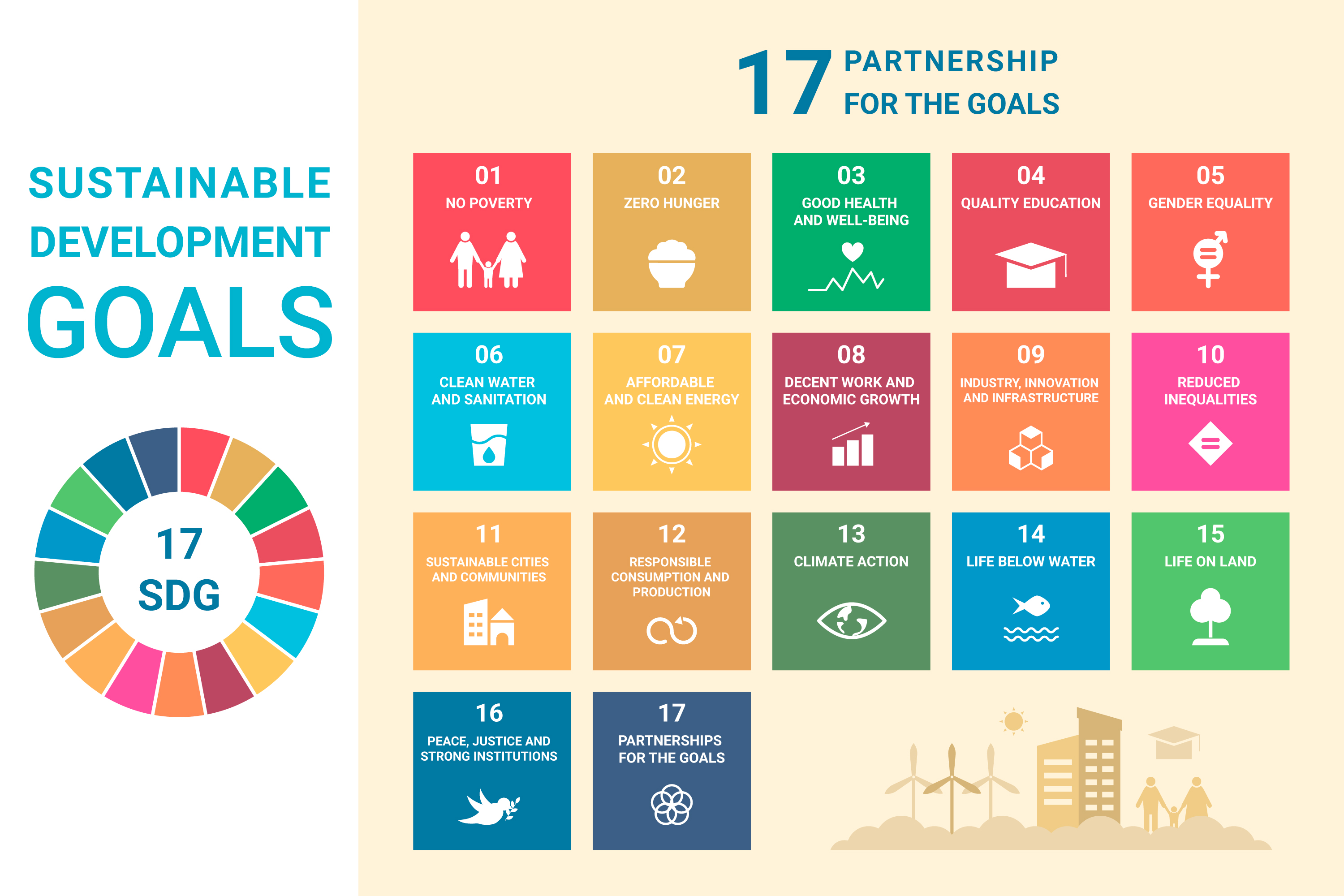
    An infographic show the 17 Sustainable Development Goals that were articulated at the United Nations in 2015 as an urgent call to action for all countries.

    Tech Giants’ Net Zero Goals May Be Unachievable Amid AI Data Center Boom

    Researchers warn that the net zero pledges of big tech companies such as Microsoft, Apple, Google, Meta, and Amazon are increasingly unrealistic as they expand AI and data centers, driving up energy use, according to a report by AFP that was widely syndicated last week.

    For example, Microsoft disclosed a 23 percent increase in greenhouse gas emissions since 2020, driven by rapid expansion of AI and cloud infrastructure, despite significant investments in carbon removals and clean energy, Carbon Pulse reported on May 30.

    Listen to the podcast

    Independent analysis rates the credibility of the big tech companies’ climate strategies as poor, with emissions targets likely unattainable if unchecked energy consumption continues without stronger oversight and regulation, according to the report.

    “The greenhouse gas emissions targets of tech companies appear to have lost their meaning,” Thomas Hay, lead author of a report by think tanks Carbon Market Watch and NewClimate Institute, told AFP.

    Meta finalizes deals for green power for AI data centres

    Meanwhile, Meta has finalized deals that will take it closer to net-zero emissions across its global data centers, according to a Bloomberg report on June 26. Meta signed new clean energy agreements with developer Invenergy to power its operations with renewable energy.

    Clean hydrogen investment at risk in US after tax bill proposal

    A proposed US tax bill threatens to drive clean hydrogen investors out of the country by cutting key incentives, Reuters reports. The move could slow the growth of the clean hydrogen sector, undermining efforts to decarbonize heavy industry and transportation.

    BizClik announces global sustainability awards finalists

    BizClik, a B2B digital media and events company, named the finalists for its Global Sustainability Awards 2025, recognizing measurable progress in ESG, climate tech, and sustainable innovation. The awards ceremony, set for September in London, spotlights global enterprises leading in sustainability, encouraging best practices and transparency in corporate environmental responsibility.

    Global Energy Prize shortlist features 15 scientists from eight countries

    The Global Energy Prize announced its 2025 shortlist, highlighting 15 scientists from eight countries working on sustainable energy solutions. The award promotes innovations addressing global energy challenges, supporting research that drives the transition to a cleaner, more sustainable energy future.

    Germany’s Climatiq bags €10 million to turn emissions into business metric

    Climatiq, a German climate tech startup, has raised €10 million in funding to develop technology that quantifies and tracks carbon emissions as a core business KPI, Tech Funding News reported. The company’s platform helps businesses to monitor their carbon footprint in real time and integrates emissions metrics into financial and operational decision-making. The investment will fuel further tech development and market expansion.

    Resilience AI assesses climate risk for Indian cities

    Resilience AI, a startup in Bengaluru, is developing a software platform that assesses how risk-prone our buildings and other infrastructure in our cities are to climate hazards like floods and landslides, Your Story reports. The startup’s risk modeling is helping urban planners and policymakers prepare for and mitigate the impact of increasingly frequent extreme weather events.

    India breaks into sustainable development goals index top 100 for the first time

    India has reached a significant milestone in the latest Sustainable Development Goals (SDG) Index, ranking within the top 100 countries for the first time, The Indian Express reports. This marks a notable improvement from its previous positions of 112th in 2022 and 120th in 2021, reflecting substantial progress in health, education, and environmental sustainability.

    The SDG Index evaluates countries on their commitment and performance toward global development targets. While India’s inclusion is a milestone, it also highlights ongoing challenges in areas like poverty reduction and climate resilience, requiring continued policy focus and innovation to sustain momentum.


    In Conversation

    In-depth conversations with entrepreneurs, investors, industry leaders, and other stakeholders building India’s deep tech and climate tech ecosystems

    Insight

    Takeaways from conversations with entrepreneurs, investors, industry leaders, and other stakeholders building India’s deep tech and climate tech ecosystems

  • Ending the ICE age: Kunal Khattar on the trillion dollar EV opportunity in India

    Ending the ICE age: Kunal Khattar on the trillion dollar EV opportunity in India

    My guest today is Kunal Khattar, founding managing partner at AdvantEdge Founders, an early-stage VC firm in New Delhi that’s well known for backing founders in the EV and mobility sectors in India. Kunal is well known for backing both consumer facing shared mobility ventures like Rapido and technology-led product innovation startups like Exponent Energy, which is a leader in fast-charging tech in India.

    It’s now 10 years since AdvantEdge was founded, Kunal says, and the firm is very close to announcing the first close of its third fund, which will likely be in the ballpark of $75 million, to back the next generation of EV entrepreneurs in India.

    In this conversation, Kunal talks about why he expects the EV space to hit the J-curve growth stage over the next three to five years and how replacing the overall ICE economy in India is a trillion-dollar opportunity.

    Kunal also talks about how because technology-led industry shifts can take decades, some promising technologies, like green hydrogen, for example, will take time to become mainstream.